The House of Representatives, controlled by the Democrats, has just finished over-riding President Bush's veto of the wrongheaded and massive porky farm bill. But, it turns out that the bill sent to the President as the bill voted on by the House, was not the bill voted on by the House. A version of the farm bill not voted on was sent to the President by the Democratic House leadership. Perhaps this is to be fully expected of these foolish politicians, who do not bother to read the bills they vote on. They believe themselves capable of running all aspects of our lives from our health, our use of energy, our use of chemicals, our charities, our education, our hiring and firing, many of our professions and businesses, growing and marketing food, they manage and fund scientific research, and they label us polluters because we breathe out carbon dioxide, but can they do the fundamentals of their own job?
But then the provisions of the farm bill that they will have to go through the motions of passing again will also prove their incompetence. The incompetent Democrats voting to over-ride the President's veto numbered 216 and they were joined by 100 incompetent Republicans. They have plenty of incompetent colleagues in the Senate also. There, the incompetent Senators on their vote before the Presidential veto numbered 85.
There is some good news in this. It will take some time for the House to pass this bill again. This is likely to mean that some other mischief they had planned to do will be pushed off the calender. Too bad that they will find the time to pass a farm bill as bad as that vetoed by the President.
The report on the fiasco by the Washington Times is here.
22 May 2008


21 May 2008
Our New Farm Bill
Well, folks, Congress has done it to us again. Read about it in this short, but very informative, editorial, aptly titled "Pigs in the trough on Capitol Hill," on one of the latest injustices against the American people that the Congress has overwhelmingly endorsed. President Bush says he will veto it, but it appears clear that his veto will be overridden.
This bill will give $300 billion to farmers, some of whom do not themselves farm, even as the market prices of cotton, corn, wheat, soybeans, sugar, and other plant products have gone through the roof due to huge overseas demand increases and due to the ethanol subsidies and fuel mandates. This is a very overt effort to buy votes. It also is causing a world of hurt for the meat producers and those who buy meat. We might call this the Congressional mandate for American vegetarianism!
The editorial discusses crop insurance provisions, the increased subsidies for domestic sugar and restriction on sugar importation and the purchase of "excess sugar" for resale to ethanol refineries. Then it talks about some local special interest provisions and some provisions added without vote by either the Senate or the House by the House and Senate negotiators for further special interests such as a salmon fishery for California and another fuel subsidy for cellulosic ethanol.
I'm a meat eater. I propose that we eat the pigs in Congress by throwing out everyone of those who voted for this farm bill. Just for a start of course. I will propose that we do the same for a few additional idiotic bills between now and the election. If you follow my lead, we will have almost none of the old pigs in the trough in the House and about one-third fewer in the Senate after the 2008 election!
Oh, damn, I forgot how few people read this web log. Looks like the pigs will retain control of the Congressional trough and will probably actually increase their control. They live by the motto that "You can fool most of the people most of the time." and the people are happy to play their game. How sad. Especially so, because their false game is so transparent. I am embarrassed for my fellow Americans.
This bill will give $300 billion to farmers, some of whom do not themselves farm, even as the market prices of cotton, corn, wheat, soybeans, sugar, and other plant products have gone through the roof due to huge overseas demand increases and due to the ethanol subsidies and fuel mandates. This is a very overt effort to buy votes. It also is causing a world of hurt for the meat producers and those who buy meat. We might call this the Congressional mandate for American vegetarianism!
The editorial discusses crop insurance provisions, the increased subsidies for domestic sugar and restriction on sugar importation and the purchase of "excess sugar" for resale to ethanol refineries. Then it talks about some local special interest provisions and some provisions added without vote by either the Senate or the House by the House and Senate negotiators for further special interests such as a salmon fishery for California and another fuel subsidy for cellulosic ethanol.
I'm a meat eater. I propose that we eat the pigs in Congress by throwing out everyone of those who voted for this farm bill. Just for a start of course. I will propose that we do the same for a few additional idiotic bills between now and the election. If you follow my lead, we will have almost none of the old pigs in the trough in the House and about one-third fewer in the Senate after the 2008 election!
Oh, damn, I forgot how few people read this web log. Looks like the pigs will retain control of the Congressional trough and will probably actually increase their control. They live by the motto that "You can fool most of the people most of the time." and the people are happy to play their game. How sad. Especially so, because their false game is so transparent. I am embarrassed for my fellow Americans.
Walter Williams on Congressional Problem Creation
Prof. Walter E. Williams has written a short commentary on a number of problems caused by Congress and the Presidents. These problems then become the justification for Congress taking still more control of industries and the economy, which will cause still more problems. These will newer problems will be used to justify still more Congressional controls and, happily for Congress, lead to still more problems, which will .......
He discusses the effects of The Community Reinvestment Act of 1977, monetary expansion by the Federal Reserve Bank, Congressional limitations on oil and gas exploration, refineries, and nuclear power, and the ethanol fuel mandates and food prices.
He discusses the effects of The Community Reinvestment Act of 1977, monetary expansion by the Federal Reserve Bank, Congressional limitations on oil and gas exploration, refineries, and nuclear power, and the ethanol fuel mandates and food prices.
20 May 2008
David N. Mayer's Thoughts for Summer 2008
David N. Mayer, professor of law and history at Capital University Law School in Columbus, Ohio, is my personal favorite interpreter of the Constitution of the United States of America. He has written The Constitutional Thought of Thomas Jefferson (Charlottesville: University Press of Virginia, 1994, paperback 1995) [ Amazon.com link ]. He is presently writing a book on the Constitution and Constitutional law, which will assuredly be an incredibly important book when it is finished.
David has just published his "Thoughts for Summer 2008" on his web log. He discusses these topics:
David has just published his "Thoughts for Summer 2008" on his web log. He discusses these topics:
- Gas-Price Hysteria, Again
- The Ethanol Boondoggle
- Green Bullshit
- Pick Your Poison! [on the quality of Presidential candidates]
- The only acceptable candidate for President of the United States...
- Multiple Obasms No More?
- Ding, Dong, the Witch is Dead! [yes, this is about Hillary in her lying, criminal glory!]
- It's Not the Economy, Stupid! [its saddling business with more taxes and regulations]
- More Supreme Nonsense? [concerns about the Supreme Court decision on our clear right to bear arms]
- The Ever-Expanding Nanny State
- The Criminalization of America [Victimless Crimes]
- Pay Day for Politicians [payday loan suppression in Ohio]
- Ohio Democrats' Dann Hypocrisy [scandal and allegations of abuse of power by Ohio's Attorney General]
- Coleman's Folly: A Desire Named Streetcar [Columbus mayor Coleman wants a streetcar line]
- Ben Stein, Where's Your I.D.?
- The Real Adams Family
- 25 Years of Risky Business [a favorite summer movie]
- Summer Movie-ocrities: A Preview
18 May 2008
Thomas Sowell's "Economics Too Complex?" Series
One of the most basic principles of life and also of politics is that wishing something does not make it real. Yes, wishing for something may well serve as an effective means to get us to act to achieve something, but short of the act to achieve it, that value will not materialize in simple response to our wish. Most people come to understand this in their personal life when they have matured past adolescence. Unfortunately, it seems that most people do not understand that the same principle applies to the realities that politics are supposed to deal with!
Many of my recent commentaries have made a point of examining issues as a matter of supply and demand, because in reality, this is how things are priced absent government interference, and ultimately, in various perverted ways even with government interference. If government says that only the graduates of accredited medical schools can perform the duties of doctors and then government acts to limit the number of medical internships which then prevents medical schools from training more doctors, then there will be a shortage of doctors as the population grows and ages. This is what has happened over the last 20 or so years. The shortage of doctors means that doctors can charge more for their services, or if Medicare says they cannot, then they may work fewer hours or retire early. Patients will have less time to discuss their symptoms with the doctor and he will have less time to treat them, to consider interactions between the several drugs a patient might be on, or to review how effective a given treatment was. These issues are not dominated by a desire on the part of doctors to serve patients badly. They were not due to government bureaucrats thinking that it would be good to have a shortage of doctors. There is probably little intentional evil being done here, but there is evil afoot nonetheless. There is the evil of not thinking through important issues in a rational way and then taking foolish actions with the government's monopoly on force while not understanding very understandable issues. It is a shirking of responsibility for thinking, usually in favor of the emotional appeal of nonsense. The real problem here and in a very great many political issues is one of the supply of limited resources and the demand for those limited resources. Unfortunately, politics is usually ruled by politicians pandering to and often encouraging people only to decide issues upon emotional criteria, while ignoring entirely, or at least largely, the basic issues of supply and demand.
Thomas Sowell has just written a series of three commentaries on whether economics is too complex for people to understand or is it that they simply prefer the emotional appeal of thinking only in terms of heroes and villains? In Part 1, he talks about the price of oil to illustrate the preference for false emotional ideas of heroes and villains rather than a critical discussion of supply and demand.
In Part 2, he illustrates this with affordable housing as an issue, though he briefly alludes to restrictions on drilling oil put in place by politicians who are then the loudest in protesting higher prices for oil. He notes: "So long as politicians can get some people's votes by publicly feeling their pain when it comes to housing costs, and other people's votes by restricting the building of housing, they can have a winning coalition at election time, which is their bottom line." Then "So long as voters prefer heroes and villains to supply and demand, this game will continue to be played. It is not because supply and demand is too "complex" to understand, but because it is not emotionally satisfying."
In Part 3, Sowell writes about the tendency of government to object to large businesses selling goods and services for less than smaller local businesses may be able. He talks about San Francisco banning chain stores from some parts of the city. He talks about how the mistaken notion of "a living Constitution" has come to destroy property rights. This results in the economies of scale not being passed along to consumers who can then buy products for less. He mentions the bias against Wal-Mart and the Robinson-Patman Act of 1936, which was known as the anti-Sears, Roebuck law. He mentions the Standard Oil Company and Great Northern Railroad Trust break-ups, despite the fact that they provided ever lower prices. Over and over, Fair Trade laws were used to keep consumers from the enjoyment of lower prices. The reason was that it was more effective politically to indulge people's emotions against so-called villains than it would have been to rationally analyze the costs in terms of supply and demand. Sowell says: "Neither economics nor property rights are too "complex" to understand. But both get in the way of willful people who seek to deny other people the right to make their own decisions." Instead of personally refusing to use a chain store, the villain-destroying person assumes that they have the right to stop others from using their own freedom of choice on whether to shop at the chain store.
Without thinking issues through on the basis of supply and demand, it is very easy to identify the good guys as the villains and the villains as the heroes. A large fraction of the population makes a habit of doing just this.
Many of my recent commentaries have made a point of examining issues as a matter of supply and demand, because in reality, this is how things are priced absent government interference, and ultimately, in various perverted ways even with government interference. If government says that only the graduates of accredited medical schools can perform the duties of doctors and then government acts to limit the number of medical internships which then prevents medical schools from training more doctors, then there will be a shortage of doctors as the population grows and ages. This is what has happened over the last 20 or so years. The shortage of doctors means that doctors can charge more for their services, or if Medicare says they cannot, then they may work fewer hours or retire early. Patients will have less time to discuss their symptoms with the doctor and he will have less time to treat them, to consider interactions between the several drugs a patient might be on, or to review how effective a given treatment was. These issues are not dominated by a desire on the part of doctors to serve patients badly. They were not due to government bureaucrats thinking that it would be good to have a shortage of doctors. There is probably little intentional evil being done here, but there is evil afoot nonetheless. There is the evil of not thinking through important issues in a rational way and then taking foolish actions with the government's monopoly on force while not understanding very understandable issues. It is a shirking of responsibility for thinking, usually in favor of the emotional appeal of nonsense. The real problem here and in a very great many political issues is one of the supply of limited resources and the demand for those limited resources. Unfortunately, politics is usually ruled by politicians pandering to and often encouraging people only to decide issues upon emotional criteria, while ignoring entirely, or at least largely, the basic issues of supply and demand.
Thomas Sowell has just written a series of three commentaries on whether economics is too complex for people to understand or is it that they simply prefer the emotional appeal of thinking only in terms of heroes and villains? In Part 1, he talks about the price of oil to illustrate the preference for false emotional ideas of heroes and villains rather than a critical discussion of supply and demand.
In Part 2, he illustrates this with affordable housing as an issue, though he briefly alludes to restrictions on drilling oil put in place by politicians who are then the loudest in protesting higher prices for oil. He notes: "So long as politicians can get some people's votes by publicly feeling their pain when it comes to housing costs, and other people's votes by restricting the building of housing, they can have a winning coalition at election time, which is their bottom line." Then "So long as voters prefer heroes and villains to supply and demand, this game will continue to be played. It is not because supply and demand is too "complex" to understand, but because it is not emotionally satisfying."
In Part 3, Sowell writes about the tendency of government to object to large businesses selling goods and services for less than smaller local businesses may be able. He talks about San Francisco banning chain stores from some parts of the city. He talks about how the mistaken notion of "a living Constitution" has come to destroy property rights. This results in the economies of scale not being passed along to consumers who can then buy products for less. He mentions the bias against Wal-Mart and the Robinson-Patman Act of 1936, which was known as the anti-Sears, Roebuck law. He mentions the Standard Oil Company and Great Northern Railroad Trust break-ups, despite the fact that they provided ever lower prices. Over and over, Fair Trade laws were used to keep consumers from the enjoyment of lower prices. The reason was that it was more effective politically to indulge people's emotions against so-called villains than it would have been to rationally analyze the costs in terms of supply and demand. Sowell says: "Neither economics nor property rights are too "complex" to understand. But both get in the way of willful people who seek to deny other people the right to make their own decisions." Instead of personally refusing to use a chain store, the villain-destroying person assumes that they have the right to stop others from using their own freedom of choice on whether to shop at the chain store.
Without thinking issues through on the basis of supply and demand, it is very easy to identify the good guys as the villains and the villains as the heroes. A large fraction of the population makes a habit of doing just this.
15 May 2008
The Most Competitive Country in the World
For the 15th straight year, the United States was ranked the most competitive country in the world. Singapore and Hong Kong ranked right behind the U.S. Switzerland improved its ranking to 4th position and Luxembourg took 5th. This ranking is done by the IMD business school, which publishes the World Competitiveness Yearbook.
It seems that we are well able to compete in the global economy and that free trade clearly works to our advantage. Actually, by putting pressure on the governments of countries which are less competitive to be become more competitive by allowing more individual initiative and freedom, it is playing a very useful role in improving life in many countries. It is also helping more people to understand what they are missing in their own economies and from their own governments. As they learn this, they are demanding better treatment and more freedoms.
It seems that we are well able to compete in the global economy and that free trade clearly works to our advantage. Actually, by putting pressure on the governments of countries which are less competitive to be become more competitive by allowing more individual initiative and freedom, it is playing a very useful role in improving life in many countries. It is also helping more people to understand what they are missing in their own economies and from their own governments. As they learn this, they are demanding better treatment and more freedoms.
05 May 2008
Congress Backpeddling on Ethanol
It seems clear now that both the Democrats and the Republicans in Congress are largely coming to the conclusion that they made a big mistake in backing ethanol mandates, subsidies, and exclusionary tariffs. Some aspects of the magnitude of their mistake have only relatively recently become clear such as the fact that there is probably no net energy achieved with the use of farmed plants to create ethanol, with the possible exception of sugar cane grown in some very favorable areas. Another example of recent knowledge is that ethanol use does not likely reduce net pollution when all factors are accounted for. On the other hand, the idea that one-quarter of all corn could be used to create ethanol and that this would not greatly increase the cost of corn, those end products dependent upon corn such as beef, pork, chicken, corn oil, and corn syrup, and of soybeans and wheat as corn was planted in their stead, was ludicrous. This year, 35% of the corn crop may be going to ethanol production.
President Bush is still saying that the ethanol mandates are not barely responsible for the food cost increases. He is disappointingly slow on coming around on this. It is true that corn and other food prices are going up both because of the reduction of supply due to the ethanol mandates and due to a major increase in world-wide demand for better and more food.
Congress has pleasantly surprised me by starting to change course so soon. House Minority Leader Steny Hoyer, Democrat, is not as nimble-minded as he should be, but he is now advocating that the upcoming farm bill, delayed from last year, should reduce the ethanol subsidy. They would also increase the subsidy for cellulosic ethanol. He has said, "Obviously, sometimes there are unforseen or unintended consequences of actions." Imagine a committed socialist allowing that he is not omnipotent! Even that he may have been wrong-headed!
Republicans in Congress actually want now to remove mandates requiring the blending of ethanol with gasoline. Representative Jeff Flake, Arizona Republican, introduced a bill to end all federal ethanol supports, including the requirement to blend it with gas, the tax credits for ethanol refiners, and the tariffs to prevent the importation of sugar cane produced ethanol, primarily from Brazil. He recognizes that our economy does not need big increases in food prices on top of those for energy, such as oil. Senator Kay Bailey Hutchison, Texas Republican, wants to freeze the ethanol mandate for gasoline at this year's level. On Rush Limmbaugh's program, she noted that cattle and pig producers were being hurt badly. Apparently there are a few of them in Texas! Rick Perry, Texas governor, has asked the EPA to allow Texas to use only half as much ethanol in gasoline blends as is required.
Meanwhile, some farmers are asking Congress to put windfall taxes on oil producing companies, claiming that these companies are responsible for driving up their costs. The National Corn Growers Association made the foolish claim that the use of biofuels with gasoline was saving Americans $69 billion a year. Others such as Hillary Clinton are also demagogically calling for windfall profit taxes on the oil companies.
President Bush is still saying that the ethanol mandates are not barely responsible for the food cost increases. He is disappointingly slow on coming around on this. It is true that corn and other food prices are going up both because of the reduction of supply due to the ethanol mandates and due to a major increase in world-wide demand for better and more food.
Congress has pleasantly surprised me by starting to change course so soon. House Minority Leader Steny Hoyer, Democrat, is not as nimble-minded as he should be, but he is now advocating that the upcoming farm bill, delayed from last year, should reduce the ethanol subsidy. They would also increase the subsidy for cellulosic ethanol. He has said, "Obviously, sometimes there are unforseen or unintended consequences of actions." Imagine a committed socialist allowing that he is not omnipotent! Even that he may have been wrong-headed!
Republicans in Congress actually want now to remove mandates requiring the blending of ethanol with gasoline. Representative Jeff Flake, Arizona Republican, introduced a bill to end all federal ethanol supports, including the requirement to blend it with gas, the tax credits for ethanol refiners, and the tariffs to prevent the importation of sugar cane produced ethanol, primarily from Brazil. He recognizes that our economy does not need big increases in food prices on top of those for energy, such as oil. Senator Kay Bailey Hutchison, Texas Republican, wants to freeze the ethanol mandate for gasoline at this year's level. On Rush Limmbaugh's program, she noted that cattle and pig producers were being hurt badly. Apparently there are a few of them in Texas! Rick Perry, Texas governor, has asked the EPA to allow Texas to use only half as much ethanol in gasoline blends as is required.
Meanwhile, some farmers are asking Congress to put windfall taxes on oil producing companies, claiming that these companies are responsible for driving up their costs. The National Corn Growers Association made the foolish claim that the use of biofuels with gasoline was saving Americans $69 billion a year. Others such as Hillary Clinton are also demagogically calling for windfall profit taxes on the oil companies.
04 May 2008
Airline Regulation
John Stossel has written an intelligent opinion editorial on regulation of the airlines by the FAA. The title is The Conceit of the Regulators. He points out that airline travel has never been safer. Despite this, many in the media and in Congress assume that airlines would be willing to crash their $50 million planes in the interest of saving some maintenance money. There are several very strong reasons why they would not do this:
- $50 million losses really hurt the bottom line. Of course the planes are insured, but the insurance companies insuring them would raise the airlines insurance costs greatly if they started to have a higher accident occurrence rate. Therefore, crashing airplanes is a big money loser.
- If the airline were lax in its maintenance, then the families of those killed in accidents would sue and win very large awards.
- The public would not care to fly on an airline that has a bad safety record.
- Many people would think it terribly unethical to be haphazard with maintenance and other safety procedures. This would make them angry at the airline and cause them to stop flying on it or to stop working for it.
01 May 2008
The Cost of Coal
Many commodities prices have risen considerably in the last couple of years. These include oil, concrete, steel, natural gas, corn, soybeans, wheat, wood, fish, beef, and coal. The principal reason is rapidly increased demand. This demand has grown faster than the supply of these products. The increased wealth of many people throughout the world which has been brought on by a large increase in international trade and improvements in economic freedom in China, India, Brazil, and Eastern Europe has given billions of more people much more money to bid for the supply of these products. The United States exports many of them and is making a great deal of money and providing many jobs as a result.
Let us examine the case of coal. The U.S. has an abundance of coal. Presently, 600 power plants burning coal generate 49% of the nation's electricity. This is up from 43% of the electricity in 2000. However, more than 60 coal power plant proposals were terminated in 2007 due to concerns about greenhouse gases and environmental issues in 24 states. Some of the terminations were brought about by state governments and some by utilities concerned about future carbon footprint legislation. Dozens of the original 151 proposals for new coal power plants in early 2007 are being challenged in the courts.
Meanwhile coal production was cut in China this winter by heavy snowstorms and heavy rains flooded coal mines in Australia, the world's biggest coal exporter. Yes, that is Australia, not the U.S. But U.S. coal exports increased 19.2% last year and the Energy Department is expecting a further 15% increase this year. Power plants widely use Central Appalachian coal, a grade of coal with a very high energy output. This coal sold for $40 per ton in early 2007 and is now selling at almost $90 per ton. Powder River Basin coal in Wyoming and Montana has about 0.75 times the energy per ton and was selling at $10/ton in early 2007 and is now selling for $15/ton. The lower cost is not proportional to the energy content, due to longer shipping distances to most power plants and because the shipping costs are related to the weight and volume, not to the energy content. When a substantial part of the cost is determined by the world market bidding its value up, the cost of shipping relative to the energy output is even more important. The fact that the Central Appalachian coal more than doubled in cost since early 2007, while the Powder River Basin coal went up only 50% is a sure sign that the international market is playing a major role in determining the cost of the coal.
It is interesting to note that while new coal-fired power plants in the U.S. are largely being axed due to environmental concerns, Western European nations are rapidly increasing the number of their coal power plants. See the NY Times article "Europe Turns Back to Coal, Raising Climate Fears." Italy plans to produce 33% of its electricity from coal in five years, which is up from 14% now. More plants are being built in Germany and the Czech Republic. About 50 coal power plants are expected to be opened in the next 5 years in Europe. As I have pointed out before, the Europeans love to criticize the U.S. for its CO2 emissions, but our emissions are growing less rapidly than are theirs. Coal produces about two times as much CO2 per unit of electricity as does natural gas. Meanwhile, India and China are opening about 1 new coal power plant a week between them.
Both natural gas and oil are alternatives to coal for electrical power generation. Both have had larger price increases even than coal, however. Coal in 2006 cost only $1.69 per BTU, while natural gas cost $6.87/BTU. Thus, the heat output per dollar for coal was 4.1 times greater than that of natural gas. For most of us, this means that our electric bills will be going up considerably. The more we switch from coal to natural gas and oil, the more our electric bill will go up. The cost of reducing carbon dioxide emissions will be very high.
On the other hand, if we emulate the Europeans and use more coal, crops and other plants will luxuriate in CO2 fertilizer and our cool planet will perhaps become slightly warmer than it might otherwise be. Of course, over most of the last 400,000 years the planet has been colder than now. We call these colder periods Ice Ages. We are about due to begin another Ice Age, if the pattern holds up. Let us hope that producing a wee bit more CO2 will have a significant warming effect, despite the weak evidence that it might have done so to date. And if it were to cause a temperature increase, would it be cause man's emissions were significant compared to the much greater emissions from the oceans and from decaying plant matter, not to mention all of the animals breathing?
Let us examine the case of coal. The U.S. has an abundance of coal. Presently, 600 power plants burning coal generate 49% of the nation's electricity. This is up from 43% of the electricity in 2000. However, more than 60 coal power plant proposals were terminated in 2007 due to concerns about greenhouse gases and environmental issues in 24 states. Some of the terminations were brought about by state governments and some by utilities concerned about future carbon footprint legislation. Dozens of the original 151 proposals for new coal power plants in early 2007 are being challenged in the courts.
Meanwhile coal production was cut in China this winter by heavy snowstorms and heavy rains flooded coal mines in Australia, the world's biggest coal exporter. Yes, that is Australia, not the U.S. But U.S. coal exports increased 19.2% last year and the Energy Department is expecting a further 15% increase this year. Power plants widely use Central Appalachian coal, a grade of coal with a very high energy output. This coal sold for $40 per ton in early 2007 and is now selling at almost $90 per ton. Powder River Basin coal in Wyoming and Montana has about 0.75 times the energy per ton and was selling at $10/ton in early 2007 and is now selling for $15/ton. The lower cost is not proportional to the energy content, due to longer shipping distances to most power plants and because the shipping costs are related to the weight and volume, not to the energy content. When a substantial part of the cost is determined by the world market bidding its value up, the cost of shipping relative to the energy output is even more important. The fact that the Central Appalachian coal more than doubled in cost since early 2007, while the Powder River Basin coal went up only 50% is a sure sign that the international market is playing a major role in determining the cost of the coal.
It is interesting to note that while new coal-fired power plants in the U.S. are largely being axed due to environmental concerns, Western European nations are rapidly increasing the number of their coal power plants. See the NY Times article "Europe Turns Back to Coal, Raising Climate Fears." Italy plans to produce 33% of its electricity from coal in five years, which is up from 14% now. More plants are being built in Germany and the Czech Republic. About 50 coal power plants are expected to be opened in the next 5 years in Europe. As I have pointed out before, the Europeans love to criticize the U.S. for its CO2 emissions, but our emissions are growing less rapidly than are theirs. Coal produces about two times as much CO2 per unit of electricity as does natural gas. Meanwhile, India and China are opening about 1 new coal power plant a week between them.
Both natural gas and oil are alternatives to coal for electrical power generation. Both have had larger price increases even than coal, however. Coal in 2006 cost only $1.69 per BTU, while natural gas cost $6.87/BTU. Thus, the heat output per dollar for coal was 4.1 times greater than that of natural gas. For most of us, this means that our electric bills will be going up considerably. The more we switch from coal to natural gas and oil, the more our electric bill will go up. The cost of reducing carbon dioxide emissions will be very high.
On the other hand, if we emulate the Europeans and use more coal, crops and other plants will luxuriate in CO2 fertilizer and our cool planet will perhaps become slightly warmer than it might otherwise be. Of course, over most of the last 400,000 years the planet has been colder than now. We call these colder periods Ice Ages. We are about due to begin another Ice Age, if the pattern holds up. Let us hope that producing a wee bit more CO2 will have a significant warming effect, despite the weak evidence that it might have done so to date. And if it were to cause a temperature increase, would it be cause man's emissions were significant compared to the much greater emissions from the oceans and from decaying plant matter, not to mention all of the animals breathing?
30 April 2008
Are the Public Schools a Public Trust?
Flying home to Baltimore from Tulsa on Sunday, I sat next to an architect who was an ardent defender of the public schools and was adamantly opposed to competition from private schools. His arguments are very revealing when examined carefully. On my other side sat a proud Marine who was home-schooled by his mother who had been an English teacher. This Marine was a carpenter and was presently assigned to a unit that performed extensive honor guard duties in Washington, DC. He was able to give me a very accurate and incisive summary of the Global Warming fraud. It was also clear that he was very knowledgeable about computers.
The architect argued over and over that the public schools are a public trust. I responded that in many areas it was clear that the public schools had not earned the publics' trust given the quality of the education they provided. I also argued that public schools have an inherent conflict of interest which makes it impossible for them to fully address many issues and biases them to provide false propaganda.
Education should aim at helping students to learn to think for themselves. They should learn about the necessity to observe reality objectively, to analyze what they see and experience critically, learn logical thinking, learn that one's ideas should be self-consistent and non-contradictory, learn that the rights of the individual are paramount to living in a civilized society, and learn to prioritize the threats to the individual. After all, learning is the most individual of all activities, even when we interact extensively with others in the process. This is because we have learned nothing if we have not carefully and consistently exercised our own judgment in evaluating the truth of everything that we are taught. Some things we recognize as true, some things we recognize as false, some ideas are packages with both true and false contents, and some we place in the category of things to be examined further before assigning them to true or false or packages of mixed contents. It is critical that we commit ourselves to this evaluation of everything we are taught, or we have not learned anything.
In view of this, what is the conflict of interest in the public schools? Broadly, it is this: politically we threatened either by anarchy or by government. Nearly all Americans agree that anarchy is intolerable. The Framer's of the Constitution also recognized it as intolerable. But, they well knew from the example of the rule of the American colonies by Great Britain, that government, even the one they all recognized as one of, if not, the best government in the world prior to our revolution, was the greatest threat to the rights of the individual except anarchy. Their answer to this dilemma was to form a constitutionally strictly limited representative government. Even then they did not trust it very far, so they designed in many checks and balances between multiple branches of government. Then the people went still further and demanded a Bill of Rights, which was supposed to further guarantee the rights of the individual and in some cases the role of state government. Even then, Jefferson said that the people would have to frequently revolt to keep the government from becoming tyrannical! Many said that one of the reasons for the 2nd Amendment of the Bill of Rights was to ensure that the people would have the means to revolt if they needed to. The recent need of the people to revolt against Great Britain had not been forgotten.
For a long time, most Americans received their education in private schools. Those who did not, still usually received it in lightly regulated public schools organized in small school systems governed by local boards of education. The parents of school children generally personally knew several of the school board members and these members were not the elite education specialists and distant school board members running most of our much larger school boards today. Then they lived down the street as neighbors and you did business with them. As long as this was true, the schools generally taught that the purpose of government was to protect the rights of the individual. In time, the socialists who were generally the primary advocates of public schools, succeeded in making the school systems much larger and in breaking the bonds between the parents and the school board members. They were then able to place more and more elitist professionals on the school boards, especially those committed to socialism. Of course, most of these people called themselves Progressives in the late 1800s and the early 1900s. Then later they called themselves Liberals, because by then people had forgotten in substantial part that Liberals in the 1800s were the defenders of the rights of the individual.
These new Liberals were Socialists who believed the elite should run government and see that it managed the lives of the majority of the people who were not capable of managing their own lives. The school system was re-directed to "teach" children that they should look to the government to solve all social problems, that the Constitution was dominated by an Elastic Clause that allowed government to do anything it said was for the Common Good, and that there were many, many people who desperately needed government help in managing their lives. Of course they were not so bold as to tell these children that the elite thought most of them were unable to live their lives as well as the elite were prepared to help them to by bombarding them with politically correct thoughts. In the interest of advancing their socialist agenda, the public education elites opposed the idea that the purpose of government is to protect the rights of the individual. Sometimes this was a flat denial of these rights and other times they undermined the idea of individual rights by claiming that everyone had a right to demand the services of others to provide them an education, health care, a chicken in every pot, and even freedom from fear.
So the first conflict of interest is that public schools being run by government prove to be poor wardens to guard against government intrusions that violate the rights of the individual. Just as the checks and balances in the Federal Government proved to be susceptible in time to power-sharing agreements between the branches of government and then between the government and the states, the public schools achieved their power-sharing goals with respect to local and state governments and even the Federal Government. Compulsory, tax-supported schools are now run by the teachers unions. These union members hold almost all teaching jobs and hence can claim to be the vast majority of the education experts. They recommend slates of school board members at election time and the people almost always vote for them on the recommendation of the education experts. In turn, the public schools take most of the local tax revenues and they teach children that government needs to become bigger and expand its power. Of course, this usually results in the schools getting still more tax money and the politicians, except the most dimwitted, see the advantage in having more future voters willing to give them more power. More and more, state governments and the Federal Government give public schools money also. Thus, instead of being taught that we must assiduously oppose the expansion of government, that it is the problem not the solution, the young are taught to embrace the usurpers and tyrants.
One of the most important reasons for becoming educated is to think about ethics and to formulate a person code of ethical principles. Traditionally, most people thought that this involved religious teachings, which have been removed from the public schools in accordance with the separation of church and state. I think that ethics should be understood in terms of the individual life whose support, security, and happiness in this world requires rational personal choices based upon personally chosen values. But whether ethics has a religious base or a rational personal base, public schools are unable to address serious ethical issues. The personal rational base is clearly in conflict with the goals of the socialist, who has been reduced to propagandizing ecological anti-humanisms, racial group think, income bracket group think, gender group think, and a polarization between victims and oppressors based on race, gender, and income bracket. This is a remarkably poor substitute for an individual rational ethics.
So much for the idea that the public schools are a public trust!
Another argument by the architect was this: Private schools will not take in most public school students because they are too hard to teach. Interesting. First, there was a time when almost all children in many communities were taught in private schools. Why is it that this cannot be done again? Is this because the human race has become less teachable? If so, is this not evidence that the public schools have failed their trust? After all, they were supposed to provide everyone with a good education, not make them impossible to educate. Or if some people truly cannot be educated, then how can private schools be criticized for a failure to do the impossible?
When I pointed out that DC public schools spent $24,600 per student per year and that many private schools would be happy to educate the DC students better for such a sum, he simply asserted that no they would not. Then he proceeded to say that the DC schools should be given more money so they could educate the DC children. He suggested $50,000 per student. Well, if private schools would not educate them for $24,600 per year, I wonder if they would be willing to do a better job than the DC public schools for $50,000 per year then. I am sure they would! I am also sure that a true competition from private schools given nearly equivalent tax money through the choice of parents, would help the public schools to improve.
I do not think they will ever be able to provide as high a quality of education as private schools will, however. But, when the school, whether private or public, has to persuade the parents to give them money for the education of their children, there is little doubt that the schools will pay more attention to the individual needs and capabilities of each student and be more responsive to the parent's ideas of what their children should learn. This loss of control, of nearly tyrannical control is dreaded by the public schools. Yet this loss would cause parents to become more involved in their children's education and this would be good. It also means that the parents have given a particular school a warrant to discipline and teach their children, which compulsory public schools lack. They feel this lack, because teachers were constantly sending home parent and student contracts which I refused to sign on the basis that they were meaningless since the schools were compulsory. There can be no such thing as a contract which one is compelled by force to sign.
The architect also commented that homeschooling was a bad idea because many homeschooling parents were not qualified teachers. This riled up our Marine companion a bit, since he had earlier noted that he was home-schooled and now noted that his mother had been an English teacher. Of course the elitist architect was not apologetic about his comment about the Marine's parents' teaching qualifications. He also made no attempt to respond to my point that home-schooled children outscored public school children on the standardized tests, except to claim that they must teach to the test. I responded that I was pretty sure they teach less to the test than do public school teachers in general. I did not then point out that many homeschooled students are taught by professionals, who may not be teacher certified, but who were often once better students than most public school teachers were.
As the reader can see, none of the architect's arguments for compulsory and exclusively public education hold up to analysis. Some were very revealing of his elitist viewpoint and his conviction that many people are almost impossible to educate. I think that most people are capable of learning much more than they do in the public schools. The evidence is strong that this was once the case for even many very poor African-American students, who seem to be the unnamed students this architect deems to be impossible to educate, at least for less than $50,000 per student per year. For evidence that such students can be educated, I direct the reader to Thomas Sowell's book Black Rednecks and White Liberals for an extensive and fascinating chapter on the subject. The book is generally so good that I lent it to a friend long ago and he will not give it back!
The architect argued over and over that the public schools are a public trust. I responded that in many areas it was clear that the public schools had not earned the publics' trust given the quality of the education they provided. I also argued that public schools have an inherent conflict of interest which makes it impossible for them to fully address many issues and biases them to provide false propaganda.
Education should aim at helping students to learn to think for themselves. They should learn about the necessity to observe reality objectively, to analyze what they see and experience critically, learn logical thinking, learn that one's ideas should be self-consistent and non-contradictory, learn that the rights of the individual are paramount to living in a civilized society, and learn to prioritize the threats to the individual. After all, learning is the most individual of all activities, even when we interact extensively with others in the process. This is because we have learned nothing if we have not carefully and consistently exercised our own judgment in evaluating the truth of everything that we are taught. Some things we recognize as true, some things we recognize as false, some ideas are packages with both true and false contents, and some we place in the category of things to be examined further before assigning them to true or false or packages of mixed contents. It is critical that we commit ourselves to this evaluation of everything we are taught, or we have not learned anything.
In view of this, what is the conflict of interest in the public schools? Broadly, it is this: politically we threatened either by anarchy or by government. Nearly all Americans agree that anarchy is intolerable. The Framer's of the Constitution also recognized it as intolerable. But, they well knew from the example of the rule of the American colonies by Great Britain, that government, even the one they all recognized as one of, if not, the best government in the world prior to our revolution, was the greatest threat to the rights of the individual except anarchy. Their answer to this dilemma was to form a constitutionally strictly limited representative government. Even then they did not trust it very far, so they designed in many checks and balances between multiple branches of government. Then the people went still further and demanded a Bill of Rights, which was supposed to further guarantee the rights of the individual and in some cases the role of state government. Even then, Jefferson said that the people would have to frequently revolt to keep the government from becoming tyrannical! Many said that one of the reasons for the 2nd Amendment of the Bill of Rights was to ensure that the people would have the means to revolt if they needed to. The recent need of the people to revolt against Great Britain had not been forgotten.
For a long time, most Americans received their education in private schools. Those who did not, still usually received it in lightly regulated public schools organized in small school systems governed by local boards of education. The parents of school children generally personally knew several of the school board members and these members were not the elite education specialists and distant school board members running most of our much larger school boards today. Then they lived down the street as neighbors and you did business with them. As long as this was true, the schools generally taught that the purpose of government was to protect the rights of the individual. In time, the socialists who were generally the primary advocates of public schools, succeeded in making the school systems much larger and in breaking the bonds between the parents and the school board members. They were then able to place more and more elitist professionals on the school boards, especially those committed to socialism. Of course, most of these people called themselves Progressives in the late 1800s and the early 1900s. Then later they called themselves Liberals, because by then people had forgotten in substantial part that Liberals in the 1800s were the defenders of the rights of the individual.
These new Liberals were Socialists who believed the elite should run government and see that it managed the lives of the majority of the people who were not capable of managing their own lives. The school system was re-directed to "teach" children that they should look to the government to solve all social problems, that the Constitution was dominated by an Elastic Clause that allowed government to do anything it said was for the Common Good, and that there were many, many people who desperately needed government help in managing their lives. Of course they were not so bold as to tell these children that the elite thought most of them were unable to live their lives as well as the elite were prepared to help them to by bombarding them with politically correct thoughts. In the interest of advancing their socialist agenda, the public education elites opposed the idea that the purpose of government is to protect the rights of the individual. Sometimes this was a flat denial of these rights and other times they undermined the idea of individual rights by claiming that everyone had a right to demand the services of others to provide them an education, health care, a chicken in every pot, and even freedom from fear.
So the first conflict of interest is that public schools being run by government prove to be poor wardens to guard against government intrusions that violate the rights of the individual. Just as the checks and balances in the Federal Government proved to be susceptible in time to power-sharing agreements between the branches of government and then between the government and the states, the public schools achieved their power-sharing goals with respect to local and state governments and even the Federal Government. Compulsory, tax-supported schools are now run by the teachers unions. These union members hold almost all teaching jobs and hence can claim to be the vast majority of the education experts. They recommend slates of school board members at election time and the people almost always vote for them on the recommendation of the education experts. In turn, the public schools take most of the local tax revenues and they teach children that government needs to become bigger and expand its power. Of course, this usually results in the schools getting still more tax money and the politicians, except the most dimwitted, see the advantage in having more future voters willing to give them more power. More and more, state governments and the Federal Government give public schools money also. Thus, instead of being taught that we must assiduously oppose the expansion of government, that it is the problem not the solution, the young are taught to embrace the usurpers and tyrants.
One of the most important reasons for becoming educated is to think about ethics and to formulate a person code of ethical principles. Traditionally, most people thought that this involved religious teachings, which have been removed from the public schools in accordance with the separation of church and state. I think that ethics should be understood in terms of the individual life whose support, security, and happiness in this world requires rational personal choices based upon personally chosen values. But whether ethics has a religious base or a rational personal base, public schools are unable to address serious ethical issues. The personal rational base is clearly in conflict with the goals of the socialist, who has been reduced to propagandizing ecological anti-humanisms, racial group think, income bracket group think, gender group think, and a polarization between victims and oppressors based on race, gender, and income bracket. This is a remarkably poor substitute for an individual rational ethics.
So much for the idea that the public schools are a public trust!
Another argument by the architect was this: Private schools will not take in most public school students because they are too hard to teach. Interesting. First, there was a time when almost all children in many communities were taught in private schools. Why is it that this cannot be done again? Is this because the human race has become less teachable? If so, is this not evidence that the public schools have failed their trust? After all, they were supposed to provide everyone with a good education, not make them impossible to educate. Or if some people truly cannot be educated, then how can private schools be criticized for a failure to do the impossible?
When I pointed out that DC public schools spent $24,600 per student per year and that many private schools would be happy to educate the DC students better for such a sum, he simply asserted that no they would not. Then he proceeded to say that the DC schools should be given more money so they could educate the DC children. He suggested $50,000 per student. Well, if private schools would not educate them for $24,600 per year, I wonder if they would be willing to do a better job than the DC public schools for $50,000 per year then. I am sure they would! I am also sure that a true competition from private schools given nearly equivalent tax money through the choice of parents, would help the public schools to improve.
I do not think they will ever be able to provide as high a quality of education as private schools will, however. But, when the school, whether private or public, has to persuade the parents to give them money for the education of their children, there is little doubt that the schools will pay more attention to the individual needs and capabilities of each student and be more responsive to the parent's ideas of what their children should learn. This loss of control, of nearly tyrannical control is dreaded by the public schools. Yet this loss would cause parents to become more involved in their children's education and this would be good. It also means that the parents have given a particular school a warrant to discipline and teach their children, which compulsory public schools lack. They feel this lack, because teachers were constantly sending home parent and student contracts which I refused to sign on the basis that they were meaningless since the schools were compulsory. There can be no such thing as a contract which one is compelled by force to sign.
The architect also commented that homeschooling was a bad idea because many homeschooling parents were not qualified teachers. This riled up our Marine companion a bit, since he had earlier noted that he was home-schooled and now noted that his mother had been an English teacher. Of course the elitist architect was not apologetic about his comment about the Marine's parents' teaching qualifications. He also made no attempt to respond to my point that home-schooled children outscored public school children on the standardized tests, except to claim that they must teach to the test. I responded that I was pretty sure they teach less to the test than do public school teachers in general. I did not then point out that many homeschooled students are taught by professionals, who may not be teacher certified, but who were often once better students than most public school teachers were.
As the reader can see, none of the architect's arguments for compulsory and exclusively public education hold up to analysis. Some were very revealing of his elitist viewpoint and his conviction that many people are almost impossible to educate. I think that most people are capable of learning much more than they do in the public schools. The evidence is strong that this was once the case for even many very poor African-American students, who seem to be the unnamed students this architect deems to be impossible to educate, at least for less than $50,000 per student per year. For evidence that such students can be educated, I direct the reader to Thomas Sowell's book Black Rednecks and White Liberals for an extensive and fascinating chapter on the subject. The book is generally so good that I lent it to a friend long ago and he will not give it back!
25 April 2008
Who Faces Malnuitrition?
Those most affected by the rise in food prices throughout the world are the poorest 1 billion people in the world. These people are generally those living in countries with broken governments, civil wars, border conflicts, heavily infringed property rights, little participation in free markets, and widespread corruption. There is a good article on this on Real Clear Politics by Steven Malanga, called Free Markets are Rare in Starving Nations. These are the people being priced out of the food market by rising world affluence where the free markets are stronger and because of the choice in the West to convert food into ethanol and biodiesel fuels.
An Ally Speaks on Food versus Fuel
Indur Goklany of the Cato Institute in Fuels vs. Food addresses the foolishness of the choice made in the U.S. to turn farmland to the purpose of producing ethanol from corn and of the European Union to turn palm oil into biodiesel fuel. He talks about its effect on the poor in the developing world, the lack of net energy production from either ethanol or biodiesel, and the choice to turn more land from animal habitat to the production of fuel for man.
I would have no problem with using land to make fuel, if we really were able to produce significant net energy at a marketable price without subsidies. That we cannot do this is enough to make the choice to subsidize ethanol or biodiesel fuel production as very foolish one.
I would have no problem with using land to make fuel, if we really were able to produce significant net energy at a marketable price without subsidies. That we cannot do this is enough to make the choice to subsidize ethanol or biodiesel fuel production as very foolish one.
21 April 2008
Depression Lunacy
There is a great deal of talk in the media, broadcast and print, that we are heading into a depression, or at least a significant recession. We had a one-month drop in manufacturing followed by a rise the next month and we had a brief leap in unemployment, which has since leveled out. Housing starts are certainly down and energy and food costs are certainly up. Despite all of this, the economy has not been knocked to the ground. It seems determined to chug on. Many companies just announced first quarter earnings which beat expectations. Consequently, stocks went up last week. But, the Gloom and Doomers have great staying power, especially with a Presidential election coming up. So, let's see what economist Alan Reynolds has to say about the state of the economy.
On 11 April, before most companies announced their first quarter earnings, Reynolds had an article appear in the New York Post. He notes that the gloomy economic news is of a credit crisis or a financial crisis. He points out that since WWII, no U.S. financial crisis has become an economic disaster. The S&L crisis of 1986-1995 was the worst financial crisis since WWII, but the economy grew by an average 2.9% a year in that time. There was a recession in that time lasting 8 months and beginning with the invasion of Kuwait by Iraq when oil prices jumped 113%. By then, the S&L problems were healing.
So, what is going on now? The LA Times asked on 20 March if another Great Depression was just over the horizon. On 6 April, the NY Times claimed that the "focal point for the stock market's difficulties" is that "banks have been reluctant to lend money to one another, or to anyone else." Reynolds points out that this is nonsense since the six-month London Interbank Offered Rate (LIBOR) would not have fallen from 5.3% to 2.6% in the last year if this were so. Bank loans to "anyone else" have increased by 8% according to Federal Reserve Board data since last August. As a further anecdotal measure, numerous companies are calling me daily eager to loan my laboratory money to buy equipment!
So, where is the difficulty? Reynolds says, "It is in selling or valuing exotic securities." The IMF, the Washington Post reports, says the crisis will cost nearly $1 trillion. Well, that estimate was for the entire world, not the U.S. This is the accounting loss of 4.1% on all sorts of loans and securities. The IMF estimates losses of $115 billion on mortgages alone. But, these accounting losses are in many cases only temporary. In many cases the future cash flow produced by the mortgages will be much higher than implied by the accounting loss declared. Standard and Poors says these write-down losses may be as much as $285 million. Well, in comparison, the S&L losses were 3% of GDP, which would be $450 billion now! Reynolds notes that many of these potential losses will be to foreign banks now, rather than U.S. banks or S&Ls as they were in the S&L crisis.
The villain socialist Paul Krugman (remember the guy of a few posts ago who did not like BB&T giving money to universities to teach Ayn Rand's philosophy) told Fortune that we should expect $6 or 7 trillion in capital losses in housing. Reynolds notes that the Federal Reserve estimated the value of household real estate was $22.5 trillion in the 4th quarter of 2007. A 30% fall in house prices would generate a $6.8 trillion loss! A 30% decrease in value across the nation is unlikely. Furthermore, Reynolds points out that this household real estate is not just single family homes, but it is actually all commercial, farm, and rental property as well owned by households and nonprofit institutions!
Further, the often quoted S&P Case-Shiller index of house prices only covers single-family homes in 20 metropolitan areas. The extra-expensive LA, San Francisco, and San Diego areas are weighted heavily at more than 25% of the total loss of 10.7% for home values in this index. Data for the whole country show that single-family homes lost 3% in the year ending in January. Between the 4th quarters of 2006 and 2007, home values rose an average of 3.8% in 29 states not appearing in the S&P Case-Shiller index. Two states not included in the S&P index actually did see home values decrease, but it is clear that the home value losses are largely localized to metropolitan areas heavily overweighted in the S&P index.
Others have claimed similarities to the 2000-2002 tech-stock collapse. But, Reynolds notes that in 1999 to 2000, oil prices also nearly tripled and in late 2000, the Fed increased the fed-funds rate to 6.5% with industrial production falling. Then came 9/11. So, there were more shocks to the economy than just the tech-stock collapse.
Actually, the S&L and tech-stock crises were quite mild recessions. They were brought on by worse economic conditions than we have now, so it is insane to be drawing analogies to the Great Depression. It is a common practice for socialists and some contrarians to tend to exaggerate the problems of the U.S. market. The socialists do it to create an excuse to have more government controls put in place and to hit higher income taxpayers with higher taxes. The contrarians often do it because they underestimate the resilience and resourcefulness of American producers and investors. Others do it because a frightened public will pay more money for investment advice. The media does it because frightened people watch and read the news more. As a result, you have to carefully seek out those who know what they are talking about, like Alan Reynolds.
On 11 April, before most companies announced their first quarter earnings, Reynolds had an article appear in the New York Post. He notes that the gloomy economic news is of a credit crisis or a financial crisis. He points out that since WWII, no U.S. financial crisis has become an economic disaster. The S&L crisis of 1986-1995 was the worst financial crisis since WWII, but the economy grew by an average 2.9% a year in that time. There was a recession in that time lasting 8 months and beginning with the invasion of Kuwait by Iraq when oil prices jumped 113%. By then, the S&L problems were healing.
So, what is going on now? The LA Times asked on 20 March if another Great Depression was just over the horizon. On 6 April, the NY Times claimed that the "focal point for the stock market's difficulties" is that "banks have been reluctant to lend money to one another, or to anyone else." Reynolds points out that this is nonsense since the six-month London Interbank Offered Rate (LIBOR) would not have fallen from 5.3% to 2.6% in the last year if this were so. Bank loans to "anyone else" have increased by 8% according to Federal Reserve Board data since last August. As a further anecdotal measure, numerous companies are calling me daily eager to loan my laboratory money to buy equipment!
So, where is the difficulty? Reynolds says, "It is in selling or valuing exotic securities." The IMF, the Washington Post reports, says the crisis will cost nearly $1 trillion. Well, that estimate was for the entire world, not the U.S. This is the accounting loss of 4.1% on all sorts of loans and securities. The IMF estimates losses of $115 billion on mortgages alone. But, these accounting losses are in many cases only temporary. In many cases the future cash flow produced by the mortgages will be much higher than implied by the accounting loss declared. Standard and Poors says these write-down losses may be as much as $285 million. Well, in comparison, the S&L losses were 3% of GDP, which would be $450 billion now! Reynolds notes that many of these potential losses will be to foreign banks now, rather than U.S. banks or S&Ls as they were in the S&L crisis.
The villain socialist Paul Krugman (remember the guy of a few posts ago who did not like BB&T giving money to universities to teach Ayn Rand's philosophy) told Fortune that we should expect $6 or 7 trillion in capital losses in housing. Reynolds notes that the Federal Reserve estimated the value of household real estate was $22.5 trillion in the 4th quarter of 2007. A 30% fall in house prices would generate a $6.8 trillion loss! A 30% decrease in value across the nation is unlikely. Furthermore, Reynolds points out that this household real estate is not just single family homes, but it is actually all commercial, farm, and rental property as well owned by households and nonprofit institutions!
Further, the often quoted S&P Case-Shiller index of house prices only covers single-family homes in 20 metropolitan areas. The extra-expensive LA, San Francisco, and San Diego areas are weighted heavily at more than 25% of the total loss of 10.7% for home values in this index. Data for the whole country show that single-family homes lost 3% in the year ending in January. Between the 4th quarters of 2006 and 2007, home values rose an average of 3.8% in 29 states not appearing in the S&P Case-Shiller index. Two states not included in the S&P index actually did see home values decrease, but it is clear that the home value losses are largely localized to metropolitan areas heavily overweighted in the S&P index.
Others have claimed similarities to the 2000-2002 tech-stock collapse. But, Reynolds notes that in 1999 to 2000, oil prices also nearly tripled and in late 2000, the Fed increased the fed-funds rate to 6.5% with industrial production falling. Then came 9/11. So, there were more shocks to the economy than just the tech-stock collapse.
Actually, the S&L and tech-stock crises were quite mild recessions. They were brought on by worse economic conditions than we have now, so it is insane to be drawing analogies to the Great Depression. It is a common practice for socialists and some contrarians to tend to exaggerate the problems of the U.S. market. The socialists do it to create an excuse to have more government controls put in place and to hit higher income taxpayers with higher taxes. The contrarians often do it because they underestimate the resilience and resourcefulness of American producers and investors. Others do it because a frightened public will pay more money for investment advice. The media does it because frightened people watch and read the news more. As a result, you have to carefully seek out those who know what they are talking about, like Alan Reynolds.
Eco Underwear, Vacations, and Housecleaning
Thanks again to Robert Bidinotto's blog, for pointing out an interesting column by Melanie Reid on how women will fare in the Green, Eco-friendly future. Since women are commonly even more enthusiastic supporters of environmentalism than men, Reid points out how their future will change as we live in the poorer and duller world of high environmental conscience. Are you women really looking forward to your hemp sleepwear, the end of energy wasting washing machines, dryers, and dishwashers, carrying your groceries home on the bus, and wasteful skiing vacations? She seems to think that a return to the old ways, which Greens seem to look upon with such nostalgia, means a return to boredom and endless drudgery.
For those of you who enjoy shopping, can you imagine having to take public transportation from one store to the next? Well, look forward to it or start sending a very different message to our politicians who are only too happy to have a looming crisis to address with more government power and more regulations and restrictions.
For those of you who enjoy shopping, can you imagine having to take public transportation from one store to the next? Well, look forward to it or start sending a very different message to our politicians who are only too happy to have a looming crisis to address with more government power and more regulations and restrictions.
20 April 2008
The Cost of Public Schools
Today I mean the cost in tax dollars to support public schools, not the cost in ethical relativism, ignorance, group think, and propaganda devoured. Andrew Coulson of The Cato Institute did some looking into the numbers for the Washington, D.C. public school system. Through the last couple of years I have seen the cost per student given commonly in the range of $9,000 to $12,000 something. He states that the most commonly cited figure is $8,322 per student now. Why do these numbers vary so much? Well, it turns out that it is because it all depends on how much the school system decides to hide from the public.
Coulson found that for K through 12 in 2007-2008, the local operating budget is $831 million, the capital budget is $218 million, federal funding is $85.5 million, and the D.C. Council kicks in an additional $81 million. There are 49,422 students, some of whom, on a given day, actually come to school. Divide this number into the sum of the annual funding and the cost per student is found to be about $24,600, which is rather a bit more than $8,322.
I have heard many discussions about how it is difficult for private schools to take on the education of a child for about $8,322 per year, so they could not take over the public school burden of education. But.......the story is clearly very different when you realize that the public schooling cost for a virtual non-education is on par cost-wise with the very elite private school, Sidwell Friends, that Chelsea Clinton attended. Would any sane person actually send their child to the dangerous and dilapidated D.C. public schools rather than an elite private school? No!
It clearly makes much more sense just to provide parents with a scholarship voucher to use on the school of their choice. Sure, the amount on the voucher may be less than $24,600 per year per student, allowing one to save considerable money for the poor beleaguered taxpayers. Florida's McKay Scholarship program provides money for special-needs children and the average scholarship for 2006-2007 was only $7,206. Sure, the cost of living is lower in Florida, but special-needs education is more expensive to deliver than general education. It is clear that private schools are now available to do a better educating job even at a cost of $12,000 to $15,000 per year per student in even the D.C. area. Many new schools would soon arise to meet the need if parents were given such scholarships.
The quality of the education in D.C. schools is indecently poor. This school system is awash in bureaucracy, inefficiency, and out-right corruption. Parents should be allowed to put it out of business or force it to meet the competition. The fantasy that this public education is free and that it even is education, must be challenged. The forces enforcing its monopoly on the education of our young are truly evil. Those forces include egalitarian socialists and the teacher's unions.
Neither is interested in the individual student learning to think for himself.
Coulson found that for K through 12 in 2007-2008, the local operating budget is $831 million, the capital budget is $218 million, federal funding is $85.5 million, and the D.C. Council kicks in an additional $81 million. There are 49,422 students, some of whom, on a given day, actually come to school. Divide this number into the sum of the annual funding and the cost per student is found to be about $24,600, which is rather a bit more than $8,322.
I have heard many discussions about how it is difficult for private schools to take on the education of a child for about $8,322 per year, so they could not take over the public school burden of education. But.......the story is clearly very different when you realize that the public schooling cost for a virtual non-education is on par cost-wise with the very elite private school, Sidwell Friends, that Chelsea Clinton attended. Would any sane person actually send their child to the dangerous and dilapidated D.C. public schools rather than an elite private school? No!
It clearly makes much more sense just to provide parents with a scholarship voucher to use on the school of their choice. Sure, the amount on the voucher may be less than $24,600 per year per student, allowing one to save considerable money for the poor beleaguered taxpayers. Florida's McKay Scholarship program provides money for special-needs children and the average scholarship for 2006-2007 was only $7,206. Sure, the cost of living is lower in Florida, but special-needs education is more expensive to deliver than general education. It is clear that private schools are now available to do a better educating job even at a cost of $12,000 to $15,000 per year per student in even the D.C. area. Many new schools would soon arise to meet the need if parents were given such scholarships.
The quality of the education in D.C. schools is indecently poor. This school system is awash in bureaucracy, inefficiency, and out-right corruption. Parents should be allowed to put it out of business or force it to meet the competition. The fantasy that this public education is free and that it even is education, must be challenged. The forces enforcing its monopoly on the education of our young are truly evil. Those forces include egalitarian socialists and the teacher's unions.
Neither is interested in the individual student learning to think for himself.
19 April 2008
Food Riots and Food Fuels
Believe it or not, there is a substantial number of people who recognize that turning foods such as corn and soybeans into fuel for cars does not make sense. Steven Milloy, who publishes JunkScience.com and DemandDebate.com and is an adjunct scholar at the Competitive Enterprise Institute, has written a commentary on food riots and other consequences of the Green lobbyists. The article is entitled A New 'Green' Body Count Begins.
The human population is growing and with it the demand for food and fuel. People in many areas of the world are finally improving their diets and traveling and trading more. The agricultural effort world-wide has been remarkable in doing such a great job in meeting the increased demand for food. The foolish campaign against Frankenfoods, especially strong in childish Europe, is doing what it can to restrict the increase in food production. In general, the Greens are not friendly to farmers. They do not like them using woodlands, prairie lands, or marsh lands. They do not like them using fertilizers and insecticides. They do not like them using water or fuel. They sometimes do want them to produce fuel from foods such as corn, soybeans, sugar cane, and biomass. The use of biomass such as general leaves and stalks is not yet economical and may never be very economic, due to the need to haul large masses of material to biomass fuel plants, as Steven Milloy points out. So, the conversion of valuable food such as corn and soybeans into fuel is now what is happening. This reduces the food supply and drives up prices to the point that many of the poor in the underdeveloped world cannot afford enough food.
Steven Milloy points out food riots in Haiti, Egypt, Cameroon, Ivory Coast, Senegal, and Ethiopia. He does not mention the anger in Mexico due to rising tortilla prices. He does note that troops have been deployed to protect the farm fields and food warehouses in Pakistan and Thailand. Indian and Turkish government officials are quoted as saying it is foolish to turn food into biofuels.
Milloy goes on to note that the Greens are doing everything they can to prevent us from having adequate power. They propose biomass fuel disasters. They oppose every economical means of generating power, however. The Sierra Club wants to shut down our coal power plants. The Natural Resources Defense Council opposes nuclear power plants. Earth First! opposes almost every source of power, including natural gas, whose cost is rising rapidly now due to the failure to build more nuclear power plants, restrictions on new coal power plants, and restrictions on developing new oil fields in the stable western countries. Maryland Gov. Martin O'Malley has declared that no wind mills will be allowed in Maryland, since they are an eyesore! It is clear that the Greens simply do not want to allow people to have power.
So, how do we plan for a future without power. Well, in Maryland officials are planning rolling blackouts beginning in 2011. As I have noted, we already have nightly brownouts. Personally, I would much rather live with coal-fired power plants and with nuclear power plants! I want my power and, indeed, it is essential for my laboratory business that I have high quality and dependable power. The damn Greens can go and live in Antarctica or take over Paraguay and use as little power as they wish to use!
The human population is growing and with it the demand for food and fuel. People in many areas of the world are finally improving their diets and traveling and trading more. The agricultural effort world-wide has been remarkable in doing such a great job in meeting the increased demand for food. The foolish campaign against Frankenfoods, especially strong in childish Europe, is doing what it can to restrict the increase in food production. In general, the Greens are not friendly to farmers. They do not like them using woodlands, prairie lands, or marsh lands. They do not like them using fertilizers and insecticides. They do not like them using water or fuel. They sometimes do want them to produce fuel from foods such as corn, soybeans, sugar cane, and biomass. The use of biomass such as general leaves and stalks is not yet economical and may never be very economic, due to the need to haul large masses of material to biomass fuel plants, as Steven Milloy points out. So, the conversion of valuable food such as corn and soybeans into fuel is now what is happening. This reduces the food supply and drives up prices to the point that many of the poor in the underdeveloped world cannot afford enough food.
Steven Milloy points out food riots in Haiti, Egypt, Cameroon, Ivory Coast, Senegal, and Ethiopia. He does not mention the anger in Mexico due to rising tortilla prices. He does note that troops have been deployed to protect the farm fields and food warehouses in Pakistan and Thailand. Indian and Turkish government officials are quoted as saying it is foolish to turn food into biofuels.
Milloy goes on to note that the Greens are doing everything they can to prevent us from having adequate power. They propose biomass fuel disasters. They oppose every economical means of generating power, however. The Sierra Club wants to shut down our coal power plants. The Natural Resources Defense Council opposes nuclear power plants. Earth First! opposes almost every source of power, including natural gas, whose cost is rising rapidly now due to the failure to build more nuclear power plants, restrictions on new coal power plants, and restrictions on developing new oil fields in the stable western countries. Maryland Gov. Martin O'Malley has declared that no wind mills will be allowed in Maryland, since they are an eyesore! It is clear that the Greens simply do not want to allow people to have power.
So, how do we plan for a future without power. Well, in Maryland officials are planning rolling blackouts beginning in 2011. As I have noted, we already have nightly brownouts. Personally, I would much rather live with coal-fired power plants and with nuclear power plants! I want my power and, indeed, it is essential for my laboratory business that I have high quality and dependable power. The damn Greens can go and live in Antarctica or take over Paraguay and use as little power as they wish to use!
Subscribe to:
Posts (Atom)

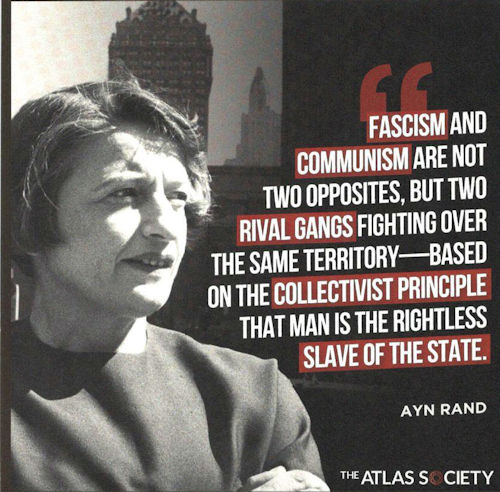





 Posts
Posts