As Obama says, these tax rates will not apply to 97% of small business owners, but they will apply to those who hire most of the new employees. In 2008, there were 27.28 million companies and only 18,469 had more than 500 employees. This means that about 27.26 million firms are small businesses or about 99.93% of all businesses are small businesses. 78.26% of all firms had no employees. Those with 4 or fewer employees accounted for 91.6% of all small businesses. The businesses that account for most of the new hiring employ from 20 to 499 employees and these are only about 2.3% of all businesses. Most of the high income business owners Obama wants to tax at 44.8% marginal rates are owners of such businesses. Such high marginal tax rates will serve as a strong disincentive to work so hard to grow a company.
Small businesses are the result of free associations of individuals in the private sector, not the government sector, or the falsely, but optimistically termed public sector. The owner(s) of the small business voluntarily formed the business to supply services or goods to others in voluntary trade. The owner(s) may hire employees, who voluntarily trade their labor for a wage or salary. The only necessary role of government is to prevent others from using force to interfere with these voluntary trades and associations. Small businesses are very much creatures of the private sector.
Large businesses are sometimes in a position to purchase politicians to bend the excessive powers of big government to provide them with special advantages, much as labor unions and trial lawyers do the same. Among the favorite tactic of such nefarious big businesses is the use of excessive regulations to reduce the ability of otherwise lean and determined smaller businesses to compete with them. The big business can readily hire several compliance lawyers and accountants, while hiring one of each is a huge expense for the competing small business. Of course, under Obama, the big business just has legislation passed that directly gives it an advantage, such as a mandate that people must use their product or service. The green energy companies and the Too-Big-To-Fail financial companies are the recipients of such advantages. So are ethanol producers. Almost any advantage an unethical big business gets with its political pull is harmful to most small businesses.
Small business owners tend to be more independent-minded and more individualistic than most people. They are willing to take on a greater amount of self-responsibility and the risks that manifestly come with trying to build a small business. They have to carefully identify their values and control their limited resources with wisdom and understanding. These are not the traits of people who wish to be dependents of government in its Nanny State guise. Small business owners tend to be willing to rise or fall based upon their own productivity.
Broadly speaking, the Democratic Party is more the champion of big government than is the Republican Party. In particular, it tends to be anti-economic rights in its viewpoint. Property rights, the right to earn a living, the right to hire employees exercising freedom of contract, the right to travel, the right to trade goods and services with others under the freedom of contract, and the right to create new ideas, goods, and services are all critical individual rights which small businesses require to flourish. It is the maximization of these freedoms, not special interest favors, that small businesses need most to have the opportunity to succeed.
That the greatest need of small businesses is economic freedom is seen empirically by studies that rank nations and states (here, here, and here) by their economic freedom and examine their economic growth. Generally, a small business does better when its customers are doing better, so targeted favors from government are of little use if your customer and suppliers are not doing equally well. Bigger and growing markets also tend to bring down the costs of its business inputs more as more innovation occurs and businesses can take more advantage of scale or find more niche markets adequate to their growth.
Independent-minded small businessmen should want this open field of a healthy and robust private sector to operate in. They are not equipped to field an army of lobbyists to protect themselves from politician's attempt to extort money from them. They are not able to come up with the campaign donation bribes to pay the game of seeking special interest legislation or regulations. The small business owner has his mind fully occupied by the business needs of his business and does not need a ton of government paperwork to do, hundreds of thousands of pages of government regulations to read and decipher, long discussions with politicians behind closed doors, and weeks of hearings and trials to attend. Neither does he want subsidies, credits, and deductions which are supposed to reward him for obeying the wishes of politicians. He is an independent businessman because he wants to do things his way, not as the manipulated serf of a politician.
Obama has been making the claim that he has lowered taxes for small businesses 18 times. Yes, he has manipulated small businesses with a number of small or short term tax breaks. My own small business has never benefited from any of these tax breaks. In the Obama economy, I have not been able to hire an additional employee, so I have not received the benefit of paying only 90% of the taxes owed on quarterly tax payments, with the rest to be made up at the end of the year. No, I have had no advantage from this also since my company pays payroll taxes every month in full. Small business owners are not allowed to deduct the cost of their health insurance premiums, but for one year (2010) Obama allowed relief from this nasty ill-treatment of business owners. In a couple of years, the amount of equipment one could deduct in the year of purchase was increased, but the usual lower amount is much more than most small businesses can purchase in a year anyway, so only a few small businesses can benefit from this tax break. Start-up costs of up to $10,000 for a new business can now be deducted instead of a paltry $5,000, but that is worth little unless the start-up business makes money quickly. And then it is still worth little.
Obama claims to have increased Small Business Administration loans. They come with incredible paperwork, long wait times, and are for relatively small amounts. It is easier to earn the money and pay for growth from earnings than to try to get money from the SBA. Or, many small businesses used to finance growth by taking money from the refinance of the owner's home, but the policies of big government that led to the sub-prime mortgage bubble have killed that option for capital seed money. Obama and the Democrats were especially prominent in support of the sub-prime loan bubble and its collapse. The SBA programs for which Obama increased funding are directed at sub-prime loans to small businesses. Many of them will fail when they cannot make their loan payments.
Obama's website for Small Business Owners claims that:
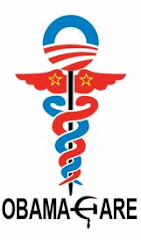
When President Obama took office, American small businesses were struggling under the devastating effects of the recession, runaway health care costs, and a credit freeze created by the Wall Street meltdown.How interesting. Small businesses, especially most of those serving mid- and large-size businesses are still feeling a recession due to the $2 trillion that these companies have been hording rather than using to buy the services of small businesses. Our healthcare costs have only increased due to ObamaCare, or the ObamaUncaringTax according the Supreme Court Chief Justice Roberts. The quote on our healthcare plan for my business went up 20% this year. We had to drop the benefit as many other small and larger companies have also done. Thanks to the Obama FDIC, the Federal Reserve, and the Dodd-Frank so-called financial reform law, it is still very hard for a small business to get a loan. Of course, who wants a loan when the economy is so bad and so variable that one cannot be sure one can make the payments on it?
The SBA 7(a) Loan Program is ideal for businesses with less established credit histories looking to borrow up to $5,000,000. Great, but what responsible small businessman will borrow anything like $5 million when his business is not well-established enough that he can be sure to pay back so much money? I suppose the answer is a Democrat businessman, especially one who has bundled campaign contribution money for Obama.
The supposition of all of Obama's small business programs is that a small business wants to partner in some way with the government. Well, no, most of us just do not want government to view us as a source of income for wasteful government spending, such as on green energy subsidies. We do not want to pay higher taxes on our marginal income if we manage to generate a profit. We really just want government to stay off our backs and out of our way as we exercise the economic rights which legitimate government is supposed to protect, not violate.







 Posts