In the last debate with Mitt Romney, Obama said, "When it comes to our foreign
policy, you seem to want to import the foreign policies of the
1980s, just like the social policies of the 1950s and the
economic policies of the 1920s." Let us review the economic policies of the 1920s a bit. We will learn some very important lessons.
Amity Shlaes called Obama out on this. She notes that real GDP grew by an average of 4% a year in the 1920s. High unemployment in 1921 at 11.7% was brought down to 2.4% in 1923 while cutting federal spending. In time, government spending as a percentage of real GDP was cut in half. 80,000 patents a year were being issued on average in the 1920s, which was not again matched until the 1960s. The 1920s were a decade of growth in technology and for the economy generally.
Now, Obama can not abide by cuts in federal spending. President Harding cut tax rates as advised by Andrew Mellon, and we know that Obama greatly dislikes that idea. The income tax marginal rate under the bloated government of Woodrow Wilson for those with an income of $100,000 or more was 60% when Harding took office in 1921. Under Wilson, those with an income of $1 million or more had paid a marginal tax rate of 77%. The marginal tax rate for those with income over $100,000 was lowered in 1922, 1923, 1924, and then again in 1925 under President Coolidge, with a final marginal rate of 25%, until 1929 when it was dropped to 24%. Not only did the economy grow well as noted, but the share of income taxes paid by those with incomes of $100,000 or more steadily and rapidly increased from 1923 to the end of the decade. The total amount of income tax paid by these higher income taxpayers increased rapidly also. In 1920, those making over $100,000 a year paid 29.9% of all income taxes. In 1928, they paid 61.3% of all income tax collected.
Income tax revenues from those making $10,000 or less decreased greatly and stayed much lower throughout the decade. For those making $25,000 to $100,000, very wealthy people then, the collected tax revenues went down considerably before rising later in the decade to about the level at the start of the decade. See Tax Rates and Tax Revenue: The Mellon Income Tax Cuts of the 1920s by Veronique de Rugy of the Cato Institute. The fact that total income taxes decreased somewhat for several years before growing back to levels exceeding that of the start of the decade was fine because the Republican Presidents Harding and Coolidge reduced the size of the government considerably.
Arthur Laffer and other supply side economists have often said that the Mellon tax cuts resulted in both economic growth and an increase in tax revenues. Actually, with such severe tax cuts for all income tax brackets, this is not a sufficiently accurate portrayal of what happened. However, the income tax revenue collected from those with incomes over $100,000 more than doubled! Large tax cuts for higher earners result in large tax revenue increases because these taxpayers are much more likely to devote great effort to avoiding paying high income tax rates, including exercising their greater ability to retire early or simply to work fewer hours. They are also more likely to invest their money in businesses when taxed at lower rates, causing the economy to grow more rapidly, which also adds more to both income tax total revenues in time, but also to other types of taxes as people generally earn and spend more.
It is an interesting fact that if high earners were taxed at lower marginal tax rates than lower earners are, total revenues collected by the government by the income tax would increase and increase specifically from the higher earners. There is even a very good moral argument that this is the way things should be. Government legitimately serves only to protect our equal, sovereign individual rights from those who would initiate the use of force to deprive people of their rights. If one man earns 10 times what another man earns, does it really cost government 10 times as much to protect the rights of the bigger earner? I do not think so. Some legitimate costs of government overall scale with the population, some with the area of the country, and some with its GDP. The area of the U.S. is not changing and the population is growing at a rate of only about 1% a year. Only a fraction of the legitimate costs of government are left as proportional to the GDP. Total government spending should increase at a rate greater than that of population growth, but less than that of the GDP. For both moral reasons and for the purpose of maximizing tax revenues, marginal tax rates should decrease with higher income rather than increase. Such a tax scheme would guarantee that everyone's effective and marginal tax rates could be reduced with time.
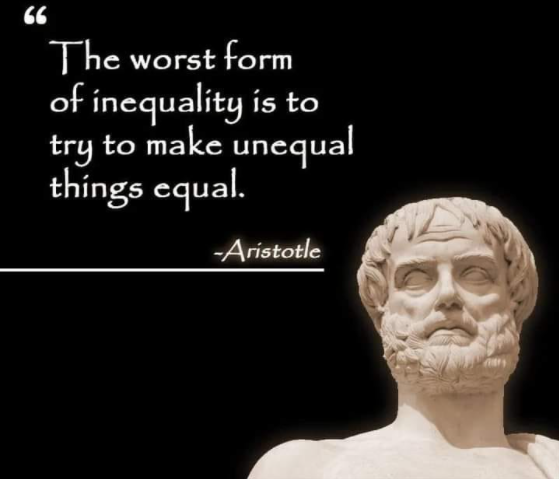
Thus we see that the current highly progressive income tax scheme serves only an ideological purpose of egalitarianism. It makes the primary purpose of the income tax code that of punishing higher income earners, rather than maximizing the income of the government with a minimum of harm to the People. It sacrifices economic growth. It sacrifices maximizing income tax revenues at minimal pain. It means that those many tax revenues that grow with the economy will increase more slowly. But this highly irrational progressive income tax system is much beloved by Obama. Therefore, it should be no surprise that Obama hates the tax and economic policies of the 1920s. Rational Americans should learn from that period of history and at the least greatly reduce the progressive marginal tax rates of the present insane system. If we had the wisdom to go further and adopt an income tax code that is regressive, we would all benefit greatly in relatively short order.
Showing posts with label tax cuts. Show all posts
Showing posts with label tax cuts. Show all posts
26 October 2012


04 October 2012
How Could One Replace a $5 Trillion Tax Revenue Reduction Due to Reduced Tax Rates?
Obama claimed that one cannot replace a loss of revenue from taxes of $5 trillion due to a reduction of tax rates such as Romney plans simply by closing loopholes. He is probably right, but what was not entirely adequately discussed is that Romney's understanding of the economy allows him to change many policies which will allow the economy to grow much more rapidly than it has or will in the future under Obama policies.
Democrats have a habit of making tax projections which ignore the benefit of growth. But, it is absolutely a critical component of rational tax policy. Tax revenues are a function of the tax rate, the amount the tax is applied to, and the frequency with which the tax rate is applied. Lowering the tax rate will bring in less money on a given transaction amount each time the tax is collected. However, lower rates allow greater growth of the economy, which means that the amount on which the tax is levied increases and the frequency of application in many cases also increases. The interaction of these three factors affecting the tax revenue is not nearly as simple as the common consideration of only the tax rate.
It was not made clear in the debate, but all of the numbers on tax revenue were apparently based on the next ten years of tax revenue. We have a $15 trillion GDP now. Under Obama, whose policies presently are allowing a government-claimed growth rate of only 1.6% so far this year which does not adequately adjust for price increases due to an understated government adjustment for the Consumer Price Index. The real real GDP growth is probably not even 1%, despite the fact that with a population growing at about 1% a year, a 1% growth rate in GDP is a give-me.
A combination of lower tax rates for business owners and for corporations will allow them to grow more and increase the GDP more. Lowering the rate for corporations, which is the opposite of what Obama has done despite his claim he wants to reduce corporate taxes, will allow multi-national corporations to bring home many profits they have made outside the US. Lower business tax rates will allow many companies to invest more in equipment, facilities, R&D, and training employees which will allow them to grow more rapidly. Allowing a much greater freedom to realize our huge fossil fuel resources will add considerable growth to our economy. Bringing down electricity costs by not forcing power companies to use expensive and unreliable wind, solar, and biomass energy will allow increased growth. Eliminating the requirement to use ethanol in gasoline would save a great deal of money and allow that to go to growth. Sensible relief from some of the excessive regulations of the EPA, the FDA, the SEC, the NRLB, and a host of other regulatory agencies will allow more growth. Repealing ObamaUncaringTax and Dodd-Frank will allow greater growth of the economy. The opportunities to improve GDP growth are many, but Obama has been and will continue to be on a stagnation path.
Let us look at the difference in the size of the economy over ten years at the Obama growth rate of 1% and at a reasonably attainable 4% growth rate which a President knowledgeable about the economy and business could manage. Here is the economy or GDP in trillions of dollars at the Obama growth rate:
2012, $15.00 trillion
2013, $15.15
2014, $15.3015
2015, $15.454515
2016, $15.609060
2017, $15.765151
2018, $15.922802
2019, $16.082030
2020, $16.242851
2021, $16.405279
2022, $16.569332
The cumulative 10 years of GDP to be taxed from 2013 through 2022 is then $158.50252 trillion. With a doable Romney growth rate of 4%, the growth of GDP looks like this:
2012, $15.00 trillion
2013, $15.60
2014, $16.224
2015, $16.87296
2016, $17.54788
2017, $18.249794
2018, $18.979785
2019, $19.738977
2020, $20.528536
2021, $21.349677
2022, $22.203664
The cumulative 10 years of GDP under the Romney growth rate of 4% is $187.29527 trillion. This is a cumulative $28.79275 advantage in a dynamic, growth economy. This is 1.9195 times our present GDP, from which the government has tax revenues of about $2.4686 trillion. If Romney were to reduce the effective tax rate by 20%, then the tax take on $15 billion would be $1.9749 trillion. So, the increased growth over 10 years at a 20% lower tax rate would add (1.9195)($1.9749 trillion) = $3.7908 trillion. This is most of the $5 trillion that Obama says Romney cannot make up by eliminating deductions. This does not even take into account the added tax revenues due to a higher frequency of application of some taxes. So, ignoring that additional tax revenue, reductions in tax deductions over ten years only need to recover $1.2092 trillion. That should be easy to do without changing the deductions of the middle class, as Romney claims he can do.
The difference in tax revenues for a healthy and growing economy compared to those of a stagnant economy such as we have now under Obama is huge. Given the future liabilities of Medicare and Social Security, not to mention paying interest on the national debt at a higher interest rate than the historically low rates now being paid, this much higher rate of growth is critical.
Democrats have a habit of making tax projections which ignore the benefit of growth. But, it is absolutely a critical component of rational tax policy. Tax revenues are a function of the tax rate, the amount the tax is applied to, and the frequency with which the tax rate is applied. Lowering the tax rate will bring in less money on a given transaction amount each time the tax is collected. However, lower rates allow greater growth of the economy, which means that the amount on which the tax is levied increases and the frequency of application in many cases also increases. The interaction of these three factors affecting the tax revenue is not nearly as simple as the common consideration of only the tax rate.
It was not made clear in the debate, but all of the numbers on tax revenue were apparently based on the next ten years of tax revenue. We have a $15 trillion GDP now. Under Obama, whose policies presently are allowing a government-claimed growth rate of only 1.6% so far this year which does not adequately adjust for price increases due to an understated government adjustment for the Consumer Price Index. The real real GDP growth is probably not even 1%, despite the fact that with a population growing at about 1% a year, a 1% growth rate in GDP is a give-me.
A combination of lower tax rates for business owners and for corporations will allow them to grow more and increase the GDP more. Lowering the rate for corporations, which is the opposite of what Obama has done despite his claim he wants to reduce corporate taxes, will allow multi-national corporations to bring home many profits they have made outside the US. Lower business tax rates will allow many companies to invest more in equipment, facilities, R&D, and training employees which will allow them to grow more rapidly. Allowing a much greater freedom to realize our huge fossil fuel resources will add considerable growth to our economy. Bringing down electricity costs by not forcing power companies to use expensive and unreliable wind, solar, and biomass energy will allow increased growth. Eliminating the requirement to use ethanol in gasoline would save a great deal of money and allow that to go to growth. Sensible relief from some of the excessive regulations of the EPA, the FDA, the SEC, the NRLB, and a host of other regulatory agencies will allow more growth. Repealing ObamaUncaringTax and Dodd-Frank will allow greater growth of the economy. The opportunities to improve GDP growth are many, but Obama has been and will continue to be on a stagnation path.
Let us look at the difference in the size of the economy over ten years at the Obama growth rate of 1% and at a reasonably attainable 4% growth rate which a President knowledgeable about the economy and business could manage. Here is the economy or GDP in trillions of dollars at the Obama growth rate:
2012, $15.00 trillion
2013, $15.15
2014, $15.3015
2015, $15.454515
2016, $15.609060
2017, $15.765151
2018, $15.922802
2019, $16.082030
2020, $16.242851
2021, $16.405279
2022, $16.569332
The cumulative 10 years of GDP to be taxed from 2013 through 2022 is then $158.50252 trillion. With a doable Romney growth rate of 4%, the growth of GDP looks like this:
2012, $15.00 trillion
2013, $15.60
2014, $16.224
2015, $16.87296
2016, $17.54788
2017, $18.249794
2018, $18.979785
2019, $19.738977
2020, $20.528536
2021, $21.349677
2022, $22.203664
The cumulative 10 years of GDP under the Romney growth rate of 4% is $187.29527 trillion. This is a cumulative $28.79275 advantage in a dynamic, growth economy. This is 1.9195 times our present GDP, from which the government has tax revenues of about $2.4686 trillion. If Romney were to reduce the effective tax rate by 20%, then the tax take on $15 billion would be $1.9749 trillion. So, the increased growth over 10 years at a 20% lower tax rate would add (1.9195)($1.9749 trillion) = $3.7908 trillion. This is most of the $5 trillion that Obama says Romney cannot make up by eliminating deductions. This does not even take into account the added tax revenues due to a higher frequency of application of some taxes. So, ignoring that additional tax revenue, reductions in tax deductions over ten years only need to recover $1.2092 trillion. That should be easy to do without changing the deductions of the middle class, as Romney claims he can do.
The difference in tax revenues for a healthy and growing economy compared to those of a stagnant economy such as we have now under Obama is huge. Given the future liabilities of Medicare and Social Security, not to mention paying interest on the national debt at a higher interest rate than the historically low rates now being paid, this much higher rate of growth is critical.
Subscribe to:
Posts (Atom)









 Posts
Posts