Among the issues most commonly discussed are individuality, the rights of the individual, the limits of legitimate government, morality, history, economics, government policy, science, business, education, health care, energy, and man-made global warming evaluations. My posts are aimed at intelligent and rational individuals, whose comments are very welcome.

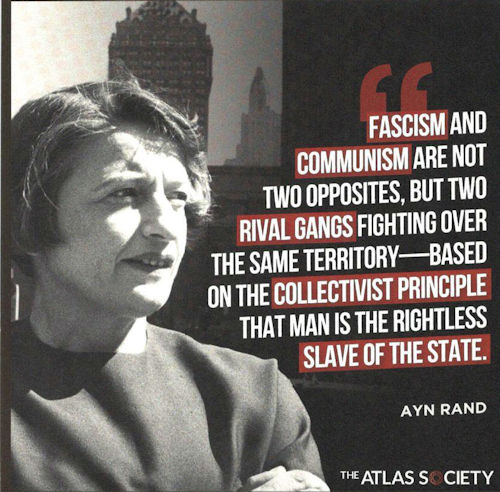
"No matter how vast your knowledge or how modest, it is your own mind that has to acquire it." Ayn Rand

"Observe that the 'haves' are those who have freedom, and that it is freedom that the 'have-nots' have not." Ayn Rand

"The virtue involved in helping those one loves is not 'selflessness' or 'sacrifice', but integrity." Ayn Rand

For "a human being, the question 'to be or not to be,' is the question 'to think or not to think.'" Ayn Rand
Showing posts with label median household income. Show all posts

03 August 2015

Most Okies are Better Off than Most New Yorkers

When discussing the impact of the current New York state minimum wage of $9.00/hour and the law requiring that the minimum wage for fast food workers will rise in stages to $15/hour, I discovered how surprisingly bad off compared to the national household median income most New York residents were.  Because I have family in Oklahoma and it is considered to be backward, poor, and only worth flying over by New York Progressive Elitists, I have decided to do a comparable comparison of Oklahoma to New York.  After all, Oklahoma is the home of many poor Native Americans and a land of people who should have fled the dust bowl in the 1930s in abject poverty, right?  This should be an easy contest for New York.

So once again I will find the cost of living in Oklahoma cities and towns and use that to adjust the median household income of each city or town.  This recognizes that income goes much further when the cost of living is low than when it is very high, as tends to happen in areas with a big government mentality.  Or at least this happens until the costs cause so many business failures that housing values collapse as people flee the area for jobs in areas with more limited government.

Now the total population of the state of Oklahoma is about 0.2 times that of New York state.  So, the size of the cities and towns in this list will be smaller.  I chose all of the bigger cities and towns and a few to represent low population areas of the state.  The results in the table below for Oklahoma should be compared to those for New York in my previous post.


City or Town
Cost of Living % Compared to National Average
Median Household Income (National = $53,046)
Effective Median Household Income
% National Effective Median Household Income
Broken Arrow
93
$64,411
$69,259
131
Edmond
109
$71,216
$65,336
123
Woodward
82
$51,811
$63,184
119
Bartlesville
80
$48,036
$60,045
113
Guymon
81
$47,775
$58,981
111
Norman
88
$48,248
$54,827
103
Clinton
79
$43,216
$54,704
103
Ponca City
78
$40,434
$51,838
98
Oklahoma City
80
$45,704
$51,353
97
Altus
80
$40,429
$50,536
95
Ardmore
77
$38,383
$49,848
94
Enid
84
$41,515
$49,422
93
Lawton
89
$43,953
$49,385
93
McAlester
81
$39,291
$48,507
91
Tulsa
85
$40,781
$47,978
90
Durant
80
$36,863
$46,079
87
Cushing
78
$35,553
$45,581
86
Muskogee
79
$32,621
$41,292
78
Vinita
78
$32,109
$41,165
78
Okmulgee
79
$32,022
$40,534
76
Sallisaw
82
$29,524
$36,005
68
Stillwater
91
$31,243
$34,333
65
Hugo
76
$21,639
$28,472
54 

Whereas, the residents of New York City had effective median household incomes of only 80% of the national average and those of Buffalo had such incomes of only 78% of the national average, most of the residents of Oklahoma have higher incomes.  Most of the population in Oklahoma enjoys median effective household incomes which are 90% or more of the national average.  For most Oklahomans, the cost of living is below 90% of the national average.

Only three towns were found with effective median household incomes below 76% of the national average.  One of these, Hugo, has a population of only 5,325 and is in the table only to represent the low population southeast area of the state.  Its effective median household income is better than that of larger Ithaca, NY, population 30,016 and home of Cornell University.  Another, Sallisaw, has only 8,779 residents, of whom most are Native Americans.  Stillwater, home of Oklahoma State University, has a population of 45,584.  None of the other towns are worse off than Buffalo.

The biggest city in the state, Oklahoma City, has an effective median household income of 97% of the national median.  The other colossus in the state is Tulsa with an effective median household income of 90% of the national median.  The third largest city, Norman, home of the University of Oklahoma, has an effective median household income of 103% the national value.  Broken Arrow, number 4 in size, is at 131%, #5 Lawton is 93%, and #6 Edmond is at 123% of the national median household income.  There is no contest between Oklahoma and New York.

The Progressive Elitists of New York are famous for telling the rest of the country how to manage the finances of the country and about how concerned they are about income inequality.  They assure us that the big government model is best for reducing income inequality and will generally make most people better off.  Now, there are many very wealthy and high income people in New York.  But the median household income tells us that income point at which half the households make more and half make less.  Thus there can be a minority of people who are have very high incomes who do little to shift the median income level up when most households are making far less than they are.  New York state is famous for its income inequality in fact.  Not withstanding the preaching of its controlling Progressive Elitists.

The minimum wage in Oklahoma is the federal minimum wage of $7.25/hour.  According to the advice now being given to us by many Progressive Elitists, it should be $15/hour.  They claim this would give so many more purchasing power that they would spend their local economies to a condition in which everyone would have higher incomes.  But, the people of Oklahoma have managed to do far better than New Yorkers for the most part by ignoring this advice.  They have also ignored advice on the advantages of big government to a considerable degree.  It appears that the experiment has been done here.  The people who inherited the land of the dust bowl and a large Native American population are better off economically than New Yorkers, who have the national financial and business center of the nation.

There is far less income inequality in Oklahoma than in New York.   Most households have higher effective median incomes.  Wow!  The people of fly-over country are beating the pants off of those New Yorkers guided by the all-knowing Progressive Elitists.  Now who would have thought that Okies could win this contest so handily?

So, hi Mom, Betsy, Scott, Peggy, and my nieces and nephews in Oklahoma.  Congratulations on beating those New Yorkers economically and for not following their advice on matters of politics.  It is a very good idea to keep the cost of living low and the cost of doing business low by keeping government smaller.  Keep on trucking!  Keep electing those smaller government Republicans and leave those Big Government Democrats to the New Yorkers, who are killing themselves.

02 August 2015

New York Further Damages Economy with a Minimum Wage of $15/hr.

A minimum wage mandate is a serious infringement upon the rights of individuals to earn a living, to enter into contracts with one another, and their freedom of association.  It is a fundamentally unethical use of force in which third parties impose their ignorance and values upon others.  It should be opposed with great vigor as a matter of principle.

Too often, Americans believe they are pragmatists with little need for the principles that actually make it easier and far more efficient for them to identify the values and means by which people secure their lives and happiness.  They actually forgo valid principles thinking they can identify the practical means to achieve their values without them.  They pursue this phantom path to their perdition as often as to their happiness.

New York state just mandated a rise in the minimum wage to $15/hour throughout the state for fast food workers working for companies operating in 30 or more locations.  The full requirement has to be met in 2021, with staged increases before that.  The general minimum wage increased from $8.75/hour on 31 December 2014 to $9.00/hour.  Such state-wide minimum wage laws can cause very different degrees of harm in communities with different income levels and different costs of living.  It is also much harder for a state with a lower median household income than the national average to sustain the economic effects of a minimum wage higher than the federal minimum wage of $7.25/hour.

Let us examine how this lack of principled support for individual rights is going to cause further harm to the already sub-par New York state economy.  We will compare the median household incomes of many New York state cities to the national average of $53,046.  We will note the cost of living in those cities compared to the national average, given as 100%.  We will compute an effective median household income for these New York cities by dividing their median household income by their cost of living ratio with the national cost of living average.  We will then give the city effective median household income as a percentage of the national median household income.


City
Cost of Living % Compared to National Average
Median Household Income (National = $53,046)
Effective Median Household Income
% National Effective Median Household Income
Yorktown
109
$99,553
$91,333
172
Hauppauge
160
$102,601
$64,126
121
Niagara Falls
74
$33,324
$45,032
85
Schenectady
90
$38,485
$42,761
81
New York City
122
$51,865
$42,512
80
Buffalo
74
$30,502
$41,219
78
Watertown
97
$38,511
$39,702
75
Albany
102
$40,145
$39,358
74
Rochester
80
$30,708
$38,385
72
Elmira
83
$30,122
$36,292
68
Southampton
254
$90,855
$35,770
67
Jamestown
87
$30,835
$35,443
67
Syracuse
89
$31,459
$35,347
67
Poughkeepsie
112
$39,528
$35,293
67
Utica
89
$31,048
$34,885
66
Binghamton
92
$30,179
$32,803
62
Ithaca
113
$29,230
$25,867
49


Only Yorktown, home of many IBM operations, and Hauppauge on Long Island beat the national effective median household income!  Most of the cities in the state have effective median household incomes only 66 to 81% those of the nation as a whole!  The New York state economy is a very bad mess.  The people of New York are generally much worse off than the average American.  New York state was once a rich state and it still has many natural advantages that should help it to hold its own compared to other states, barring negative effects due to its Big Government state government model installed by decades of Democrat one-party control of the state.

There are two closely related reasons for this.  One is that government policies have a very large impact on the cost of living.  Big Government policies drive up the cost of living, until and unless those policies drive so many businesses away that people abandon their housing or are desperate to sell it to move to a location with jobs.  Housing prices drop precipitously in such cases.  Nine of the above cities have a housing cost of living which is 66% of the national average or lower.  These are desolate cities and include cost of housing values in Buffalo at 32%, Rochester at 35%, Niagara Falls at 34%, Jamestown at 38%,  Elmira at 39%, Syracuse at 45%, Utica at 45%, and Schenectady at 53%.

The other effect of Big Government is on businesses whose labor, regulatory, and tax costs are all driven up considerably.  Those businesses then fare worse in competition with other businesses nationally and internationally.  They expand more slowly than they would otherwise.  They have less money to invest in facilities, production equipment, employee training devoted to the company core purposes, research and development, quality control, and better pay and benefits for their employees generally.  They deliver lower returns to their investors and cause those investors to abandon them.  Highly skilled and hardworking employees move to states that pay them better and where they can find healthier companies with which to build their careers.  There is an inevitable failure of the state economy to keep up with those of states with more limited governments.


The abysmally low effective median household incomes of most of New York state's cities above are a result of and a clear indicator of the very unwise economic policies of the state of New York.  This was once a wealthy state with comparatively higher median incomes.  There is still great wealth in New York, but it is in the hands of a relative few people, thanks to government policies.  The very big government of the state of New York has been mostly controlled by Democrats for a 100 years, and when it was not, it was in the hands of Progressive Elitist Republicans.  Despite the many claims of concern for economic equality, the divergence in income levels in New York state is actually unusually large compared to most other states, especially those with much more limited power governments.

The cost of the higher than average minimum wage payments has to be spread over some combination of higher prices, lower wages for other employees, lower returns to investors, less investment in facilities except those which allow a facility to operate with fewer employees, and fewer low skill employees.  In general, the choices which will be made to meet the minimum wage demand will have the net effect of providing less money to the communities of New York.  Most of the people in these communities are already suffering by the national standard of income.  How are most of those people supposed to be able to pay a few among them much higher wages?  The present $9.00/hour general rate and the future $15/hour rate for fast food workers are well above the national average minimum wage.  The present high minimum wage is one of many factors responsible for the great income inequality and the low incomes of most New Yorkers already.

Minimum wages have less impact on communities in which most people are well-off, so they can afford to pay more for services.  When those higher minimum wages are in industries that compete outside the state, they hurt more than for local service industries.

The New York state minimum wages are going to hurt most New Yorkers.  They will hurt many businesses and eliminate jobs for the initially least productive potential employees.  Young, under-educated people will be the ones most likely not to be offered jobs.  Blacks and Hispanics will by and large suffer still higher unemployment rates than they do now.  Some will become wards of the state.  Some will leave the state to find jobs.  The working population will become older and older.  This will be a further drain on businesses over time.

It is not hard to figure out these effects.  Generally, economists recognize that labor pay increases with demand for labor.  Demand for labor increases when the added production of an employee more than covers all of the many costs associated with putting an employee to work.  Democrat Socialists who most often support minimum wage increases often know this, but they also know that most people would like to see low-paid workers paid more.  Some low-paid workers would like to be paid more.  Employers are in comparatively small numbers.  Vote maximization suggests that one count on the ignorance and the emotions of most voters on the effects of minimum wages.  They are popular.  But, wise leaders would steer away from them and would work hard to educate voters in the great harm they do.  Such leaders could do much to prevent cities in well-positioned states from falling far below the national effective median household income levels.  But, it is especially hard to find such wise leadership in the bowels of the Democrat Socialist Party.

I was surprised to find just how badly depressed the effective household income of most New Yorkers is.  One does not usually think of most New Yorkers and Mississippians as being in the same highly depressed income boat.  The choice of Democrats to rule one's state has dire consequences.