Labor unions have been having a tough time competing in the private sector for a long time and now are even shrinking as a percentage of government workers. In 2015, union workers were 11.1% of the work force. This fell to 10.7% in 2016 with a loss of 240,000 union members. Only 6.4% of private sector workers are now union members. The mainstay of the unions is in the government sector with 29.6% of state government employees being union members and 40.3% of local government employees being members. The local government union membership is much inflated by the many teachers who pretend to manage 25 or 30 people in the classroom, but are really blue-collar workers unable to negotiate their own work compensation as individuals. The high percentage of government workers in unions has more recently been falling so that the percentages above are 15-year lows.
Within the last year, West Virginia and Kentucky have become Right to Work states, increasing the number of Right to Work states to 27. There is a good chance that Missouri will soon become a Right to Work state. In the 2016 election, a Republican who championed Right to Work hard won the governorship in Missouri despite the unions supplying the Democrat who opposed Right to Work with more than $10 million of campaign funds and other support. Missouri voters returned every one of the state legislators to office who supported Right to Work. Missouri, like other states with forced union dues collection, has been losing jobs to states with Right to Work laws. The bordering states of Iowa, Nebraska, Kansas, Oklahoma, Arkansas, Tennessee, and Kentucky all have Right to Work laws. Only the basket case state of Illinois still maintains forced unionization on its borders.
You would not know it based on the recent campaign rhetoric, but manufacturing jobs increased by 236,000 in 2016. Despite that overall growth in manufacturing jobs, union membership decreased by 74,000. The growth in manufacturing jobs has been in Right to Work states. In 2016, union membership in the 25 states that were Right to Work states for the full year decreased by 290,000, falling from 7.1% to 6.5%. Membership in forced unionization states increased by 50,000, making it clear how dependent labor unions are on forced unionization. Union membership increased in only one-quarter of the states with Right to Work laws, while increasing in 60% of those with forced unionization. The percentage of Michigan workers in labor unions has fallen by 2.2% since Michigan became a Right to Work state in 2013. Government worker unions lost their privileged powers in Wisconsin in 2011 and since then union membership has fallen by 136,000 workers or by 40%!
The loss of union power over the school systems in Wisconsin since 2011 and the freeing of school systems to pay teachers on their individual merit, is improving education in those school systems that have moved to the individual merit evaluation and compensation of teachers. A Stanford University researcher, Barbara Biasi, has found that the school systems that have chosen to stick with union-favored seniority compensation programs rather than individual merit programs are falling behind the individual merit school systems. Governor Scott Walker's Act 10 collective bargaining reform has allowed the thinking school systems to improve. Who would think that evaluating and rewarding individual teaching ability would improve education? Clearly the Democrats who claimed this would undermine the government-run school system would not allow this possibility. How surprising it is that there is a correlation between being a capable teacher and classroom manager and being capable of negotiating your own working conditions and compensation!
Showing posts with label labor unions. Show all posts
Showing posts with label labor unions. Show all posts
31 January 2017


05 March 2016
Why Some U.S. Companies are Fleeing to Mexico and Trump Cannot Negotiate Us Out of this Mess
In my recent 1 March post Making America Great and Donald Trump, I said
The Wall St. Journal response to that is:
Nabisco is hardly alone in abandoning Chicago or Illinois. In 2015, Illinois bucked the increase in manufacturing jobs in other nearby states by losing 56 jobs a working day. Meanwhile, Michigan gained 74 manufacturing jobs a working day, Ohio gained 58, Indiana gained 20, and Wisconsin gained 18 manufacturing jobs a day. The unfriendly business climate in Illinois has dire consequences.
Both Ford and General Motors are doubling their production in Mexico by 2018. Ford is building two engine and transmission plants in Mexico and will manufacture small cars and hybrids required to meet the federally imposed fuel standard fleet requirements on all Ford vehicles manufactured. These required small cars are money losers, so it is particularly hard to manufacture them in the U.S.
The United Auto Workers Union has won an agreement that will raise the hourly cost of wages and benefits for its members to $60, from the already very high cost of $57/hour cost for Ford and a $55/hour cost for GM. In comparison, foreign-owned automakers in the U.S. have labor costs of about $50/hour.
In addition to lower labor costs, Mexico has free-trade agreements with 45 countries, while the U.S. has free-trade agreements with only 20 countries. Trump clearly wants to reduce our free-trade agreements, hurting the U.S. still further in this competitive advantage. He will drive still more plants to Mexico following his trade-war policies.
The Wall St. Journal says the way to make the U.S. economy great is to
the primary reason the opening of new trade markets around the world has not led to the growth of the American economy is because the American government does not allow American businesses to be competitive. He notes the importance of corporate tax reductions, but only after implying that bad trade negotiations caused job loses in America. The job losses in America are due to excessive taxes, paperwork, and regulations that American businesses are hobbled with, thanks to Washington. Business expenses are very high in America compared to many other countries in the world. To compete, we need to be free to take full advantage of our design and innovation capabilities, while shedding governmental burdens that provide no or insufficient benefits. We should be taking advantage of our abundance of inexpensive and reliable energy, not trying to make it more expensive as Obama has done. We should be taking advantage of our great banking and financial companies, not smothering most of them in disabling requirements under Dodd-Frank so-called reform. We should not be raising the cost of business with governmental dictates of minimum wages, paid leave benefits, the highest corporate and personal taxes in most of the developed nations, ObamaCare, NLRB rulings favoring forced unionization, and EPA regulations based on exaggerated claims of mercury or catastrophic man-made global warming.The lead Opinion article in the 4 March Wall St. Journal was titled Trump on Ford and Nabisco. Trump has been claiming that Mexico hijacked both Ford and Nabisco plants resulting in plant closings in the U.S. Trump says this is why he "Does not mind trade wars."
The Wall St. Journal response to that is:
That's one way of looking at it. Another way is that both companies made rational decisions to move some of their operations to Mexico because the tax and regulatory climate in the U.S. under President Obama has become increasingly hostile to business. Before picking destructive trade fights with the world, maybe the next President could work to make America great for doing business again.Nine production lines at the largest bakery in the world, in Chicago, are to be closed by Nabisco to build a higher technology plant in Salinas, Mexico. Nabisco will save $46 million a year with the new plant. Nabisco gave the labor union at the Chicago plant the opportunity to match that annual savings. The labor union brought in a Bernie Sanders campaign official to help them. Operating a business in Chicago is especially tough. Illinois has unusually high corporate taxes and property taxes, not to mention very high worker's compensation expenses. Underfunded city employee pensions are forcing taxes upward rapidly.
Nabisco is hardly alone in abandoning Chicago or Illinois. In 2015, Illinois bucked the increase in manufacturing jobs in other nearby states by losing 56 jobs a working day. Meanwhile, Michigan gained 74 manufacturing jobs a working day, Ohio gained 58, Indiana gained 20, and Wisconsin gained 18 manufacturing jobs a day. The unfriendly business climate in Illinois has dire consequences.
Both Ford and General Motors are doubling their production in Mexico by 2018. Ford is building two engine and transmission plants in Mexico and will manufacture small cars and hybrids required to meet the federally imposed fuel standard fleet requirements on all Ford vehicles manufactured. These required small cars are money losers, so it is particularly hard to manufacture them in the U.S.
The United Auto Workers Union has won an agreement that will raise the hourly cost of wages and benefits for its members to $60, from the already very high cost of $57/hour cost for Ford and a $55/hour cost for GM. In comparison, foreign-owned automakers in the U.S. have labor costs of about $50/hour.
In addition to lower labor costs, Mexico has free-trade agreements with 45 countries, while the U.S. has free-trade agreements with only 20 countries. Trump clearly wants to reduce our free-trade agreements, hurting the U.S. still further in this competitive advantage. He will drive still more plants to Mexico following his trade-war policies.
The Wall St. Journal says the way to make the U.S. economy great is to
- lower corporate and marginal tax rates
- reform pensions and entitlements
- institute right-to-work laws
- repeal ObamaCare
11 January 2015
Why Increasing the Federal Gasoline Tax is Bad
Aside from the fact that Americans are finally catching a break on their expenses in an economy with far too few decent jobs, stagnant wages, more businesses shutting down than started, and increasing food, housing, and tax expenses, there are many other reasons why the federal gas tax should not be increased.
Some say that the highway infrastructure is decaying and more federal money is needed to repair it. This is actually a false claim. The Federal Highway Administration says otherwise. According to it, the condition, safety, and quality of the US road system has been steadily improving. A 2009 study by the Federal Reserve Bank of Chicago concluded that for twenty years the road system had improved. It even said that the median road was fully suited for higher speed transportation than the law allowed.
The federal government certainly loves having control of the dispensing of the income from the federal gas tax. It used to be a favorite means of funding earmarks used as demonstrations of a Congressman's or Senator's ability to send money to his home district or state. The money was frequently wasted or used inefficiently. The "bridge to nowhere" was one famous example, but was really only one of many such abuses of the taxpayers.
It has been estimated that increased costs in highway projects due to the federal requirements of Davis-Bacon laws mandating high wages, due to an executive order of Obama diverting many projects to labor union workers while minimizing competitive bidding, greatly increased environmental and other federal requirements, and the siphoning off of taxes to pay for the federal bureaucracy, that 30% of the federal gas tax revenues are wasted.
It is worse than that. Much additional federal gas tax revenue is still diverted to other transportation policies very much in vogue among Progressive Elitists. These diversions are the main reason that so many Progressive Elitists want to increase the federal gas tax. They divert large sums to rail projects, almost all of which lose money in operation. They also divert money to bike and walking paths, which may make it easier for some Elitists to get their exercise, but which is hardly a purpose consistent with the U.S. Constitution. Neither for that matter are the money-losing passenger rail and bus systems they like to fund in major metropolitan areas, or in some cases in low density areas as is the case in the massive cost and massive operational loss rapid rail system being built in California.
At least the Interstate Highway system has a cover under the Constitution as a system of "post roads," which were meant to tie a far-flung country together with communications and make it more defensible in a period of our history when that was needed. Since 2008, spending on the actual road system has not increased. The increase in spending of the federal gas and diesel taxes has fueled the 38% increase in funding of non-highway projects adored by the anti-road Progressive Elitists. The present federal fuel taxes are actually adequate to fund road construction and repair for the next 10 years.
Republicans sometimes like the federal gas tax because it is a use tax, while Democrats see it as a sin tax to discourage fossil fuel use consistent with their failed hypothesis of catastrophic man-made global warming. The 16% of the federal gas tax revenues spent on non-highway purposes are especially unrelated to national needs and should be funded and controlled by local governments, if they should be funded at all. There is no reason rural people with longer driving distances between points of interest should be funding commuter systems in New York City, where no one owns a car and only pays the federal gas tax indirectly when they take a cab. There is no reason that rich and local environment-ignorant New Yorkers should be deciding what the environmental requirements of highway projects are in Oklahoma or North Dakota.
And why is it that the fraction of the federal gas tax collected in each state that is returned to projects in that state has varied hugely from state to state over the life of the federal tax? Some states have been huge winners and some huge losers, with the losing states outnumbering the winning states. Generally, Pengyu Zhu of Boise State University and Jeffery Brown of Florida State University found in a 2013 paper that the federal fuel tax redistributed money from poorer to wealthier states and from higher transportation need states to lower transportation need states. The tax distribution is biased against those states with more miles of highway and more use of that highway.
When a project is largely funded by federal money, state and local governments have little incentive to see that the money is spent wisely. This seemingly free money from the federal government induces the states and local governments to make expensive lobbying efforts to obtain it and adds to our huge special interests problem in government.
The idea that the federal government should increase its control of the U.S. road system and other transportation systems by increasing the federal gas tax, Charles Krauthammer and Senator James Inhofe notwithstanding, is a very bad idea. Georgia Republican Tom Graves introduced a better idea, the Transportation Empowerment Act, in the House of Representatives in November of 2013 to greatly reduce federal involvement and its highly inefficient meddling in local transportation matters with a greatly reduced federal gas tax. Senator Mike Lee co-sponsored the bill in the Senate.
Some say that the highway infrastructure is decaying and more federal money is needed to repair it. This is actually a false claim. The Federal Highway Administration says otherwise. According to it, the condition, safety, and quality of the US road system has been steadily improving. A 2009 study by the Federal Reserve Bank of Chicago concluded that for twenty years the road system had improved. It even said that the median road was fully suited for higher speed transportation than the law allowed.
The federal government certainly loves having control of the dispensing of the income from the federal gas tax. It used to be a favorite means of funding earmarks used as demonstrations of a Congressman's or Senator's ability to send money to his home district or state. The money was frequently wasted or used inefficiently. The "bridge to nowhere" was one famous example, but was really only one of many such abuses of the taxpayers.
It has been estimated that increased costs in highway projects due to the federal requirements of Davis-Bacon laws mandating high wages, due to an executive order of Obama diverting many projects to labor union workers while minimizing competitive bidding, greatly increased environmental and other federal requirements, and the siphoning off of taxes to pay for the federal bureaucracy, that 30% of the federal gas tax revenues are wasted.
It is worse than that. Much additional federal gas tax revenue is still diverted to other transportation policies very much in vogue among Progressive Elitists. These diversions are the main reason that so many Progressive Elitists want to increase the federal gas tax. They divert large sums to rail projects, almost all of which lose money in operation. They also divert money to bike and walking paths, which may make it easier for some Elitists to get their exercise, but which is hardly a purpose consistent with the U.S. Constitution. Neither for that matter are the money-losing passenger rail and bus systems they like to fund in major metropolitan areas, or in some cases in low density areas as is the case in the massive cost and massive operational loss rapid rail system being built in California.
At least the Interstate Highway system has a cover under the Constitution as a system of "post roads," which were meant to tie a far-flung country together with communications and make it more defensible in a period of our history when that was needed. Since 2008, spending on the actual road system has not increased. The increase in spending of the federal gas and diesel taxes has fueled the 38% increase in funding of non-highway projects adored by the anti-road Progressive Elitists. The present federal fuel taxes are actually adequate to fund road construction and repair for the next 10 years.
Republicans sometimes like the federal gas tax because it is a use tax, while Democrats see it as a sin tax to discourage fossil fuel use consistent with their failed hypothesis of catastrophic man-made global warming. The 16% of the federal gas tax revenues spent on non-highway purposes are especially unrelated to national needs and should be funded and controlled by local governments, if they should be funded at all. There is no reason rural people with longer driving distances between points of interest should be funding commuter systems in New York City, where no one owns a car and only pays the federal gas tax indirectly when they take a cab. There is no reason that rich and local environment-ignorant New Yorkers should be deciding what the environmental requirements of highway projects are in Oklahoma or North Dakota.
And why is it that the fraction of the federal gas tax collected in each state that is returned to projects in that state has varied hugely from state to state over the life of the federal tax? Some states have been huge winners and some huge losers, with the losing states outnumbering the winning states. Generally, Pengyu Zhu of Boise State University and Jeffery Brown of Florida State University found in a 2013 paper that the federal fuel tax redistributed money from poorer to wealthier states and from higher transportation need states to lower transportation need states. The tax distribution is biased against those states with more miles of highway and more use of that highway.
When a project is largely funded by federal money, state and local governments have little incentive to see that the money is spent wisely. This seemingly free money from the federal government induces the states and local governments to make expensive lobbying efforts to obtain it and adds to our huge special interests problem in government.
The idea that the federal government should increase its control of the U.S. road system and other transportation systems by increasing the federal gas tax, Charles Krauthammer and Senator James Inhofe notwithstanding, is a very bad idea. Georgia Republican Tom Graves introduced a better idea, the Transportation Empowerment Act, in the House of Representatives in November of 2013 to greatly reduce federal involvement and its highly inefficient meddling in local transportation matters with a greatly reduced federal gas tax. Senator Mike Lee co-sponsored the bill in the Senate.
25 March 2014
Representative John Sarbanes Would Restrict Freedom of Speech
Representative John Sarbanes, Democrat, Maryland, is polling his constituents on their desires to limit the influence of Big Business on Big Government. I am in his most incredibly gerrymandered district. Here is his letter to me:
The Sarbanes bill would provide everyone a tax credit for making a political donation, provide taxpayer's money to candidates based on how many people made donations to them, and provide additional money in the last 60 days of a campaign if some bureaucrat decides that a super PAC is slamming a candidate too hard in that time period. So, let us see what this means:

Dear Friend,I listened to John Sarbanes address the House on the bill he is sponsoring, along with many another Democrat in the House, and he only railed against Big Business. He never mentioned any other type of special interest. His bias is anti-business. Of course he especially hit oil companies and made the many times debunked claim that they are heavily subsidized by government simply because they take the tax deductions provided to most businesses. He had no complaints directed at the big political campaign donations of labor unions, trial lawyers, government employees, so-called green energy companies, teachers, and accountants who love complex tax codes.
Many Americans feel their priorities get left behind in Washington and the priorities of billionaires and big corporations receive undue attention. Many tell me their voices are being drowned out by the special interests. I'd like to know how you feel about the role of big money in politics. Please share your thoughts with me in the survey below.
Earlier this year, I introduced the Government by the People Act (HR 20) - a bipartisan bill with more than 140 cosponsors that would empower millions of everyday Americans to take back their government from big money special interests. To read more about the proposal and become a citizen cosponsor, pleas visit http://ofby.us
Sincerely,

John P. Sarbanes
The Sarbanes bill would provide everyone a tax credit for making a political donation, provide taxpayer's money to candidates based on how many people made donations to them, and provide additional money in the last 60 days of a campaign if some bureaucrat decides that a super PAC is slamming a candidate too hard in that time period. So, let us see what this means:
- It now will cost a person nothing to aid the campaign of a candidate. If it costs him nothing, he has even less reason to understand the candidate's purpose and the consequences of his political viewpoint.
- Hard-working, more productive people and corporations will have to provide funding for candidates who wish to use government force to redistribute their money to the many who pay little or no taxes through the taxpayer campaign financing requirement. This enables such politicians to better buy the votes of those who pay little in taxes.
- Some bureaucrat, perhaps in the thrall of the President and his political party, will decide which candidates are being unfairly attacked by a big PAC and provide that candidate with taxpayer money. I wonder if that will work any better than having the IRS decide who can set up a non-profit organization based on whether the organizational name has Patriot or Tea Party in the name or its purpose includes teaching the provisions of the Constitution?
John,
As usual, your questions belie a bias based on a naive view of the role of government.
When
government becomes big and dictates values to the People and starts
micromanaging their lives, we all suffer for these quite obvious
reasons:
- Government is too big for the elected officials to manage it well.
- The People cannot understand what the government is doing and all of the consequences of its actions.
- The People can no longer choose their representatives adequately.
- As the People lose control and understanding, they lose confidence in their government.
- Special interests step in to fill the power vacuum, manipulating just those policies that benefit themselves with no regard for the individual rights and welfare of most of the People.
- Labor Unions
- Some Big Businesses
- Welfare Recipients
- Environmental Extremists and Global Warming Alarmists
- Trial Lawyers
- Government Employees including Teachers
- University Employees deriving income from Government Grants
- Exporters using Government Loans
- Banks using money printed by the Federal Reserve
- Ethanol Manufacturers and corn growers
- Some Farmers
- Shipping Line Operators
- PPACA Website Programmers
- Health Care Insurance Providers
- Really Bad American Car Manufacturers
- Power-Hungry Politicians
- Campaign Contributors to Power-Hungry Politicians
- Accountants due to Unintelligible Tax Laws Forcing Americans to Buy their Services
- Regulatory Consultants due to Unintelligible Regulations
Charles R. Anderson, Ph.D.
Lab: (410) 740-8562
Mobile: (301) 830-1886
http://www.AndersonMaterials.
http://AndersonMaterials.
http://
Lab: (410) 740-8562
Mobile: (301) 830-1886
http://www.AndersonMaterials.
http://AndersonMaterials.
http://
I do not suppose I will get any special interest favors from John Sarbanes! I am surprised he is up to so much mischief in Congress. One would think he would be spending all of his time traveling between the far-flung isthmuses of his kingly domain, the 3rd Congressional District of Maryland, shown here in brown:

Only Big Government could create and love such a creature.
Only Big Government could create and love such a creature.
07 February 2014
Representative John Sarbanes Proposes Law to Control Free Speech
The Representative of my incredibly gerrymandered Congressional District in Maryland is the socialist John Sarbanes, son of the former Maryland Senator. He has just sent out a letter to his constituents in which he complains that:
In the 2012 election cycle alone, big interests such as the oil and gas industry and Wall Street contributed hundreds of millions of dollars to Congressional campaigns and equally vast sums to lobbying groups. Meanwhile, upwards of $1.3 billion poured in from Super PACs and “dark money” groups that float outside the reaches of our campaign finance laws.He has just proposed the following new law:
That’s why I am introducing the Government By the People Act. This sensible and straightforward piece of legislation will do the following.It is very strange that he did not mention such special interest groups as trial lawyers, teachers, labor unions, environmental groups, feminist groups, Black American groups, and Hispanic groups. Will his legislation equally suppress their freedom of speech as will his attempt to make taxes more unfavorable for groups who do not always reliably support Democrats? It is clear that the only way to get the taxes to pay for this is to attack businesses and milk them. His legislation can hardly acquire the funding it needs from labor unions, non-profit environmental, feminist, Black, and Hispanic groups. This proposal is a very clearly anti-business proposal and makes no attempt at all to control many special interest groups. What it does is force businesses to fund anti-business special interests.
First, it will encourage the participation of everyday Americans in the funding of campaigns by providing a refundable $25 My Voice Tax Credit. This will bring the voices of the broad public into the funding side of campaigns and democratize the relationship between money and speech.
Second, the bill will establish a Freedom From Influence Matching Fund to boost the power of small-dollar contributions. To be eligible for these matching funds, a candidate must agree to a limit on large donations and must demonstrate broad-based support from a network of small-dollar contributors. Amplified by the Freedom From Influence matching fund, the voices of everyday Americans would be just as powerful as the voices of the big donors.
Third, the Government By the People Act will provide candidates with an opportunity to earn additional resources in the home stretch of a campaign so that the voices of the people are not completely drowned out by Super PACs and other dark money interests. In the wake of the Citizens United decision, this kind of support is critical to ensuring that citizen-backed candidates have staying power.
We can pay for these changes just by closing a few of the tax and regulatory loopholes that are the decades-old legacy of special interest influence in Congress. It’s only fair that those who are responsible for breaking the policy-making machinery in Washington should bear the cost of fixing it.
The
reason government is controlled by special interests is because
government is too large for the People to understand what it is doing
and how to control it. Special interests step into the power vacuum and
take over. The People are frustrated with this situation, yet many do
not understand that inherent in excessive government is control by
special interests. Good government limits itself to protecting the
rights of the individual and is much, much smaller and much, much easier
for the People to understand and control.
Big
Government cannot be for the people or by the people. Many will reject
it with disgust because it tries to dictate what values the individual
may pursue and will micromanage their lives. Many others will actually
want it to do more for them, but will be frustrated by what it does and
unable to figure out how to make it do what they think is right. Big
Government can never be loved or even tolerated by the People. Their
present disgust is entirely understandable. John Sarbanes proposed law is
nothing but a veil to hide the real problem: the excessive size and
scope of governmental power.
28 January 2013
The Lawless NRLB and Obama
The U.S. Court of Appeals for the District of Columbia just decided that Obama's three appointments to the National Labor Relations Board on 4 January 2012 were illegal because they were not approved by the Senate which had started a new session on 3 January. Obama had claimed he was making recess appointments, which the Constitution allows when the Senate is in recess. Obama claimed the right to determine when the Senate was in recess or not, despite the fact that Congress traditionally declares itself to be in session or recess.
In 2010, the Supreme Court had ruled that the NLRB could not make case rulings or undertake rule-making activities without a quorum of three of its usual five members. One of the illegally added members, the sole Republican, had resigned long ago because of the very one-sided pro-Labor Union decisions against business owners. One of these cases was the Boeing ruling in which they were trying to set up a production facility in South Carolina, a Right to Work state. The NRLB had ruled that Boeing had to do more of that work than it wanted to in Washington, a Union Shop state. With two of the remaining four NRLB members illegally appointed, hundreds of rulings should be considered to have no authority. The NRLB Chairman, Mark Gaston Pearce, claims that only the single case actually decided upon by the Appeals Court is tossed out and that all of its other decisions remain in force despite a lack of quorum. In addition, he claims that the NRLB will continue making rulings and rules with its current members, including those just ruled to have been illegally and unconstitutionally appointed by Obama in direct violation of the 2010 Supreme Court decision.
The initial appointments were a lawless act by Obama. The determination of the NRLB, with only pro-labor union members, to continue with rulings and rule making without a legal quorum is stunningly lawless. The fact that Obama has not ordered the NRLB to stop proceeding without a quorum is a renewal of his claim to be above the law. Note that the claim that a violation of the quorum requirement only overturns one out of hundreds of rulings is absurd. This means that a lawless federal agency can continue to abuse the People in every case in which the People do not have the money and the time to pursue their own case in the federal courts to at least the Appeals Court level! It makes a mockery of justice and of individual rights and clearly mocks the idea that government is a servant of the people.
Obama also made a similar "recess appointment" of Richard Cordray as director of the Consumer Financial Protection Board, which was set up by the Dodd-Frank financial reform bill. That bill was really an attempt to divert public attention from the fact that the 2008 financial crisis was primarily caused by the government. Obama has just asked to have Cordray appointed again to be director of this CFPB. Its activities under this illegally appointed director have also been challenged in the courts.
Obama's failure to order the Justice Department to produce the public documents they are required to produce on the Fast and Furious investigation and to require the EPA to produce documents it was required to produce on Lisa Jackson's hidden e-mail activities are other examples of his common lawlessness. His providing billions of dollars of funding to his campaign contributors who set up flimsy green energy companies, while not providing federal funding to more sound green energy companies is another instance of his lawlessness. Then what could beat his awarding exemptions from the requirements of ObamaCare to his union friends and to his contributors and those of other top Democrat leaders, when no such exemptions are a part of the law? He has made similar unauthorized exemptions to the law through the programs of the Department of Education.
Obama is a very shady, lawless man and he likes to gather similar people around himself and put them in positions of power. American federal government institutions have been rapidly degraded by this man and his regime of outlaws.
In 2010, the Supreme Court had ruled that the NLRB could not make case rulings or undertake rule-making activities without a quorum of three of its usual five members. One of the illegally added members, the sole Republican, had resigned long ago because of the very one-sided pro-Labor Union decisions against business owners. One of these cases was the Boeing ruling in which they were trying to set up a production facility in South Carolina, a Right to Work state. The NRLB had ruled that Boeing had to do more of that work than it wanted to in Washington, a Union Shop state. With two of the remaining four NRLB members illegally appointed, hundreds of rulings should be considered to have no authority. The NRLB Chairman, Mark Gaston Pearce, claims that only the single case actually decided upon by the Appeals Court is tossed out and that all of its other decisions remain in force despite a lack of quorum. In addition, he claims that the NRLB will continue making rulings and rules with its current members, including those just ruled to have been illegally and unconstitutionally appointed by Obama in direct violation of the 2010 Supreme Court decision.
The initial appointments were a lawless act by Obama. The determination of the NRLB, with only pro-labor union members, to continue with rulings and rule making without a legal quorum is stunningly lawless. The fact that Obama has not ordered the NRLB to stop proceeding without a quorum is a renewal of his claim to be above the law. Note that the claim that a violation of the quorum requirement only overturns one out of hundreds of rulings is absurd. This means that a lawless federal agency can continue to abuse the People in every case in which the People do not have the money and the time to pursue their own case in the federal courts to at least the Appeals Court level! It makes a mockery of justice and of individual rights and clearly mocks the idea that government is a servant of the people.
Obama also made a similar "recess appointment" of Richard Cordray as director of the Consumer Financial Protection Board, which was set up by the Dodd-Frank financial reform bill. That bill was really an attempt to divert public attention from the fact that the 2008 financial crisis was primarily caused by the government. Obama has just asked to have Cordray appointed again to be director of this CFPB. Its activities under this illegally appointed director have also been challenged in the courts.
Obama's failure to order the Justice Department to produce the public documents they are required to produce on the Fast and Furious investigation and to require the EPA to produce documents it was required to produce on Lisa Jackson's hidden e-mail activities are other examples of his common lawlessness. His providing billions of dollars of funding to his campaign contributors who set up flimsy green energy companies, while not providing federal funding to more sound green energy companies is another instance of his lawlessness. Then what could beat his awarding exemptions from the requirements of ObamaCare to his union friends and to his contributors and those of other top Democrat leaders, when no such exemptions are a part of the law? He has made similar unauthorized exemptions to the law through the programs of the Department of Education.
Obama is a very shady, lawless man and he likes to gather similar people around himself and put them in positions of power. American federal government institutions have been rapidly degraded by this man and his regime of outlaws.
27 October 2012
Obama Calls for More Spending on Education, But Does More Spending Improve Education?
In the last debate, Obama said that a cornerstone to recovery from the never-ending Great Socialist Recession was an increase in federal spending on education. This he says is critical to improving the economy.
Now, we can all agree that an American population of thinking individuals with a broad and accurate knowledge base and excellent problem-solving skills would be a major economic factor. One can even imagine an education system based on sound principles which might do a better job of educating the People if it had more money. However, the present American education system gives no evidence that spending more money on education has any beneficial effect upon the knowledge base of Americans and on their development of critical thinking skills. Let us examine the recent history of total spending on education:

Since 1981 there has been an almost 6-fold increase in education spending in the U.S. To be sure, if we believe that education spending should be proportional to the GDP, then this is only a 23% increase in spending as a proportion of GDP. In 1981, education spending was about 6.4% of GDP and in 2010 it was 7.9% of GDP. However, the student population has not grown at anything like the rate of the growth in GDP, so one should be able to expect an equal level of educational results with a decreasing fraction of the GDP being devoted to education. The trend is clearly in the wrong direction.
There are very fundamental reasons why the massively increased spending on education and on a per pupil basis has not resulted in any significant increase in student knowledge and thinking skills. In almost every community, the local school labor unions assemble a slate of Board of Education members who appear to have good education credentials and their election is backed by lots of union money. This slate wins almost every position on the school boards. Because of this and the power of the teachers unions in also greatly influencing the election of city and county officials, the schools are managed for the benefit of the teachers labor unions, not for the education of the children. Increasing the pay and benefits of teachers who are blue-collar union members unable to even negotiate their own pay and benefits with their employer, guarantees that few of them will have the teaching skills, knowledge, self-confidence, and managerial skills needed by a professional educator. Union members are not picked and not rewarded for their teaching professionalism. Of course, as so often happens when a con is being performed, teachers present bogus certifications proclaiming them experts in teaching.
We have government-run schools specifically because Progressives saw them as a means to indoctrinate children to believe that big and socialist government was needed and moral. Of course a government-run school could be counted upon to advance the never-ending quest of governments for power. Such government schools could be counted upon to subvert the American Principle that government should be highly limited and only act to protect the equal, sovereign rights of the individual to life, liberty, property, the ownership of one's own mind, body, and labor, and to the pursuit of personal happiness. Thus, government-run schools have become increasingly anti-American even as they became the dominant force in the education of American children. The general viewpoint of American government-run school teachers is well-aligned with the socialist and extreme environmentalist viewpoints of Obama. It is opposed to a healthy and robust private sector in which Americans should be free to exercise their freedom of association to cooperate with others to achieve their self-chosen goals. The government-run schools are generally bastions of Progressivism and opponents of Capitalism.
Despite the large increases in education spending, we have not seen an increased ability of American young people to perceive reality and understand it. In fact, they are more and more removed from reality and less and less capable of performing real productive work in the private sector without more and more massive training efforts by private businesses. Few students graduate with a proper respect for those with the skills and motivation to produce in our society. Few are able to communicate well and solve problems well. Despite our spending more and more and spending far more of our GDP on education than does almost any other country, we keep losing ground to other countries in rankings of educational attainment. It could not be more clear that we are throwing our education dollars into a black hole.
Marcos Cordero in an article called The Link Between Unemployment Rates and the Lack of Qualified Professionals in America notes that
A very fundamental reform of American education is desperately needed and it will not come from government. Governments are only eager to increase their power and politicians are easily bought by the massive teachers union money accumulated as the government automatically deducts union dues from teachers paychecks. Labor unions and government increasingly see their interests to be largely in common and the interests of students and good governance are not now able to compete with them. Only when the People understand these problems and massively rebel will there be any real hope of fixing this problem.
But most of the American People are largely in a feel good mode on education. Because labor union members provide children with inflated grades, most parents think their child is doing well in school and they are inclined to assume that that means that they are actually learning. The labor union policy of easy grading and of placing few demands on students lulls the parents and students to sleep. Until parents and students wake up to the fact that they are being poorly educated and heavily indoctrinated in socialism and extreme environmentalism, America will continue to go downhill. Obama is happy to push us down that hill.
Now, we can all agree that an American population of thinking individuals with a broad and accurate knowledge base and excellent problem-solving skills would be a major economic factor. One can even imagine an education system based on sound principles which might do a better job of educating the People if it had more money. However, the present American education system gives no evidence that spending more money on education has any beneficial effect upon the knowledge base of Americans and on their development of critical thinking skills. Let us examine the recent history of total spending on education:

Since 1981 there has been an almost 6-fold increase in education spending in the U.S. To be sure, if we believe that education spending should be proportional to the GDP, then this is only a 23% increase in spending as a proportion of GDP. In 1981, education spending was about 6.4% of GDP and in 2010 it was 7.9% of GDP. However, the student population has not grown at anything like the rate of the growth in GDP, so one should be able to expect an equal level of educational results with a decreasing fraction of the GDP being devoted to education. The trend is clearly in the wrong direction.
There are very fundamental reasons why the massively increased spending on education and on a per pupil basis has not resulted in any significant increase in student knowledge and thinking skills. In almost every community, the local school labor unions assemble a slate of Board of Education members who appear to have good education credentials and their election is backed by lots of union money. This slate wins almost every position on the school boards. Because of this and the power of the teachers unions in also greatly influencing the election of city and county officials, the schools are managed for the benefit of the teachers labor unions, not for the education of the children. Increasing the pay and benefits of teachers who are blue-collar union members unable to even negotiate their own pay and benefits with their employer, guarantees that few of them will have the teaching skills, knowledge, self-confidence, and managerial skills needed by a professional educator. Union members are not picked and not rewarded for their teaching professionalism. Of course, as so often happens when a con is being performed, teachers present bogus certifications proclaiming them experts in teaching.
We have government-run schools specifically because Progressives saw them as a means to indoctrinate children to believe that big and socialist government was needed and moral. Of course a government-run school could be counted upon to advance the never-ending quest of governments for power. Such government schools could be counted upon to subvert the American Principle that government should be highly limited and only act to protect the equal, sovereign rights of the individual to life, liberty, property, the ownership of one's own mind, body, and labor, and to the pursuit of personal happiness. Thus, government-run schools have become increasingly anti-American even as they became the dominant force in the education of American children. The general viewpoint of American government-run school teachers is well-aligned with the socialist and extreme environmentalist viewpoints of Obama. It is opposed to a healthy and robust private sector in which Americans should be free to exercise their freedom of association to cooperate with others to achieve their self-chosen goals. The government-run schools are generally bastions of Progressivism and opponents of Capitalism.
Despite the large increases in education spending, we have not seen an increased ability of American young people to perceive reality and understand it. In fact, they are more and more removed from reality and less and less capable of performing real productive work in the private sector without more and more massive training efforts by private businesses. Few students graduate with a proper respect for those with the skills and motivation to produce in our society. Few are able to communicate well and solve problems well. Despite our spending more and more and spending far more of our GDP on education than does almost any other country, we keep losing ground to other countries in rankings of educational attainment. It could not be more clear that we are throwing our education dollars into a black hole.
Marcos Cordero in an article called The Link Between Unemployment Rates and the Lack of Qualified Professionals in America notes that
The Defense Department found that 75 percent of Americans age 17 to 24 are not qualified to serve in the armed forces. In fact, 30 percent of the high school graduates who take the Armed Forces Qualification Test, a test of basic reading and math skills, fail it.
A very fundamental reform of American education is desperately needed and it will not come from government. Governments are only eager to increase their power and politicians are easily bought by the massive teachers union money accumulated as the government automatically deducts union dues from teachers paychecks. Labor unions and government increasingly see their interests to be largely in common and the interests of students and good governance are not now able to compete with them. Only when the People understand these problems and massively rebel will there be any real hope of fixing this problem.
But most of the American People are largely in a feel good mode on education. Because labor union members provide children with inflated grades, most parents think their child is doing well in school and they are inclined to assume that that means that they are actually learning. The labor union policy of easy grading and of placing few demands on students lulls the parents and students to sleep. Until parents and students wake up to the fact that they are being poorly educated and heavily indoctrinated in socialism and extreme environmentalism, America will continue to go downhill. Obama is happy to push us down that hill.
07 October 2011
Obama Jobs Bill Will Kill Jobs
The Obama Jobs Bill is supposed to cost $447 billion, create as many as 1.9 million jobs according to economists who have already proven they have no clue, and increase the GDP by 2%, again according to those same clueless economists. Let us examine the effects of the Obama Jobs Bill in a simple and rational manner.
The GDP in 2011 is estimated to be $15.012 trillion. Obama's clueless economists say that his jobs bill will increase the GDP by 2% because simply printing money you do not have always increases the size of the economy. Hmmm....., no wonder many of them keep saying we just need bigger stimulus packages and with an outpouring of enough newly printed dollars, the economy will grow and we will all have dream jobs. If this effect works, then the government should print up $15.012 trillion and the economy will take a Great Leap Forward! Apparently some us are just too timid to do this. But Paul Krugman would be happy to push us into it. OK, so yes, I do not believe this is the way the economy works for a minute, or even a second. But still, it is interesting to examine whether the Obama Jobs Bill makes some kind of sense even on the numbers given by the clueless Obama economists.
First, we need to note that the cost of the bill, $447 billion, is 2.98% of the GDP. That is more than the 2% growth of GDP claimed to result from this expenditure! In fact, we can calculate from these numbers that for every dollar spent by the government in this Obama Jobs Bill $0.33 simply vanishes into thin air. The Obama economists are claiming that this government expenditure is only 2/3 as effective as other money in the economy, which already includes huge inefficiencies due to the cost of overblown governments with their over-compensated employees and all of the mandates and regulations they impose without regard to cost upon the much more efficient private sector.
But, it gets worse. Assuming that, most unbelievably, Obama's Job Bill does create the wishful 1.9 million jobs, each job costs $235,263. This comes from dividing $447 billion by 1.9 million jobs. We can compare this number with the cost of the jobs we presently have. Of course the cost of those jobs is already grossly cranked skyward by the many prior costs of government, so we should remember that real private sector jobs cost less than the amount we are about to calculate because we are including all jobs and that includes all of those very expensive government jobs. At present, each job costs ($15.012 trillion)/(140,335,000 jobs) = $106,973, where the present number of jobs comes from the Bureau of Labor Statistics Unemployment Report for September 2011. So a new Obama job will cost 2.2 times as much as the composite of private sector and government jobs presently costs. Surely, taking 2.2 times as much money out of the private sector as it takes to create a job there and giving it to Obama to create a job is not a good idea. It is a great way to bankrupt America and many of its families.
Now, some economists believe in magic and they will disagree with me on what I am about to point out. When you remove 2.2 times as much from the private sector as it takes for the private sector to create a job, you actually destroy 2.2 jobs for every job you create. Yes, Obama will create jobs with his $447 billion expenditure of our money, but he will kill more than 2.2 jobs in the private sector for every job he will create for his campaign contributors. He will create some union jobs to build and repair infrastructure. He will maintain some teaching positions for the teachers unions in public schools. He will create some temporary green energy jobs, but the collapse of those businesses will still occur soon, as it did with Solyndra and numerous other green jobs companies producing expensive and unreliable energy products. Obama will try to point out the jobs created, so this is what will be seen. What will not be seen, except partially in the rising unemployment statistics, will be the 2.2 minimum number of jobs destroyed in the private sector. Obama is counting on our failing to see those jobs die.
What I am saying is based on recognizing that if government spends money, it is taken out of the private sector one way or another. Generally, it is either taken out in taxes, by borrowing it with the payment of interest paid with future taxes, by simply printing it and diluting the value of all other money and assets, and by imposing mandates upon the private sector that cost them time and money. In this case, Obama wants to raise taxes on the "rich" or companies which will remove money from the private sector in a simple and straightforward way to pay for this turkey bill.
Now I do not believe the Obama Jobs Bill will create 1.9 million jobs at all, even if we do not subtract the jobs killed by Obama. We can easily calculate the number of jobs that will be killed. These jobs are jobs that might well have been jobs long sustained by the private sector and they will be replaced by a smaller number of jobs that will not make economic sense once the immediate government expenditure runs out. The private sector jobs killed will be about $447,000,000,000 / $106,973 = 4,178,625 jobs, or more than 4 million jobs, to be replaced with maybe 1 million jobs for Obama's cronies.
As I said, it gets worse. Creating about 1 million temporary jobs while killing more than 4 million longer term jobs cannot be the act of rational men and women. But it is the way the wrongheaded Obama wants badly to drag the country. It is Obama who will throw most of us off the cliff.
Someone should make an ad of a jackbooted Obama marching shackled American workers to a cliff and then pushing them over the edge, one by one, with the calculations above overprinted on the images of a fascist Obama. This would only be justice to pay back the injustice done to Paul Ryan.
The GDP in 2011 is estimated to be $15.012 trillion. Obama's clueless economists say that his jobs bill will increase the GDP by 2% because simply printing money you do not have always increases the size of the economy. Hmmm....., no wonder many of them keep saying we just need bigger stimulus packages and with an outpouring of enough newly printed dollars, the economy will grow and we will all have dream jobs. If this effect works, then the government should print up $15.012 trillion and the economy will take a Great Leap Forward! Apparently some us are just too timid to do this. But Paul Krugman would be happy to push us into it. OK, so yes, I do not believe this is the way the economy works for a minute, or even a second. But still, it is interesting to examine whether the Obama Jobs Bill makes some kind of sense even on the numbers given by the clueless Obama economists.
First, we need to note that the cost of the bill, $447 billion, is 2.98% of the GDP. That is more than the 2% growth of GDP claimed to result from this expenditure! In fact, we can calculate from these numbers that for every dollar spent by the government in this Obama Jobs Bill $0.33 simply vanishes into thin air. The Obama economists are claiming that this government expenditure is only 2/3 as effective as other money in the economy, which already includes huge inefficiencies due to the cost of overblown governments with their over-compensated employees and all of the mandates and regulations they impose without regard to cost upon the much more efficient private sector.
But, it gets worse. Assuming that, most unbelievably, Obama's Job Bill does create the wishful 1.9 million jobs, each job costs $235,263. This comes from dividing $447 billion by 1.9 million jobs. We can compare this number with the cost of the jobs we presently have. Of course the cost of those jobs is already grossly cranked skyward by the many prior costs of government, so we should remember that real private sector jobs cost less than the amount we are about to calculate because we are including all jobs and that includes all of those very expensive government jobs. At present, each job costs ($15.012 trillion)/(140,335,000 jobs) = $106,973, where the present number of jobs comes from the Bureau of Labor Statistics Unemployment Report for September 2011. So a new Obama job will cost 2.2 times as much as the composite of private sector and government jobs presently costs. Surely, taking 2.2 times as much money out of the private sector as it takes to create a job there and giving it to Obama to create a job is not a good idea. It is a great way to bankrupt America and many of its families.
Now, some economists believe in magic and they will disagree with me on what I am about to point out. When you remove 2.2 times as much from the private sector as it takes for the private sector to create a job, you actually destroy 2.2 jobs for every job you create. Yes, Obama will create jobs with his $447 billion expenditure of our money, but he will kill more than 2.2 jobs in the private sector for every job he will create for his campaign contributors. He will create some union jobs to build and repair infrastructure. He will maintain some teaching positions for the teachers unions in public schools. He will create some temporary green energy jobs, but the collapse of those businesses will still occur soon, as it did with Solyndra and numerous other green jobs companies producing expensive and unreliable energy products. Obama will try to point out the jobs created, so this is what will be seen. What will not be seen, except partially in the rising unemployment statistics, will be the 2.2 minimum number of jobs destroyed in the private sector. Obama is counting on our failing to see those jobs die.
What I am saying is based on recognizing that if government spends money, it is taken out of the private sector one way or another. Generally, it is either taken out in taxes, by borrowing it with the payment of interest paid with future taxes, by simply printing it and diluting the value of all other money and assets, and by imposing mandates upon the private sector that cost them time and money. In this case, Obama wants to raise taxes on the "rich" or companies which will remove money from the private sector in a simple and straightforward way to pay for this turkey bill.
Now I do not believe the Obama Jobs Bill will create 1.9 million jobs at all, even if we do not subtract the jobs killed by Obama. We can easily calculate the number of jobs that will be killed. These jobs are jobs that might well have been jobs long sustained by the private sector and they will be replaced by a smaller number of jobs that will not make economic sense once the immediate government expenditure runs out. The private sector jobs killed will be about $447,000,000,000 / $106,973 = 4,178,625 jobs, or more than 4 million jobs, to be replaced with maybe 1 million jobs for Obama's cronies.
As I said, it gets worse. Creating about 1 million temporary jobs while killing more than 4 million longer term jobs cannot be the act of rational men and women. But it is the way the wrongheaded Obama wants badly to drag the country. It is Obama who will throw most of us off the cliff.
Someone should make an ad of a jackbooted Obama marching shackled American workers to a cliff and then pushing them over the edge, one by one, with the calculations above overprinted on the images of a fascist Obama. This would only be justice to pay back the injustice done to Paul Ryan.
23 May 2011
The Right to Work: The Economic Advantage
22 states are Right to Work states in which unions cannot make it a condition of work for a worker to join the labor union or pay some fee assessed by the union based on what it claims is its value to the nonmember worker. Right to Work states since 1990 have demonstrated much greater economic performance in jobs creation and in the growth of state GDP. Here are the comparisons between highly unionized and union shop states vs. the least unionized and Right to Work states:

 The 22 Right to Work states have produced more new private sector jobs than the more populated 28 states fostering the union shop. The Right to Work states created new jobs in the critical private sector at a rate 2.3 times that of the Union Shop states. The least unionized states are increasing their state GDPs at much higher rates than the most unionized states.
Richard Vedder of Ohio University noted in a Cato Journal publication (Winter 2010) that:

Between 2000 and 2008, 4.7 million Americans moved from Union Shop states to Right to Work states. Moreover, a larger fraction of the population chooses to work in the Right to Work states than in the Union Shop states. The only four states with over 70% of the working age population working in 2007 were Right to Work states. The national average then was 63%. People in Right to Work states appear to prefer working more than those in Union Shop states. Greater freedom of association on the job should make work more appealing. That higher work force participation may also be due to the fact that people in the Right to Work states had a 10% greater growth in personal income between 1993 and 2009. They also gave rise to the creation of 60% of all new businesses, despite having only about 40% of the population at the end of that time period and less earlier.
Public opinion has swung strongly against the unions being empowered to put workers under pressure to join a union as a condition of employment. Only 11.9% of the work force is now union and the private sector workforce union rate is only 6.9%. Legislation to become a Right to Work state is being considered in Wisconsin, Indiana, New Hampshire, and Missouri among other states. For fear of the union hubbub and a desire to emphasize state debt control, Gov. Mitch Daniels decided that the Right to Work bill that had passed the Indiana state lower legislative branch was not a priority. So it is on hold.
Missouri which was heavily unionized (25%) in 1978 when it last considered becoming a Right to Work state, was only 11.2% union in 2010. If you count only those who are actually working, only 9.9% are union members. In other words, if you are a union member, you are more likely than others to be unemployed. Missouri is largely surrounded by Right to Work states, such as Iowa, Kansas, Oklahoma, Arkansas, and Tennessee. Only Illinois and Kentucky of its neighbors are Union Shop states. The legislature is lining up in favor of becoming a Right to Work state, though the Democrat Governor is expected to veto such a bill. It is being considered for a statewide referendum to get around that. Testimony by a company site consultant that 75% of the companies coming to him say they would prefer a site in a Right to Work state and 50% say they will not consider a site in a Union Shop state at all, had a telling effect upon the Republican committee heads.
Unions like to point out that family incomes are higher in Union Shop states, but when union dues are subtracted and the lower cost of living of Right to Work states is taken into account, family income is actually higher in the Right to Work states. Clearly, the trend is solidly in their direction. Business growth and jobs creation in the Right to Work states and out-migration from the Union Shop states will continue to put pressure on the Union Shop states to allow more freedom of association in employment. Of course, many will long continue to be held hostage by unions, but they will pay a huge price.


Richard Vedder of Ohio University noted in a Cato Journal publication (Winter 2010) that:
In 1970, 28.5 percent of Americans lived in right-to-work states; by 2008, the proportion had risen to nearly 40 percent (to over 121 million). The population living in right-to-work states more than doubled, compared with a modest 25.7 percent increase in non right-to-work states. Moreover, only a small proportion (about 15 percent) of the increase in the proportion of Americans in right-to-work states is due to states newly enacting right-to-work laws. Indeed, in the last 20 years, only one state (Oklahoma) has adopted a new right-to-work law. Most of theProfessor Vedder made a mistake in his comment about the affect of Oklahoma becoming a Right to Work state in 2001. Oklahoma only had a population of 3.687 million in 2009. Using that figure rather than a slightly lower population in 2008, Oklahoma's conversion only produced about 10% of the increase in the proportion of the U.S. population in Right to Work states.
population gains arose from greater population increases in right-to-work states.

Between 2000 and 2008, 4.7 million Americans moved from Union Shop states to Right to Work states. Moreover, a larger fraction of the population chooses to work in the Right to Work states than in the Union Shop states. The only four states with over 70% of the working age population working in 2007 were Right to Work states. The national average then was 63%. People in Right to Work states appear to prefer working more than those in Union Shop states. Greater freedom of association on the job should make work more appealing. That higher work force participation may also be due to the fact that people in the Right to Work states had a 10% greater growth in personal income between 1993 and 2009. They also gave rise to the creation of 60% of all new businesses, despite having only about 40% of the population at the end of that time period and less earlier.
Public opinion has swung strongly against the unions being empowered to put workers under pressure to join a union as a condition of employment. Only 11.9% of the work force is now union and the private sector workforce union rate is only 6.9%. Legislation to become a Right to Work state is being considered in Wisconsin, Indiana, New Hampshire, and Missouri among other states. For fear of the union hubbub and a desire to emphasize state debt control, Gov. Mitch Daniels decided that the Right to Work bill that had passed the Indiana state lower legislative branch was not a priority. So it is on hold.
Missouri which was heavily unionized (25%) in 1978 when it last considered becoming a Right to Work state, was only 11.2% union in 2010. If you count only those who are actually working, only 9.9% are union members. In other words, if you are a union member, you are more likely than others to be unemployed. Missouri is largely surrounded by Right to Work states, such as Iowa, Kansas, Oklahoma, Arkansas, and Tennessee. Only Illinois and Kentucky of its neighbors are Union Shop states. The legislature is lining up in favor of becoming a Right to Work state, though the Democrat Governor is expected to veto such a bill. It is being considered for a statewide referendum to get around that. Testimony by a company site consultant that 75% of the companies coming to him say they would prefer a site in a Right to Work state and 50% say they will not consider a site in a Union Shop state at all, had a telling effect upon the Republican committee heads.
Unions like to point out that family incomes are higher in Union Shop states, but when union dues are subtracted and the lower cost of living of Right to Work states is taken into account, family income is actually higher in the Right to Work states. Clearly, the trend is solidly in their direction. Business growth and jobs creation in the Right to Work states and out-migration from the Union Shop states will continue to put pressure on the Union Shop states to allow more freedom of association in employment. Of course, many will long continue to be held hostage by unions, but they will pay a huge price.
24 April 2011
The Union that did not Represent its Members
Unions that do not represent the interests of their members are common. This is fundamentally why union membership in the private sector has fallen to only 6.9% in 2010 according to the Bureau of Labor Statistics. The many grossly underfunded union pension funds are another clear proof that the unions pay little attention to the best interests of their members. The International Association of Machinists (IAM) is involved with the recent Boeing altercation in which they and the National Labor Relations Board (NLRB) claim Boeing built a production line in the Right to Work state of South Carolina in retaliation for a strike in Washington state by the IAM. It used to represent the employees at the facility in South Carolina, as well as those in Washington. It is interesting to see why the South Carolina machinists decertified the IAM.
In 2007, when Vought Aircraft Industries, Inc. owned the facility in North Charleston, South Carolina, the IAM narrowly won an election to represent 200 employees there. Vought was a Boeing parts supplier and the IAM strike against Boeing forced Vought to close the South Carolina plant temporarily. The new IAM members were laid off. Meanwhile, the IAM and Vought spent a year discussing the new labor contract. The employees were grumbling and there was indication that a decertification attempt was underway. The IAM quickly put an offer of Vought to a vote, though this surprised Vought which was working up better offers. Apparently, the IAM wanted some contract to lock in the new members in South Carolina no matter what. Some employees were unaware of the emergency vote on 7 November 2008 set up by the IAM just as Vought was. The IAM announced that an overwhelming 92% of membership had approved the new contract. After some investigation, it was found that of the 200 affected employees, only 13 had voted. Twelve members out of 200 had committed everyone to a new labor contract. Many of the relatively new labor union members complained that the 1.5% wage increases would not cover the increased union dues and inflation.
In July 2009, Boeing announced it was buying the South Carolina facility from Vought and completed the purchase that month. The employees filed to decertify the IAM that month also. The IAM was thrown out because the workers had concluded that it was not interested in their best interest. Subsequently, the IAM is furious that Boeing is building a second 787 Dreamliner production line in this South Carolina facility using the now 1000 employees there who are no longer union members. The Obama-packed NLRB is backing the union vendetta both against Boeing and these dissatisfied former union members.
In 2007, when Vought Aircraft Industries, Inc. owned the facility in North Charleston, South Carolina, the IAM narrowly won an election to represent 200 employees there. Vought was a Boeing parts supplier and the IAM strike against Boeing forced Vought to close the South Carolina plant temporarily. The new IAM members were laid off. Meanwhile, the IAM and Vought spent a year discussing the new labor contract. The employees were grumbling and there was indication that a decertification attempt was underway. The IAM quickly put an offer of Vought to a vote, though this surprised Vought which was working up better offers. Apparently, the IAM wanted some contract to lock in the new members in South Carolina no matter what. Some employees were unaware of the emergency vote on 7 November 2008 set up by the IAM just as Vought was. The IAM announced that an overwhelming 92% of membership had approved the new contract. After some investigation, it was found that of the 200 affected employees, only 13 had voted. Twelve members out of 200 had committed everyone to a new labor contract. Many of the relatively new labor union members complained that the 1.5% wage increases would not cover the increased union dues and inflation.
In July 2009, Boeing announced it was buying the South Carolina facility from Vought and completed the purchase that month. The employees filed to decertify the IAM that month also. The IAM was thrown out because the workers had concluded that it was not interested in their best interest. Subsequently, the IAM is furious that Boeing is building a second 787 Dreamliner production line in this South Carolina facility using the now 1000 employees there who are no longer union members. The Obama-packed NLRB is backing the union vendetta both against Boeing and these dissatisfied former union members.
23 April 2011
The Purpose of the National Labor Relations Board is to Deny Cooperation
As I just wrote in my last post, the benefits of society reside in our freedom of association with others of our choosing for purposes of our choosing. This fundamental right allows us to cooperate with others in exchanges of mutual benefit so that we might all prosper and live more secure and richer lives. In this process, we are constantly exchanging values, which we must evaluate and rank using our minds. We succeed in these exchanges best when we think rationally. Government properly imposes limits on private action to keep individuals from using force to affect these exchanges so that they are voluntary and people are free to only make exchanges they see as beneficial to them. Unfortunately, governments also commonly use force to force individuals to make exchanges of values they would not make voluntarily.
The National Labor Relations Board (NLRB) is an especially egregious actor in forcing involuntary associations and involuntary exchanges of values. Long-established laws have given this board the power to force individuals and associations of individuals owning companies to enter into labor exchanges with labor unions rather than individual employees whenever a majority of the employees vote to join a union. In many cases, states force those who do not want to be union members to pay union dues nonetheless. The states that do not force individuals to join the union when the union wins an election, are called Right to Work states. The Right to Work states preserve a larger measure of the individual employee's right to associate than do the forced union states. Some argue that the Right to Work laws interfere with a company's right to force its employees to be union members! That argument is an example of how crazy things get once one allows the use of force to deprive individuals of their rights. The NLRB has long been charged with depriving companies and individuals of the right to hire union workers or not and to force them to rehire union workers after strikes. The NLRB also runs the elections in which the employees of a company vote to join or reject a union or accept a bargaining contract. It places severe restrictions on the freedom of speech of companies during union elections as well.
The NLRB has been stacked by Obama to make it even more biased towards labor unions. The NLRB's acting general counsel earlier this year threatened to sue South Carolina, Utah, Arizona, and South Dakota because the people of those states amended their constitutions to give their citizens the right to a secret ballot in unionization elections. It is amazingly presumptuous that a minor federal agency can sue a state because its citizens have decided to protect their rights in their own state constitution. The people acted because the Obama administration and unions backed a new law that would allow unionization elections to be performed without secret ballots, using what is called card checks. This would have allowed union bosses to strong-arm employees one by one into signing up for the union without benefit of a secret ballot. It would be as if Obama had complete lists of everyone who voted for him or against him and could thereafter award all government contracts only to those who voted for him and give entitlement benefits only to those who voted for him. In addition, he could use the New Black Panther Party people he has refused to prosecute for polling place intimidation to make people vote for him in the first place. One of the main reasons the labor unions supported Obama so strongly in his election was because they wanted card check and he had agreed to give it to them. They were gambling heavily on this to turn around their loss of union membership in the private sector, where most employees have caught on to the fact that unions are very good at killing the companies for which the employees work.
Representative Jeff Duncan of South Carolina has introduced legislation to keep the NLRB from pursuing the threatened lawsuit. He has 30 co-sponsors of the bill. The NLRB's purpose is so wrongheaded that 176 members of the House of Representatives voted for an amendment by Tom Price of Georgia to completely defund the NLRB. The freedom of association will always be impaired by this agency.
The most recent new threat to our freedom to cooperate by the NLRB is its claim that Boeing violated federal labor law by not building a production line for its 787 Dreamliner aircraft in Washington state. The International Association of Machinists and the NLRB claim that Boeing's decision to build the production line in the Right to Work state of South Carolina was retaliation against the union because of its history of strikes that cost the company many billions of dollars. The union and Obama's NLRB claim this is an infringement of the worker's right to strike. That right to strike exists, but so does the right of the company not to hire the striking workers back. Present law does not let the companies fire the strikers, which infringes the rights of the company owners. Despite the many absurdities of the present law, the Supreme Court has ruled many times that companies can consider the negative effects of strikes when making their business decisions. What is more, Boeing's present collective bargaining agreement with the IAM allows Boeing to build new plants outside of Washington without union approval. This is apparently unusual for such union agreements, which only shows how unions have generally been able to impose themselves into company management.
The corrective action the NLRB is asking for is that Boeing be forced to build a 787 Dreamliner production facility in Washington state at great expense. Boeing was considering building the facility in Washington, but they wanted a no-strike clause in their labor agreement with the union so they would have production stability in their on-going competition with EADS (Airbus) in Europe, which the union would not give them on any affordable terms. The request for a ruling against Boeing comes when Boeing has nearly completed a new facility for the 787 in North Charleston, where jobs are much needed. Boeing has already hired 1,000 workers there. The announcement of their plan to build this plant was made 17 months ago. Meanwhile, Boeing has hired 2,000 more workers in Washington state, so the union was not retaliated against in terms of a reduction of employees in Washington. But the union bosses certainly are disappointed that they cannot collect union dues from the new South Carolina employees, since they voted not to join the union. The first production of airliners in South Carolina is scheduled for July 2011.
The Obama crew, contrary to some reports, is not calling for the direct shutdown of the new largely built facility in South Carolina. They are just imposing equal large costs to put a facility into Washington state with an equal number of employees, who will be union members. They no doubt plan to use this fact to claim they are not killing the jobs in South Carolina or stopping the company from continuing its hiring there. Despite not calling for the shutdown of the South Carolina facility, Boeing, Gov. Nikki Haley, Sen. Lindsay Graham, and Sen. Jim Demint are all protesting the interference of the NLRB. But, the state of Washington is a better bet to give electoral votes to Obama than is the state of South Carolina in his re-election attempt, so Obama does not care.
Whenever government interferes with the individual right of association or the freedom to cooperate, it causes harm to our society. This is a real social injustice done to many individuals. The present action of Obama's NLRB is to try to intimidate companies against building new facilities where a union they have an agreement with does not want them to. It is also an attempt to keep unionized businesses specifically from building new plants and facilities in Right to Work states. These restrictions only serve to reduce the value a company can offer its customers in exchanges. This will reduce the growth of the company and may cause it to fail, ending such union jobs as it presently supplies.
In any case, companies come and go and large companies are replaced by more nimble smaller companies all the time. If the NLRB is allowed to keep unionized companies from expanding in Right to Work states, new companies will find even stronger incentives to plant themselves in Right to Work states and avoid union interference with their plant and facility siting decisions. Unionized companies will have no choice but to put their new plants overseas, rather than in the United States. Overseas companies will have reduced reason to establish new facilities in the U.S. and will stay out. U.S. unemployment will be higher as a result. Americans will find themselves with a lowered standard of living.
Of course the Obama Democrats have been talking about placing new taxes on companies who expand aboard instead of at home. The strongest growth in the American economy now is precisely in companies with operations abroad or with high exports, such as many manufacturers. The Obama taxes will be targeted at those companies and reduce their growth still more than our highest in the world corporate taxes and most onerous regulations have already done. These wrongheaded Democrat Socialists are just one economic disaster after another.
The National Labor Relations Board (NLRB) is an especially egregious actor in forcing involuntary associations and involuntary exchanges of values. Long-established laws have given this board the power to force individuals and associations of individuals owning companies to enter into labor exchanges with labor unions rather than individual employees whenever a majority of the employees vote to join a union. In many cases, states force those who do not want to be union members to pay union dues nonetheless. The states that do not force individuals to join the union when the union wins an election, are called Right to Work states. The Right to Work states preserve a larger measure of the individual employee's right to associate than do the forced union states. Some argue that the Right to Work laws interfere with a company's right to force its employees to be union members! That argument is an example of how crazy things get once one allows the use of force to deprive individuals of their rights. The NLRB has long been charged with depriving companies and individuals of the right to hire union workers or not and to force them to rehire union workers after strikes. The NLRB also runs the elections in which the employees of a company vote to join or reject a union or accept a bargaining contract. It places severe restrictions on the freedom of speech of companies during union elections as well.
The NLRB has been stacked by Obama to make it even more biased towards labor unions. The NLRB's acting general counsel earlier this year threatened to sue South Carolina, Utah, Arizona, and South Dakota because the people of those states amended their constitutions to give their citizens the right to a secret ballot in unionization elections. It is amazingly presumptuous that a minor federal agency can sue a state because its citizens have decided to protect their rights in their own state constitution. The people acted because the Obama administration and unions backed a new law that would allow unionization elections to be performed without secret ballots, using what is called card checks. This would have allowed union bosses to strong-arm employees one by one into signing up for the union without benefit of a secret ballot. It would be as if Obama had complete lists of everyone who voted for him or against him and could thereafter award all government contracts only to those who voted for him and give entitlement benefits only to those who voted for him. In addition, he could use the New Black Panther Party people he has refused to prosecute for polling place intimidation to make people vote for him in the first place. One of the main reasons the labor unions supported Obama so strongly in his election was because they wanted card check and he had agreed to give it to them. They were gambling heavily on this to turn around their loss of union membership in the private sector, where most employees have caught on to the fact that unions are very good at killing the companies for which the employees work.
Representative Jeff Duncan of South Carolina has introduced legislation to keep the NLRB from pursuing the threatened lawsuit. He has 30 co-sponsors of the bill. The NLRB's purpose is so wrongheaded that 176 members of the House of Representatives voted for an amendment by Tom Price of Georgia to completely defund the NLRB. The freedom of association will always be impaired by this agency.
The most recent new threat to our freedom to cooperate by the NLRB is its claim that Boeing violated federal labor law by not building a production line for its 787 Dreamliner aircraft in Washington state. The International Association of Machinists and the NLRB claim that Boeing's decision to build the production line in the Right to Work state of South Carolina was retaliation against the union because of its history of strikes that cost the company many billions of dollars. The union and Obama's NLRB claim this is an infringement of the worker's right to strike. That right to strike exists, but so does the right of the company not to hire the striking workers back. Present law does not let the companies fire the strikers, which infringes the rights of the company owners. Despite the many absurdities of the present law, the Supreme Court has ruled many times that companies can consider the negative effects of strikes when making their business decisions. What is more, Boeing's present collective bargaining agreement with the IAM allows Boeing to build new plants outside of Washington without union approval. This is apparently unusual for such union agreements, which only shows how unions have generally been able to impose themselves into company management.
The corrective action the NLRB is asking for is that Boeing be forced to build a 787 Dreamliner production facility in Washington state at great expense. Boeing was considering building the facility in Washington, but they wanted a no-strike clause in their labor agreement with the union so they would have production stability in their on-going competition with EADS (Airbus) in Europe, which the union would not give them on any affordable terms. The request for a ruling against Boeing comes when Boeing has nearly completed a new facility for the 787 in North Charleston, where jobs are much needed. Boeing has already hired 1,000 workers there. The announcement of their plan to build this plant was made 17 months ago. Meanwhile, Boeing has hired 2,000 more workers in Washington state, so the union was not retaliated against in terms of a reduction of employees in Washington. But the union bosses certainly are disappointed that they cannot collect union dues from the new South Carolina employees, since they voted not to join the union. The first production of airliners in South Carolina is scheduled for July 2011.
The Obama crew, contrary to some reports, is not calling for the direct shutdown of the new largely built facility in South Carolina. They are just imposing equal large costs to put a facility into Washington state with an equal number of employees, who will be union members. They no doubt plan to use this fact to claim they are not killing the jobs in South Carolina or stopping the company from continuing its hiring there. Despite not calling for the shutdown of the South Carolina facility, Boeing, Gov. Nikki Haley, Sen. Lindsay Graham, and Sen. Jim Demint are all protesting the interference of the NLRB. But, the state of Washington is a better bet to give electoral votes to Obama than is the state of South Carolina in his re-election attempt, so Obama does not care.
Whenever government interferes with the individual right of association or the freedom to cooperate, it causes harm to our society. This is a real social injustice done to many individuals. The present action of Obama's NLRB is to try to intimidate companies against building new facilities where a union they have an agreement with does not want them to. It is also an attempt to keep unionized businesses specifically from building new plants and facilities in Right to Work states. These restrictions only serve to reduce the value a company can offer its customers in exchanges. This will reduce the growth of the company and may cause it to fail, ending such union jobs as it presently supplies.
In any case, companies come and go and large companies are replaced by more nimble smaller companies all the time. If the NLRB is allowed to keep unionized companies from expanding in Right to Work states, new companies will find even stronger incentives to plant themselves in Right to Work states and avoid union interference with their plant and facility siting decisions. Unionized companies will have no choice but to put their new plants overseas, rather than in the United States. Overseas companies will have reduced reason to establish new facilities in the U.S. and will stay out. U.S. unemployment will be higher as a result. Americans will find themselves with a lowered standard of living.
Of course the Obama Democrats have been talking about placing new taxes on companies who expand aboard instead of at home. The strongest growth in the American economy now is precisely in companies with operations abroad or with high exports, such as many manufacturers. The Obama taxes will be targeted at those companies and reduce their growth still more than our highest in the world corporate taxes and most onerous regulations have already done. These wrongheaded Democrat Socialists are just one economic disaster after another.
22 January 2011
Decline of Labor Unions Continues
In 2010, the number of union members in the government sector outnumbered those in the private sector by 7.6 million to 7.1 million. The union rate for the private sector employees was 6.9%, compared to the huge government sector rate of 36.2%. Among all jobs, union members decreased from 12.3% in 2009 to 11.9% in 2010 due to a loss of 612,000 union members. These losses should continue since union membership is highest among those workers who are 55 to 64 years old and lowest among workers who are 16 to 24 years old. Because unions have been such a strong force for socialist programs and special interest programs in government, this decline is a very good thing. Unfortunately, this decline has made them more desperate and as we saw in the general elections of 2008 and 2010, the unions are willing to spend huge sums to push the government in the direction of socialism and a greater play of factions.
The highest union membership was among local government employees with a rate of 42.3%. The heavily regulated private sector industries of transportation and utilities had the highest degrees of unionization at 21.8%. and they were followed by the regulated telecommunications industry at 15.8% unionized. Agriculture at 1.6% had the lowest rate of unionization, though financial services was also low at a 2.0% unionization rate. Teaching had the highest degree of unionization at 37.1%. Protective services had the second highest rate of unionization at 34.1%.
Broken down by race and ethnicity, black workers had the highest rate of unionization at 13.4%, while whites were 11.7% unionized, Asians were 10.9%, and Hispanics were 10.0% unionized.
Union membership rates rose in 17 states, but fell in 33 states and the District of Columbia. The map below shows the distribution of unionization rates in the states:

New York has the highest unionization rate at 24.2%. Alaska and Hawaii are next at 22.9% and 21.8%, respectively. This is apparently because these two states have a very high ratio of government workers to private sector workers. Washington state has a 19.4% rate, while California's rate is 17.5%, and New Jersey's rate is 17.1%. Unionization is concentrated in the Pacific region, the Northeast, and the East North Central. To these, Minnesota and Nevada should be added. The high unionization rate in Nevada played a big role in the re-election of Senator Harry Reid.
It is no accident that population growth rates and state domestic product growth have generally been better in those states with low unionization rates. The states with the fastest population growth rates from the 2000 Census to the 2010 Census are:
Nevada, 35.1%
Arizona, 24.6%
Utah, 23.8%
Idaho, 21.1%
Texas, 20.6%
North Carolina, 18.5%
Georgia, 18.3%
Florida, 17.6%
Colorado, 16.9%
South Carolina, 15.3%
Of these states only Nevada has a high unionization rate. People generally migrate to those states which have the best job growth. The unions are much better at destroying jobs than creating them.
The highest union membership was among local government employees with a rate of 42.3%. The heavily regulated private sector industries of transportation and utilities had the highest degrees of unionization at 21.8%. and they were followed by the regulated telecommunications industry at 15.8% unionized. Agriculture at 1.6% had the lowest rate of unionization, though financial services was also low at a 2.0% unionization rate. Teaching had the highest degree of unionization at 37.1%. Protective services had the second highest rate of unionization at 34.1%.
Broken down by race and ethnicity, black workers had the highest rate of unionization at 13.4%, while whites were 11.7% unionized, Asians were 10.9%, and Hispanics were 10.0% unionized.
Union membership rates rose in 17 states, but fell in 33 states and the District of Columbia. The map below shows the distribution of unionization rates in the states:

New York has the highest unionization rate at 24.2%. Alaska and Hawaii are next at 22.9% and 21.8%, respectively. This is apparently because these two states have a very high ratio of government workers to private sector workers. Washington state has a 19.4% rate, while California's rate is 17.5%, and New Jersey's rate is 17.1%. Unionization is concentrated in the Pacific region, the Northeast, and the East North Central. To these, Minnesota and Nevada should be added. The high unionization rate in Nevada played a big role in the re-election of Senator Harry Reid.
It is no accident that population growth rates and state domestic product growth have generally been better in those states with low unionization rates. The states with the fastest population growth rates from the 2000 Census to the 2010 Census are:
Nevada, 35.1%
Arizona, 24.6%
Utah, 23.8%
Idaho, 21.1%
Texas, 20.6%
North Carolina, 18.5%
Georgia, 18.3%
Florida, 17.6%
Colorado, 16.9%
South Carolina, 15.3%
Of these states only Nevada has a high unionization rate. People generally migrate to those states which have the best job growth. The unions are much better at destroying jobs than creating them.
24 October 2010
Government Employees Union is Lord of Campaign Spenders and Master Thief
The ultra special interest group in elections would be that which has the most to gain from Big Government. The Lord of all the independent election campaign spenders is the government employees union, the American Federation of State, County and Municipal Employees, or AFSCME, union. This union now has 1.6 million members and that membership has grown by 25% in the last decade, making it a very powerful union.
In comparison, the total number of non-farm workers in the U.S. grew by 5.0% from September 2000 to September 2010 and that number includes the large increase in government workers. The U.S. population grew by about 6.5% in the last decade. The AFSCME union grew by leaps and bounds because state and local government spending from 2000 to 2008 soared upward by 55% and federal government spending skyrocketed by 66.7%! AFSCME grew rich on this huge transfer of wealth from the private sector to the government sector. This bloodsucking of the private sector resulted in a decade of little job growth and little increase in the standard of living for other Americans.
The 22 October 2010 Wall Street Journal reported that AFSCME has spent or is spending $87.5 million on the Democrats to continue the transfer of wealth from the private sector to the government sector. In comparison, the U.S. Chamber of Commerce, the 2nd biggest spender, is spending $75 million and the American Crossroads and Crossroads GOP is spending $65 million. The Service Employees International Union, SEIU, which spend so heavily to get Obama elected and whose members pension fund is critically underfunded, is spending $44 million. The next biggest campaign spender is another government sector employees union, the National Education Association, which is spending $40 million to keep the government spending spigots fully open. It is clear that the unions are expecting to be paid back for their efforts with bundles and bundles of taxpayer money. Meanwhile, the U.S. Chamber of Commerce and American Crossroads are simply trying to reduce the damage to the American People caused by the huge confiscation of private wealth by the governments and politicians who lust for power.
In the private sector, unions have come to represent a smaller and smaller fraction of those employed, with union members being more than 30% of workers in 1965, but only about 8% now. In comparison, about 40% of state and local government workers are union members now. That percentage has been fairly constant since the early 1980s, though there has been a recent Socialist Recession increase. Those government employees in unions, when compared to state or local governments with no unions, are receiving 31% more pay and 68% more in benefits. The states with the greatest incidence of unionized government workers are states with higher pay generally, so one has to correct for that. The result is that they are paid 10% more with that correction, but such a correction to the huge benefit packages still leaves a large windfall to the unionized government worker. The recent increase in union workers has been most noticeable on the West Coast, where 16.7% of workers in California are now union. This is part of the reason why the local and state governments of California are in such financial straits. It is also contributing to the anti-business climate of California and causing many businesses to leave the state or build new facilities outside the state.
Governments controlled by the Democrats are kind and generous to the unions. But, the Tea Party movement has the Republicans much less inclined to be so generous. On principle, they are in favor of smaller, limited governments. They have become very aware that the growth of government has resulted in a loss of their freedoms and deprived them of personal choices. The Tea Party is putting the screws to those long-tenured Republican politicians who have favored the growth of government. The Tea Party people are aware that the transfer of wealth from the private sector to the government sector is hurting the economy and putting our children and grandchildren into unbelievable debt. AFSCME is the opposition and is spending a hefty fraction of its members $390 per year dues to counter the Tea Party and the Constitution itself, which calls for a very limited federal government.
The Socialist Recession we are still staggering in for the third year, has caused a large reduction in state and local government income. Many of these governments increased taxes on the People who were themselves staggering due to the Socialist Recession. At least $160 billion of the $787 billion Stimulus Package was given to state and local governments so that AFSCME workers would not suffer from the recession as those of us in the private sector have. The increased taxes and the federal Stimulus largesse allowed the states to have only a small reduction of employees, while local governments actually had a net increase in workers during the recession. The Republicans must counter this privileged government worker nonsense as they gain strength in this election in Congress and in the states. Republican Gov. Chris Christie has proposed that public employee unions in New Jersey be limited in the use of member dues for political purposes. The National Right to Work Legal Defense Foundation wants to make government employee unions voluntary organizations, which is a viewpoint with which I agree and to which I have contributed.
The AFSCME union has a great desire to grow, which means it is invested in the growth of governments at the local, state, and federal levels. It has another pressing reason to control the politicians: the defined benefits retirement plans for many state and local government employees in the union are unsound. Illinois, Louisiana, New Jersey, Connecticut, Indiana, Oklahoma, and Hawaii have defined benefit legal contracts which they will not be able to meet by the end of the decade according to Prof. Joshua Rauh of the Kellogg School of Management at Northwestern University and Prof. Robert Novy-Marx of the University of Chicago Booth School of Business. Illinois is in the worst shape, perhaps due to the legacy of the Chicago politicians such as Obama. Assuming that the Illinois pension fund has an surprising 8% rate of return and the state makes the contributions planned, the pension fund runs out of money in 2018. After that, the state must raise taxes by $14 billion a year. The other states in the list will not last through 2020. By 2030, 31 states may be unable to meet their defined benefit pensions requirements. They will be going to the federal government with hat in hand to come up with the money to meet these requirements. The resulting bailouts will match or exceed the bailouts of this Socialist Recession.
I recently discussed the defined benefit multiemployer pension failures of the private sector labor unions in a post called Union Pension Fund Swindles, Their Democrat Henchmen, and the Beknighted Taxpayer.
These private sector unions with very underfunded pension plans have been hoping to get the federal government and the Democrats to bail them out also. Again the scale of the bailout is comparable to that of the bailouts in this Socialist Recession.
The legacy of the Democrat, and of some long-tenured Republican, politicians has been unfunded liabilities that are likely to total many times the staggering sums we recently paid in this Socialist Recession. It is now clear that we still have huge payouts to make for Fanny Mae and Freddy Mac as well. The payouts for their unmet obligations may be $300 billion. The management of American government has been horribly mishandled and we will be paying the consequences with a lowered standard of living for a very long time. It would have been so much wiser if we had lived by the principle that governments should be limited in power and that the People were capable of choosing their own individual values and managing their own lives. The Nanny State has proven to be a thief operating on a scale to beggar us all.
In comparison, the total number of non-farm workers in the U.S. grew by 5.0% from September 2000 to September 2010 and that number includes the large increase in government workers. The U.S. population grew by about 6.5% in the last decade. The AFSCME union grew by leaps and bounds because state and local government spending from 2000 to 2008 soared upward by 55% and federal government spending skyrocketed by 66.7%! AFSCME grew rich on this huge transfer of wealth from the private sector to the government sector. This bloodsucking of the private sector resulted in a decade of little job growth and little increase in the standard of living for other Americans.
The 22 October 2010 Wall Street Journal reported that AFSCME has spent or is spending $87.5 million on the Democrats to continue the transfer of wealth from the private sector to the government sector. In comparison, the U.S. Chamber of Commerce, the 2nd biggest spender, is spending $75 million and the American Crossroads and Crossroads GOP is spending $65 million. The Service Employees International Union, SEIU, which spend so heavily to get Obama elected and whose members pension fund is critically underfunded, is spending $44 million. The next biggest campaign spender is another government sector employees union, the National Education Association, which is spending $40 million to keep the government spending spigots fully open. It is clear that the unions are expecting to be paid back for their efforts with bundles and bundles of taxpayer money. Meanwhile, the U.S. Chamber of Commerce and American Crossroads are simply trying to reduce the damage to the American People caused by the huge confiscation of private wealth by the governments and politicians who lust for power.
In the private sector, unions have come to represent a smaller and smaller fraction of those employed, with union members being more than 30% of workers in 1965, but only about 8% now. In comparison, about 40% of state and local government workers are union members now. That percentage has been fairly constant since the early 1980s, though there has been a recent Socialist Recession increase. Those government employees in unions, when compared to state or local governments with no unions, are receiving 31% more pay and 68% more in benefits. The states with the greatest incidence of unionized government workers are states with higher pay generally, so one has to correct for that. The result is that they are paid 10% more with that correction, but such a correction to the huge benefit packages still leaves a large windfall to the unionized government worker. The recent increase in union workers has been most noticeable on the West Coast, where 16.7% of workers in California are now union. This is part of the reason why the local and state governments of California are in such financial straits. It is also contributing to the anti-business climate of California and causing many businesses to leave the state or build new facilities outside the state.
Governments controlled by the Democrats are kind and generous to the unions. But, the Tea Party movement has the Republicans much less inclined to be so generous. On principle, they are in favor of smaller, limited governments. They have become very aware that the growth of government has resulted in a loss of their freedoms and deprived them of personal choices. The Tea Party is putting the screws to those long-tenured Republican politicians who have favored the growth of government. The Tea Party people are aware that the transfer of wealth from the private sector to the government sector is hurting the economy and putting our children and grandchildren into unbelievable debt. AFSCME is the opposition and is spending a hefty fraction of its members $390 per year dues to counter the Tea Party and the Constitution itself, which calls for a very limited federal government.
The Socialist Recession we are still staggering in for the third year, has caused a large reduction in state and local government income. Many of these governments increased taxes on the People who were themselves staggering due to the Socialist Recession. At least $160 billion of the $787 billion Stimulus Package was given to state and local governments so that AFSCME workers would not suffer from the recession as those of us in the private sector have. The increased taxes and the federal Stimulus largesse allowed the states to have only a small reduction of employees, while local governments actually had a net increase in workers during the recession. The Republicans must counter this privileged government worker nonsense as they gain strength in this election in Congress and in the states. Republican Gov. Chris Christie has proposed that public employee unions in New Jersey be limited in the use of member dues for political purposes. The National Right to Work Legal Defense Foundation wants to make government employee unions voluntary organizations, which is a viewpoint with which I agree and to which I have contributed.
The AFSCME union has a great desire to grow, which means it is invested in the growth of governments at the local, state, and federal levels. It has another pressing reason to control the politicians: the defined benefits retirement plans for many state and local government employees in the union are unsound. Illinois, Louisiana, New Jersey, Connecticut, Indiana, Oklahoma, and Hawaii have defined benefit legal contracts which they will not be able to meet by the end of the decade according to Prof. Joshua Rauh of the Kellogg School of Management at Northwestern University and Prof. Robert Novy-Marx of the University of Chicago Booth School of Business. Illinois is in the worst shape, perhaps due to the legacy of the Chicago politicians such as Obama. Assuming that the Illinois pension fund has an surprising 8% rate of return and the state makes the contributions planned, the pension fund runs out of money in 2018. After that, the state must raise taxes by $14 billion a year. The other states in the list will not last through 2020. By 2030, 31 states may be unable to meet their defined benefit pensions requirements. They will be going to the federal government with hat in hand to come up with the money to meet these requirements. The resulting bailouts will match or exceed the bailouts of this Socialist Recession.
I recently discussed the defined benefit multiemployer pension failures of the private sector labor unions in a post called Union Pension Fund Swindles, Their Democrat Henchmen, and the Beknighted Taxpayer.
These private sector unions with very underfunded pension plans have been hoping to get the federal government and the Democrats to bail them out also. Again the scale of the bailout is comparable to that of the bailouts in this Socialist Recession.
The legacy of the Democrat, and of some long-tenured Republican, politicians has been unfunded liabilities that are likely to total many times the staggering sums we recently paid in this Socialist Recession. It is now clear that we still have huge payouts to make for Fanny Mae and Freddy Mac as well. The payouts for their unmet obligations may be $300 billion. The management of American government has been horribly mishandled and we will be paying the consequences with a lowered standard of living for a very long time. It would have been so much wiser if we had lived by the principle that governments should be limited in power and that the People were capable of choosing their own individual values and managing their own lives. The Nanny State has proven to be a thief operating on a scale to beggar us all.
21 October 2010
Union Pension Fund Swindles, Their Democrat Henchmen, and the Beknighted Taxpayer
The unions prefer defined benefit pension plans to defined contribution pension plans. They claim they want the risk in the plans to be with the employer, not the union member. Defined benefit plans are either single employer plans or multiemployer plans. The unions tend to prefer the latter, especially in heavily unionized industries such as construction, transportation, hotels, food, and entertainment. The multiemployer plans were created by the Taft-Hartley Act of 1947 and allow workers to leave one company in the same industry for another while remaining in the same union or the same multiemployer agreement. About 20% of workers in defined benefit pension plans are in multiemployer plans, or about 10 million active and retired workers.
There are about 1,500 multiemployer-union pension plans in the United States. A pension plan that is less than 80% funded to meet its liabilities is defined by the Pension Protection Act of 2006 as endangered. If it has less than 65% of the assets needed to meet obligations, it is defined as critical. According to studies by Diana Furchtgott-Roth of the Hudson Institute and by economist Andrew Brown, in 2006 before the recession arrived, only 17% of these union plans were fully funded, though 35% of non-union defined benefit plans were fully funded. Only 59% of union multiemployer pension funds were above endangered status, though 86% of non-union plans were. 13% of union plans were in critical status, while only 1% of non-union plans were.
It seems that unions are systematically eager to "win" higher retirement benefit payouts to their members so they can win re-election and members will stay with the union. But, they are not diligent in seeking to keep the pension plans secure and safe. In fact, in 2006, of the 438 union pension plans in critical condition, only 5% were even contributing enough money to pay for the current costs. In comparison, there were 54 non-union defined benefit plans in critical condition, but 39% were at least meeting current annual costs with contributions.
The Government Accountability Office studied multiemployer plans over the time period of 1980 to 2006 and found that in 1998 the number of contributing active workers was equal to the number of retirees on the plans. Presently, the Teamsters union Central States pension fund has four times as many retired workers as active workers paying into the plan. There are many union members who expect retirement payouts of $60,000 a year who are likely to receive only the Pension Benefit Guarantee Corporation maximum of $12,870 per year for a union worker with 30 years of work! The unions hide this possibility from their members.
Since the recession hit, the situation with underfunded pension plans is worse for most defined benefit plans, but most especially for the union multiemployer plans. The 230 critical condition pension plans of 2008 were up to 640 in 2009, despite the reporting requirement actually lagging the present condition of these plans. In hard times, more companies fail. In these multiemployer pension plans, the remaining companies in the plan have to pick up the costs of the pensions for the employees in the plan who may never have worked for them. The burden of covering the orphaned workers can become huge. Since unions in the private sector are very skilled at killing their employer, this is a common problem.
Many plans which have experienced failing companies, are very dependent upon bringing new workers into the plan. This is a very strong incentive for the unions to force new companies to unionize to keep the Ponzi scheme going. The card check, or the words-have-no-meaning Employee Free Choice Act bill which was so strongly desired by the unions, was to serve this purpose. That plan, having failed to pass Congress, has now been supplanted by Senator Casey's (D, PA) bill, the Create Jobs and Save Benefits Act of 2010, which he hopes to get passed in the Lame Duck session of Congress after the Democrat's election Armageddon. Representatives Earl Pomeroy (D, ND) [who appears to be losing re-election] and Patrick Tiberi (R, OH) have a union pension bailout plan called the Preserve Benefits and Jobs Act of 2009, which they introduced a year ago. In July 2009, I posted Is a Government Take-Over of Pension Plans Coming? If the Democrats have their way, it apparently is.
How big a liability are these Congressional hacks selling out the American People on? We do not know. But, last September Moody's Investor Services examined the Labor Department's Form 5500 reports of 126 multiemployer pension plans in 2007. Remember this is only 126 plans out of about 1500! In 2007, they said these plans were only 77% funded, with a total funding shortfall of $87 billion. Moody's estimated that the 2008 data for these funds would show that they were only 56% funded and the shortfall would be about $165 billion. Brett McMahon, vice president of Miller & Long Construction Co., an expert in the union pension fund issues, believes the total unfunded liability for the 1500 plans may be about $700 billion!
This building crisis is about to collapse the dam. The Financial Accounting Standards Board (FASB) is likely to implement a new rule to take effect on 15 December requiring that companies more accurately report their liabilities for their multiemployer pension plans. When the Kroger grocery store chain reported its multiemployer pension plan liabilities had more than doubled in a year to $1.2 billion, it mortified stock analysts and credit agencies. YRC Worldwide, a trucking company, owed about $2 billion to various multiemployer pension plans in 2009 and about half of that will be paid to retirees who have never worked for a YRC Worldwide company. The UPS paid $6.1 billion to leave the Teamsters Central States pension fund in 2008, before it declared it was in critical status in 2009.
These huge liabilities now greatly concern Moody's and Standard and Poor's. They concern Wall Street and bankers and creditors, at least those on their toes. After the new reporting requirements take hold on 15 December, many more of these banks and creditors will become aware of the problem. This will be cause for considerable new economic woe. The resulting situation will be very bad for many unionized companies and terrible for the private sector unions. The Republicans will control the House of Representatives. Redistricting according to the 2010 Census will probably help the Republicans to keep future control. With unionized companies collapsing more rapidly because no banks will loan to them if they are liable for multiemployer pension funds, the funds will collapse catastrophically as company after company collapses. The unions will be smothered with class action lawsuits by their members for being negligent in protecting their retirements. And, the unions days of buying elections for the Democrats will be over, except for the public sector unions.
The SEIU, which is so close to Obama and the Democrats, already has announced that its multiemployer pension fund is in a critical status. That happen in early 2009. Many more union pension funds will follow. Can you imagine the sense of betrayal many of the today's union members will feel? Especially since Furchtgott-Roth and Brown found that union staff have much better funded pension funds than do union members. Even worse, union officials have much better funded pension plans than do the union staff! It seems the union officials were always well-aware of the shaft they were giving to their members! They protected their elitist selves, while committing a serious fraud upon their members.
There are about 1,500 multiemployer-union pension plans in the United States. A pension plan that is less than 80% funded to meet its liabilities is defined by the Pension Protection Act of 2006 as endangered. If it has less than 65% of the assets needed to meet obligations, it is defined as critical. According to studies by Diana Furchtgott-Roth of the Hudson Institute and by economist Andrew Brown, in 2006 before the recession arrived, only 17% of these union plans were fully funded, though 35% of non-union defined benefit plans were fully funded. Only 59% of union multiemployer pension funds were above endangered status, though 86% of non-union plans were. 13% of union plans were in critical status, while only 1% of non-union plans were.
It seems that unions are systematically eager to "win" higher retirement benefit payouts to their members so they can win re-election and members will stay with the union. But, they are not diligent in seeking to keep the pension plans secure and safe. In fact, in 2006, of the 438 union pension plans in critical condition, only 5% were even contributing enough money to pay for the current costs. In comparison, there were 54 non-union defined benefit plans in critical condition, but 39% were at least meeting current annual costs with contributions.
The Government Accountability Office studied multiemployer plans over the time period of 1980 to 2006 and found that in 1998 the number of contributing active workers was equal to the number of retirees on the plans. Presently, the Teamsters union Central States pension fund has four times as many retired workers as active workers paying into the plan. There are many union members who expect retirement payouts of $60,000 a year who are likely to receive only the Pension Benefit Guarantee Corporation maximum of $12,870 per year for a union worker with 30 years of work! The unions hide this possibility from their members.
Since the recession hit, the situation with underfunded pension plans is worse for most defined benefit plans, but most especially for the union multiemployer plans. The 230 critical condition pension plans of 2008 were up to 640 in 2009, despite the reporting requirement actually lagging the present condition of these plans. In hard times, more companies fail. In these multiemployer pension plans, the remaining companies in the plan have to pick up the costs of the pensions for the employees in the plan who may never have worked for them. The burden of covering the orphaned workers can become huge. Since unions in the private sector are very skilled at killing their employer, this is a common problem.
Many plans which have experienced failing companies, are very dependent upon bringing new workers into the plan. This is a very strong incentive for the unions to force new companies to unionize to keep the Ponzi scheme going. The card check, or the words-have-no-meaning Employee Free Choice Act bill which was so strongly desired by the unions, was to serve this purpose. That plan, having failed to pass Congress, has now been supplanted by Senator Casey's (D, PA) bill, the Create Jobs and Save Benefits Act of 2010, which he hopes to get passed in the Lame Duck session of Congress after the Democrat's election Armageddon. Representatives Earl Pomeroy (D, ND) [who appears to be losing re-election] and Patrick Tiberi (R, OH) have a union pension bailout plan called the Preserve Benefits and Jobs Act of 2009, which they introduced a year ago. In July 2009, I posted Is a Government Take-Over of Pension Plans Coming? If the Democrats have their way, it apparently is.
How big a liability are these Congressional hacks selling out the American People on? We do not know. But, last September Moody's Investor Services examined the Labor Department's Form 5500 reports of 126 multiemployer pension plans in 2007. Remember this is only 126 plans out of about 1500! In 2007, they said these plans were only 77% funded, with a total funding shortfall of $87 billion. Moody's estimated that the 2008 data for these funds would show that they were only 56% funded and the shortfall would be about $165 billion. Brett McMahon, vice president of Miller & Long Construction Co., an expert in the union pension fund issues, believes the total unfunded liability for the 1500 plans may be about $700 billion!
This building crisis is about to collapse the dam. The Financial Accounting Standards Board (FASB) is likely to implement a new rule to take effect on 15 December requiring that companies more accurately report their liabilities for their multiemployer pension plans. When the Kroger grocery store chain reported its multiemployer pension plan liabilities had more than doubled in a year to $1.2 billion, it mortified stock analysts and credit agencies. YRC Worldwide, a trucking company, owed about $2 billion to various multiemployer pension plans in 2009 and about half of that will be paid to retirees who have never worked for a YRC Worldwide company. The UPS paid $6.1 billion to leave the Teamsters Central States pension fund in 2008, before it declared it was in critical status in 2009.
These huge liabilities now greatly concern Moody's and Standard and Poor's. They concern Wall Street and bankers and creditors, at least those on their toes. After the new reporting requirements take hold on 15 December, many more of these banks and creditors will become aware of the problem. This will be cause for considerable new economic woe. The resulting situation will be very bad for many unionized companies and terrible for the private sector unions. The Republicans will control the House of Representatives. Redistricting according to the 2010 Census will probably help the Republicans to keep future control. With unionized companies collapsing more rapidly because no banks will loan to them if they are liable for multiemployer pension funds, the funds will collapse catastrophically as company after company collapses. The unions will be smothered with class action lawsuits by their members for being negligent in protecting their retirements. And, the unions days of buying elections for the Democrats will be over, except for the public sector unions.
The SEIU, which is so close to Obama and the Democrats, already has announced that its multiemployer pension fund is in a critical status. That happen in early 2009. Many more union pension funds will follow. Can you imagine the sense of betrayal many of the today's union members will feel? Especially since Furchtgott-Roth and Brown found that union staff have much better funded pension funds than do union members. Even worse, union officials have much better funded pension plans than do the union staff! It seems the union officials were always well-aware of the shaft they were giving to their members! They protected their elitist selves, while committing a serious fraud upon their members.
29 August 2010
Past American Federation of Teachers Union President on School Children
Mark Mix just sent me an e-mail in which he noted that the late American Federation of Teachers union president Al Shanker once said:
"When school children start paying union dues, that's when I'll start representing the interests of school children."
As I have often said, children need professional educators, not blue-collar labor unionists. Shanker also once said that many of his union members were not competent teachers. He was right about that.
"When school children start paying union dues, that's when I'll start representing the interests of school children."
As I have often said, children need professional educators, not blue-collar labor unionists. Shanker also once said that many of his union members were not competent teachers. He was right about that.
23 July 2010
The Startling Inconsistency of Americans in Believing that Democrats are More Ethical in Government
Chuck Roger at Clear Thinking notes the weird inconsistency of Americans in believing that Republicans would perform a host of governmental policy tasks better than Democrats, except that Democrats would be more ethical. It is mighty strange that the Democrats' linkages with Labor, Trial Lawyers, Teachers Unions, horrible inner city schools or holding pens, an affinity for unkept promises, an equal affinity for baldfaced lies ("You can keep your doctor and your medical insurance, if you want to."), the unethical spending of our children's and grandchildren's income forever, the call for 2 years of slavery, the medical bureaucratic death panels, the advocacy of Ginny Mae and Freddy Mac, Congressional leadership tax evasion, some highly political Wall Street firms, and a host of heavily subsidized alternative energy companies have not resulted in more ethical condemnation.
The process of waking up can take a remarkable long time for the People. But, they have made big strides toward understanding compared to the sad lack of it in recent history. Perhaps, given time, they will come around on government ethics as well. I hope the Republicans will show they can refrain from small-minded mark-ups as their strength in Congress is increased by the 2010 election. For those of them who talk up "family values", perhaps they could try hard to live up to their own professed values. I would prefer they concentrate on limiting the power of government and allow individual families to enjoy their own idea of "family values," but they should at least not be hypocrites.
The process of waking up can take a remarkable long time for the People. But, they have made big strides toward understanding compared to the sad lack of it in recent history. Perhaps, given time, they will come around on government ethics as well. I hope the Republicans will show they can refrain from small-minded mark-ups as their strength in Congress is increased by the 2010 election. For those of them who talk up "family values", perhaps they could try hard to live up to their own professed values. I would prefer they concentrate on limiting the power of government and allow individual families to enjoy their own idea of "family values," but they should at least not be hypocrites.
17 June 2010
You can keep your health care plan -- It's a lie
Documents from a project of the Labor Dept., Health and Human Services Dept., and the IRS to examine the effects of ObamaCare on existing employer-based health care plans claim that 51% of employers will have to give up their current health care plans by 2013. That constant refrain that "If you like your present plan, I guarantee you can keep it." was the usual Obama tactic of saying anything to get more control over our lives and to diminish the private sector. There is no pain in lying when lying is the path to socialism.
Current employer-based coverage will not be grandfathered and will be subject to ObamaCare if compared to 23 March 2010:
There is one exception to the above conditions. The last bulleted item does not apply to collective bargaining contract provisions relating to health care insurance. Such plans can change insurance companies. Labor unions are once again an Obama favorite and unions members have special, unequal rights compared to the rest of us. The General Welfare be damned, if you are among the anointed by the socialists now ruling us all. It is all about Special Interest or Factions now and their taking advantage of most of the People.
Current employer-based coverage will not be grandfathered and will be subject to ObamaCare if compared to 23 March 2010:
- Any benefit related to treatment or diagnosis is lost or reduced.
- Any increase in cost-sharing, such as co-insurance occurs.
- Deductibles or out-of-pocket limits rise by more than medical inflation plus 15%.
- An increase in co-payments greater than medical inflation plus 15% or medical inflation plus $5 occurs.
- The employer's share of the premium decreases more than 5%.
- Any new policy, certificate, or contract of insurance issued ends grandfather coverage.
There is one exception to the above conditions. The last bulleted item does not apply to collective bargaining contract provisions relating to health care insurance. Such plans can change insurance companies. Labor unions are once again an Obama favorite and unions members have special, unequal rights compared to the rest of us. The General Welfare be damned, if you are among the anointed by the socialists now ruling us all. It is all about Special Interest or Factions now and their taking advantage of most of the People.
18 March 2010
Chris Edwards - Public-Sector Unions
Labor unions in the private sector have long had a decreasing membership, especially as a percentage of the private sector workforce, which in 2009 was 7%. Public sector unions have retained a high and nearly constant percentage of the public sector workforce, presently at 39%. Since this workforce is growing and since government workers have an out-sized political influence and power, this 5.6 times greater presence in the government workforce is a troubling circumstance. It is causing a great deal of income produced by the productive private sector to be transferred into the parasitical public sector, where workers are paid much better and have much, much better benefits. The workforce percentages are plotted below.
 Chris Edwards, Director of Tax Policy Studies at the Cato Institute has written a good article on Public-Sector Unions and their growth in the Cato Institute Tax & Budget Bulletin, No. 61, March 2010. Important points in the historical background and the present situation are:
The 22 states with 40% or more of government workers unionized are almost uniformly in serious trouble with huge future taxpayer liabilities for these pampered government union workers. My state of Maryland, with 41% government worker unionization, for instance, has very serious future liability problems. We hear more frequently about the problems of state and local employees and their benefits and high pay in California with a 58% government worker unionization rate and New York with a 73% union rate. In Rhode Island, with the second highest government employee unionization rate of 71%, the government unions have long been dominated by organized crime. The same is true of the Cleveland city workers unions, where I used to have a neighbor whose father was an important city union leader who used to come over periodically and shout at his son that even he had to go to work sometimes for the sake of appearances. His son was a ghost worker.
The largest public-sector labor unions are the National Education Association (NEA), the American Federation of Teachers (AFT), the American Federation of State, County, and Municipal Employees (AFSCME), and the Service Employees International Union (SEIU). We hear a lot about the SEIU lately due to its close ties with Obama and the many special interest joint activities of the two. The NEA and the AFT collect about $2 billion a year in membership dues and fees, mostly from states with agency shop rules, so they have deep pockets. In the last two decades, AFSCME was the second-largest contributor to election campaigns in the U.S. The NEA was the 7th largest contributor, the SEIU was the 10th largest, and the AFT was the 15th largest. The SEIU pulled out all the stops in its effort to get Obama elected. Public service workers also vote in higher percentages than most Americans. These unions strongly favor increased government spending and higher taxes, they hate school choice and privatization efforts, and generally oppose any efforts to improve government efficiency.
Edwards points out that collective bargaining is inconsistent with our Constitutional right to freedom of association. He advises that states should follow the examples of Virginia and North Carolina, who do not allow collective bargaining by government workers. This avoids such problems as Governor Chris Christie is having in New Jersey, with a 66% government worker unionization rate, with the state budget and government worker wages and benefits.
I believe that the legitimate functions of government are so vital that they should not be entrusted to workers who may strike or go on work slowdowns. Their workers should not have other allegiances than to the citizens they serve. Many of them, certainly including teachers, should be professionals who should shun labor unions. Labor unions are for unskilled and semi-skilled workers, not professionals. When people who are supposed to be professionals join labor unions, they quickly lose their professional work ethic. This is one of the key reasons why American education has become so deficient. Of course, governments have greatly exceeded their legitimate functions and this seems to undermine the argument against government worker unionization. This is just another reason why it is critical to force governments to limit their powers to those which are legitimately protecting and preserving the sovereign rights of the individual to life, liberty, and the pursuit of happiness.

- Before 1960, unions represented less than 15% of state and local government workers.
- The courts generally did not allow public-sector employees the collective bargaining allowed private-sector workers by the 1935 Wagner Act.
- In the 1960s and 1970s, states passed laws that required or encouraged collective bargaining by state and local government workers. Many states passed laws to require union-represented government workers to pay union dues and fees.
- 26 states have collective bargaining for nearly all state and local government workers today.
- 12 states have it for some local and state workers now.
- 12 states do not allow collective bargaining for government workers.
- The states that require collective bargaining all have half or more of government workers unionized.
- States with no collective bargaining average 17% union membership.
- 28 states have agency shop rules, which require workers to join the union or to pay it fees.
- 22 states are right-to-work states where workers cannot be forced to join a union or pay union fees.
- Some states allow some government workers to strike and some require arbitration, which usually favors the unions.
The 22 states with 40% or more of government workers unionized are almost uniformly in serious trouble with huge future taxpayer liabilities for these pampered government union workers. My state of Maryland, with 41% government worker unionization, for instance, has very serious future liability problems. We hear more frequently about the problems of state and local employees and their benefits and high pay in California with a 58% government worker unionization rate and New York with a 73% union rate. In Rhode Island, with the second highest government employee unionization rate of 71%, the government unions have long been dominated by organized crime. The same is true of the Cleveland city workers unions, where I used to have a neighbor whose father was an important city union leader who used to come over periodically and shout at his son that even he had to go to work sometimes for the sake of appearances. His son was a ghost worker.
The largest public-sector labor unions are the National Education Association (NEA), the American Federation of Teachers (AFT), the American Federation of State, County, and Municipal Employees (AFSCME), and the Service Employees International Union (SEIU). We hear a lot about the SEIU lately due to its close ties with Obama and the many special interest joint activities of the two. The NEA and the AFT collect about $2 billion a year in membership dues and fees, mostly from states with agency shop rules, so they have deep pockets. In the last two decades, AFSCME was the second-largest contributor to election campaigns in the U.S. The NEA was the 7th largest contributor, the SEIU was the 10th largest, and the AFT was the 15th largest. The SEIU pulled out all the stops in its effort to get Obama elected. Public service workers also vote in higher percentages than most Americans. These unions strongly favor increased government spending and higher taxes, they hate school choice and privatization efforts, and generally oppose any efforts to improve government efficiency.
Edwards points out that collective bargaining is inconsistent with our Constitutional right to freedom of association. He advises that states should follow the examples of Virginia and North Carolina, who do not allow collective bargaining by government workers. This avoids such problems as Governor Chris Christie is having in New Jersey, with a 66% government worker unionization rate, with the state budget and government worker wages and benefits.
I believe that the legitimate functions of government are so vital that they should not be entrusted to workers who may strike or go on work slowdowns. Their workers should not have other allegiances than to the citizens they serve. Many of them, certainly including teachers, should be professionals who should shun labor unions. Labor unions are for unskilled and semi-skilled workers, not professionals. When people who are supposed to be professionals join labor unions, they quickly lose their professional work ethic. This is one of the key reasons why American education has become so deficient. Of course, governments have greatly exceeded their legitimate functions and this seems to undermine the argument against government worker unionization. This is just another reason why it is critical to force governments to limit their powers to those which are legitimately protecting and preserving the sovereign rights of the individual to life, liberty, and the pursuit of happiness.
Subscribe to:
Posts (Atom)

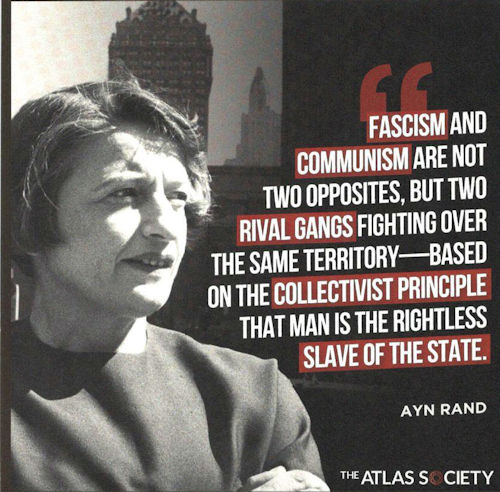





 Posts
Posts