I am proposing the following constitutional amendments. Many would not have been necessary had Americans understood and lived by the principles of the Framers of the Constitution. Given decades of ignoring the Constitution and a huge excess of laws, regulations, and government spending, I think these amendments would go far in correcting the many problems we have with excessive, tyrannical government.
Good law requires that the welfare of every individual is increased by the law. For this reason, it a super-majority of individuals do not approve of a law or a regulation, it should not become law or it presently law, it should be repealed.
My amendments are:
1) Amend the 16th Amendment authorizing an income tax to state that one and only one marginal tax rate will be applied to incomes equal to 75 percent of the median taxable household income and all higher taxable household incomes.
2) Repeal the 17th Amendment requiring the popular election of Senators. Return to the original election of Senators by state legislatures.
3) Every adult owns his own mind, body, and labor and may use them, maintain them, and dispose of them as he pleases, so long as he does not initiate the use of force upon others. Individuals have the right to protect their minds, body, and labor from violence.
4) Every adult has the right to the results of his labor or thought and to his property. The goods he has made, the land he has improved, and the ideas he has originated and put into the form of a product or process are to be protected from theft by government. No government taking of property is permitted except with just and reasonable compensation or because that property was used by the owner in the commission of a crime as determined by trial. No government taking of property not used in the commission of a crime is allowed except for necessary and proper government use.
5) Every adult individual has the right to associate with others for the purposes of his choosing in voluntary relationships, contracts, and trading. Adult individuals have the right to exercise their own judgment in their associations, contracts, and relationships with others. Government will protect individuals from violence and fraud which has actually happened or is in the process of happening, but will not limit the freedom of association out of fear of potential future violence or fraud.
6) The government does not control or manipulate the economy or trade and commerce. It provides a constant value supply of currency for government functions and general use, but does not prevent the circulation of other distinctive currencies. It forbids state and local governments from interfering with trade, commerce, and travel by the People across state boundaries.
7) Individuals have the right of privacy so long as they are not engaged in acts of violence or fraud. Information not available to the general public will not be collected and saved about any individual without a court order attesting to the reasonable likelihood that the individual is engaged in violent acts or fraud. No means of obtaining private information on individuals will be used without due process.
8) Any law or act of Congress may be repealed by a vote of 40% or more of the members of both the House of Representatives and the Senate. The President may not veto such repeal votes.
9) Any law or act of Congress requires a vote of 60% or more of the members of both the House of Representatives and the Senate. The President may use his veto power on such acts of Congress. The same 60% approval is required for all Executive Branch appointments reviewed and consented upon by the Senate.
10) Any member of Congress who has voted for a bill must attest in a written document that the member has read the bill and believes it to be in the interest of the general welfare, necessary, proper, and constitutional.
11) Any federal law may be repealed by act of 40% or more of the state legislatures.
12) Any regulatory rule by an executive branch agency of the federal government may be nullified by votes of 40% or more of the members of both the House of Representatives and the Senate or by 40% or more of the state legislatures. Any new regulation produced by a government agency which will impose costs of $25 million or more must be specifically approved by both the House of Representatives and the Senate with votes of 60% or more. Any legislative attempt by Congress members to review any regulatory ruling which has the support of 40% of the members of that house cannot be kept from a vote in that house.
13) No federal law shall exempt members of Congress or federal government employees from its application to them, except by an explicit and recorded vote in favor of such an exemption by at least 80% of the members of both the House of Representatives and the Senate.
14) No member of Congress shall serve in Congress more than 12 years continuously and no more than 20 years in a lifetime. After 12 years of service, there must be at least a ten-year period of non-service in the federal government before further service commences.
15) Senators and their staffs will be paid by the state they represent. Senators will not receive any payment or benefits for services, nor will they receive any payments or benefits after the termination of their service, from the federal government.
16) Members of the House of Representatives will not receive any payments or benefits from the federal government after the end of their service in the House of Representatives.
17) Authorizations for the existence of each and every executive branch agency or department must be renewed by an individual, specific act of Congress every four years for that executive entity. The budget for every such agency or department must be individually reviewed and approved at the same time. Congress will also at that time review and evaluate the actions of that agency or department over the last four years and make that review available to the public, with only national security exceptions upon the vote of 60% or more of the members of each house of Congress. If Congress does not authorize the agency or department and its budget individually on this four-year cycle, all operations of that agency or department must cease at that time.
18) No appropriations may be made by any Congress which are binding upon any future Congress.
19) Decisions of the federal courts may be overturned by a vote in both houses of Congress of two-thirds of the members of each house. Federal court decisions may be overruled by two-thirds of the states by acts of their legislatures.
20) Annual federal government spending may not exceed a fixed percentage of the annual national gross domestic product except in times of declared war and then by no more than half the annual cost of that war unless both houses of Congress approve such additional spending with a vote of 80% or more. The upper limit fixed percentage will initially be 18% and will be decreased by 0.5% with each new Congress, until it reaches 8% of gross domestic product.
21) Annual federal government spending may not exceed government revenues by more than 3% except in times of declared war and then by no more than half the annual cost of that war unless both houses of Congress approve such additional spending with a vote of 80% or more.
22) Total government debt may not exceed the annual national gross domestic product except by the vote of 80% or more of the members of each house of Congress.
23) No one may vote in a federal election unless they present a valid picture identification at the time of voting. Only federal employees on duty outside the United States of America may cast their vote more than 2 weeks prior to the day of the election. They may not vote earlier than 6 weeks prior to the election.
I plan to revisit these proposed amendments to discuss them in more detail. I am sure that some of them need to be tuned up and I will welcome comments with suggestions on how to do that.
Showing posts with label good government. Show all posts
Showing posts with label good government. Show all posts
25 February 2014


02 June 2013
The Corrupting Influence of Excessive Power
It is finally becoming apparent to many Americans that the Obama administration is corrupted to its core. That it would be the case was clear to me when he was still a candidate for President in 2008. One had only to consider his stated purposes which were incompatible with good government, listen to his criticism of the U.S. Constitution, see the pattern of his attempts to hide his personal history, and to study such of that history as was available to a reader willing to actively seek information about him. His ideals were a con. They were unattainable or they were undesirable to the rational man. He probably only believed in some of his stated values even himself. In many ways he conned himself.
With time, the transgressions of this administration against good governing have mounted. The failures to prosecute voter intimidation, Fast and Furious, the grants to sham energy companies run by campaign donors, the bailouts for labor unions, the arbitrary exemptions to ObamaCare provisions, the infringement of freedom of religion in ObamaCare rulings, the long known, but only recently much discussed, IRS vendetta against smaller government groups, the lies about Benghazi, the statement of his brain and forever adviser, Valerie Jarrett, that after the election they would really go after their enemies on the right, the massive voter fraud, and the recently revealed infringements against freedom of the press, all tell a story of corruption at the core of Obama's administration.
Great power corrupts greatly. This is not just because people of less than the most sterling character are tempted to misuse that great power. It is even more because that great power cannot be exercised even by the best intention without ignoring a solid fact about man's nature - individuals are very complex and highly differentiated.
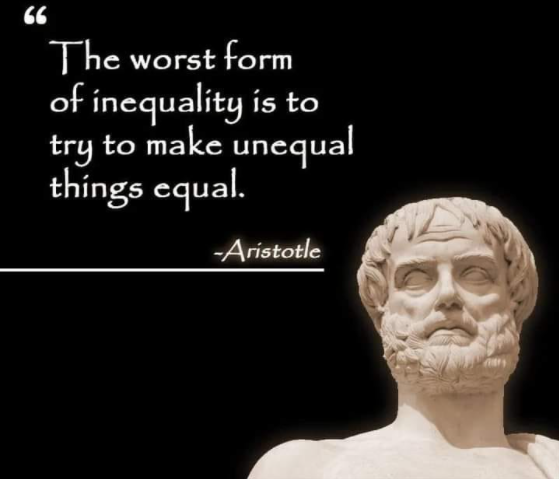
Laws must be applied equally and universally. There are few actions of man that can be regulated by equal and universal law without causing harm to many individuals, who are inherently not equal and not universally facing the same circumstances from the same base of experience with the same capabilities and values.
Those charged with enforcing excessive bodies of law will also become frustrated in time with the mess they can hardly deny they have created. Criticism is eventually piled upon them. Many such rulers lose any ideals they may have had and simply become child-like in their determination to have their own way. To be sure, excessive law has been so dominant in our society now for so long that those most likely to scramble to the top in the quest for power rarely ever use ideals as much more than a con game to collect votes to get the power they seek. Obama is clearly such a person.
Getting rid of Obama as soon as possible is not an adequate solution. There are many, many politicians eager to get their chance to exercise excessive control over the myriad individuals of our society. Some may be more corrupt than Obama and many will be less corrupt. That corruption is bad, yet it is also the most dramatic indicator that big government has its faults. Even people paying little attention to understanding government will at least notice these more obvious instances of corruption.
What we really need is for people to acquire the much more fundamental understanding that there are few instances in which laws of a universal and equal nature can be beneficially applied to the richly diverse individuals of our society. Good government tries first to do no harm. No one deserves to be harmed by government, save those who are using force or fraud to harm others.
The Utilitarian idea that good government acts to provide the greatest good for most people always fails for many reasons. Most fundamental is the one I pointed out above that people are complex and highly differentiated. Government cannot know each of us and what is good for each of us in any broad way. Indeed, what is good for each of us is constantly changing in our own life. How on Earth is a mere politician or bureaucrat going to know what is best for each of us, when it is hard for us to know that?
It is also important to note that even if every government law were good for 51% of the people, the many such laws would almost certainly mean that at best we will be helped 51% of the time and hurt 49% of the time. Most of us can surely do better than that making our own decisions in the private sector. But it is actually worse than this. This is because big government falls under the control of factions or special interests to a very large degree. The laws of such big government will favor them at the expense of most of us most of the time. Many people live in a fantasy world in which they are convinced that they can chose such an upright politician that he will prevent these special interests from tilting the playing field in their favor. This is actually the most unlikely of outcomes. It would even be unlikely if most of the politicians were well-intended, which is a most unlikely case itself.
As we have seen most dramatically demonstrated with Obama, he is not only venal, but he is also an incompetent manager of the government. Indeed, he is not alone. Throughout the Executive Branch, the managers are largely incompetent. The House of Representatives and the Senate are mostly filled with incompetent managers eager to create more and more unnecessary and harmful laws to prove that they are doing something. Meanwhile, they fail to read the bills they pass, they fail to review and correct prior bad laws, they pass off their deliberative duties to bureaucrats, they fail to protect and defend the Constitution, they use inside information to make investment killings, they extort companies into making political contributions to them, and they reward their political donors with all sorts of special favors. Then we have a host of federal judges who do not understand or choose to disregard the Constitution.
These many failings are no surprise. They are exactly what the wise man expects of big government. Governments do not want to be limited by a constitution and they surely do not wish to be good governments. Only a People strongly imbued with a strong principled belief in limited government devoted to the protection of every individual's right to life, liberty, property, the ownership of their own bodies, minds, and labor, and the pursuit of their personal happiness will ever enjoy the benefits of good government.
With time, the transgressions of this administration against good governing have mounted. The failures to prosecute voter intimidation, Fast and Furious, the grants to sham energy companies run by campaign donors, the bailouts for labor unions, the arbitrary exemptions to ObamaCare provisions, the infringement of freedom of religion in ObamaCare rulings, the long known, but only recently much discussed, IRS vendetta against smaller government groups, the lies about Benghazi, the statement of his brain and forever adviser, Valerie Jarrett, that after the election they would really go after their enemies on the right, the massive voter fraud, and the recently revealed infringements against freedom of the press, all tell a story of corruption at the core of Obama's administration.
Great power corrupts greatly. This is not just because people of less than the most sterling character are tempted to misuse that great power. It is even more because that great power cannot be exercised even by the best intention without ignoring a solid fact about man's nature - individuals are very complex and highly differentiated.
Laws must be applied equally and universally. There are few actions of man that can be regulated by equal and universal law without causing harm to many individuals, who are inherently not equal and not universally facing the same circumstances from the same base of experience with the same capabilities and values.
Those charged with enforcing excessive bodies of law will also become frustrated in time with the mess they can hardly deny they have created. Criticism is eventually piled upon them. Many such rulers lose any ideals they may have had and simply become child-like in their determination to have their own way. To be sure, excessive law has been so dominant in our society now for so long that those most likely to scramble to the top in the quest for power rarely ever use ideals as much more than a con game to collect votes to get the power they seek. Obama is clearly such a person.
Getting rid of Obama as soon as possible is not an adequate solution. There are many, many politicians eager to get their chance to exercise excessive control over the myriad individuals of our society. Some may be more corrupt than Obama and many will be less corrupt. That corruption is bad, yet it is also the most dramatic indicator that big government has its faults. Even people paying little attention to understanding government will at least notice these more obvious instances of corruption.
What we really need is for people to acquire the much more fundamental understanding that there are few instances in which laws of a universal and equal nature can be beneficially applied to the richly diverse individuals of our society. Good government tries first to do no harm. No one deserves to be harmed by government, save those who are using force or fraud to harm others.
The Utilitarian idea that good government acts to provide the greatest good for most people always fails for many reasons. Most fundamental is the one I pointed out above that people are complex and highly differentiated. Government cannot know each of us and what is good for each of us in any broad way. Indeed, what is good for each of us is constantly changing in our own life. How on Earth is a mere politician or bureaucrat going to know what is best for each of us, when it is hard for us to know that?
It is also important to note that even if every government law were good for 51% of the people, the many such laws would almost certainly mean that at best we will be helped 51% of the time and hurt 49% of the time. Most of us can surely do better than that making our own decisions in the private sector. But it is actually worse than this. This is because big government falls under the control of factions or special interests to a very large degree. The laws of such big government will favor them at the expense of most of us most of the time. Many people live in a fantasy world in which they are convinced that they can chose such an upright politician that he will prevent these special interests from tilting the playing field in their favor. This is actually the most unlikely of outcomes. It would even be unlikely if most of the politicians were well-intended, which is a most unlikely case itself.
As we have seen most dramatically demonstrated with Obama, he is not only venal, but he is also an incompetent manager of the government. Indeed, he is not alone. Throughout the Executive Branch, the managers are largely incompetent. The House of Representatives and the Senate are mostly filled with incompetent managers eager to create more and more unnecessary and harmful laws to prove that they are doing something. Meanwhile, they fail to read the bills they pass, they fail to review and correct prior bad laws, they pass off their deliberative duties to bureaucrats, they fail to protect and defend the Constitution, they use inside information to make investment killings, they extort companies into making political contributions to them, and they reward their political donors with all sorts of special favors. Then we have a host of federal judges who do not understand or choose to disregard the Constitution.
These many failings are no surprise. They are exactly what the wise man expects of big government. Governments do not want to be limited by a constitution and they surely do not wish to be good governments. Only a People strongly imbued with a strong principled belief in limited government devoted to the protection of every individual's right to life, liberty, property, the ownership of their own bodies, minds, and labor, and the pursuit of their personal happiness will ever enjoy the benefits of good government.
Subscribe to:
Posts (Atom)






 Posts
Posts