On 18 December 2008, the United Nations General Assembly passed a nonbinding resolution, with strong advice to its members, that condemns "defamation of religion." You can read that resolution here. The United States, more than half of the European countries, India, and Japan opposed it. The 57-member Organization of the Islamic Conference pushed strongly for it and was backed by Belarus and Venezuela. It passed with an 83-53 vote, with many abstentions.
The resolution frequently conflates racial and ethnic discrimination with religious discrimination. It implies that any unfavorable evaluation of a particular religion and its beliefs is intolerance. It deplores "the negative projection of certain religions in the media ...., particularly Muslim minorities following the events of 11 September 2001, ...."
It says "that defamation of religions is a serious affront to human dignity leading to the illicit restriction of the freedom of religion of their adherents and incitement to religious hatred and violence,"
It stresses "the need to effectively combat defamation of all religions, and incitement to religious hatred in general,"
It reaffirms that "discrimination on the grounds of religion or belief constitutes a violation of human rights and a disavowal of the priniples of the Charter of the United Nations,"
It states that "education should contribute in a meaningful way to promoting tolerance and the elimination of discrimination based on religion or belief,"
It then launches into a list of 24 numbered paragraphs. Some say:
2. Expresses deep concern at the negative stereotyping of religions and manifestations of intolerance and discrimination in matters of religion or belief still evident in the world;
5. Notes with deep concern the intensification of the overall compaign of defamation of religions, and incitement to religious hatred in general, including the ethnic and religious profiling of Muslim minorities in the aftermath of the tragic events of 11 September 2001;
7. Expresses deep concern in this respect that Islam is frequently and wrongly associated with human rights violations and terrorism; [This is the third time Muslims and/or Islam is specifically noted, while no other religion is specifically noted.]
8. Reiterates the commitment of all States to ..... respect for all religions, religious values, beliefs or cultures and [to] prevent the defamation of religions;
9. Deplores the use of the print, audio-visual and electronic media, including the Internet, and any other means to incite acts of violence, xenophobia or related intolerance and discrimination against any religion, as well as targeting of religious symbols [Muhammad with a bomb in his turban!];
10. Emphasizes that, as stipulated in international human rights law, everyone has the right to hold opinions without interference, and has the right to freedom of expression, the exercise of which carries with it special duties and responsibilities and may therefore be subject to limitations as are provided for by law and are necessary for the respect of rights or reputations of others, protection of national security or of public order, public health or morals;
16. Urges all States .... to take all possible measures to promote tolerance and respect for all religions and beliefs and the understanding of their value systems and to complement legal systems with intellectual and moral strategies to combat religious hatred and intolerance;
18. Underscores the need to combat defamation of religions .... through education for all, ..., including access to free primary education for all children, both girls and boys, [No mention of those Islamic areas where schools for girls are bombed by Islamic enforcers.]
19. Calls upon all States ..... to ensure that religious places, sites, shrines and symbols are fully respected and protected, ....;
21. Affirms that the Human Rights Council shall promote universal respect for all religious and cultural values and address instances of intolerance, discrimination and incitement to hatred ....;
Now, I do not believe governments should discriminate against religious beliefs as such. They can and must discriminate against one kind of action, the initiated use of force. So, if a person holds a belief, religious in nature or not, that he is allowed to use force to keep others from exercising their right to freedom of speech, to freedom of conscience, and to freedom of the press and he acts upon that belief to use force to prevent others from their equal rights, then government must protect its citizens from this initiated use of force. To do this, government may reasonably watch with special diligence those persons whose religious or other beliefs state that they may use initiated force to attain their ends. To do anything else would be irrational. Government should not assume, however, that someone holding to a tradition of belief will necessarily choose to act to initiate the use of force, even though that belief may allow and even encourage it. But, Government can watch and be prepared to pounce if such a person's actions reasonably signal an intent to act upon the violent belief.
Freedom of religion was really intended to be about freedom of conscience and it was intended that one could act upon one's beliefs, with one very important proviso. Everyone has this same right, but it would clearly be impossible for any individual to exercise his right to freedom of conscience and to use his belief system to guide his actions, if anyone had the right to impose his beliefs upon others by using force. People of different religious belief have often come into conflict with one another, even when those differences were relatively minor. After centuries of such conflicts among Christians in Europe, the philosophers of the Age of Enlightenment came in many cases to recognize a very practical need for freedom of conscience and freedom of religion. But, they also came to understand that the individual had to be allowed to think for himself and to choose his values. These chosen values were required to help guide actions he would take in living his life. But, everyone had this same need by virtue of being human, so this right to freedom of conscience was universal. In America, we developed our Constitution and Bill of Rights in recognition of this fact.
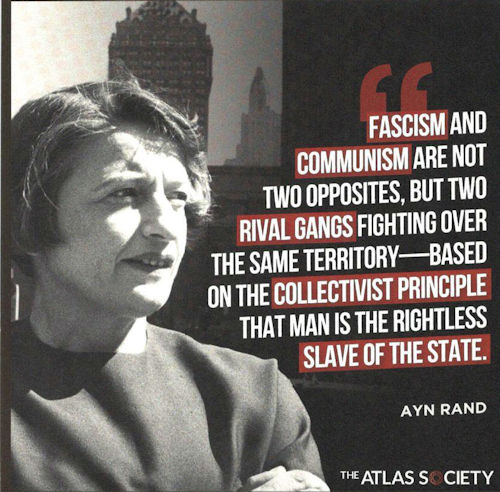
No one, and no religion, has the right to impose its values and beliefs upon others. Many religions have tried to do this historically, as have other belief systems such as socialism (whether fascist or communist) and environmentalism. No one is obliged to give those belief systems respect, though they commonly demand it. No one is required to be silent when they see reason to criticize those belief systems, though religions, socialism, and environmentalists have often tried to silence them. We are only required not to initiate the use of force.
Though Christians did often use force to advance their religion, that religion is fortunate in that Jesus was not a proponent of using force to spread his beliefs. He did not gather armies and attack nearby peoples and impose Christianity upon them. Islam, on the other hand, is the religion made up by Mohammed, who did lead armies to attack non-believers and did advocate either killing non-believers or treating them as second-class citizens in Islamic countries. He also believed that anyone accepting the religion of Islam should be killed if he changed his mind later. This unfortunate tradition of belief in the use of force as a means to spread their religion has caused disproportionate numbers of Muslims to adopt the use of terrorist tactics in our present times. Of course, there are some people of other religions who have also resorted to terrorism, but most of the present-day God-worshiping religions have fewer terrorists operating in the name of their religion.
There are several references in the U. N. resolution requiring respect to the symbols of a religion. These are clearly intended to require countries to abridge the right of the people to publish cartoons critical of Islam. This is an overt attack upon freedom of expression, freedom of speech, and freedom of the press.
It was ironic that the paragraph requiring States to provide education for both girls and boys, did not mention the fact that in those countries practicing Islam, the education of women is least valued and sometimes prevented entirely by violence in the name of the religion. Of course, this provision also stated that it was the responsibility of the state to provide education, which is wrong. Other provisions also made it clear that the state was to use education to squelch any rational discussion of the merits of various beliefs and value systems, particularly if they claimed to be of a religious nature. The State was to demand respect for all religious beliefs and values.
Frankly, all religions are made up by man. This is particularly obvious in the case of Scientology, Mormonism, and Islam, since they have roots in the recent past. In stating this fact, I am making it clear that I do not respect any religion. Furthermore, none of the religions offer an adequate and rational philosophy for living a human life on this earth. Clearly, I am defaming all religions. Clearly, I am defaming Islam more than most. All religions are false beliefs and harmful to mankind. Of course, people should be free to practice a false religion, provided they do not use force against others while doing so.
So, according to the United Nations, it is the responsibility of the United States government to force me to take sensitivity training and to force me to stop writing of these matters on this blog. It even seems clear that the U.N. is saying that I am inciting hatred and violence against all religions, especially Islam. I would deny this and say that I am simply rejecting the idea that Islam has the right to force me to respect it or to adopt its beliefs as my own. If Islam were to be amended to renounce the use of force, then I would oppose it only because it is false. At this time, I must oppose it because its principle tenets include the claim that it is proper and a duty of Muslims to use force to spread the religion. Of course, I also oppose any other system of beliefs and values which allows for the initiated use of force. This will include any effort by the U.S. government to make me respect religions or any effort by the U.N. to make me do so.
Contrary to the U.N.'s assertion, the only responsibility I have before rational law in the excution of my freedoms is that I do not initiate the use of force against others. I do not have a responsibility not to hurt the feelings of the religious. If I do so, this is not a valid reason to restrict my freedom of conscience, of speech, or of the press. That government which would do so would be a tyranny.
Showing posts with label tolerance. Show all posts
Showing posts with label tolerance. Show all posts
07 February 2009


08 April 2007
Individuality and Loneliness
There is a constant tension between asserting one's individuality and feeling welcome within a group. In fact, we are all very complex and differentiated individuals and we are also mostly social animals. Many of the most difficult choices we make in life are the result of a tug of war between our desire to be ourselves and our desire to be well-regarded and welcomed by others. In a rational world full of benevolent and tolerant people, the tension in this rope would be reduced, but it would always still be significant with most of the people who may hold the other end of the rope. Of course, they will be different in their capabilities, interests, and values in most cases from ourselves. This is simply a consequence of the complexity and the many differences that exist among people.
To start life, we are different in many ways at birth. We are so complicated at the level of initial biochemistry, that many differences exist between us already. Then, we start experiencing the world and interacting with other people and we each have a unique experience with unique exposures to stimuli from reality. Then, we each make a constant stream of choices in our thoughts and in our actions which have consequences unique to our own life. In the end, there can be no question but that each of us is a highly complex and differentiated individual. This in turn means that if you put any two people on the opposite ends of the rope, there will be tension in that rope. Two sisters at opposite ends of the rope will find times when the tension is great, as will two lovers, two scientists, two farmers, two historians, two philosophers, two friends, two bloggers, two unionists, and two businessmen. The tension is always present at some level.
If we consider even just fairly common traits, we do not find it easy to match two people up on any fairly substantial, yet quite finite set of traits. People have a tendency to be distributed across wide ranges, often along a bell-shaped curve, for given traits. Of course, many people may be close to the maximum of the curve for a given trait, but any two people who are close for that trait may be far apart on the distribution curve for another significant trait. For instance, suppose you are trying to match two people for intelligence, talkativeness, energy level, political beliefs, religious beliefs, and sexual preferences. As we know, it is difficult even with such a limited set of traits to find someone who matches any given individual. In real life, especially if one is looking for a marriageable mate, the number of traits that may be of importance is much greater. We would have to add such items as desire for children, manner of handling money and finances, preferences in homes, driving technique, sharing versus specialization in chores, how to entertain friends, how to interact with each other's family, and how to respond to each other's career needs. Bringing any two lives together is a very challenging task. This is true in many realms beyond that of two marriage partners.
The rope is always under tension. Yet, we are social animals. We want to receive and give affection, we want to exchange ideas, goods, and services, and we want to enjoy and appreciate others who are goal-directed living beings faced with many of the same challenges in life that face us. So, we want to find those to hold the other end of the rope who will not yank us off our feet and will allow us to be the individuals we are. At least, this is what we do if we are rational, because we realize that it is important to also be the individual we are. Less rational people will often try to diminish their individuality to belong comfortably within a large group of people, so they can have any number of people from that group at the other end of the rope without being yanked off their feet. In the Northeastern US and California, many people looking for some large group to belong to will decide to share in the socialist and Europeanized vision of government and society. In the heartland, many people will seek this common ground in a Christian community. In India, they seek it most commonly in Hinduism and the caste system. In Northern Africa and parts of southern Asia, they find it in Islam. Of course, this and other aspects of the common culture in these areas are only a part, though a substantial part, of an effort to reduce the tension in the rope. Most of these efforts involve a considerable sacrifice of individuality and with that a pain of its own.
How much pain there was and how much people had a need to express their individuality has been made very clear by the advent of the Internet and the now widespread communication channels opened between countless individuals seeking to find those who lie on the bell-shaped curve for a given interest or trait near them. For instance, maybe as many as 0.01% of Americans consider themselves to be Objectivists. Despite this small number, there are at least a dozen forums for Objectivists to discuss ideas, each with its own unique flavor. Or, consider the general distain for explicit sex and its public discussion. Yet, the internet is heavily trafficked with hordes of people trying to express their individuality in sexuality which they would never express within their local community. The Internet has become a tool also for finding that mate who might best be a match for marriage. It provides a means to filter through far larger numbers of people than one could ever meet in one's local community or travel to see and it allows people to assert their individuality without as great a risk that it will be discovered at their church, their workplace, or by their political henchmen. So, the Internet has done wonders to redress the constraints put on a person's individuality by the desire to fit in with some group of people without totally suppressing their individuality.
But, there is still that tension of having one realm in which one can be an individual and another in which it is hard to assert that individuality. Yet, oddly, very many of those who try hard to conform in their local community are the individualists of the Internet. Many of them have now been exposed to a higher level of personal expression and therefore freedom on the Internet. As they turn back into their communities, the benefits and the knowledge that have come about other people and their yearnings are bound to have a big impact on the level of benevolence toward individuals and tolerance toward the idea of individuality. This effect will be greater on younger people who came of age on the Internet. Community conformity will be almost certain to diminish over the next couple of decades as a result.
Among many other things, this opens the door for a philosophy for living which stresses individuality. It is also a very strongly positive development because it allows those few people who are willing and able to sustain their end of the rope, when it is under the greater tension characteristic of a little-shared philosophy of life, to meet one another. We Objectivists can at least be a part of a society through the Internet. This Internet society will grow if we practice our rational philosophy rationally. As it does, more and more people who can sustain rope tensions in their local communities of smaller magnitudes will be enticed to become Objectivists. The cost of membership will have to be brought down before a substantial fraction of even the American population will be willing to become Objectivists. If we want Objectivism to become a powerful force in our local world, we must practice both Internet and local community benevolence and toleration. The activation energy for becoming an Objectivist must be decreased, or there will only be a very few Objectivists and too many of them will simply be masochists and contrarians, who will be poor representatives.
Even with the Internet, being an individualist and an Objectivist is a lonely experience. You really must be a strong and resilient person. You must have the strength to bear some rather serious loneliness. Some of that loneliness is the result of already generally being a particularly intelligent person with a strong commitment to understanding reality. That already places you far out on some bell-shaped curves. Then on top of that you reject all the popular philosophies and causes of our time. You reject religion, socialism, environmental animism, tribalism, racism, and simple-minded, relativistic diversity/multiculturalism. You stand out like a sore thumb. You seek company on the Internet then where you can search the entire world and still you find only a small number of individuals you can really admire and whose friendship can be treasured. The cost of loving reality is only exceeded by the cost of acquiring a club to join by denying reality. It remains a fairly lonely business to be an individualist and even more so to be an individualist Objectivist.
Of course, the only real Objectivist is the individualist who expresses his individuality, thinks for himself, lives a productive and creative life, and seeks his own happiness. The orthodox, the cultist, the contrarian, and the masochist do not live the philosophy of Objectivism. They are pretenders or in some cases those who would be carnivores. Life is short and there is much to do. This imposes an economy that dictates against wasting one's time in endless debates with those who will not be convinced by rational argument. One must identify those who treat reality with total respect and ignore those who have other primary allegiances. There are some who distort the findings of science, pick them selectively and in as out-of-context a manner as do the environmental animists while claiming to respect science. This is actually a very fundamental attack on science, one which will totally discredit it, if allowed to go unchallenged.
This attack on science is being carried out very broadly by those environmentalists who falsely claim that there is a scientific consensus that the recent global warming is caused primarily by man rather than by a natural increase in radiation from the sun. But, in some Objectivist forums, there are other attacks upon science. Some are attacks upon quantum theory, which while not yet a completed program, is nonetheless not at fault for the reasons often claimed. Another is an attempt to claim that science has proven that all operations of the mind are now understood in terms of classical physics, classical thermodynamics even! This argument is viewed as a keystone argument that man lacks volition and the mind is really just a very complex program that makes choices. How these choices differ from simple conditional branching in a computer program has not been explained, but these claims have met with widespread acceptance on one major Objectivist forum.
The battle to be true to reality is a never-ending battle and I wonder if I will ever find a reasonable and sustaining number of friends to join me in these battles. If I should not carry the day, at least I will never be defeated! I will be true to my own individual nature and to my primary respect for reality whether I fight alone or with a few magnificent friends. Those who fight under the banner of individuality and reality beside me, I will love.
To start life, we are different in many ways at birth. We are so complicated at the level of initial biochemistry, that many differences exist between us already. Then, we start experiencing the world and interacting with other people and we each have a unique experience with unique exposures to stimuli from reality. Then, we each make a constant stream of choices in our thoughts and in our actions which have consequences unique to our own life. In the end, there can be no question but that each of us is a highly complex and differentiated individual. This in turn means that if you put any two people on the opposite ends of the rope, there will be tension in that rope. Two sisters at opposite ends of the rope will find times when the tension is great, as will two lovers, two scientists, two farmers, two historians, two philosophers, two friends, two bloggers, two unionists, and two businessmen. The tension is always present at some level.
If we consider even just fairly common traits, we do not find it easy to match two people up on any fairly substantial, yet quite finite set of traits. People have a tendency to be distributed across wide ranges, often along a bell-shaped curve, for given traits. Of course, many people may be close to the maximum of the curve for a given trait, but any two people who are close for that trait may be far apart on the distribution curve for another significant trait. For instance, suppose you are trying to match two people for intelligence, talkativeness, energy level, political beliefs, religious beliefs, and sexual preferences. As we know, it is difficult even with such a limited set of traits to find someone who matches any given individual. In real life, especially if one is looking for a marriageable mate, the number of traits that may be of importance is much greater. We would have to add such items as desire for children, manner of handling money and finances, preferences in homes, driving technique, sharing versus specialization in chores, how to entertain friends, how to interact with each other's family, and how to respond to each other's career needs. Bringing any two lives together is a very challenging task. This is true in many realms beyond that of two marriage partners.
The rope is always under tension. Yet, we are social animals. We want to receive and give affection, we want to exchange ideas, goods, and services, and we want to enjoy and appreciate others who are goal-directed living beings faced with many of the same challenges in life that face us. So, we want to find those to hold the other end of the rope who will not yank us off our feet and will allow us to be the individuals we are. At least, this is what we do if we are rational, because we realize that it is important to also be the individual we are. Less rational people will often try to diminish their individuality to belong comfortably within a large group of people, so they can have any number of people from that group at the other end of the rope without being yanked off their feet. In the Northeastern US and California, many people looking for some large group to belong to will decide to share in the socialist and Europeanized vision of government and society. In the heartland, many people will seek this common ground in a Christian community. In India, they seek it most commonly in Hinduism and the caste system. In Northern Africa and parts of southern Asia, they find it in Islam. Of course, this and other aspects of the common culture in these areas are only a part, though a substantial part, of an effort to reduce the tension in the rope. Most of these efforts involve a considerable sacrifice of individuality and with that a pain of its own.
How much pain there was and how much people had a need to express their individuality has been made very clear by the advent of the Internet and the now widespread communication channels opened between countless individuals seeking to find those who lie on the bell-shaped curve for a given interest or trait near them. For instance, maybe as many as 0.01% of Americans consider themselves to be Objectivists. Despite this small number, there are at least a dozen forums for Objectivists to discuss ideas, each with its own unique flavor. Or, consider the general distain for explicit sex and its public discussion. Yet, the internet is heavily trafficked with hordes of people trying to express their individuality in sexuality which they would never express within their local community. The Internet has become a tool also for finding that mate who might best be a match for marriage. It provides a means to filter through far larger numbers of people than one could ever meet in one's local community or travel to see and it allows people to assert their individuality without as great a risk that it will be discovered at their church, their workplace, or by their political henchmen. So, the Internet has done wonders to redress the constraints put on a person's individuality by the desire to fit in with some group of people without totally suppressing their individuality.
But, there is still that tension of having one realm in which one can be an individual and another in which it is hard to assert that individuality. Yet, oddly, very many of those who try hard to conform in their local community are the individualists of the Internet. Many of them have now been exposed to a higher level of personal expression and therefore freedom on the Internet. As they turn back into their communities, the benefits and the knowledge that have come about other people and their yearnings are bound to have a big impact on the level of benevolence toward individuals and tolerance toward the idea of individuality. This effect will be greater on younger people who came of age on the Internet. Community conformity will be almost certain to diminish over the next couple of decades as a result.
Among many other things, this opens the door for a philosophy for living which stresses individuality. It is also a very strongly positive development because it allows those few people who are willing and able to sustain their end of the rope, when it is under the greater tension characteristic of a little-shared philosophy of life, to meet one another. We Objectivists can at least be a part of a society through the Internet. This Internet society will grow if we practice our rational philosophy rationally. As it does, more and more people who can sustain rope tensions in their local communities of smaller magnitudes will be enticed to become Objectivists. The cost of membership will have to be brought down before a substantial fraction of even the American population will be willing to become Objectivists. If we want Objectivism to become a powerful force in our local world, we must practice both Internet and local community benevolence and toleration. The activation energy for becoming an Objectivist must be decreased, or there will only be a very few Objectivists and too many of them will simply be masochists and contrarians, who will be poor representatives.
Even with the Internet, being an individualist and an Objectivist is a lonely experience. You really must be a strong and resilient person. You must have the strength to bear some rather serious loneliness. Some of that loneliness is the result of already generally being a particularly intelligent person with a strong commitment to understanding reality. That already places you far out on some bell-shaped curves. Then on top of that you reject all the popular philosophies and causes of our time. You reject religion, socialism, environmental animism, tribalism, racism, and simple-minded, relativistic diversity/multiculturalism. You stand out like a sore thumb. You seek company on the Internet then where you can search the entire world and still you find only a small number of individuals you can really admire and whose friendship can be treasured. The cost of loving reality is only exceeded by the cost of acquiring a club to join by denying reality. It remains a fairly lonely business to be an individualist and even more so to be an individualist Objectivist.
Of course, the only real Objectivist is the individualist who expresses his individuality, thinks for himself, lives a productive and creative life, and seeks his own happiness. The orthodox, the cultist, the contrarian, and the masochist do not live the philosophy of Objectivism. They are pretenders or in some cases those who would be carnivores. Life is short and there is much to do. This imposes an economy that dictates against wasting one's time in endless debates with those who will not be convinced by rational argument. One must identify those who treat reality with total respect and ignore those who have other primary allegiances. There are some who distort the findings of science, pick them selectively and in as out-of-context a manner as do the environmental animists while claiming to respect science. This is actually a very fundamental attack on science, one which will totally discredit it, if allowed to go unchallenged.
This attack on science is being carried out very broadly by those environmentalists who falsely claim that there is a scientific consensus that the recent global warming is caused primarily by man rather than by a natural increase in radiation from the sun. But, in some Objectivist forums, there are other attacks upon science. Some are attacks upon quantum theory, which while not yet a completed program, is nonetheless not at fault for the reasons often claimed. Another is an attempt to claim that science has proven that all operations of the mind are now understood in terms of classical physics, classical thermodynamics even! This argument is viewed as a keystone argument that man lacks volition and the mind is really just a very complex program that makes choices. How these choices differ from simple conditional branching in a computer program has not been explained, but these claims have met with widespread acceptance on one major Objectivist forum.
The battle to be true to reality is a never-ending battle and I wonder if I will ever find a reasonable and sustaining number of friends to join me in these battles. If I should not carry the day, at least I will never be defeated! I will be true to my own individual nature and to my primary respect for reality whether I fight alone or with a few magnificent friends. Those who fight under the banner of individuality and reality beside me, I will love.
20 March 2005
Rational Men Must be Tolerant of Others
There are at least three major reasons why a rational man must practice tolerance with other human beings. These are:
- Tolerance makes it possible to learn from the efforts of other people. Without tolerance, others are not encouraged to put as much effort into thinking, since the fruit of their labor is too often viewed as evil. It becomes less risky not to think about anything prohibited and if they have thought about it, they had best not share the thought. Without tolerance one lives in the Dark Ages in Europe or the Middle East of the present. Tolerance is essential if we do not all wish to enter the world and spend our lives reinventing the wheel. Tolerance is also the great tool that makes it possible for us to challenge our own ideas with those of others. This makes it easier for us to identify our own errors of thought and correct them. Tolerance makes it possible for a group of thinkers to tackle a tough problem and take advantage of each person's different experience, interests, and thinking abilities to understand the whole of it, when each individual could only contribute a part of that understanding. I will call this epistemological tolerance.
- Individuals are very complex and highly differentiated. We are different biochemically and structurally. We have different experiences. We think in different ways and have a history of myriad unique choices behind us. We have different values. These differences add immensely to the richness of our experience with other people. Similarly, they make each of us a unique experience to others. Some of the value represented by each individual is precisely found in the uniqueness of each of us. As gold is more valuable than iron because it is more rare, each individual has more value because each is unique. But, of course, not all of our differences from one another are valued by others. Some of those differences may be viewed with mistrust, some with disdain, and some with repulsion. When a rational man practices tolerance with respect to the properties and values of others, he does not sign on to vouch for the value of each property or the morality of all of their choices. This form of tolerance recognizes the fact of reality that people are individuals. It recognizes that there is commonly much that is sufficiently good in the differences we find in others that we will generally profit in our interactions with them. I will call this the tolerance of individuality.
- Throughout the history of man, the political entities that have controlled men around the world have established various balancings of dogma versus individual initiatives in thought. They have also frequently sought to direct what values a man may seek and achieve. They have often favored men of one race, ethnic group, religion, cast, tribe, clan, or profession over others. In Europe, the Hundred Year's War, largely between Catholics and Protestants, caused untold misery until finally Europe realized a more live and let live philosophy held benefits for civilization. In a capitalist republic, the government does not favor one person over another for these reasons. In fact, a capitalist republic finds value in the differences among its people, since the many differences in interests and abilities allow the society the advantages of many specializations and open the door to a wealth of trading among its citizens. It is also recognized that when one group suppresses another group or any individual, the fighting and the discord are distractions at best and very often fatal to the continuance of either the government or the entire society. This form of tolerance is political tolerance.
Each of these forms of tolerance are related to one another. They are each important to us as thinking individuals. Since Objectivists are thinking individuals, they should be foremost among those proclaiming toleration as a great benefit to each of us and to the societies in which we live. Objectivists are also a minority, who are not infrequently viewed as heretics. They are dependent upon others exercising the virtue of tolerance toward them. Taken together, the forms of tolerance allow us to develop and function fully as individuals. They allow us to trade ideas and values that raise the level of our civilization to much greater heights than is possible for a society or group of intolerant individuals.
Dogma and rigid social custom are the enemies of tolerance. Rational thought directed at understanding reality and the celebration of the productive individual are the product of toleration. Toleration allows us to experiment with ideas and test them out. It offers us a rich complexity of theories and choices, while aiding us in our efforts to evaluate those theories and choices. It allows each man to draw on the individual insights of others. It is a major virtue whenever two or more individuals live and work together.
There are dogmatic Objectivists (a contradiction in terms actually) who need very badly to understand these aspects of reality. Because reason is the individual's means of surviving and promoting his life, that which promotes reason is virtuous. Rationality is the most fundamental virtue. Tolerance is a major virtue because it recognizes that every other individual has the right of their own attempt to use reason, just as I have that right. Tolerance recognizes that it is the individual mind that must of its own volition choose to focus upon the creation of concepts and the use of principles to understand reality in all of its complexity. It is to be expected that individuals, even when highly committed to rational thought, will independently arrive at somewhat differing understandings of our complex existence. Tolerance recognizes individuality and allows us to take advantage of it to gain much greater insight of reality by evaluating the ideas generated by other creative and rational minds. What we gain in value makes us much more productive and much less primitive. We gain the advantage of living in a great civilization, provided we can also provide our society with a healthy respect for the rights of the individual. The concept of these rights and their exercise again requires us individually to be committed to tolerance.
Among Objectivists, David Kelley has been the most effective spokesman for the importance of toleration. He has been especially concerned with toleration as a means to increase our knowledge. He has also recognized the virtue of independence in each individual. I highly recommend his book The Contested Legacy of Ayn Rand: Truth and Toleration in Objectivism to anyone interested in how people can work together to greatly improve their understanding of any subject they may have a common interest in. While he especially addresses issues of Objectivism, there is a great deal to think about and use from this book even for a small group of collaborators in a laboratory or in a factory. It is really about being more productive in thought and action than it is possible for a single individual to be acting alone. As I read this book, I kept thinking that it was a marvelously organized and thought out explanation of many principles that I had found essential to the maximization of productive output in the many groups of scientific and engineering collaborators that I had had through the years.
In those groups, I had long worked hard to set such an atmosphere of tolerance in place. As this atmosphere grew, each such group became more productive. I tried to cultivate an atmosphere in which we maintained high standards for our output, but recognized that errors would be made as we sought solutions to the technical problems on which we worked, especially when we tried our hardest to be creative. Working together, we could makes leaps forward by taking advantage of our differing talents and help to correct each other's errors in a constructive way. In fact, we often learned from our errors. When we became comfortable that making an error was not likely to be viewed as evil or a sign of incompetence, ideas poured forth and our rate of solving difficult technical problems increased. It is surprising how often an idea with an error either contains a partial advance or somehow suggests the correct answer. Sometimes the wrong idea led to a test or experiment which proved it a dead end. Yet, that test provided us a clue to the right path to the answer to our problem. The idea that an error is evil is very wrongheaded. In fact, in certain contexts, making an error may actually be considered good. One does not make errors when not thinking. An error is made when one is thinking. Provided that one goes on to thoroughly evaluate the idea and test its validity rationally, the error is not evil and it may be the spur to the final correct identification of reality. In that context, it may be argued that the error served a good function. In that context, we can and should be less afraid of errors. They beat the alternative of stultification hands down.
Subscribe to:
Posts (Atom)







 Posts
Posts