Among the issues most commonly discussed are individuality, the rights of the individual, the limits of legitimate government, morality, history, economics, government policy, science, business, education, health care, energy, and man-made global warming evaluations. My posts are aimed at intelligent and rational individuals, whose comments are very welcome.

"No matter how vast your knowledge or how modest, it is your own mind that has to acquire it." Ayn Rand

"Observe that the 'haves' are those who have freedom, and that it is freedom that the 'have-nots' have not." Ayn Rand

"The virtue involved in helping those one loves is not 'selflessness' or 'sacrifice', but integrity." Ayn Rand

For "a human being, the question 'to be or not to be,' is the question 'to think or not to think.'" Ayn Rand
Showing posts with label free market. Show all posts

04 April 2022

A Milestone in the Objectivist Movement

At last! The philosophy of reality, reasoning independent minds, individual self-interest, and a free market society always had to recognize that its movement had to embrace all of these within itself. Yet the Ayn Rand Institute long refused to do this.  To an apparently significant degree, ARI is now ready to do a better job of doing so and allow a popular movement to blossom without excessive schisms and attempts to control all Objectivist thinkers.

We have always needed more recognition that independent-minded individuals with their many varied interests and experiences would reasonably hold somewhat different principles and apply them to the complexities of life differently. Objectivism as a philosophy by which one can live your own life, has to contain within it the flexibility to handle the salient fact of our individuality. Yes, at a high level we all agree on some central principles, but in our individual lives one has to work out a host of sub-principles that apply to yourself as an individual. One cannot apply to Ayn Rand or to ARI for approval of how you make these judgments, because "No matter how vast your knowledge or how modest, it is your own mind that has to acquire it." 

To be a successful movement, the Objectivist movement needs to believe that there is a free market in Objectivist ideas. That market of rational, independent-minded individuals will sort out the good and the bad ideas. Unfortunately, some Objectivists had too little confidence that there were enough rational, independent-minded individuals for this to work out successfully. Yet only if there are, will Objectivism ever succeed as a major popular movement.

See The Atlas Society comments on the ARI release for the main ways in which the ARI policy will now open up Objectivism to more independent-minded thinkers.  Robert Tracinski has also made interesting observations on this.


26 July 2020

How to Change a Society from a Largely Free Democratic Republic to a Fascist Socialist Totalitarian State

1.  Divide individuals by gender, by ethnicity, by wealth and income, by education, by age, and by sexuality; 

2.  Pit one group against another using the force of government to provide unearned rewards to some at the expense of others by putting limits on the rights of individuals to earn a living, limiting their freedom of association, and their freedom to cooperate with one another; 

3.  Thereby, creating distrust and hatred as the factions fight to control the government that insists on hurting many, making it a threat to all, thereby making it a matter of life and death for each group to control the government;

4.  Watch a country that once honored merit in the market place, but became an unlimited democracy, succumb to greed for the unearned with the development of ever more special interest groups dependent upon government largess;

5.  The government-run and funded education system becomes a tool promoting more and more government powers, seeks to suppress all private education alternatives, seeks to suppress individual rights especially freedom of speech and the freedom of the press or media, promotes the collective rights of some groups at the expense of the rights of the individuals in other groups, and promotes versions of the country's prior history that diverge ever more from the truth such that more and more power and money flow to the government and the education system;

6. In which a majority coalition of those who have less wealth and want government forced transfers of wealth to themselves and those who most lust for power turn the country into a socialist, fascist country (very poor, primitive countries usually turn communist instead);

7. Which in turn comes to be ruled by the most brutal elements of the power lusters with a total loss of individual rights.

I read William L. Shirer's The Rise and Fall of the Third Reich the summer after the 9th grade and came to understand most of this.  I think I understood some of these lessons better than Shirer did.  There have been many further examples of this process since WWII.

Here is a very interesting analysis video of what we are presently facing based on a young woman's experience during the disintegration of Yugoslavia.


03 March 2016

Comments from Comments Following an Article Attacking Ayn Rand's Ideas

A very scurrilous article called This is what happens when you take Ayn Rand Seriously by Denise Cummings has elicited many comments.  The article itself sets up many a straw man interpretation of Ayn Rand's ideas and makes some incredibly obvious false statements about her ideas.  I have commented rather extensively in the comments following it.  Here is one of my comments in reply to other comments opposing Ayn Rand's ideas:
Blaming businessmen for their business practices is one of the frauds most commonly used to justify governments that micromanage our lives and prevent us from individually choosing our own values and pursuing them in a rich and robust private sector. The bogeyman businessman is all too often the false justification for forcing us to give up our individually optimal choices for the sake of one-size-fits-all laws and regulations which are not enforced on the friends of big government, but are often enforced on those who just want to get on with their lives.
Average Joe is always free to start his own business, except that governments make it hard for him to do so and will require him to spend huge blocks of time on paperwork and tax him at every turn. Big government institutes many of its regulations more for the purpose of preventing the formation of small businesses and for preventing them from competing with bigger businesses who find it much easier to comply with the 80,000 pages of new regulations each year. Of course, even some big businesses are not favored by Big Government, such as the fossil fuel businesses.
It is only when a business is allied with big government that it can get away with mistreating employees and customers. A really free market always offers alternatives, as people take advantage of their freedom of association and either start competing businesses or turn to existing competitors or make suitable substitutions. Of course government should prevent the actual use of force or fraud throughout our society. But, what we find is that government itself is the abuser and uses much too much force and defrauds the citizens on a routine basis.
To which one Paul Ruggiero, who often shows up whenever Ayn Rand is the subject, replied:
"Bogeyman businessman" - how about tobacco companies? Was it rational to sell products to people that the company knew were addictive and highly likely to kill them over time? Where was the "self regulation" or rational or moral nature of this?
Businesses can mistreat employees or their customers very easily without the help of government. You are making a lot of assumptions about free market capitalism in your argument without stating them. Many of your assumptions though are not true. State some, and I'm happy to knock them down.
Rand's ideas about companies are unfortunately not true. She assumes that without govt interference all businesses would be rational. This is crap.
To which this patient soul replied:
The left likes to picture the businessman as frequently a predator and government as a protection against these powerful and many predators. Yes, bad people can be found in the business world, but they are actually much less likely to be bad than the politicians and bureaucrats of the government which wields much more power than do businessmen.
Tobacco is addictive and I have never used it for that reason and for health and hygiene reasons. Everyone else also has had this choice, whereas when government runs up the cost of energy or denies me paying a high school summer intern less than the minimum wage, I have no choice. I am forced to comply. It is worse to be robbed of a choice and forced to comply than to be offered a product I should not choose to buy.
Let us also note that government, your tainted angel, long subsidized tobacco farming. It also delighted and still does in the taxes it collects on this dangerous product.
Rand absolutely does not assume that all businesses will be rational or that those that are usually fairly rational will always be so. She also does not assume that all purchases of goods and services will be rational. The trades of the free market and private sector generally are akin to freedom of speech. We do not assume that everything everyone says will be rational or true. We know it will not be. But, there will be a rich diversity of ideas and knowledge in that flow of speech in a free society. People are free to evaluate what others have to say and incorporate or reject viewpoints and ideas according to their own choice. The same is true of the many products and services offered in the private sector.
To the degree that the customer chooses badly, he will be hurt. But he is also free to choose wisely and to benefit greatly from good choices. It is stultifying to be so terrified of making bad choices that one refuses to allow oneself the opportunity to make good choices. I have confidence that most people make more good choices than bad ones and that they benefit greatly from the diversity of choices offered by the free market, just as we benefit greatly from the rich and diverse flow of ideas and information we are offered due to freedom of speech. Just as we tend to stop listening to people who always rattle off nonsensical viewpoints, so do most people refuse to buy goods and services from companies that do not meet their needs. Bad products and poor service tend to bring an end to the company that offers them.
Now, I understand that you think that most people are bad and will fleece everyone else at every opportunity. You also have no confidence in the people to be mostly rational consumers. I do not think so. Then you turn around and seem to believe that the same bad sellers and consumers are capable of choosing good representative politicians and good government policies to protect these basically incompetent people. Your inconsistency could not be more apparent.

To which a good man (Threnody) added:

Savin' this one.
Echoes of Bastiat
"When it is time to vote, apparently the voter is not to be asked for any guarantee of his wisdom. His will and capacity to choose wisely are taken for granted. Can the people be mistaken? Are we not living in an age of enlightenment? What! are the people always to be kept on leashes? Have they not won their rights by great effort and sacrifice? Have they not given ample proof of their intelligence and wisdom? Are they not adults? Are they not capable of judging for themselves? Do they not know what is best for themselves? Is there a class or a man who would be so bold as to set himself above the people, and judge and act for them? No, no, the people are and should be free. They desire to manage their own affairs, and they shall do so.
But when the legislator is finally elected — ah! then indeed does the tone of his speech undergo a radical change. The people are returned to passiveness, inertness, and unconsciousness; the legislator enters into omnipotence. Now it is for him to initiate, to direct, to propel, and to organize. Mankind has only to submit; the hour of despotism has struck. We now observe this fatal idea: The people who, during the election, were so wise, so moral, and so perfect, now have no tendencies whatever; or if they have any, they are tendencies that lead downward into degradation."
The comments following articles misrepresenting and misunderstanding Ayn Rand's ideas are often very interesting.  There really are huge numbers of people who either cannot understand her or who are endlessly eager to misrepresent her ideas.  Many people become so deeply rutted in their line of "thought" that they literally are unable to see any other viewpoint, especially when that viewpoint fundamentally differs with all of their own reference points.  The most blatant inconsistencies in their own viewpoint go totally unrecognized and unaddressed.  Even when you bring such a person to admit they have a problem through hours of discussions, by the next day almost everyone of them will have found some way to forget that they admitted a severe inconsistency the prior day.

Few people can change their worldview after they have held it for many years.  It is often claimed that Ayn Rand's ideas appeal only to the young and therefor to the immature.  It is not entirely true that only the young are greatly influenced by her ideas and it is certainly not the case that her ideas only attract interest from the immature.  But, there is a reason why so many individuals who do become interested in Ayn Rand's ideas do so when they are young.  It is because such a large fraction of those older are mired in deep ruts in the mud of ideas they have held a long time and which have so distorted their view of the world that they cannot see or will not see the truth anymore.

27 March 2013

The Falsely Framed Moral Evaluation of Capitalism

The Washington Post ran a long article on page 1 of its Outlook section on Sunday, 17 March 2013 entitled Is Capitalism Moral?  It was written by Steven Pearlstein, a Post columnist.  He claims that much of the reason for the stalemate in Washington is because the Republicans and Democrats have not really faced up to the question of whether Capitalism is moral or not.  He says that

The grand experiment with communism has been thoroughly discredited, a billion people have been lifted from poverty through free-market competition, and even European socialists have given up on state ownership and the nanny state.  Here at home, large swaths of the economy have been deregulated, and tax rates have been cut.  A good portion of what is left of government has been outsourced, while even education is moving toward school choice.  In embracing welfare reform, Americans have acknowledged that numerous programs meant to lift up the poor instead trapped them in permanent dependency and poverty.
This introduction to the Pearlstein article seems to bow to the power of Capitalism to do good, though it is always jarring to read that deregulation characterizes our government's efforts when about 80,000 pages of new regulations are added each year and the EPA is carrying out the Obama threat to kill the coal industry and coal-fired electric plants and to give us skyrocketing European gasoline prices.  The outsourced government continues to grow its many tentacles and keeps developing new tentacles such as those that sprout from the recent and still developing ObamaCare and Dodd-Frank "Too Big to Fail" acts.

Pearlstein notes that books by Arthur Brooks, of the American Enterprise Institute, and John Allison, of the Cato Institute, make a moral case for "even-freer-market capitalism than we have now."  The books he is referring obliquely to are:

Arthur C. Brooks, The Road to Freedom: How to Win the Fight for Free Enterprise, Basic Books, 2012.

John A. Allison, The Financial Crisis and the Free Market Cure: Why Pure Capitalism is the World Economy's Only Hope, McGraw Hill, 2012.

Pearlstein characterizes their argument for capitalism as
As they see it, regulation is an infringement of individual liberty, while income redistribution, in the form of a progressive tax-and-transfer system, is nothing more than thievery committed against the most talented and productive by those who are not.  Regulation and redistribution, they contend, also undermine the vital incentives that drive capitalism, which throughout history has been the best system for freeing large masses of human beings from lives of misery and poverty.  What could be more moral, they ask, than that?
 Pearlstein even credits John Locke, Adam Smith, and Ludwig von Mises for their moral defenses of capitalism, before noting that the novels and writings of Ayn Rand really caused the idea of the morality of Capitalism to catch hold among "right-leaning intellectuals and politicians."

The remainder of this article mostly examines whether Capitalism is moral from Pearlstein's and frankly that of most people's perspective.  That perspective is implicit in the question he asks at the end of the article in his very last sentence:
If our moral obligation is to provide everyone with a reasonable shot at economic success, within a market system that, by its nature, thrives on unequal outcomes, then we ought to ask not just whether government is doing too much or too little, but whether it is doing the right things.
Basically, Pearlstein and most people believe that Capitalism is moral only if it is fair.  The bulk of the article is devoted to his belief that it is not really fair and loaded with implications that it must be controlled by government to see to it that it is as fair as possible.

One problem with judging the morality of Capitalism on the basis of whether it is fair or not is that even a toddler soon has a concept of fairness which need not have firm roots at all in a deep moral understanding.  It is extraordinarily common for the child to complain that it is not fair that her older brother always wins when they play Monopoly.  It is common that the younger sibling claims it is unfair that the older sibling can stay out to midnight on a Friday night with his friends or maybe even until 3 AM.  For many people, that concept of fairness evolves very little as they become adults.

The Founding Fathers and the Framers of the Constitution understood that what government should do was not governed by fairness.  They understood that the legitimate role of government was, as stated in the Declaration of Independence, the protection of our equal, inalienable individual rights to life, liberty, and the pursuit of happiness.  The role of government was simply to see that we were not forced by government or by others to give up making our own choices of values and prevented from taking action to try to acquire and keep our values, so long as we did not initiate the use of force against others.  Government had no role in deciding what values we should seek and no role in the distribution of those values among the people.

Those, who like Pearlstein, claim that the central government role is to ensure fairness in the distribution of values among the people must push government to decide what values really matter and how they will be distributed.  Commonly, they then think almost entirely in terms of income and worldly goods as the values of importance and those to be redistributed.  To concede that government has such a fairness role, is to concede that the Nanny State is proper.  It is to concede that the less developed person is right to constantly challenge the more developed person, or at least that those who have fewer worldly goods are right to challenge the government to redistribute those goods more in their favor or even totally unto equality in the distribution.

Of course a more developed concept of fairness might recognize that someone who chooses to watch NBC and CBS every evening for hours rather than working 12 or 14 hours in a day does not have a moral claim on the earnings or wealth of a person who did make the choice to work the longer hours.  After all, the TV watcher does not trade his relaxation and laughter in front of the TV in any meaningful way for the proceeds of the many additional hours worked by someone making a very different value choice.  Yet, most Americans exercise their limited sense of fairness to think that the TV watcher deserves to have a significant part, maybe even more than half, of what the hard worker made in his additional hours of work.

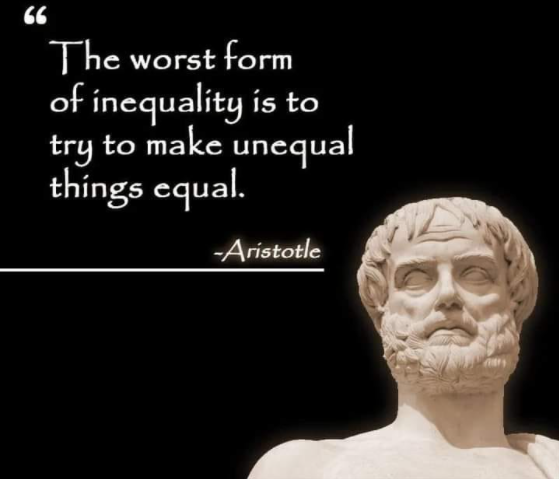
To a large degree, most people think fairness is about equality.  Yet, people are too complex and too highly differentiated for them to be equal.  They may have equal rights, but that is about the only way in which people are equal.  The Founding Fathers understood this, but they feared democracy largely because they understood that most people are governed too much by a desire for a simple-minded fairness, which drove them to desire equality and the redistribution of money and goods.  Yet, it cannot be fair to deprive the person who has acquired income and goods without the use of force of what he has acquired.  No system based on a forced redistribution can be fair.  Why set out in the name of fairness to redistribute income and goods when this necessarily means that one is unfairly doing harm to many and that fairness cannot be achieved?  Even Pearlstein allows that it is hard to know when to stop the process of redistribution.

The morality of Capitalism has the same basis as the morality of the entire private sector, only some of whose activities are devoted to the values of income and worldly goods.  There is no role for government in choosing who my friends will be and how many hours I am to spend with each of them for our mutual enjoyment.  The government that tried to redistribute my friendship time and effort would clearly be recognized as a tyranny.  There is no role for government in determining how fair it is that a woman of good character may or may not be loved by the man she wants to love her.  There is no role for government in deciding who we may choose for our domestic partner or partners, though that issue is still hotly debated with respect to same-sex marriage.  Many of the greatest values in each of our lives are properly seen by most of us as beyond the sphere of government rules for distribution.

Yet, for some childish and foolish reason, most adults do think that government has a role in re-distributing income and wealth.  I believe this is in large part because they ignore the fact that this is really a theft of the time an individual put into acquiring that income and wealth, including the time he may have spent preparing himself for earning it, as in his studies, his thinking about markets over many years, and his careful attention to details in his work.  Many seem to think that they have not subjected someone to slavery just because they are taking by force only half of every added dollar he earns rather than all of it.  In fact, a paper by Peter Diamond (MIT) and Emmanuel Saez (UC Berkeley) is making its rounds among the Progressive Elitists now that claims that the correct marginal tax on high income people is 73%.  I frankly cannot understand how they so deceive themselves that taking half or 73% of every additional hour worked from someone is not the moral equivalent of slavery.

Most slave owners in the Antebellum South allowed their slaves to spend a few hours working in their own gardens to grow some of their own food.  Did this mean that they were really not slaves because the slaveholder did not have them in his cotton or rice fields 100% of the time?  The Progressive Elitist might argue that they only make slaves of those who choose to be very productive in the marketplace, so if you participate in the market you are choosing to be a slave.  Of course they fear to be that honest, but they do say that if you make a lot of money you are choosing to pay the progressive taxes.

Yet, the person who spends time on other values, such as watching TV, going fishing, running, or spending time with friends or family is not taxed in any way.  That is not fair.  If it is right to progressively tax the person who chooses to spend time making money, then it is unfair to give the person who could have made money, but did not, a tax deduction for the money he failed to make.  Fairness demands that he be taxed for the value of his time that he spent in a different choice of values.  Yet, government knows that people will not stand for it to discourage other values such as time with family with a tax, so it acts in a manifestly unfair way on those who spend productive time making money through voluntary trades with others.  It does this even though it is generally recognized, even by Pearlstein, that such economic activity has done wonders in improving the standard of living for almost everyone, even the inveterate TV watcher.

Pearlstein's characterization of the market as much more free than it is provides him with some of his arguments that free markets do not work so well.  He also treats the arguments of people like Allison  unfairly.  For instance, he says
The conservative case against regulation, for example, is premised on the proposition that everything that has gone wrong with the markets is the government's fault.
 Well no, free market advocates realize that many businesses will fail in a perfectly free market and that there will be a business cycle in a free market with recessions from time to time.  They just object to the fact that government action in the market has the consequence of causing more business failures, more frequent and deeper recessions, and in the present case a recession that seems to have no foreseeable end.

Pearlstein claims that free market advocates say that
Because pursuit of self-interest is the essential ingredient in a market system, it somehow follows that individuals and firms are free to act as greedily and selfishly as they can within the law, absolved from any moral obligations.
I do not think there are many who believe they are "absolved from any moral obligations" in their actions.  Pearlstein in particular seems to imply that Allison holds this view.  I have not read his book, but the way Pearlstein describes Allison's viewpoint leaves quite a large leap to the conclusion that Pearlstein seems to impose on Allison's viewpoint.  I surely do not believe that a businessman is only morally obliged to obey the law and that he is morally allowed to otherwise act immorally.  Indeed, that is a clearly immoral viewpoint, which an advocate of Capitalism on moral grounds is most unlikely to make.  But Allison correctly notes that when government uses a heavy hand in making moral decisions in the marketplace, the many laws that claim to define moral actions and value choices in the marketplace will naturally become a substitute morality for many people.  If Pearlstein wants everyone in the market to act morally, then he should remove the government from the market as much as possible so that people will understand that they must act morally in the market, rather than just obeying the laws.  Government morality acts as bad money does to drive good money out of the market.

Pearlstein repeats the liberal argument that economic success often is due to dumb luck.  Some have the good fortune to be born with the right genes and the right parents, to grow up in a good community, to be better educated, to be better mentored, and to be at the right place at the right time.   They argue that the market should reward virtue, not dumb luck.

Well OK, we like to see virtue rewarded.  But, in a system in which market success means that everyone involved in a voluntary transaction has entered into it because he believes he is better off for having participated in it, how is anyone hurt if someone in the transaction was lucky?  Everyone still benefited.  We all want the freedom to be lucky, do we not?  We may be lucky in a business transaction one day also.  Or, maybe we were lucky enough to meet the love of our lives 40 years ago.  Apparently liberals believe that luck should be re-distributed also.  So, why is it only luck in financial terms to be redistributed?  Did I not realize a greater value in having the luck to meet Anna than someone else has had who is unhappily married for the third time?  As in the marketplace, virtues and luck both play roles in our love lives.  Luck is not something to be redistributed and rationed among us.  Our luck and misfortunes are generally properly beyond the reach of government.  Yes, we may well choose to recognize that some people have suffered more misfortune in life than others in our private charity work or contributions, but this is not a proper function of government.  Rightly, there is no grant of power for the purpose in the Constitution.

Pearlstein continues to argue against the perceived fairness of the marketplace.  He says that 20 years ago wage and salary earners reliably captured about 75% of the national income, with the rest going to capital providers.  More recently, labor has only received about 67%.  I expect there are reasons for such a shift that make sense.  One is that there is a decrease in union labor in the private sector.  Another is that there is an increase in the importance of knowledge and professionalism and both are more and more often tied to capital and the founders of businesses.  Still another is that complex law and regulation has insulated very large companies from upcoming competition.  Another is the huge influxes of taxpayer money to companies such as Goldman Sachs, CitiBank, Bank of America, GE, GM, Lockheed Martin, Solyndra, and A123 Systems in recent years.  Corporate welfare seems to be a staple of Progressive Elitist government even as it pretends it is not.

Pearlstein claims that 50 years ago, the typical corporate executive earned less than 50 times the pay of the average front-line worker.  He says the ratio is now 350 to 1.  He implicitly believes this is a statement that morality is defied here.  I expect he is comparing the few large corporations of 50 years ago in a much smaller US economy with today's corporations acting in a much larger US economy and in a much larger world economy.  If he chose to compare the mid-sized companies and large small businesses today with similar sized businesses by income of 50 years ago, the ratios would be much more similar.  That is, compare the ratio in a $100 million income company today with a $100 million income company of 50 years ago and the ratio will be much less dissimilar.  Neither 200 years ago, 100, 50, or last year did most companies even have a 50 to 1 ratio.  That ratio is a phenomena of size.

Pearlstein laments the fact that inequality of income in the market threatens to overwhelm the ability of a progressive tax-and-transfer system to keep up with it.  So yes, Pearlstein simply assumes that income equality is a requirement of a moral economic system, despite the fact that almost no one advocates equality in other aspects of our private lives.  His, and that of most Progressive Elitists, is a very childish moral code.  It is manifestly biased in the application of equality and it absolutely refuses to recognize that individuals are highly complex and differentiated.  It refuses to recognize that as a result, we make very different value choices and bring very different abilities to bear on acquiring the values we choose.  It just assumes that using force to redistribute income and wealth is good.  It just assumes that largely enslaving those who make good money in the voluntary and mutually beneficial marketplace is justified as for the greater good.  It also assumes that it is right and proper to redistribute luck, but only luck operating in the market.  What an absolutely weird, yet common, idea of morality this is!

A society with a very limited government whose only function is to protect our equal, sovereign individual rights to life, liberty, property, the ownership of one's own body, mind, and labor, and the pursuit of personal happiness is the only society in which people are free to be moral.  They are then free to be moral in the entire private sector of their activities, including that subset of economic activities in the market.  Capitalism is moral for the same reason that other human action dedicated to the free choice of values and the freedom to pursue them is moral.  Capitalism is moral because it allows these choices of value by each individual in the marketplace.  It is moral as an exercise in our individual right to freedom of association to cooperate with others as we choose for financial reward, just as in other aspects of our lives we are free to associate with others as friends and lovers and family.  Our labor belongs to each of us by right and we trade it with others in some cases for monetary gain and in other cases as part of a family to instruct a child or to do the dishes and laundry.  Government has no moral obligation to equalize any of the rewards that we get from exercising our freedom of association or the use of our time.  Indeed, if it tries to do so, it has violated our individual rights and done an evil deed.


30 October 2012

The Election Choice: Is Another Human Being a Burden?

If, as the Progressive Elitists say, we are all our brother's, neighbors, and unknown countryman's keeper and that keeping is to be performed by government using mandatory taxation and forced labor, then every newborn baby is an added burden to everyone.  In this view, the needs and the wishes of each new person become the command that forces each of us to act to satisfy those needs and wishes.  With no regulating principle to limit which needs and wishes will be satisfied, these needs and wishes will make very heavy demands on limited resources.  This perhaps heightens the tendency of Progressive Elitists to see each new human as a threat to the Earth, to nature, and to the environment.

Indeed, instead of the effort required by a man to produce what he needs and wants in voluntary cooperation with others in the free market being the limit on the use of resources, the Progressive Elitist is required to find other means to place limits on both the requirements for action on the part of others and upon the use of resources.  There are two major such limits:

1)  Political power and the jockeying of factions for control of government, whose monopoly on the use of force to compel action by others to satisfy the needs and wants of controlling factions is fought for with warlike intent and ferocity.  This vicious fight for power to control always limited resources is rarely acknowledged by more gentle supporters.

2)  Claims, commonly exaggerated, that the resources of the Earth are limited justifies limits on demands on the government to compel too much effort from others to satisfy greedy demands.  Protection of the Earth, nature, and the environment are to become regulators of greed which the Progressive Elitists refuse to allow free associations for purposes of cooperation in the pursuit of values in the private sector to pursue.  This is also used to argue against the efficiency of the private sector and Capitalism in providing for individual needs and wants with the claim that the private sector uses too many of the Earth's resources and violates nature.  Nature is seen as excluding mankind.  These limits seem more amenable to gentler souls than do those of the raw exercise of government power for special interests or factions, yet these limits become added tools for warlike factions in control of government.

Whatever the limits on efforts to satisfy the needs and wants of each of our countrymen by these two Progressive Elitist principles, each person is an added burden.  Each newborn child has a long future of educational expenses from Kindergarten through the 12th grade and then perhaps in college.  Any sickness or genetic defect is a burden on everyone else.  If the adult does not prove ready to be productive enough to produce a large stream of tax revenues for the governments, then the adult is a burden on all.  Inevitably, no matter what, each person is a strain on the Earth and Mother Nature.  Each person presents complex needs and wants, with critical differences in the timing of these needs and wants, which lawmakers and bureaucrats cannot understand and provide for.  The individuality of each person must be suppressed and modeled out of existence for such a state to function.  The problems that result make each individual a sore spot to be resented by the lawmakers, bureaucrats, and voting Progressive Elitists.

In a rich and vibrant private sector with a highly limited government only protecting individual rights, individuals choose their own values based on their own assessments of their needs and wants.  They then arrange their voluntary associations with others to make trades of time, effort, money, and favors to pursue their values.  These trades are made only as each participant sees some kind of advantage in cooperation for himself.  All such relationships contribute to the value we see in one another.  Aside from a few murderers and street thieves, everyone has at least some positive value to us as an actual trader, a potential trader, or just someone in the incredibly complex hierarchies of trades and interactions that infuse our society who is almost certainly productive at some level.  In such a society, we come to see everyone as a value to us.  Those few worthy people down on their luck for a time or really, really unfortunate in the chance of genetic problems or disease, we want to help care for voluntarily because they are still a part of our society of valued individuals.

Not so in the society of the Progressive Elitist.  The characteristic ObamaCare program is already rationing medical care in Medicaid and Medicare by refusing operations and expensive drugs to those over 70, who are seen as an excessive burden to society.  After all, not only do such people burden society with their medical costs, but they also take Social Security money.  They produce little in the way of a tax revenue stream now.  Similarly, newborn babies with severe problems are to receive less care in the frank acknowledgment that they will burden society with many years of education expenses before they will be generators of a tax revenue stream.  Progressive Elitism robs us of our joy in the lives of others.  It rubs the fact of our being forced to serve them in our faces.  It forces us to become sullen slaves to their needs and wants.  It forces us to become angry combatants for our own needs and wants.  Among our own needs and wants is the avoidance of having to provide for the needs or wants of others if only because the hours of our own days and lives are limited.  The Progressive Elitist society is suffused with stress and resentment.  Everyone else becomes a burden upon us.

In the election on 6 November, we will be faced with many choices to either choose to enthusiastically embrace the Progressive Elitist viewpoint of society as Obama and Biden do, or to make a choice that recognizes at least a substantial part of the value of a limited government and private sector society more consistent with the American Principle put forth in our Declaration of Independence and our Constitution as Romney and Ryan do.  We all need to decide whether we want to live in a society that makes nearly everyone else a value to us or one which makes nearly everyone else a burden to us.  We need to decide whether we want to cooperate with others or whether we want to fight others for government power or for the limited resources of the Earth.  This is the nature of the conflict between government limited to protecting our rights and socialist government which is supposed to provide for everyone's needs and wants.  This is the nature of the rich and vibrant private sector choice and the big government choice.  We must choose to recognize the fact of a complex and highly differentiated individuality or to refuse to see it.  We have to decide whether we are pro-human or anti-human.

07 September 2011

Obama Kills Jobs and Resuscitates the Great Socialist Recession

Let us start off with a chart showing the number of jobs missing from our economy since January 2000 in thousands of jobs.  The number of missing jobs in January 2000 was equal to the number of unemployed people then who were looking for jobs or in some cases were simply taking some time off between jobs.  Jobs were plentiful then and had been for several years, so unemployment was only 4.0%.  Because of the boom and bust nature of the economy since then due to the Federal Reserve setting very low interest rates, the deficits run by our governments, increasing regulations and taxes, added energy costs due to drilling prohibitions, recent added uncertainty caused by ObamaCare and Dodd-Frank financial reform, and considerable class warfare and anti-business rhetoric, the number of missing jobs has increased greatly in the course of the last 11 years.


The number of missing jobs is calculated assuming that the same percentage of Americans would work today as did in January 2000 if good jobs were available.  The high tech bubble that burst in 2001 and 2002 had already created a situation with about 5 million more missing jobs than we had had at the beginning of the century.  In December 2007, the United States had not yet been much affected by the recession due to a sharp increase in the price of oil that was already hurting most other countries of the world.  But in 2008, companies began laying off employees and stopped hiring new employees.  This never-ending Great Socialist Recession was underway.

Since Obama occupied the White House, there has been no substantial or sustained return to normalcy.  The number of missing jobs for the last four months has been almost constant.  There was actually a small increase in the number of missing jobs in August, though the statistics are not really good enough to consider that a real effect.  What is real is that over the long term now, there has been no improvement.  This is not surprising since almost every action the Federal Government and the Federal Reserve have taken was effective in killing jobs, not in creating them.  Jobs are conserved in big businesses and many, many jobs are created by small businesses when the government does little to hurt their businesses.  The Federal Government and many state governments have worked very hard to create very tough business conditions and much uncertainty when American business already faced a world largely in recession and stiff competition from abroad.

Obama's socialist viewpoint, his servitude to labor unions, and his academic economic advisers with their belief in Keynesian economic theory, led him and the Democrats down a very wrongheaded path.  America is in misery because of this wrongheaded understanding of the economy and business by our ever more controlling central planners in Washington.  The private sector and Capitalist free market can do much better.

20 April 2011

Capitalism: Freedom to Compete or Freedom to Cooperate?

The enemies of Capitalism and free markets like to describe them as being characterized by dog-eat-dog competition and the survival of the fittest.  Ayn Rand's philosophy of Objectivism provides moral support for Capitalism and hence is subjected to the same criticism.  Before examining the derogatory portions of those claims, let us ask if the free market should be viewed as that part of society in which man has the freedom to cooperate or to associate with others.

Of course, all real freedoms adhere to individuals and each and every individual has the same sovereign rights.  If I have the freedom to cooperate or associate with another person, then I have the right to use my mind to evaluate whether I will enter into a particular cooperation or association with another person and  he has the corresponding right.  If we arrive at a mutual agreement to cooperate or associate, we do so.  If we cannot do so, we go our separate ways and perhaps seek out others with whom we can reach a mutual agreement.  In practice, this means that we seek people out who we can trade values with such that each party believes they are better off because of the trade.  There are innumerable such trades being made in a society and it is perfectly rational for the parties to make such trades in many cases.  The value of living in a society is found in the wealth of such advantageous exchanges.

Such free market trading requires that men be free to use their minds to choose their own values and then to manage their own lives in accordance with their values.  Much of the prejudice against free markets is based on the opinion of elitists that others are not capable of choosing their own values and of managing their own lives.  But let us be frank that if men are not allowed the freedom to choose their own values and manage their own lives, then they are fundamentally enslaved.  There will then be no free market or a very restricted domain will be all that is allowed to the free market.
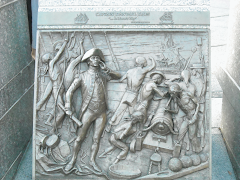
If there is no free market, what have we lost?  We have lost the ability to manage our own lives according to our own values.  We have also lost the ability to cooperate freely with others in our society or even between societies to trade values for mutual benefit.  We lose the freedom of association which is a freedom to choose with whom we will cooperate or associate and for what reason we will do so.  We lose the freedom to exchange money, goods, services, ideas, friendship, and love.  Of course a restricted society which has begun the process of eliminating the freedom of association tends to do so in the realm of money, goods, and services exchanges if freedom of speech was once well-established.  In many societies freedom of speech has never been well-established and in those societies the exchange of ideas may be among the first exchanges lost.

When it is well-established that the government has control of those exchanges, it can further expand its controls to ideas, friendships, and even love.  In America today, we have some cases in which government already controls ideas.  This is common in government-run schools and colleges, as well as in the workplace.  We have restrictions on friendships in the form of outlawed sexual exchanges, especially if friendship is mixed with the exchange of money.  We have restrictions on love in the form of Don't Ask, Don't Tell and the Defense of Marriage Act.  It is perfectly appropriate to view these restrictions as restrictions on the free market, which is a concept really much broader than the strictly economic concept usually given to it.  The reason is that all of our human relationships are based on an exchange of values and these values need not be economic values.  The values may be friendship, love, and ideas.  In this realm of the free market, it is not competition, as people usually think of it, that most characterizes it.  It is cooperation and willing association.

Returning to the economic marketplace, where goods, services, and ideas are exchanged, the more fundamental action an individual makes a choice about is also one of with whom and for what reason will he cooperate and associate.  His primary motive is not to bury some opponent.  It is to find a way to exchange values with others in such a way that each is made happier by the result.  Of course, he may only be thinking of his own happiness, but then so are those with whom he is trying to arrange the trade.  So, the result is that everyone, to the extent they are rationally using their minds, is better off.

Of course, some people may wish to make trades that others will not choose to make with them and they may be disappointed.  This cannot be helped because everyone has an equal, sovereign right to cooperate or associate with others.  Force cannot then be used to make others enter into exchanges to which they have not agreed.  Those who do not like Capitalism or the free market then proclaim that the disappointed person or persons have been "eaten."  This is a clear exaggeration.  The proposed solution to this disappointment is to have the government use force to make people, who calculated that the disappointed person's proposed trade was bad for them, enter into the exchange nonetheless.  A better alternative to using force would be for the disappointed competitor to establish more reasonable evaluations of his proposed trades with others.  If he is simply not good at arranging certain types of exchanges on a voluntary basis, then he needs to find other types of exchanges which he is better at arranging.  A wealthy free market society is rich in possibilities for many other alternative exchanges.

Government restrictions on free markets take the form of mandates disallowing cooperation between people or forcing unwanted exchanges of values.  Either way, the government is destroying the freedom of association, or we might say the freedom to cooperate, that every sovereign individual has.  I just learned about an example of just such a nefarious government interference upon one of my nieces today.  She is a very good soccer player and a deep-thinking strategist of the game.  She teaches soccer to children in classes operated by a sports store.  The other soccer coaches are paid.  She cannot be paid because of the Child Labor Laws.  She teaches soccer because she loves the game and she likes teaching children.  But, there is clearly no justice in the perhaps well-intentioned law, that keeps her from being paid.  Her freedom to associate with children who want to learn to play soccer well because she might both love teaching it and be remunerated is interfered with by government.  She teaches anyway, but her freedom to choose payment and maximize the values gained is lost.  Of course, she is a child, though a very intelligent and hard-working child.  We have governments which are only too happy to restrict the freedom of adults in very many exchanges as well.  Why not, since our governments think adults are no more able to choose their own values and manage their own lives than they think children can.

Government interferences with the free market always take the form of restrictions on the freedom of association.  It is voluntary cooperation that the government limits to prevent competition or to achieve other goals contrary to the choices made by individuals in the free marketplace.  The reason is that the economic marketplace exists so that people can form partnerships and companies together voluntarily, hire voluntary labor, use capital from voluntary investors, buy equipment, facilities, and supply goods from voluntary venders, acquire knowledge and ideas from cooperating consultants and inventors, buy a technical library, and provide goods, services, and ideas to voluntary clients.  Each of these relationships is characterized by a voluntary exchange of goods, services, or ideas.  Each is an example of the freedom of association.  Each is an example of cooperation.

Of course competition usually occurs in the process.  But, competition in the sense that people usually think of it is not as fundamental as the freedom to cooperate is.  While some people have a surfeit of competitive juices, many are simply seeking out one value after another and care only about the value they gain in any given transaction.  They hope to string together many successful transactions and do very well for themselves.  In many cases, they have no idea with whom or what they are in competition.  For instance, when I quote a material analysis job for a possible client, am I in competition with another materials analysis laboratory, or am I in competition with other alternative uses of the company money?  The company could buy a piece of equipment, pay off a loan costing them interest, or send an employee off for training.  My experience is that most often my real competition is not another materials analysis laboratory.  It is a host of other alternative uses that my possible client has for his money.

It is very hard to conjure up visions of dog-eat-dog competition in this context!  What does become clear in this context is that competition is fundamental to an economic exchange only in the broader context that everyone rationally is placing a value on his values that can be realized in a trade.  It is very hard to see this as evil.  Indeed, this is exactly what the moral man does and it is why he develops a moral code.  He needs a moral code to place relative values on the many possible values he might pursue and might gain in exchanges with others.  Of course the exchanges in question are all exchanges of values, of which economic exchanges are a subset.

Competition exists in the free market because people act to realize value gains in their exchanges with others.  But, the exchange itself is an act of cooperation or association.  There is no way to interfere with the natural competition without losing acts of cooperation and denying the freedom of association.  The act of competition is the act of the evaluation of values.  It is not stabbing someone in the chest.  It is not throwing them in a dungeon and starving them.  These are the things governments do when they interfere with our voluntary exchanges of values whether in the economic free market or in the broader free market.

You may say I am extreme in this assessment, but no, I am seeing the complete context very well.  If a government interferes with my sovereign right to associate with others, it may place a less severe penalty on me for trying to go ahead with a denied exchange.  If I then assert my sovereign right and refuse to take or accept the penalty, the government will ratchet up the use of force on its part and may well have a SWAT team shoot me or imprison me for life.  The real penalty for asserting my sovereign right may well be death or permanent enslavement.  This is clearly evil.

Rational men do not want their societies to go into these sorts of death spirals.  They understand the need to keep their society as free as possible from the use of force, including government-wielded force.  Capitalism is the form society takes when men are free to associate with one another.  Mixed economies deny the freedom to cooperate with others and trample the right of association.  These principles are readily illustrated in Ayn Rand's ingenious novel Atlas Shrugged and in the excellent movie Atlas Shrugged Part I.

16 October 2010

Did Capitalism Save the Chilean Miners or Try to Kill Them?

On 14 October 2010, Daniel Henninger wrote an upbeat opinion in the Wall Street Journal that noted that what Americans do in their work in the private sector often has noble consequences despite the frequently negative view of the market and corporations of such socialists as Obama.  In particular, he notes that a small private company, Center Rock, Inc., in Berlin, PA developed an amazing down-the-hole hammer drill head suitable for drilling quickly through unusually hard rock.  This drill head is a canister 28-inches in diameter and consists of 4 air hammers and 4 drill bits.  The Chilean miners just rescued after 69 and 70 days more than 2000 feet beneath the surface were brought out about 2 months earlier using a Schramm T-130 drill system using the Center Rock drill head.  Schramm Inc. is a West Chester, PA company.  These tools were created and marketed by for-profit American companies.

For 17 days the miners had no contact with the outside world and historical precedent would have given them but little hope of ever being rescued from that great depth.  It had taken some 30 probe holes to intersect a part of the mine to which the trapped miners had access.  On the 18th day, water, food, and medicines were being supplied to the trapped miners.  Brandon Fisher, President of Center Rock, and Richard Soppe of Center Rock worked very long hours for 37 days of drilling to create the shaft wide enough to bring the miners out.  A fantastically successful rescue had been accomplished through the efforts of many companies from around the world and the Chilean government.

Daniel Henninger noted that Obama has been campaigning throughout the U.S. with the message:
The basic idea is that if we put our blind faith in the market and we let corporations do whatever they want and we leave everybody else to fend for themselves, then America somehow automatically is going to grow and prosper.
To which, Henninger says that's a caricature, but yes, it is basically right.

This flies in the face of the viewpoint of the socialist or Progressive.  They usually view man as an animal dominated by low emotions such as envy and jealousy, hatreds and bigotry, a deep-seated dishonesty, and a willingness to use violence and fraud to take whatever he wants.  Most men are stupid.  A few who are brighter and fortuitously of a slightly better or more trainable nature, can be indoctrinated in the basic rules of the better socialist man.  These few, after many years of training and indoctrination in government-run schools, will form the elite who will guide a large and complex government apparatus to force upon the unwashed and largely stupid masses the values they would not themselves choose.  This government, too complex for most of the people to understand or to concern themselves with, will then nudge them and force them as need be to live their lives on a higher plane than they otherwise would.  They will be told this is for the collective good.  The guiding elite politicians and academics are rewarded for being the guiding elite with power, prestige, and money, while pretending that it isn't so.  They pretend it is self-less service to the unwashed masses.

This was the conclusion the socialist Owens, father and son, came to when their socialist experiment failed in New Harmony, Indiana in the early 1800s.  The viewpoint was still similar in such proselytizers for the American public school system as Horace Mann, John Dewey, and William James.  The teachers unions of today continue in that tradition.  So do Obama, Pelosi, and Reid.  So probably does Associate Professor William K. Black of Economics and Law at the University of Missouri - Kansas City.  He felt he had to respond to Daniel Henninger with a blog post called Capitalism Would have Killed the Chilean Miners: a Reply to Mr. Henninger.

Prof. Black wants to defend Obama and the Progressive viewpoint on the need to rigorously regulate the free market because human beings operating without severe regulation will eat each other alive.  He starts with asking why the miners needed to be rescued in the first place.  He says the Chilean mine was private and it had a bad safety record.  Black says
Reports from Chile stress that the mine violated the law in failing to have a second entrance to the mine (which would have greatly reduced the risk of the miners being trapped by the collapse of a portion of the shaft.)  Local officials have claimed that the only way the mine owners could have gotten away with such an obvious violation of the safety rules was through bribery of the regulatory officials. ....
Once the mine shaft collapsed in Chile, the private mining company declared that it not only could not pay to rescue the miners -- it could not even pay their wages.  The private company threatened to file for bankruptcy.  The rescue was paid for by the State-owned mine (i.e., the Chilean government had to bail out the private mine owner to the tune of an estimated rescue cost of $10 to $20 million in order to rescue the miners.)  A $25 ladder apparently would have prevented the tragedy, but the private owner's profit motive led them to avoid that expense.  The Chilean mine had gold and copper ore.  Both of these minerals are selling for record prices.  This makes the private mining company's failure to provide another exit and a ladder all the more outrageous.  Where did the profits go?  Capitalism would have left the miners to die.  The government paid to rescue the miners.
Prof. Black says "When we prevent a corporation from engaging in fraud or endangering its workers we do not harm capitalism, but rather save honest businesses from being driven from the marketplace."

I agree with Prof. Black that bad behavior is evidenced in the additional information on the mine, the mining company, and the Chilean government regulators.  The issues are complex and require us to carefully establish a context for our evaluation of the role of government in regulating businesses.  He is very concerned that the mining company controlled the miners and foisted a fraud upon them that endangered their lives.  He gives us a number of facts that bear on this issue of how the miners were forced into a life endangering job, which he does not seem to think need examination and discussion.  They do however.

First, the mine is said to have had serious safety issues and they were well-known to the miners and their union.  Their protests had been ignored.  Yet the miners kept going down into the deep mine knowing their lives were at risk.  Second, Black says the mining companies profit motive was so strong that it would not pay for a live-saving $25 ladder, even though gold and copper prices are at truly record levels.  Third, the company bribed government regulators to ignore the lack of a second mine entrance, rather than spend the money to create one.  Fourth, the mining company preferred declaring bankruptcy rather than paying for the rescue of its miners which cost $10 - 20 million and was paid by the Chilean state-owned mining company.  In fact, the mining company was unable to even pay the miner's salary.  Fifth, the final consequence of the miners being trapped for the company was that it was shutdown.  It no longer is allowed to operate the mine.

While Prof. Black is on the Economics faculty, he does not seem to think that we need know anything about this company but that its product sells for a lot and the company itself is greedy and irresponsible.  The facts suggest that it is more likely that the company was in fact so marginal in profitability that it should have gone out of business some time ago.  If it were making big profits because of the skyrocketing price of gold and copper, why would it go out of business rather than pay a mere $10 - 20 million of rescue costs?  Why would it bother to bribe government officials and ignore real safety issues correctable at a cost of $25?  These greedy mine owners are supposed to have been blind to the fact that their earning huge profits on gold and copper could easily be lost to them because of safety violations?  Possible, but probably less than likely and the professor does not even see the need to offer us evidence that this is so.  Perhaps he assumes, in the best Progressive fashion, that we are too stupid to ask such questions ourselves?  While gold and copper are very high priced now, one still has to consider the costs of production.  That Chilean mine may well have had a vein rich in gold and copper at one time, but it appears likely from the behavior of the company that they were working the dregs and barely eking out a living even given the present high prices of gold and copper.  If this is not the case, then the Chilean government will be trying to recover their costs for rescuing the miners from the hidden profits of the mining company owners, I expect. 

Enough with the mining company!  Let us return to the miners.  If conditions at the mine were known to be life-threatening, why didn't they simply take other jobs?  If Chile has a free market, which Black treats them as having, then no one forced the miners to stay on the job at the mine.  They could simply take a job that offered them a safer and more pleasant workplace.  Given that Chile has a state-owned mining company, the private mining sector is probably less free than in a real free market.  Governments that operate state-owned businesses often interfere with any competitive private businesses to support the less competitive state-owned business.

Now Chile, is not Haiti, which was very obvious when each nation had a very severe earthquake recently.  Chileans have property rights and consequently they build much better buildings that underwent much less damage.  They have a society that could recover from such devastation relatively quickly.  They are better educated than most people around the world.  While they sought help with the rescue, they also contributed greatly to the rescue work and managed it.  Chile may not be at the level of the U.K., the Netherlands, Germany, or France, but it is no Cuba, Bangladesh, Siam, or Angola either.  Chile has had the inheritance of instability of many South American countries and the legacy of the Spanish Conquistadors and favored old families.  Nonetheless, it is now a relatively advanced nation, though saddled with some state-owned businesses.  In the end though, it does not have so vibrant a free market that these miners felt they could walk away from a dangerous job and a marginal employer to find better work.

Why?  Basically the answer is that the rule of law and the equal, sovereign rights of the individual have not been long recognized as essential to Chilean society so that a broad-based and vibrant, innovative free market could develop on the scale of that in the U.S. or at least close to the potential of Chile.  One aspect of the mine story demonstrating this was that bribes were effective to avoid being shut down for some time.  This is a failure of the rule of law.  That many Chileans were unequal was long a part of Chile's tradition.  There is no U.S. Constitution to limit the powers of government and not yet a strong and always dependable will among the people to insist that the government serve them, rather than they it.  When Prof. Black says Americans need to have more business regulation, which Obama calls for constantly, because of the nature of business in Chile, he is using that story in a very out-of-context manner.  Indeed, the context is neither right for Chile nor for the U.S.

It is very reasonable for libertarians to argue that government regulation of American businesses is excessive and often very naive and ill-informed.  It is very reasonable to argue that the ends to be achieved by it are very often not achieved or achieved at too high a price.  It is also very reasonable to argue that regulations often infringe upon our equal, sovereign individual rights.  It is also clear that regulation is often a tool to keep smaller companies from becoming effective competitors against larger and older companies.  Here in the U.S., we do have a very vibrant free market by and large and when it is not so free in some segment, we find that it is not free and vibrant because the government is regulating it.  When there are jobs restrictions, it is commonly because of government interference in the market.  When companies are not being innovative, it is commonly because of government interference in the market.

Prof. Black acts as though business regulation is always done only to prevent business fraud.  He acts as though it is possible to expect that despite positing a human nature which is constantly trying to get away with fraud except when the moral hand of government uses regulations to prevent every effort at fraud.  The Progressive seems to naturally assume that men in the market are evil, while men in the government are angels.  The angels in the government will anticipate and prevent with regulations most of the evil actions being devised by the devils in the free market.  The angels will devise rules with minimal collateral damage because they will have a very good understanding of the market place and all the interrelationships in that market.

In reality, this is far from the truth.  In reality, the complex free market has many internal and private means to counteract anyone's attempt to use control frauds of the type that worry Prof. Black.  In the real private sector, people learn about the frauds of others and refuse to do business with them.  If a business produces unreliable products, people stop buying from that business.  Retailers will stop putting that company's products on their shelves.  If the product does harm, the company is quickly taken to court.  Prof. Black seems to think that without regulation the fraud control company will prosper.  But by the time the government knows to take regulatory action, there are likely to be many in the free market who already know the same thing and have already moved against the fraudulent company by no longer buying their product or by suing them in court.  In fact, one of the reasons companies sometimes want to be regulated by a friendly government agency subject to the guidance of politicians who can be bought with campaign funds, is to avoid the wrath of their customers expressed in lawsuits.

Workers often do make a decision, often a very conscious and considered decision, to take a job which is more dangerous than most.  Often they do so for higher pay, sometimes for greater adventure, and sometimes because they simply want to work with tougher, more courageous people.  This is their right to do.  There are many sub-cultures in the workplace.  Many of these sub-cultures do not wish to be turned into pre-school nurseries.  There is a human need for freedom of choice and some people will choose what most others would not choose.  This individuality should be honored and respected in America.  It once was and it did many good things for our country.  Despite the Progressive's desire to completely regulate our lives, we must, the unique individuals we are, assert the right to choose our own values and manage our own lives both as business owners and as employees.

The decision on how safe a workplace should be is very complex.  For instance, it is often a strong function of the knowledge of the workers, more than of fences and gates and shields.  It is often most affected by how focused people are on their tasks.  It may be a function of the culture.  It is certainly a function of the economics and competition at times as well.  It is also a strong function of the tasks that need to be done.  If central planning by government cannot do an adequate job of producing and distributing toothpaste, it certainly cannot do an adequate job of policing workplace safety.  The vast majority of these workplace safety issues are best left to the people involved in a free market relationship in that workplace.  Government is generally unable to do the job as well.  Indeed, government does not do as good a job at almost any aspect of business regulation as free people in a free market do.

As an employer, I can assure you that employees stay when they are getting what they want from the workplace and they leave when they are not.

12 May 2010

Obama Chooses NHS Admirer to Head Medicare

Obama has chosen Dr. Donald Berwick to be the new head of the Center for Medicare/Medicaid Services.  Berwick gave the talk shown in the video below in 2008 in the United Kingdom and bowed in praise to the altruists' shrine of the British National Health Service (NHS).  He loves the political system of rationing health care and redistributing the costs from those not poor and not unhealthy to the poor and the unhealthy.  He claimed that health care decisions made in the free market are made in the dark, while those made in the bowels of a gigantic government are made democratically in the public light.  That huge government makes democratic decisions in the light of day is certainly laughable in the light of understanding how ObamaCare came to be.  The backroom deals with big companies to gain their support or at least to prevent their opposition, the backroom deals to enlist the aid and enthusiasm of labor unions, the backroom deals to get the votes of certain reluctant Senators, the willful trampling of the well-expressed opposition of the People, and the order to pass the bill so we would find out what was in it, all make a lie of the Berwick idea that the political process is democratic and performed in open daylight.

On the other hand, health care decisions made in a free market are made where they matter in the light of day.  First, the government does meddle extensively with the free market in medicine, with many limitations on health insurance due to state mandates and many government limitations on competition between hospitals and among doctors, such as severe limits on their numbers.  The government has also stacked the cards in favor of having employers choose the health care insurance options for their employees, thereby reducing the employee's choice in the matter.  Still, the employee does evaluate his own compensation package in choosing employers and the employer will sometimes offer multiple choices.  The market, if it were free, would offer more choices.  But, even after all this, the decision that really counts is one made by the individual, who can decide which compensation plan best meets his individual needs.  In the Berwick and Obama system, bureaucrats will make many more of these decisions than they now make.  Dr. Berwick thinks this is great.  Listen to him:

26 April 2010

Government Sucks, or is that Goldman Sachs?

I am not yet sufficiently informed on the many faults of Goldman Sachs to write an extensive and knowledgeable post on its many shenanigans.  But, it is very clear that Goldman Sachs has long had much too cozy a relationship with the federal government.  The financial institutions have long been subject to extensive and intrusive regulation by the government.  As usually happens when the government regulates an industry, the government turns to people from the industry to explain what goes on in the industry and in turn winds up taking direction from industry insiders on what government policies toward the industry should be.  Even more broadly, in the case of the financial industry, the more and more active role of the government in generally trying to centrally plan the economy and to regulate it, has required the government to seek out expertise in the many arcane matters of industrial and service industry finance. Companies such as Goldman Sachs will often conclude that further growth of government involvement in the economy as regulator and central planner can be made to work to the advantage of Goldman Sachs.  Hence, it provides very generous campaign contributions to politicians who want to increase the power of government and also to pay them off so they will not increase that power at the expense of Goldman Sachs.

I find Goldman Sachs and its relationship with the government to be very distasteful.  Goldman Sachs undoubtedly performs legitimate and vital tasks in the private sector.  But, when faced some time ago with a too powerful and meddling government, Goldman Sachs decided that the combined need to protect itself from a capricious and dangerous government and the advantages of directing that government's efforts to give it a competitive advantage, made it very useful to the company to develop a cozy relationship with big government.  This is a choice that many companies have to make.  The consequences of the choice mount as the size of the company increases because government finds there is more wealth to be expropriated from large companies.  Some industries are also more under scrutiny than others, either because many depend upon it or because its business is hard to understand.  In the 1800s, the most scrutinized industry was the railroads.  Later, steel and banking, then still later electric utilities became very regulated industries.  Once the voracious government starts meddling with an industry, it becomes very hard for many companies to resist the temptation to join what they cannot beat, so they can at least beat their competition.  This is very much what Goldman Sachs did.  It has largely become a company not of market entrepreneurial effort, but one of political entrepreneurial effort.

This has clearly paid off.  Goldman Sachs played a big role in selling securitized sub-prime home mortgage bundles to other companies, which their close relationship with government probably aided with almost insider relationships with Freddy Mac and Fanny Mae.  They received bailout money, when Lehman Brothers did not.  It would not be surprising if the many Goldman Sachs ex-employees in the government, especially this one, provides its management with many useful heads-up warnings about actions the government is about to take.  It must be nice that it has people who influence future interest rates and the like.  Note that Goldman Sachs was not pressured into taking over an overvalued Merrill Lynch the way Bank of America was.  Neither was it pushed into taking over Wachovia Bank, the way Wells Fargo was.  There have been advantages in being in bed with the government.

But, this whole process is a means of broadly thieving from the American People.  And, there is no honor among thieves.  So, the Obama administration and his radical Democrat Congress are now desperate to try a populist tactic out on the American People in which they pretend to protect them from evil business interests.  They long ago ducked the greater responsibility of the government itself for this recession and they have consistently blamed that on big business and supposed failures of the Capitalist system and free markets.  This is their excuse for seeking still more regulatory authority over the financial markets which they are trying to push through Congress now.  To prove how badly this is needed and to distract the People as much as possible from the sorry state of the economy and the role of the government in making it so, the government has decided this is the time to turn upon Goldman Sachs.  To be sure, the government cannot name some of its worst offenses, since the government was involved collaboratively in many of those.  But, a series of smaller offenses can be exposed to Obama's advantage.

Obama has previously turned against other industries or constituencies which thought they had agreements with him to interfere with the markets to their advantage.  Among these are the health insurance industry and AARP.  He also has betrayed his major constituency of young adults, by forcing them to heavily subsidize the health care insurance policies of older people.  And, he has taxed, and will tax much more heavily, the middle class he pretended to champion during the presidential campaign.  Obama is a redistributionist, so he requires a constant series of victims from whom he takes wealth using the force of government and then he redistributes it to others to curry their favor.  If he did not control the government, he would universally be recognized as a thief.

Given the special interest and spoils politics that must characterize any government's actions when it begins to expand its powers beyond those limited powers needed to protect the equal, sovereign rights of the individual to life, liberty, and the pursuit of happiness, this business environment is inevitable.  The only way to keep companies from facing the decision that Goldman Sachs made to protect itself and to gain insider advantages over their rivals is to reduce the scope and power of government.  Instead, we almost always hear that the power of government must be increased so it can better regulate the Goldman Sachs of the world.  This misses the point that the Goldman Sachs of the world are made by excessive government power.  The only realistic solution to such problems is to return to the excellent vision of the Founding Fathers and the Framers of the Constitution for a very limited government and a very independent free market.  Only a very limited government can perform its legitimate function of equally protecting the individual rights of the People.  Only when one has such a government can one have free and independent markets in a fully developed Capitalist system.

Powerful government can never equally protect individual rights, because it is driven to redistribute all the good things in life.  That process is too complex for it to do so equally, even if it really wanted to do so.  Practical politics, unguided by proper Constitutional principle, will never seriously attempt to provide equal protection.  This is clearly the history we have seen of big government.  It is time to take the lessons of that history, though frankly, a little thought would have predicted such a result in any case.

01 March 2010

Marsha Enright and Gen LaGreca: Can the Free Market Survive Without Rand?

Marsha Enright and Gen LaGreca have written a very good summary of how Ayn Rand completed the vision of the Founders of the United States of America by providing the moral basis of the free markets of Capitalism as the means for justice for each and every individual.  They specifically reject the claim that Capitalism should be defended primarily for what it does for poor groups or similar arguments, rather than for the freedom of thought and action which it provides to each and every individual.  I highly recommend that you read their article.

24 February 2010

What is Progressivism?

"progressivism." Webster's Third New International Dictionary, Unabridged. Merriam-Webster, 2002. http://unabridged.merriam-webster.com (24 Feb. 2010).

1 : the principles or beliefs of progressives
2 : PROGRESS 4a
3 usually capitalized : the political and economic doctrines advocated by the Progressives
4 : the theories of progressive education -- contrasted with essentialism


OK, that is not very helpful.  So far we know it is some set or sets of principles or beliefs and the progressives who hold these principles or beliefs would like to think they represent some form of progress.  But, the principles and beliefs are apparently defined by those who are progressives.  Who on earth are they?


5 often capitalized : of, relating to, or constituting a political party advocating or associated with the principles of political progressivism

Whoa!  Is this circular or what?  Apparently Progressives do not want to have any limits placed upon their beliefs by anything we could legitimately call principles, or they do not wish to name their principles.  If they had principles, those could be defined, but there may be reasons why they do not want them to be defined.  Arbitrary beliefs cannot be defined and they have an advantage in being very flexible.  Today Progressives believe in minimum wage laws, but if the labor unions were to decide tomorrow that they do not like minimum wage laws, then the principle of minimum wages is tossed aside with no problem.  Today they want to reward the trial lawyers with many extraordinary awards of punitive damages in medical malpractice lawsuits, but if the trial lawyers fail to deliver enough political contributions, why then the Progressive is free to believe in tort reform, at least if the insurance companies give them more political contributions for the purpose than the trial lawyers do.

How marvelous it is to be assured that you are for progress and you are free to believe in anything you wish to believe in.  How confining it is to actually be a man of principle.  How much more freedom one has by being a woman without principles.  It is so much more practical to have no principles.  It is great to be a pragmatist and an opportunist.  Today, it is good to advocate alternative energy development by government subsidies and mandates and high fossil fuel prices, but if the ground falls out from under the catastrophic man-made global warming alarm story and the People wake up to the foolish economics of alternative energy and balk at the high cost of fossil fuels under Progressive controls, well the Progressives can simply change their beliefs to some other vague and not-yet-understood to be unsound program, which sounds plausibly like progress.


When Obama campaigned to become President, he kept saying over and over that he was for change.  Indeed, he is.  He wants to diminish the role of Capitalism and increase the role of government.  He wants to increase the central planning of government and take away the individual decisions that characterize the free markets of the private sector.  He wants to diminish those few restrictions on government power still recognized as being required by our Constitution and replace them with a more powerful Presidency and Congress.  He wants the President and Congress to have more control over the People.  These are the only changes for which he and the Progressives consistently stand.


There is a remaining program for change, however.  That program has no principles to guide it and it has no defining characteristic, except that it is a constantly changing program of claims which vaguely sound to many people as though the Progressives are trying to improve our society in some collective sense.  In fact, the particular claims are not important.  They are just whatever seems to motivate some people to back the Progressives themselves for a period of time.  The Progressives figure out what increase in government power can be used to buy the votes of a block of voters and they find a rationale for that program.  The rationale can be very flimsy and can be understood to be wrong by those who have expertise in the given area.  For instance, the Progressive is for those minimum wage laws that increase unemployment among the young and the handicapped and in the more remote rural areas of the country, proclaiming that a man must support his wife and children, so minimum wage must allow for that.  Never mind that minimum wage jobs are usually held only by those in training and who are very poorly educated.  These people will simply not be hired at all as the minimum wage is raised.  Keeping them out of jobs is hardly a good change in keeping with progress, but it is a favored program of the Progressives.


Another favored change with the Progressives is union card check.  This program is such a blatant travesty that little rationale is even offered for it.  No one wants this except union leaders and those politicians who expect they will get larger donations from the unions as the unions increase the number of poor workers who have to give union leaders union dues.  The change is to deprive employees of a secret ballot allowing them to determine who will represent them in wage negotiations.  Who on earth would want that, except the party of Progressives who only want it because they want more money to use in elections to gain more government power to gain more control over the People.


It is clear that it is not quite the case that Progressives have no principles.  They do have one principle.  They stand for more government power so the government can have more control over the lives, bodies, property, income, character, and actions of the People.  Some of those Progressives simply want the power of being in control, while others delude themselves with thinking that once they, the college-educated elitists usually, are in control, they will somehow use their power to do good things for the rabble, the trailer trash, the NASCAR fans, those who cling to their guns, religion, and Constitution, and the uneducated.

There are problems with believing this rationale for seeking power to do good.  One problem is all the harm they do to gain the money to gain the power.  Another is the pretense that these elitists know the lives and experiences of the peasants well enough to be able to figure out what is good for them when the Progressive has finally gotten his hands wrapped firmly around the levers of power and no longer has to buy the votes of those who do not care so deeply as the Progressive good souls do.  Another problem is that after decades of fighting to attain the power of government by being an opportunist looking for more power at every turn and dealing with unsavory union leaders and trial lawyers, the well-intended Progressive is very likely to become damaged goods.


Some would claim that the Progressive wants a redistribution of income so that the differences in income and wealth among the People are minimized.  There is usually a claim among the Progressives that they stand for this.  But, when they have exercised power in the U.S., their actions have rarely been consistent with such an idea being taken as a principle.  They have instead been more about picking winners and losers in our society.  Sure, they want high income taxpayers to have high tax rates, but they also want farmers, ethanol refiners, union leaders, trial lawyers, accountants, alternative energy producers, bankers, recyclers, government contractors, and others who are politically connected to have high incomes through subsidies, mandates, and make-work programs.  Meanwhile, they pile on the taxes and while many of these are aimed at the rich or better off, most of those high taxes are passed on to those who need the products and services produced by the more productive people in our society.  These people tend to be those with high incomes and/or great wealth.


In practice, the one single principle of Progressivism is a desire for government to have more power so it will have greater control over the People, while the college educated elite control the government.  Now, our colleges have long been controlled by the Progressives and such jobs as those in publishing are similarly mostly controlled by Progressives.  It is not at all surprising that Merriam-Webster did not name the principle that gives meaning to the words Progressive or Progressivism.  Naming that principle is not helpful to the goals of the Progressives.  It must be kept a bit hidden.  The Progressive is against allowing the individual to choose his own values and to manage his own life in accordance with his freely chosen values.  He is against the Constitution, because that limits the powers of government.  He is against the free market and the freedom of choice that individuals find in the private sector.  But, he is loathe yet to tell us that he is against the individual and his rights.