Liberty was in full retreat in the early 1940s. Tyrants oppressed or threatened people on every continent. Western intellectuals whitewashed mass murderers like Joseph Stalin, and Western governments expanded their power with Soviet-style central planning. Fifty million people were killed in the war that raged in Europe, Africa, and Asia. The United States, seemingly the last hope for liberty, was drawn into it.
Established American authors who defended liberty were a dying breed. H.L. Mencken had turned away from bitter politics to write his memoirs, while others like Albert Jay Nock and Garet Garrett were mired in pessimism.
Amidst the worst of times, three bold women banished fear. They dared to declare that collectivism was evil. They stood up for natural rights, the only philosophy which provided a moral basis for opposing tyranny everywhere. They celebrated old-fashioned rugged individualism. They envisioned a future when people could again be free. They expressed a buoyant optimism which was to inspire millions.
All were outsiders who transcended difficult beginnings. Two were immigrants. One was born in frontier territory not yet part of the United States. They struggled to earn money as writers in commercial markets dominated by ideological adversaries. All were broke at one time or another. They endured heartaches with men—one stayed in a marriage which became sterile, and two became divorced and never remarried.
These women who had such humble beginnings—Rose Wilder Lane, Isabel Paterson, and Ayn Rand—published major books during the same year, 1943: The Discovery of Freedom, The God of the Machine, and The Fountainhead, respectively. The women, recalled journalist John Chamberlain, “with scornful side glances at the male business community, had decided to rekindle a faith in an older American philosophy. There wasn’t an economist among them. And none of them was a Ph.D.” Albert Jay Nock declared that, “They make all of us male writers look like Confederate money. They don’t fumble and fiddle around—every shot goes straight to the centre.”If you have read this introduction, I am sure you are now hooked. Read the rest of Rose Wilder Lane, Isabel Paterson, and Ayn Rand: Three Women Who Inspired the Modern Libertarian Movement and enjoy yourself.
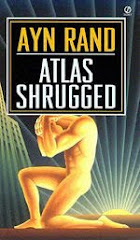
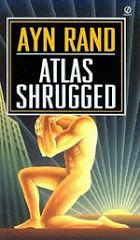
I am less a fan of Lane's The Discovery of Freedom, Man's Struggle Against Authority (13 customer reviews on Amazon), than I am of Isabel Paterson's God of the Machine (6 customer reviews on Amazon) and, of course, Ayn Rand's The Fountainhead (with 1,012 reader reviews on Amazon) and Atlas Shrugged (2,028 reviews on Amazon!). The latter three books are great reads and fascinating books. I find Lane's The Discovery of Freedom interesting for its historical role, useful for some information on a period of time in Europe and the U.S., but strained in the recurring analogy of freedom with energy. The analogy is useful and true, but its overuse throughout the book bore a weight on me that was just a bit too much about half way through the book. She is also less clear-minded about many issues than Paterson or Rand and she is too religious in her thinking to be as satisfying.









 Posts
Posts