“We hold these Truths to be self-evident, that all Men are created equal, that they are endowed by their Creator with certain unalienable Rights, that among these are Life, Liberty, and the Pursuit of Happiness – That to secure these Rights, Governments are instituted among Men, deriving their just Powers from the Consent of the Governed, that whenever any Form of Government becomes destructive of these Ends, it is the Right of the People to alter or abolish it, and to institute new Government, laying its Foundation on such Principles, and organizing its Powers in such Form, as to them shall seem most likely to effect their Safety and Happiness.”
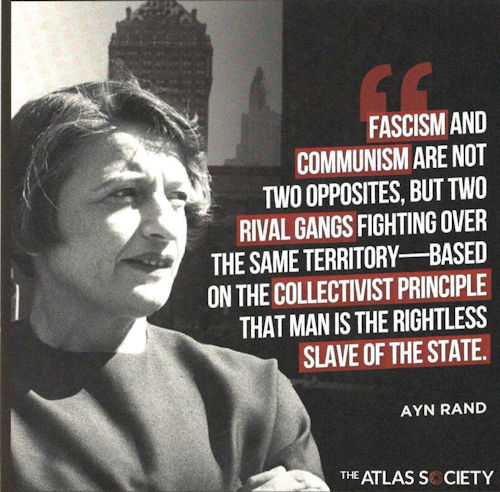
The idea that every person has unalienable rights by virtue of the nature of man which are not dependent upon a government granting or recognizing those rights is very frightful to socialists or any other supporters of tyrannical government. They hate the Declaration of Independence. They hate the fact that it declares that the only justifiable reason for government is its dedication to the protection and support of every single individual’s rights. They hate the fact that the Declaration of Independence states clearly that when government acts to deprive men of their equal, individual rights, then it is the right of the People to alter or abolish it.
The Declaration of Independence is not the only essential American governing document that the socialists hate. Barack Obama declared in a radio interview when he was an Illinois state senator in its state legislature that he did not like the U.S. Constitution because it was a barrier to socialism. Supreme Court Justice Elena Kagan just wrote in the opinion of the four dissenting justices of the Supreme Court in the Janus case that decided that public employees cannot be forced to pay union dues that the majority were “weaponizing the First Amendment.” The five justices of the majority had used freedom of speech as the reason for not allowing unions to forcibly collect union dues or even to collect them as a default unless a public employee underwent a process to deny the union the right to collect the money from his paycheck.
Justice Kagan and many others of the left have become very incensed that freedom of speech and freedom of religion have been used to thwart them in their dictation of how Americans can think and act. They are terribly upset that people associating with one another in business were allowed freedom of speech in the Citizens United v. Federal Election Commission in 2010. They have been incensed that some businesses have been able to escape infringements of their right to freedom of association by virtue of claiming their freedom of religion, whether in their hiring practices or in their wedding cake baking services. The present session of the Supreme Court also used freedom of speech to deny the socialist California legislature to require organizations giving advice to pregnant women to tell them about their options to have an abortion. Hence the socialists or Progressive Elitists are more and more horrified by the individual rights recognized in the First Amendment of the Constitution.
Unfortunately, those who favor a government whose functions violate the individual rights of some, often in the name of providing more security or comfort for others, have long been able to keep the courts from recognizing the many individual rights which were supposed to be protected by the Ninth and Tenth Amendments. It was recognized when the Bill of Rights was added to the Constitution that individuals had many rights not explicitly dealt with in the earlier amendments of the Bill of Rights.
What are our individual rights, whether recognized by our government are not?
- The right to life, not to be supported, but to be allowed to act to support it ourselves, as we allow others to do so also. This is a general right to manage our own life and to fully claim self-ownership.
- The right to determine our own actions and to undertake them, provided we do not act to prevent others from determining their own actions and undertaking them with all of us barred from the initiated use of force.
- The right to choose our own values and to pursue those values to try to achieve our own happiness.
- The freedom of conscience, the right to use our own judgment and to act upon it. Freedom of religion is a subset of this right and is far from all-inclusive.
- The freedom of association, which is also the freedom to choose who we will cooperate with and for what purposes. This includes our domestic partnerships, our business partnerships, our hiring choices, our freedom of contract, our choice of friends, and those we join in our recreational activities.
- Freedom of speech or communication of our thoughts and ideas in all the forms this may take. The freedom of assembly is part of this, as it is part of our freedom of association.
- The freedom of privacy, or the freedom not to share those parts of our lives we do not wish to share knowledge of with others. This includes the right to be secure in our papers, our homes, and such as prescribed in the 4th Amendment.
- The freedom of equal protection of our income and property and the other fruits of our labor and thought.
- The right to own and bear arms so that we might protect our own lives and individual rights.
- The right to fair and just treatment when accused of a crime as prescribed in our 5th , 6th, 7th, and 8th Amendments.
I will not claim this to be an all-inclusive list of our natural rights. I do not claim that life is so simple that it is always easy to understand how one individual’s exercise of his rights will affect others as they try to exercise their own rights. But, good societies and good governments -- legitimate governments – will always try very hard to make individual liberty their primary goal and will defer as much as is possible to the individual’s right to make his own value choices and manage his own life. No legitimate government can take the stance that it is justified in violating the rights of some in the interest of other persons. Legitimate government cannot violate any person’s rights. It must respect the equal rights of every citizen and legal resident.
A society with such a legitimate government will be one which minimizes the use of force. The government should act to prevent all individuals from initiating the use of force. That government also minimizes its restraints on liberty such that its own use of force is also minimized. Government which violates individual rights does so by the use of force or its threatened use. Governments are commonly the worst abusers of the use of force in the nations of the world today. There are no highly legitimate governments operating at this time. Some are much less worse than others, but all are massive abusers of the rights of the individual. The United States federal government violates very many of our rights today and American socialists and Progressive Elitists want it to violate many more of our individual rights.
Many Americans, whether socialists or religious traditionalists, want to use government to prescribe a moral code by which everyone is expected to live. They are often certain that their moral code is right and that a good society can be achieved if only the government will force everyone to live by their moral code. The fact that there is often more variation in the moral codes held by the political factions pursuing such moral code prescriptions by law than could possibly be encoded into law rarely dawns on them. These same people, especially the socialists, are very inclined to either use government or extra-governmental force and intimidation to prevent dissenters from their moral ideas from exercising their freedom of speech, press, and assembly. According to the socialists and sometimes those who speak for God, if you have morally wrong ideas, you forfeit your freedom of speech, press, and assembly.
No freedom is a freedom at all if one will not allow those you think are wrong from exercising their freedom. There is no freedom of speech if a minority or a single individual is not allowed to state their own ideas. There is no freedom of association if one is not allowed to discriminate in the choosing of those one wishes to associate with, even if that discrimination may be what many may call bigotry.
The Christian who refuses to associate with gay people is wrong in my opinion, but he is acting fully within his rights. To make him bake a cake for a gay wedding may very well be an infringement upon his freedom of conscience.
The gay organizations that want to force non-discrimination against gay people outside of the government itself are very wrong in doing so. They should be as determined to protect their own freedom of association and conscience as anyone else should be. Imagine a law that requires every gay bar to bring in heterosexual people until they represent their proportion in the population at large among their customers each night when the federal inspectors come around to make a count at the bar.
Many of the religious conservatives were very unhappy about the Supreme Court ruling allowing gay marriages. In fact, this should have been a very obvious requirement respecting freedom of association. Unfortunately, our government does not actually recognize the freedom of association. It also very much limits the freedom of contract in general. In reality, people should have as much freedom in forming their domestic partnerships under contract as they would have in forming a business partnership. If three men and three women wanted to form a domestic partnership, that is their right as much as it would be the right of one woman and one man. The same is true for one woman and two men or for two men and one woman or for three men or for three women. The government has no business interfering with such an exercise in freedom of association and freedom of contract. What such domestic partnerships might aim to accomplish and their sexual relationships are not government business, except insofar as the adults entering into the contract choose to make those matters a part of their lawful domestic partnership contract.
A much more harmonious society results when government is not being extensively used as a tool to prevent individuals from exercising their broad and many individual rights. There are many claims that we live in an very uncivil society today. Well, what do you expect when we have to fight over the control of a government that is constantly willing and wanting to violate our rights. When we have a government that loves to take more from the rich and redistribute it to the many more voters who are not as rich, do the rich not have a right to believe they are threatened by that government? If the rich use their money and connections to manipulate the regulatory state so that it is much harder for small, upstart companies to compete with their larger companies, is it not reasonable that the small businessmen will be very upset? If the federal government owns half the land in a state and it controls the use of that land so that the environmentalists on the left and right coasts are happy, is it not to be expected that many in the state where that land is not of use to them are going to be unhappy? If you are a coal miner, a river barge operator, a store owner in a coal town, or a dock worker in Norfolk, VA, is it not reasonable that you will be very unhappy when the federal government decides that a pregnant woman eating only fish from a river downwind from a coal-fired power plant might according to very imaginative argument and highly cherry-picked studies of islanders who only eat seafood develop some problem due to mercury released from coal combustion so that coal-fired power plants are being shutdown? Or you want to build an office building, but you have to wait 5 years before starting as you work through endless environmental studies which keep requiring you to spend more and more on the building itself, not to mention the lawyers fees.
Then there is the shear weight of the taxes. You are young and you do not expect Social Security to be around in 40 years when you might retire, but you are paying into it out of every paycheck, instead of putting that money into your own retirement investment fund. Medicare costs will exceed its revenues in 2026 according to the ever-changing projections, so if that program is still going to be around, you will have to pay higher Medicare taxes soon. Meanwhile, you may still be struggling to pay off the money you borrowed to go to college. Thanks to all of that loan money available, the colleges built themselves up like spas for the rich, but the education you received was no better and maybe worse than the education people received 30 years earlier, but you paid much more for it.
Perhaps you are struggling to start a new business and the paperwork required by the governments and by your business customers is overwhelming, thanks to big government. Meanwhile, you need to buy equipment so you can expand, but the county personal property tax penalizes you for having that equipment, making it harder for you to hire more people. The more people you hire the more the governments expect you to act as an unpaid tax collector. If you do business across state lines, you now have to worry about collecting sales taxes for each and every one of many thousands of taxing authorities even though you have no presence in their areas and no vote to determine the taxes or the politicians who decide to levy them. Imagine the deluge of paperwork now coming your way.
When the governments do too much and forget the principle that their legitimate function is simply to protect everyone’s equal individual rights, then it is pitting the people against one another. Good people are simply trying to protect themselves from the hurt that the government can do to them. Immoral people are very happy to try to wrest control of government so they can take advantage of most of the people. If you think there are not endless numbers of schemes or conspiracies to do just that in Washington, you are very naive indeed. The evil-doers are some foundations, environmental groups, people who want welfare, labor unions, educators, scientists, professions that want restrictive licenses, and many businesses, not to mention many politicians.
It is absolute pie in the sky nonsense to think government should hurt some and violate the rights of some in order to help some greater number or the most needy. Government will start with some plausible such proposal that almost everyone will agree with. After it has established numerous such programs, the people will no longer have the time or will to think about them. The government arguments for the next set of programs can be much less plausible now. Soon it is a free-for-all. Soon one has what we have now, government for special interests. The people are bewildered and no longer in effective control. Some simply trust to the authorities, but most Americans are now very jaded. But, this is exactly what should have been expected when we allowed government to disregard a strict adherence to its legitimate role as the protector of every individual’s many and broad rights. When we give this up as a critical and essential principle, we give up all hope for a just, fair, and harmonious society.









 Posts