Among the issues most commonly discussed are individuality, the rights of the individual, the limits of legitimate government, morality, history, economics, government policy, science, business, education, health care, energy, and man-made global warming evaluations. My posts are aimed at intelligent and rational individuals, whose comments are very welcome.

"No matter how vast your knowledge or how modest, it is your own mind that has to acquire it." Ayn Rand

"Observe that the 'haves' are those who have freedom, and that it is freedom that the 'have-nots' have not." Ayn Rand

"The virtue involved in helping those one loves is not 'selflessness' or 'sacrifice', but integrity." Ayn Rand

For "a human being, the question 'to be or not to be,' is the question 'to think or not to think.'" Ayn Rand
Showing posts with label housing. Show all posts

04 April 2010

Earthquake Damage and Deaths in Haiti and Chile

The recent earthquakes in Haiti and Chile caused massive damage in both locations, but the scale of the catastrophe in Haiti was much greater than that in Chile.  The Haiti earthquake was of magnitude 7.0 and between 217,000 and 230,000 people died.  In Chile, the earthquake was a magnitude of 8.8, or about 500 times more powerful than the quake in Haiti.  About 500 people died, largely due to a tsunami.  Many news stories noted that the quality of construction in Haiti is very low, while that in Chile is much better.  The poverty of the Haitians is usually the simple reason given for the low quality of construction.  Sometimes, it was noted that part of the reason for their poverty is due to a lack of freedom and a government that is highly corrupt and grasping.

For some time, I have been reading Thomas Sowell's book Applied Economics, Thinking Beyond Stage One.  It is not a hard read, it is just that I scatter books all around the many places I might find myself when I have a moment to read.  This book was in one of those many places.  Generally, I am concurrently reading about 12 to 15 books, many of them only a page or four at a time before I am back in motion.  This book was copyrighted in 2004, so he does not address the Haitian earthquake of 2010.  But, he does address one of the reasons why Haiti is so grindingly poor.  The last chapter of the book discusses The Economic Development of Nations.  Sowell notes:
Another of the functions of government that affects economic development is its role in providing property rights -- or failing to provide property rights.  Many Third World countries suffer from the fact that, while property rights may exist, they are not realistically available to vast numbers of people.  In some of these countries, a majority of the economic activity takes place "off the books" in the underground economy.  For example, most of the housing in Egypt and Peru has been built illegally, whether because of numerous restrictions and red tape that impede building housing legally, or because of costly legal processes which poor people are unable to afford.  In Egypt, where 4.7 million homes have been built illegally, legally registering a lot on state-owned desert land requires 77 bureaucratic procedures at 31 agencies -- and these procedures can take five years or more.  In Haiti, it can take 19 years to acquire property rights.  In some countries, bribes are necessary to get officials to expedite legal processes, and often the poor are unable to offer a sufficient bribe.
Now imagine yourself an average Haitian citizen.  No, you cannot do that.  That is impossible.  OK, just do your best to imagine that you are very poor and do not have sufficient means to bribe the Haitian government officials to speed up your quest for property rights for the home or store you want to build.  You also cannot afford to have no home or business for 19 years.  You have to earn a living, however hard in Haiti, and you need a roof over your family's heads.  But, since you have no property rights, no bank is going to give you a mortgage for the building you must build.  Even if you are not too, too poor and you are a rising small businessman, you may not have the money to spare to bribe the officials to get property rights.  If you do not hold the property rights, you cannot afford to sink very much money into building a very sound building.  You would otherwise, but the risk of having the building taken from you after you build it, especially if it is well-built and therefore very desirable, is just too great to put much money into it.  So, everyone builds lousy buildings, which are deathtraps in earthquakes, because you either have insufficient money to build a good building or because you cannot risk it in a building you have no property rights for.

Sowell does discuss how this lack of property rights tends to mire the people of a country lacking property rights in poverty.  This is an important discussion and it is also one made at great length in Hernando de Soto's book The Mystery of Capitalism, Why Capitalism Triumphs in the West and Fails Everywhere Else.  For the reasons I gave above, it prevents people from building safe buildings also.  It guarantees that a less powerful earthquake in Haiti, with no effective property rights, will kill vast numbers more people than will be killed by a much worse earthquake in Chile, where people have effective property rights.

Natural disasters pick on those who do not and cannot exercise their sovereign individual rights.  Some said Gaia caused the earthquake in Haiti because the earth goddess was angry about the failure of the Copenhagen Meeting to force countries into massive energy use cutbacks.  Danny Glover said the failure at Copenhagen caused the earthquake in Haiti!  But, it would appear that if Gaia was angry about anything, she was angry that the people of Haiti had no effective property rights!

18 May 2008

Thomas Sowell's "Economics Too Complex?" Series

One of the most basic principles of life and also of politics is that wishing something does not make it real. Yes, wishing for something may well serve as an effective means to get us to act to achieve something, but short of the act to achieve it, that value will not materialize in simple response to our wish. Most people come to understand this in their personal life when they have matured past adolescence. Unfortunately, it seems that most people do not understand that the same principle applies to the realities that politics are supposed to deal with!

Many of my recent commentaries have made a point of examining issues as a matter of supply and demand, because in reality, this is how things are priced absent government interference, and ultimately, in various perverted ways even with government interference. If government says that only the graduates of accredited medical schools can perform the duties of doctors and then government acts to limit the number of medical internships which then prevents medical schools from training more doctors, then there will be a shortage of doctors as the population grows and ages. This is what has happened over the last 20 or so years. The shortage of doctors means that doctors can charge more for their services, or if Medicare says they cannot, then they may work fewer hours or retire early. Patients will have less time to discuss their symptoms with the doctor and he will have less time to treat them, to consider interactions between the several drugs a patient might be on, or to review how effective a given treatment was. These issues are not dominated by a desire on the part of doctors to serve patients badly. They were not due to government bureaucrats thinking that it would be good to have a shortage of doctors. There is probably little intentional evil being done here, but there is evil afoot nonetheless. There is the evil of not thinking through important issues in a rational way and then taking foolish actions with the government's monopoly on force while not understanding very understandable issues. It is a shirking of responsibility for thinking, usually in favor of the emotional appeal of nonsense. The real problem here and in a very great many political issues is one of the supply of limited resources and the demand for those limited resources. Unfortunately, politics is usually ruled by politicians pandering to and often encouraging people only to decide issues upon emotional criteria, while ignoring entirely, or at least largely, the basic issues of supply and demand.

Thomas Sowell has just written a series of three commentaries on whether economics is too complex for people to understand or is it that they simply prefer the emotional appeal of thinking only in terms of heroes and villains? In Part 1, he talks about the price of oil to illustrate the preference for false emotional ideas of heroes and villains rather than a critical discussion of supply and demand.

In Part 2, he illustrates this with affordable housing as an issue, though he briefly alludes to restrictions on drilling oil put in place by politicians who are then the loudest in protesting higher prices for oil. He notes: "So long as politicians can get some people's votes by publicly feeling their pain when it comes to housing costs, and other people's votes by restricting the building of housing, they can have a winning coalition at election time, which is their bottom line." Then "So long as voters prefer heroes and villains to supply and demand, this game will continue to be played. It is not because supply and demand is too "complex" to understand, but because it is not emotionally satisfying."

In Part 3, Sowell writes about the tendency of government to object to large businesses selling goods and services for less than smaller local businesses may be able. He talks about San Francisco banning chain stores from some parts of the city. He talks about how the mistaken notion of "a living Constitution" has come to destroy property rights. This results in the economies of scale not being passed along to consumers who can then buy products for less. He mentions the bias against Wal-Mart and the Robinson-Patman Act of 1936, which was known as the anti-Sears, Roebuck law. He mentions the Standard Oil Company and Great Northern Railroad Trust break-ups, despite the fact that they provided ever lower prices. Over and over, Fair Trade laws were used to keep consumers from the enjoyment of lower prices. The reason was that it was more effective politically to indulge people's emotions against so-called villains than it would have been to rationally analyze the costs in terms of supply and demand. Sowell says: "Neither economics nor property rights are too "complex" to understand. But both get in the way of willful people who seek to deny other people the right to make their own decisions." Instead of personally refusing to use a chain store, the villain-destroying person assumes that they have the right to stop others from using their own freedom of choice on whether to shop at the chain store.
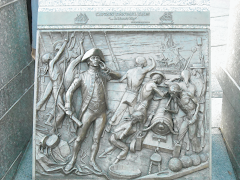
Without thinking issues through on the basis of supply and demand, it is very easy to identify the good guys as the villains and the villains as the heroes. A large fraction of the population makes a habit of doing just this.

21 April 2008

Depression Lunacy

There is a great deal of talk in the media, broadcast and print, that we are heading into a depression, or at least a significant recession. We had a one-month drop in manufacturing followed by a rise the next month and we had a brief leap in unemployment, which has since leveled out. Housing starts are certainly down and energy and food costs are certainly up. Despite all of this, the economy has not been knocked to the ground. It seems determined to chug on. Many companies just announced first quarter earnings which beat expectations. Consequently, stocks went up last week. But, the Gloom and Doomers have great staying power, especially with a Presidential election coming up. So, let's see what economist Alan Reynolds has to say about the state of the economy.

On 11 April, before most companies announced their first quarter earnings, Reynolds had an article appear in the New York Post. He notes that the gloomy economic news is of a credit crisis or a financial crisis. He points out that since WWII, no U.S. financial crisis has become an economic disaster. The S&L crisis of 1986-1995 was the worst financial crisis since WWII, but the economy grew by an average 2.9% a year in that time. There was a recession in that time lasting 8 months and beginning with the invasion of Kuwait by Iraq when oil prices jumped 113%. By then, the S&L problems were healing.

So, what is going on now? The LA Times asked on 20 March if another Great Depression was just over the horizon. On 6 April, the NY Times claimed that the "focal point for the stock market's difficulties" is that "banks have been reluctant to lend money to one another, or to anyone else." Reynolds points out that this is nonsense since the six-month London Interbank Offered Rate (LIBOR) would not have fallen from 5.3% to 2.6% in the last year if this were so. Bank loans to "anyone else" have increased by 8% according to Federal Reserve Board data since last August. As a further anecdotal measure, numerous companies are calling me daily eager to loan my laboratory money to buy equipment!

So, where is the difficulty? Reynolds says, "It is in selling or valuing exotic securities." The IMF, the Washington Post reports, says the crisis will cost nearly $1 trillion. Well, that estimate was for the entire world, not the U.S. This is the accounting loss of 4.1% on all sorts of loans and securities. The IMF estimates losses of $115 billion on mortgages alone. But, these accounting losses are in many cases only temporary. In many cases the future cash flow produced by the mortgages will be much higher than implied by the accounting loss declared. Standard and Poors says these write-down losses may be as much as $285 million. Well, in comparison, the S&L losses were 3% of GDP, which would be $450 billion now! Reynolds notes that many of these potential losses will be to foreign banks now, rather than U.S. banks or S&Ls as they were in the S&L crisis.

The villain socialist Paul Krugman (remember the guy of a few posts ago who did not like BB&T giving money to universities to teach Ayn Rand's philosophy) told Fortune that we should expect $6 or 7 trillion in capital losses in housing. Reynolds notes that the Federal Reserve estimated the value of household real estate was $22.5 trillion in the 4th quarter of 2007. A 30% fall in house prices would generate a $6.8 trillion loss! A 30% decrease in value across the nation is unlikely. Furthermore, Reynolds points out that this household real estate is not just single family homes, but it is actually all commercial, farm, and rental property as well owned by households and nonprofit institutions!

Further, the often quoted S&P Case-Shiller index of house prices only covers single-family homes in 20 metropolitan areas. The extra-expensive LA, San Francisco, and San Diego areas are weighted heavily at more than 25% of the total loss of 10.7% for home values in this index. Data for the whole country show that single-family homes lost 3% in the year ending in January. Between the 4th quarters of 2006 and 2007, home values rose an average of 3.8% in 29 states not appearing in the S&P Case-Shiller index. Two states not included in the S&P index actually did see home values decrease, but it is clear that the home value losses are largely localized to metropolitan areas heavily overweighted in the S&P index.

Others have claimed similarities to the 2000-2002 tech-stock collapse. But, Reynolds notes that in 1999 to 2000, oil prices also nearly tripled and in late 2000, the Fed increased the fed-funds rate to 6.5% with industrial production falling. Then came 9/11. So, there were more shocks to the economy than just the tech-stock collapse.

Actually, the S&L and tech-stock crises were quite mild recessions. They were brought on by worse economic conditions than we have now, so it is insane to be drawing analogies to the Great Depression. It is a common practice for socialists and some contrarians to tend to exaggerate the problems of the U.S. market. The socialists do it to create an excuse to have more government controls put in place and to hit higher income taxpayers with higher taxes. The contrarians often do it because they underestimate the resilience and resourcefulness of American producers and investors. Others do it because a frightened public will pay more money for investment advice. The media does it because frightened people watch and read the news more. As a result, you have to carefully seek out those who know what they are talking about, like Alan Reynolds.

23 February 2008

The Convenience of Not Thinking in Politics

Thomas Sowell, in Applied Economics, points out that people generally think only about the immediate intended result of any political issue they think about. When thinking that it would be nice if there were less violence, it seems so easy to wish that the elimination of gun ownership will eliminate violence. The fact that criminals will still acquire guns, while law-abiding citizens will be the ones disarmed, does not come to mind unless one takes the thought process a step further. Certainly thinking about the studies that show that there is more violence and that more homes are robbed when occupied when gun ownership is limited to the criminals, is still another step down the road of thought that is not followed.

Here in Maryland, the electric utilities have not been allowed to charge residential home owners enough for their power that the electric utilities could properly maintain and modernize their power distribution systems. In the BG&E area, residential owners were paying one-third less for power than were commercial users. In effect, commercial users were subsidizing the residential power users, since their additional payments were providing a disproportionate share of the power system maintenance costs and for the upgrades to the system. These commercial users were getting only a portion of the benefits in reliable power that they should have been getting. There is a very unreliable transformer near my laboratory which has long needed to be replaced and it has not been. This is likely a direct result of the residential home power subsidy. In addition to the many power failures experienced at my lab, we have nightly brown-outs, which I suspect are due to BG&E intentionally reducing the line voltage in the middle of the night in a desperate attempt to reduce their operational costs a bit. This may not affect many residential users of power, but my laboratory often runs experiments through the night. These brown-outs only rarely kill the computers, but they add to uncertainty about the quality of some of the data acquired by our spectrometers. Of course, those businesses which place a premium value on reliable power do not have as many concerned voters on their side as does the side which wishes for lower home power costs. It is simply assumed that we commercial users will be able to continue to provide jobs whether we have reliable power or not. It is not rocket science to understand what the effects of state power commission interference in rational power rates will be, but most of the voters will not allow themselves to think past the idea that it would be nice if the state government arranged for their power costs to be lower.

I talked to my mother tonight and she remarked that many of her elderly friends refuse to think about the effects of social programs such as Medicare, Social Security, and further proposed socialized medicine schemes. My Mom points out that medical care will suffer and that the costs of Medicare are too high because it is in no one's immediate interest to control costs. My Mom has often questioned why she or my Dad were charged so much for a procedure, a doctor walking through and asking "How are you?", or the cost of a medical product. The reply is usually, "Why do you care? You are not paying for it." Commonly, this response is an angry one. She asks her elderly friends why they do not care that the programs they want come at the expense of higher taxes on their children and grandchildren. They respond that that is depressing to think about, so why think about it? It seems to me that this is a clear case of parental and grandparental abuse of children and grandchildren, but it is apparently widely accepted practice. The AARP institutionalizes it and works mightily to lobby for this abuse. For this reason, I immediately throw away their invitations to join their organization. I love my three daughters and my nieces and nephews. I do not want to smother their life options in oppressive taxes. I will not join AARP in their crusade of intergenerational warfare. But most elderly people apparently do. They are only too happy to hurt their children. It is good not to think about this painful consequence of thinking only about their immediate convenience.

In the Maryland suburbs of Washington, DC such as Montgomery County and Howard County, about half of each county has been set aside to remain farmland or to be developed in 3 acre lots. The cost of land is so great in these counties that hardly anyone can afford to buy 3 acres and put a home on them. These land-use restrictions are intended to provide plenty of open green areas. This is the wished for result and it works. This is the claimed sole intent. However, a great many of the voters have an ulterior motive. Their monetary stake in their homes is great, so they do think a bit further down the road on this issue. They are generally very aware that they are choosing a course of action here which will drive up the cost of housing in their area and increase the value of their home in particular. On this kind of political issue they have an incentive to think about the consequences of their green area restrictions and they like the result. Yes, given a money incentive, people will think about what they are doing politically, at least a bit further down the road. But, do they admit that this is the real reason they are so green? No, never. They are very happy to pull the mantle of being an environmentally friendly good guy over their shoulders. But, that is not their primary reason for wanting land-use restrictions. The primary reason is to make housing more expensive. There is little remorse that this hurts others.

So, what do the politicians think of these usually unthinking voters? That it is very easy to present ideas for legislation which have wished for intentions. This legislation always gives the politicians more power. It improves their chances of re-election. By the time the problems come home to roost, they will be in a higher office or already retired from politics. If they serve in the US House of Representatives or the Senate, they will be enjoying a retirement with more than $1,000,000 a year income from a Fedeal government pension and further income for lobbying. Far from wishing to provide leadership in the quest for good government, our politicians see only gravy in the micro-thoughts of their electors. They are intelligent enough to manipulate the voters into giving them power, but never intelligent enough to think about the consequences of their actions on future generations of Americans. You see, they do their own wishing. They wish for power and a conscience free of concern for the ill they have done the country. In my correspondence with Maryland Senators and Representatives, I have found them all to be simple-minded in their espoused thinking, but very nimble in manipulating the voters. They are clearly practiced at selective thinking. They specialize in only that thought directed at being re-elected and increasing their own power over others.