What is the penalty for breaking any law, whether the law be a good or a bad law? Some would say that this is complicated, since there are many penalties covering a wide range of monetary fines, terms of imprisonment, confiscations of property, and occasionally death. Of course, at one level this is very true. But, what if someone objects to the law in question or to its application to him? He might seek a government remedy in the courts, but if he is simply sure that the courts are members to the conspiracy against his well-being or against his rights and his privileges and immunities, what if he chooses to stand up to protect those rights, privileges, and immunities? What if he claims they are protected by The Constitution of the United States of America and by the Law of Nature itself? Should he defend his rights, as he sees them, can he not expect that the government with jurisdiction will use whatever force it believes is needed to get him into jail, to take his property, or to accomplish whatever they choose to put down this rebellion? If he is effective in fighting off the agents of the government, will they not respond by killing him? Perhaps they will also kill his family members and destroy his property. Isn't this what happens?
So, at one level the penalty for breaking and defying any law is the same. The penalty is death. Bearing this in mind, don't you suppose that those who favor any new legislation should be very careful in considering whether someone might reasonably consider that law a violation of their individual right to life, liberty, and the pursuit of happiness? When someone makes the decision that they want to transfer more than 50% of the payment someone else received for working an hour to themselves or a third party, shouldn't they be concerned that the person losing half of his hour might consider that the same as being enslaved for half an hour? If you want to enslave someone, shouldn't you expect that the person to be enslaved might rebel? If he does, are you prepared to administer the penalty for rebellion against your redistributive law, which requires his enslavement and that you serve in the demeaning role of slave master? Are you prepared to kill in the name of your supposed effort to do a good deed for someone with less money or for someone with more political influence and clout than the man to be enslaved? Is this the route by which you come to feel moral satisfaction? Is it so important that your will be accomplished through law and the use of government force that you are willing to threaten the use of force like a thief or a slave master and willing to kill should any person rebel?
And why? Are there not plenty of other options for accomplishing whatever you want accomplished than those acting through government? In most cases there are. When there are, that is the route any moral, benevolent man would take. Such a man would not be constantly daring others to defend their individual rights and die as a consequence when the brutal force of government falls upon him and perhaps upon those he loves. Such a man would not hold cheap the manhood of others. The good man would seek out others in voluntary associations to accomplish whatever he thought was good, rather than turning to government. America has always had a rich tradition of many, many charitable organizations, most of which are much more effective than government in doing good deeds in any case. If you want to do a good deed, doesn't it have to be done by moral means? And what is the point of doing it anyway as ineffectively as government does anything but use force?
So why do people turn constantly to government as the means to do what they think, but usually not very hard, effective thinking, will be a good thing for someone or other? Usually because it is the easy, the lazy thing to do. If they were to take the lead in a private organization, they would have to work harder and think more about how to accomplish the desired ends and how to enlist the support of others. The political process is so easy. You listen to some politician declare that there is some problem in need of a solution and if you vote for him, he will take care of the problem. You do not have to have a clear idea of what the problem is or how to solve it. You do not have to write a check and mail it to an organization. All you need to do is go vote for that guy and you feel as though you are a very moral and good person. Such an easy route to virtue!
Then the politician you voted for will have some staff members work with some special interest group to write a huge law, which the politician will vote for without even reading. Then the executive branch will try to figure out what on earth the 1,000 pages of the law mean and will set up an agency to administer the law. Then the courts will try to straighten out all the complex issues which will result in legal challenges. And, should anyone personally reject the law and disobey it, penalties up to and including death will be meted out. And the voter, who has no idea what he has actually done, will be full of noble feelings. And that my friend is all that matters in this system in which no principles limit the scope and domain of government.
The Framers of the Constitution tried very hard to so limit the scope of the federal government that most of them argued that the Bill of Rights was not necessary because the government had not been given any powers which could be used to violate the individual rights to be protected by the Bill of Rights. Indeed, their argument was actually pretty much correct. They argued that if a Bill of Rights were added to the Constitution that there would be a tendency of the government to assume that they could do whatever was not denied by the Bill of Rights. They were right, but if there had not been a Bill of Rights, it is probably also true that the government would have soon changed the interpretation of the Constitution so severely that they could do almost anything they wanted anyway. Indeed, this is exactly what the government has done also! So, the principle implicit in the Constitution, and explicit in the Ninth Amendment of the Bill of Rights, that the purpose of government was to protect the rights of the individual, has been set aside. Now any issue is considered ripe for government law whenever a plurality of voters approves of it, at least as expressed by their vote for a politician.
The plurality of voters is usually a group of people who know little about most of the issues that new laws are written to address. Such a large group of people can be counted on to understand that government should prevent John from holding up Sam on the street and stealing the money from his wallet. But the laws necessary to prevent that from happening were generally put in place a long time ago. On the other hand, when the government was considering whether a large fraction of the corn crop should be turned into a gasoline additive, the public who voted for the politicians in favor of that fraud and boondoggle, knew nothing about the science, the economics, and the special interest groups interested in the subsidies and the federal mandates to do that. Neither does the public know much about running the television and radio broadcasting or cable operations, or about telephone systems, affordable housing, environmental issues, global warming, railroad freight rates, loan interest rates, drug effects, medical care, financial institutions, and many other issues. The lawmakers they choose as their representatives either know little about these issues themselves or they completely subjugate their knowledge to whatever 30 second soundbite they think they can best sell to the public, or at least to the plurality of voters. The politicians are expert at one thing: getting re-elected.
Ignorance is an excuse for lawmaking activities! The more ignorant the public is about something complex, the easier it is for a politician to play upon their fears of what they do not understand. The elected politician is usually qualified for election by virtue of being very cunning and very manipulative. He is a chameleon skilled at appearing to be all things to most large groups of voters, commonly able to tell one group one thing convincingly, while telling another group something else entirely. For instance, he tells American voters that he opposes NAFTA, while quietly telling the Canadian government that he really does not oppose it. No, this is actually unusual because the Canadian government does not vote in an American election. Ah, but in this case the politician is sure he going to become the President of the U.S. and that he wants good relations with the Canadian government then. OK, so a better example is he tells voters that he will provide affordable housing and he tells building contractors and managers that if they donate lots of money to his campaigns for office, he will see that they get contracts to rennovate and manage the affordable housing projects whether they do the job decently or not.
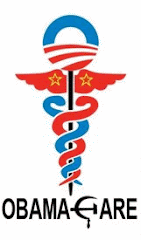
The politician is a demagogue. He tells the public that there is no need to allow oil companies to drill in more areas than they already have leases to drill in, because they should drill there first. The public is not supposed to know enough to ask whether there is oil on those leases, whether the technology to get it both exists and is affordable, and what does the global price of oil need to be several years from now so that the oil company can make the profit it must make to justify developing an oil field at that lease location. Or the demagogue repeats over and over that there are 47 million Americans without health insurance as justification for a new federal program to require everyone to have health insurance. The public is not supposed to know that many of the 47 million are illegal aliens and that very, very many are able to afford health insurance now, but choose not to have it. Many are self-insured millionaires. Many are young people in good health. Many have a rich relative who will provide for them if they need it. The politician, being a full time politician with a large staff knows this, but this is not what he tells the public.
So these are the people we employ to make up a constant stream of new laws to address issues the voters do not understand and which the politicians either do not understand or do not find it convenient to educate the public about the truth. These politicians see this constant stream of laws with nice sounding names as their means to appearing to be doing something about problems they have often manufactured themselves and certainly are not effectively addressing. The public is pleased to see that some moral problem was solved by themselves in an act of selflessness or that they have won some government plum, whatever the actual cost to the rights of many other individuals may have been.
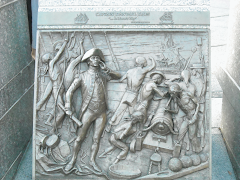
Only a minority of the people are feeling violated because they understand that their right to their life, liberty, and pursuit of happiness has been made victim to demagogical politicians, ruthless special interest groups, and a largely ignorant voting public feeling very moral because they have robbed some to give a gift to others they like or for whom they feel more sorry. Not only this, but some of these people feel helplessly emasculated because they are unable to face the massive forces of government to uphold their own rights. They feel they should, as the Minutemen did, stand with arms in hand and stop the theiving and protect themselves from slavery, but they know this is sure suicide if they do. These people who understand that government is massively trampling upon their rights, their privileges and immunities, are the victims of the system of government we have converted our once proudly limited government into. Government has become the enemy of the individual and all his values in America.
Governments, federal, state, and local, have commonly come to violate their most sacred trust: that they exist to support and secure the rights of the individual. American governments are widely and comprehensively failing the test of good government. They all are massively threatening to kill any American who stands up for his individual right to life, liberty, and the pursuit of his happiness.
The only solution to this greatest problem of our age is to commit ourselves to the principle of highly limited government which our Constitution was originally intended to provide. The only route to moral politics in America today is this principle that the domain of government laws is limited to those enumerated powers given in the Constitution and that government is good and effective only insofar as it protects the rights of each and every individual American citizen and resident. Any law meant to protect John at Sam's expense is clearly outside the role of government, since the rights of both John and Sam are to be equally protected. Both John and Sam are created equal in this sense before the law and both have their inalienable individual right to life, liberty, and the pursuit of happiness. It is not the role of government to pick winners and losers and it is certainly not its role to see that material goods are distributed equally or more equally. Good government stands aside as John and Sam make their own decisions about how they will pursue their happiness. That is one subject on which John and Sam are more knowledgeable than any government or any plurality of voters. Government and mobs of voters have no business meddling in their pursuit of their happiness as long as neither uses force to pursue it or commits a fraudulent act to acquire a material good.







 Posts
Posts