Among the issues most commonly discussed are individuality, the rights of the individual, the limits of legitimate government, morality, history, economics, government policy, science, business, education, health care, energy, and man-made global warming evaluations. My posts are aimed at intelligent and rational individuals, whose comments are very welcome.

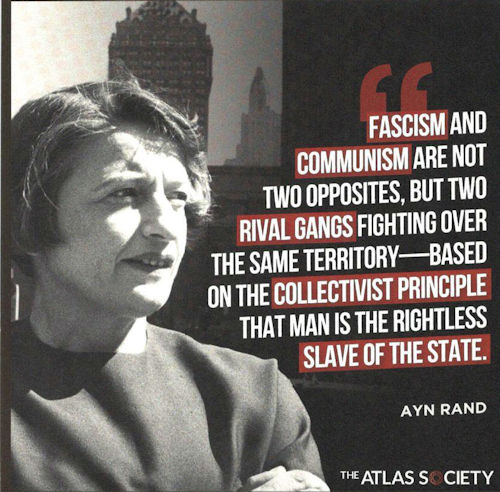
"No matter how vast your knowledge or how modest, it is your own mind that has to acquire it." Ayn Rand

"Observe that the 'haves' are those who have freedom, and that it is freedom that the 'have-nots' have not." Ayn Rand

"The virtue involved in helping those one loves is not 'selflessness' or 'sacrifice', but integrity." Ayn Rand

For "a human being, the question 'to be or not to be,' is the question 'to think or not to think.'" Ayn Rand
Showing posts with label de-regulation. Show all posts

27 July 2009

Is a Government Take-Over of Pension Plans Coming?

Single-employer defined benefit company pension plans are covered in many cases by the Pension Protection Act (PPA). The Pension Benefit Guaranty Corporation (PBGC) is tasked with the responsibility to take-over the covered pension plans if they fall into default. This is a government corporation with some similarities to Fanny Mae and Freddy Mac. 80% of the pension plans covered by the PPA in 2008 were considered to be reasonably well-funded. But, financial investment losses in late 2008 and early 2009, have left only 20% of these single-employee pension plans well-funded.

Meanwhile, outside of the PPA are some multi-employer pension plans. Among these is the Teamsters Central States Fund. This fund has three retirees for every active worker! There are now calls for the government to have the PBGC take over failing multi-employer pension funds, including the very troubled Teamsters Central States Fund. This will require an infusion of taxpayer bailout money.

The Teamsters claim the problem with their Central States Fund is that deregulation of the trucking industry decades ago caused a significant loss in trucking jobs when companies went out of business. Gee, have you seen a great decrease in the number of trucks on the road? No? Well neither have I. Teamsters leadership is heavily committed to the Democrat Party, so they are not well-inclined toward the truth.

Let us check up on the facts a bit here. In 1970 there were 18,000,000 trucks on the road. The Motor Carrier Act of 1980 brought about a partial deregulation of the industry. There was a dramatic increase in the number of trucking companies as a result. There were other consequences:
  • Driver wages dropped.
  • Consumer costs went down as trucking costs went down.
  • There was a great increase in the number of truck drivers.
  • There was drastic de-unionization!
  • In 2006, there were 26,000,000 trucks on the road, none of which are driven by robots.
So, contrary to the implication that de-regulation brought about a loss of companies and truckers, it only brought about a loss of those companies who could not compete in a less regulated environment. A very disproportionate number of the companies unable to compete were unionized. Is this a surprise to anyone?

Democrats are always complaining about de-regulation. They are always unhappy with the idea of competition. They are always eager to be lazy. They are always eager to have the world owe them a living. How disgusting. How absolutely and utterly disgusting!!!!! Yet, we are all supposed to provide pensions to union workers whose unions kept their trucking companies from being able to compete. Does this sound familiar? Can anyone remember Government Motors and Chrysler? Is providing pensions for non-competing labor unions among our next bailouts?

31 January 2009

Walter Williams - Congress's Financial Mess

Walter E. Williams, professor of economics at George Mason University, has written another interesting commentary on the current financial crisis called Congress's Financial Mess. He notes that the new media have repeatedly insisted that the current financial crisis was caused by deregulation and free markets. He goes on to show that this is not at all the case.

Professor David Henderson, research fellow at the Hoover Institution of Stanford University, studied how regulation has grown in general over the last few decades. He published his results in "Are We Ailing From Too Much Deregulation?" in Cato Policy Report (Nov/Dec 2008). He examined the Federal Register for its lists of new regulations.
  • 1977-1980, Carter, annual average of 72,844 pages of new regulations
  • 1981-1988, Reagan, annual average of 54,335 pages
  • 1989-1992, Bush, annual average of 59,527 pages
  • 1993-2000, Clinton, annual average of 71,590 pages
  • 2001-2008, Bush, annual average of 75,526 pages
Employees in government regulatory agencies:
  • 1980, 146,139 employees
  • 2007, 238,351 employees, an increase of 63%
[How do you measure the efficiency of a regulatory agency employee? Is it by the number of new pages of regulations per employee? If so, in 1980 there were 0.50 pages of new regulations per employee and this had dropped by 2007 to about 0.32 pages per employee! Apparently, the more employees, the less efficient they become.]

Regulatory spending by the banking and finance industries:
  • 1980, $725 million
  • 2007, $2.07 billion, an increase of 286%
Under the recent George Bush, there was no hesitation at all in creating new regulations. In fact, the Bush administration specifically wanted to tighten down on risky mortgage and other loans by banks, but Congress would not allow it. The most outspoken critics of tighter credit controls in Congress were Democratic leaders and committee chairmen, including Rep. Barney Frank and Senator Harry Reid.

The Clinton administration made a concerted effort to force Fannie Mae to expand mortgage loans to low and moderate income people in 1999. They used the 1977 Community Reinvestment Act to make the banks make high-risk loans they otherwise would not make. Banks not submitting were fined and their mergers and branch expansion plans were denied or held-up.

In 2008, about $5 trillion of mortgages outstanding were owned or securitized by Fannie Mae, Freddie Mac, Ginnie Mae, the Federal Housing, and the Veterans Administration. This was one-third of all such mortgages.

[Government also encouraged the inflation of home and property values with extremely low interest rates through inflation of the money supply by the Federal Reserve Board over the last several years.]

To make matters still worse for us taxpayers, Bush gave the auto industry a bailout of $17 billion in addition to about $700 billion in bailouts to banks and financial institutions. Now, the presidents of 36 state government universities are asking for a bailout. State governors and local governments are readying proposals for bailouts, with California $15 billion in the red, Florida $5 billion negative, and Michigan shutting down a prison to save money.

Williams notes that the news media is insulting our intelligence! Unfortunately, they appear to be right about the intelligence, or at least the attention span, of the average voter.