Showing posts with label freedom of religion. Show all posts
Showing posts with label freedom of religion. Show all posts
19 March 2017
Immigration Policy
While I favor a welcoming and less expensive immigration legal process than the one we have, it is important that the individual rights of Americans and those in the USA legally as residents or visitors be protected. The context of individual rights requires that those who would enjoy them must also honor the right of others to enjoy them. People known to have acted in violation of others individual rights in other countries should be culled from the pool of those allowed to immigrate to the USA. They have no right to expect the rights we Americans are supposed to protect for one another. The legal process for immigration that the Constitution wisely assigns Congress to create in law is a rational recognition of this context for individual rights. We have a legal process created by Congress and flawed as it is, it should be enforced as the Rule of Law requires. I would like to see many improvements in the immigration laws, but it is important that government review the character of those wanting to immigrate to the USA for the worst misfits for a society that values individual rights.
Context should also be applied to the anchor baby issue. The Constitution both states that Congress will create immigration laws and that those born in the USA are citizens of the USA. Congress having established a legal immigration policy and the federal government having enforced it in accordance with the Rule of Law, there are not supposed to be any illegal immigrants in the USA. The writers of the Constitution no doubt made those born in the USA citizens in that context. Making children born to illegal immigrants citizens violates the context and creates the horror situation of legally having to deport their parents even as the children are incorrectly deemed citizens. Context properly held, those born of illegal immigrants should not be considered citizens.
Context is again critical to the issue of Muslim immigrants. For those Muslims who believe that the use of force to make others practice Islam or to prevent those born into Islam from leaving is a requirement of their religion, the context of freedom of conscience is violated. Freedom of religion is a subset of that broader freedom of conscience. As with every right, the right can only be claimed and enjoyed by those willing to allow all others that equal right to freedom of conscience. It is entirely rational to prevent the immigration of those who practice the religion of Islam and who believe that it requires them to use force to prevent others from enjoying their equal right to freedom of conscience. Doing so is not an infringement of freedom of religion as it is often claimed to be, but a recognition of the critical context in which all individual rights can be exercised.


28 February 2017
Comments on Immigration Policy
The basic American Principle is the understanding that the individual is sovereign, individual rights are broad and should be inviolate, and that the only legitimate purpose of government is to protect the exercise of every individual's right. Unfortunately, few Americans understand this. Many fewer understand this in most countries of the world. What is more, not only do they recognize few if any individual rights in many countries, but even compared to most Americans of an authoritarian bent, they believe in much more brutal suppression of individual rights. In some countries, the majority of the people do not believe in even such simple and fundamental freedoms as freedom of speech, freedom of press, or freedom of conscience. Freedom of conscience means one is free to exercise a different religious belief or none at all. One is free to exercise a moral belief which has no basis in any religion. Our immigration policies should recognize the severity of the problems for our society that these differences in belief, which are often very firmly held, will have.
We should welcome everyone who believes in the American Principle as an immigrant. It is reasonable to allow people to come to the United States as immigrants who are good candidates to learn this principle better in time and provided they are not too firmly set in beliefs that are anathema to this American Principle. I see no reason to welcome immigrants who are adamantly opposed to the American Principle. I do not see a reason why one is obliged to welcome someone into one's home who means to abridge your individual rights. Yes, of course, my freedom of association and my property rights allow me to select who will enter my literal home. There is some difference as to the limits of restriction one can impose in one's country without being intolerant and unwelcoming to different viewpoints and ideas. As long as the differences of opinion and belief do not consist of a permission or a moral imperative to initiate the use of force to violate the rights of another individual, our society should be welcoming to newcomers who many have many very divergent viewpoints. But we do not as a People who control a government which is supposed to protect everyone's rights have a moral obligation to welcome individuals to the United States who want to suppress the rights of other individuals by the use of force. Indeed, it is irrational to do so.
Every individual right exists in the context that each individual has that right only so long as he or she does not deny the exercise of that same right to others by the use of force. I understand that many Objectivists and many libertarians believe that a complete open door immigration policy is a moral requirement. That belief fails to understand the context for individual rights which I have just named. As I have pointed out before in The Pre-Conditions for Religious Freedom Unmet by Islam, there is no right to emulate The Profit Mohammed's use of force to spread Islam and to prevent anyone from giving up the religion. There is no right to establish a government based on Islam. There is no right to restrict criticism of Islam in speech or in the press.
The following article by Nick Saffran of AEI is quite interesting in addressing the problem of welcoming immigrants from many or most of the Muslim majority nations: Terrorism Is Not The Only Reason To Be Skeptical of Muslim Immigration.
We should welcome everyone who believes in the American Principle as an immigrant. It is reasonable to allow people to come to the United States as immigrants who are good candidates to learn this principle better in time and provided they are not too firmly set in beliefs that are anathema to this American Principle. I see no reason to welcome immigrants who are adamantly opposed to the American Principle. I do not see a reason why one is obliged to welcome someone into one's home who means to abridge your individual rights. Yes, of course, my freedom of association and my property rights allow me to select who will enter my literal home. There is some difference as to the limits of restriction one can impose in one's country without being intolerant and unwelcoming to different viewpoints and ideas. As long as the differences of opinion and belief do not consist of a permission or a moral imperative to initiate the use of force to violate the rights of another individual, our society should be welcoming to newcomers who many have many very divergent viewpoints. But we do not as a People who control a government which is supposed to protect everyone's rights have a moral obligation to welcome individuals to the United States who want to suppress the rights of other individuals by the use of force. Indeed, it is irrational to do so.
Every individual right exists in the context that each individual has that right only so long as he or she does not deny the exercise of that same right to others by the use of force. I understand that many Objectivists and many libertarians believe that a complete open door immigration policy is a moral requirement. That belief fails to understand the context for individual rights which I have just named. As I have pointed out before in The Pre-Conditions for Religious Freedom Unmet by Islam, there is no right to emulate The Profit Mohammed's use of force to spread Islam and to prevent anyone from giving up the religion. There is no right to establish a government based on Islam. There is no right to restrict criticism of Islam in speech or in the press.
The following article by Nick Saffran of AEI is quite interesting in addressing the problem of welcoming immigrants from many or most of the Muslim majority nations: Terrorism Is Not The Only Reason To Be Skeptical of Muslim Immigration.
16 February 2016
Rationally Choosing a President
As an American with the right to vote for President, how does one rationally exercise that right?
The first task the rational individual has is to determine what the legitimate purpose of government is and how government acts to achieve that purpose. It is easier to understand how government acts to achieve its purposes, than it is to understand what its legitimate purposes are. Government achieves its purposes by using force. If challenged by any of the people it governs, it is willing to use overwhelming and fatal force. It is the nature of government that it achieves its ends through the use of force. Without a clear understanding of that and which of many purposes it may have that are legitimate, it is not possible to make a rational choice of that government's chief executive officer.
Many people believe that government exists to enforce a morality upon a society. Thus that portion of the left which is long educated in the government-controlled education system commonly believes that some groups deserve to be treated by everyone nicely. These groups are usually people they see as systematically discriminated against or as rather helpless. If those of the favored groups are not treated nicely by someone, the government should use force to see that those who are not nice will act nice. On the other hand, that portion of the right which believes in religious fundamentalism largely believes that everyone should be forced to live in accordance with what they think Christianity requires of moral people. There is some overlap in these two groups' ideas of morality, but there are also important differences. What they have in common is a belief that it is right to have government enforce their idea of moral behavior upon those whose ideas of moral behavior differ from theirs or upon people who sin by not living up to the morality they themselves may recognize.
Neither group believes in a broad concept of freedom of conscience. Because both groups are broadly willing to use force to achieve their goal of moral uniformity in individual's relationships with one another, neither believes in a broad concept of freedom of association either. The socialist elitist group of the left and the Christian fundamentalist group of the right are the most polarized groups willing to use force to make every individual comply with their moral beliefs, but this is actually a trait of most Americans.
It does not dawn on most Americans that it is from a broad individual right to freedom of conscience and freedom of association that all of the individual rights that most think they should have arise. Why should an individual have freedom of speech? Because freedom of speech enables people to develop, with feedback from others, and trade the knowledge they need to survive and flourish on Earth in the midst of powerful natural forces and other people. Freedom of speech is often opposed by those who wish to suppress the knowledge and understanding that may result. A crucial portion of that knowledge and understanding is about a moral code suitable to sustaining life as a thinking and living being. Freedom of speech is critical as a support for developing learning, identifying values to pursue, earning a living by production, and trading values with other individuals.
Today's socialist elitists are often weak on freedom of speech because they argue it can be hurtful to some among those groups they favor or think are incapable of managing their own lives. Not infrequently, they even believe that scientific pursuit of knowledge should be suppressed if it might cause people to disagree with part of their belief system. This is most apparent if those who disagree are pursuing profits in trade or disagree with their ideas about evolution or man's relationship with the environment. The fundamentalist right sometimes forces the teaching of Intelligent Design or forces counseling prior to a woman having an abortion. Freedom of speech means we have the right to say what we think, but also that we have the right not to be forced to listen to those we disagree with. Real freedom of speech also rests in freedom of association. We have the right to speak to those who want to listen to us. Freedom of the press is just the right to put our thoughts on paper or electronic media and distribute them to those who want to read what we have written. Consequently, freedom of press also has a foundation in our broad freedoms of conscience and association.
Of course, freedom of religion is just a subset of our broad freedom of conscience. Indeed, the two were often conflated when the early state constitutions were formulated and in the debates about the federal Constitution. Freedom of religion is clearly both about a set of beliefs and the freedom to gather with others of similar belief, as is our broader freedom of conscience. Freedom of conscience, really the freedom to think and to act upon what we think, is inseparable from freedom of association in our interaction with others in a society. Thus, when a socialist elitist has the government use force to make a Christian fundamentalist baker bake a cake for a gay wedding or to make one pay for a woman's abortion, that socialist elitist is violating the Christian fundamentalist's freedom of conscience and his freedom of association. It is not of primary moral importance that the socialist leftist may be right that discriminating against gay people and their marriages is wrong or that a woman has a right to have an abortion. If these are fact as I think they are, this is still not justification for using force to violate the individual rights of the Christian fundamentalist. Neither would it be right for the Christian fundamentalist to deny the government contract for domestic partnerships to gay people or to force those who do not share their religious beliefs to attend and financially support their church.
Our Declaration of Independence correctly identified the legitimate and very limited function of government. Its legitimate functions are limited to the protection of the individual's right to life, liberty, and the pursuit of happiness. It accomplishes this purpose by not allowing individuals to initiate the use of force upon others and by not itself using any more force than is needed to prevent individuals or aliens from initiating the use of force against its citizens. Legitimate government is not in the business of doing harm to some in the name of a greater good claimed for others. Legitimate government lives under a rule that it must first do no harm to anyone who has not initiated the use of force. Legitimate government minimizes the use of force in a society, including its own use of force. This is why the Constitution gave the federal government very limited and enumerated powers. Those powers have been expanded by present-day interpretations far beyond the context of this very limited role of simply protecting individual rights.
Legitimate government rests on the foundation of a People who are mostly competent to comprehend their lives and environment, choose their own values, and pursue those values in a robust and choice-rich private sector. It is in the private sector that individuals can best exercise their quest for knowledge and understanding, learn about the many values they might pursue, and exercise their choice of values by acquiring them, often in cooperation with others who wish to enter into trades of values with them. No such enabling environment is possible in a society following a large government model. The nature of laws and regulations that go beyond prohibiting the initiated use of force is to reduce choices of values and reduce their free trade. Such a society suffers a reduction of knowledge, the reduction of the happiness of many, and a subsequent reduction in the production of goods and services.
The socialist elitist thinks it is crass to argue that their web of laws and regulations lead to a reduction in the growth of an economy. They believe it is fine to impose these limits on human activity in pursuit of their moral ideals because trade and business are immoral, or at least not endeavors suitable to the most enlightened minds. Never mind the fact that a free society with limited government whose private sector production of goods and services may easily grow at a 4% rate will provide 1.83 times as many goods and services in a generation (about 31 years in America) as one growing at a 2% rate characteristic of their partially enacted agenda under Obama. They never consider how many of those with lesser abilities or drive will find it much easier to live and to enjoy a much more interesting life in a society with 83% more goods and services in a generation. They never ask if the medical achievements, the development of new life-enhancing products, the advancement of knowledge generally and its teaching, the increased wealth available for charities, and the shortened work hours in such a more developed private sector might not easily be much preferable to the society with more public housing, free food, long term unemployment benefits, higher taxes, less investment, more corn subsidies, more Import-Export Bank subsidies, more renewable energy subsidies, more college loans, incalculably less pollution, and higher minimum wages now at the expense of this growth.
A moral society starts with a government that does not itself act immorally by using any more force than it must to keep individuals from using force unnecessarily. A harmonious society starts with this minimization of the use of force. It allows individuals to choose their own values, manage and own their own lives, and to trade freely with others for each trader's mutual advantage. Such a society prospers in happiness and security.
Being happy is less about having a good or service than it is about being free to choose what you want and being able to act for the purpose of achieving your values. The competent individual is capable of doing this. The individual who is free to do this is more likely to feel competent. This esteem that follows from the act of using one's own mind to understand reality, to identify and choose one's own values, and to act to achieve those values is essential to happiness. Self-chosen values are the food of dreams and the freedom to act to achieve them is the basis for hope. Good government does not kill our individual dreams and does not subvert our hopes. It does not squash any individual's dreams and hopes in favor of a chosen group. It provides equal freedoms for all to choose their values and to pursue them.
The man to vote for to become President is the man who best understands this and will try his best to reform government to make it legitimate.
The first task the rational individual has is to determine what the legitimate purpose of government is and how government acts to achieve that purpose. It is easier to understand how government acts to achieve its purposes, than it is to understand what its legitimate purposes are. Government achieves its purposes by using force. If challenged by any of the people it governs, it is willing to use overwhelming and fatal force. It is the nature of government that it achieves its ends through the use of force. Without a clear understanding of that and which of many purposes it may have that are legitimate, it is not possible to make a rational choice of that government's chief executive officer.
Many people believe that government exists to enforce a morality upon a society. Thus that portion of the left which is long educated in the government-controlled education system commonly believes that some groups deserve to be treated by everyone nicely. These groups are usually people they see as systematically discriminated against or as rather helpless. If those of the favored groups are not treated nicely by someone, the government should use force to see that those who are not nice will act nice. On the other hand, that portion of the right which believes in religious fundamentalism largely believes that everyone should be forced to live in accordance with what they think Christianity requires of moral people. There is some overlap in these two groups' ideas of morality, but there are also important differences. What they have in common is a belief that it is right to have government enforce their idea of moral behavior upon those whose ideas of moral behavior differ from theirs or upon people who sin by not living up to the morality they themselves may recognize.
Neither group believes in a broad concept of freedom of conscience. Because both groups are broadly willing to use force to achieve their goal of moral uniformity in individual's relationships with one another, neither believes in a broad concept of freedom of association either. The socialist elitist group of the left and the Christian fundamentalist group of the right are the most polarized groups willing to use force to make every individual comply with their moral beliefs, but this is actually a trait of most Americans.
It does not dawn on most Americans that it is from a broad individual right to freedom of conscience and freedom of association that all of the individual rights that most think they should have arise. Why should an individual have freedom of speech? Because freedom of speech enables people to develop, with feedback from others, and trade the knowledge they need to survive and flourish on Earth in the midst of powerful natural forces and other people. Freedom of speech is often opposed by those who wish to suppress the knowledge and understanding that may result. A crucial portion of that knowledge and understanding is about a moral code suitable to sustaining life as a thinking and living being. Freedom of speech is critical as a support for developing learning, identifying values to pursue, earning a living by production, and trading values with other individuals.
Today's socialist elitists are often weak on freedom of speech because they argue it can be hurtful to some among those groups they favor or think are incapable of managing their own lives. Not infrequently, they even believe that scientific pursuit of knowledge should be suppressed if it might cause people to disagree with part of their belief system. This is most apparent if those who disagree are pursuing profits in trade or disagree with their ideas about evolution or man's relationship with the environment. The fundamentalist right sometimes forces the teaching of Intelligent Design or forces counseling prior to a woman having an abortion. Freedom of speech means we have the right to say what we think, but also that we have the right not to be forced to listen to those we disagree with. Real freedom of speech also rests in freedom of association. We have the right to speak to those who want to listen to us. Freedom of the press is just the right to put our thoughts on paper or electronic media and distribute them to those who want to read what we have written. Consequently, freedom of press also has a foundation in our broad freedoms of conscience and association.
Of course, freedom of religion is just a subset of our broad freedom of conscience. Indeed, the two were often conflated when the early state constitutions were formulated and in the debates about the federal Constitution. Freedom of religion is clearly both about a set of beliefs and the freedom to gather with others of similar belief, as is our broader freedom of conscience. Freedom of conscience, really the freedom to think and to act upon what we think, is inseparable from freedom of association in our interaction with others in a society. Thus, when a socialist elitist has the government use force to make a Christian fundamentalist baker bake a cake for a gay wedding or to make one pay for a woman's abortion, that socialist elitist is violating the Christian fundamentalist's freedom of conscience and his freedom of association. It is not of primary moral importance that the socialist leftist may be right that discriminating against gay people and their marriages is wrong or that a woman has a right to have an abortion. If these are fact as I think they are, this is still not justification for using force to violate the individual rights of the Christian fundamentalist. Neither would it be right for the Christian fundamentalist to deny the government contract for domestic partnerships to gay people or to force those who do not share their religious beliefs to attend and financially support their church.
Our Declaration of Independence correctly identified the legitimate and very limited function of government. Its legitimate functions are limited to the protection of the individual's right to life, liberty, and the pursuit of happiness. It accomplishes this purpose by not allowing individuals to initiate the use of force upon others and by not itself using any more force than is needed to prevent individuals or aliens from initiating the use of force against its citizens. Legitimate government is not in the business of doing harm to some in the name of a greater good claimed for others. Legitimate government lives under a rule that it must first do no harm to anyone who has not initiated the use of force. Legitimate government minimizes the use of force in a society, including its own use of force. This is why the Constitution gave the federal government very limited and enumerated powers. Those powers have been expanded by present-day interpretations far beyond the context of this very limited role of simply protecting individual rights.
Legitimate government rests on the foundation of a People who are mostly competent to comprehend their lives and environment, choose their own values, and pursue those values in a robust and choice-rich private sector. It is in the private sector that individuals can best exercise their quest for knowledge and understanding, learn about the many values they might pursue, and exercise their choice of values by acquiring them, often in cooperation with others who wish to enter into trades of values with them. No such enabling environment is possible in a society following a large government model. The nature of laws and regulations that go beyond prohibiting the initiated use of force is to reduce choices of values and reduce their free trade. Such a society suffers a reduction of knowledge, the reduction of the happiness of many, and a subsequent reduction in the production of goods and services.
The socialist elitist thinks it is crass to argue that their web of laws and regulations lead to a reduction in the growth of an economy. They believe it is fine to impose these limits on human activity in pursuit of their moral ideals because trade and business are immoral, or at least not endeavors suitable to the most enlightened minds. Never mind the fact that a free society with limited government whose private sector production of goods and services may easily grow at a 4% rate will provide 1.83 times as many goods and services in a generation (about 31 years in America) as one growing at a 2% rate characteristic of their partially enacted agenda under Obama. They never consider how many of those with lesser abilities or drive will find it much easier to live and to enjoy a much more interesting life in a society with 83% more goods and services in a generation. They never ask if the medical achievements, the development of new life-enhancing products, the advancement of knowledge generally and its teaching, the increased wealth available for charities, and the shortened work hours in such a more developed private sector might not easily be much preferable to the society with more public housing, free food, long term unemployment benefits, higher taxes, less investment, more corn subsidies, more Import-Export Bank subsidies, more renewable energy subsidies, more college loans, incalculably less pollution, and higher minimum wages now at the expense of this growth.
A moral society starts with a government that does not itself act immorally by using any more force than it must to keep individuals from using force unnecessarily. A harmonious society starts with this minimization of the use of force. It allows individuals to choose their own values, manage and own their own lives, and to trade freely with others for each trader's mutual advantage. Such a society prospers in happiness and security.
Being happy is less about having a good or service than it is about being free to choose what you want and being able to act for the purpose of achieving your values. The competent individual is capable of doing this. The individual who is free to do this is more likely to feel competent. This esteem that follows from the act of using one's own mind to understand reality, to identify and choose one's own values, and to act to achieve those values is essential to happiness. Self-chosen values are the food of dreams and the freedom to act to achieve them is the basis for hope. Good government does not kill our individual dreams and does not subvert our hopes. It does not squash any individual's dreams and hopes in favor of a chosen group. It provides equal freedoms for all to choose their values and to pursue them.
The man to vote for to become President is the man who best understands this and will try his best to reform government to make it legitimate.
08 December 2015
Obama Nonsense on Islam and Its Claim to Freedom of Religion
In his speech Sunday night, Obama claimed that those who use violence as a means to advance Islam are practicing a perverted form of Islam. Since Islam is essentially a religion that obligates its believers to emulate Mohammad's life practices and Mohammad used violence and terror to advance his religion, it is nonsense to claim that people who believe they are using violence and terror to advance Islam are practicing a perverted form of Islam. In the context of Islam, they are not radical, however radical they are as human beings.
Yes, most people who think of themselves as Muslims are not themselves violent in their practice of the religion. Many are good people. Nonetheless, those of us who are not practicing Islam have often observed that far too few Muslims are openly critical of those who use violence or terror to advance the religion. Well, there is a very logical reason why Muslims do not offer such criticism as much as good people should. They cannot criticize the present-day advocates of violence against non-Muslims without making an implied criticism of Mohammad himself for using violence and terror to spread his religion. They must be silent. Their silence is in some part due to fear, but it is also due to the fundamental beliefs of the religion itself. Many of those Muslims who do not themselves use force to make others observe Islam make "charitable" contributions to organizations that advocate or actually use force for that purpose.
Contrary to Obama's claim that we owe Muslims all of the rights we usually allow people under the freedom of religion, we do not owe this religious freedom to any religion that advocates the use of force to make others practice that religion. Freedom of religion, as with all freedom of conscience, has to have a foundation in the prohibition of the use of force against others as a means to practice the religion. Given that prohibition of force, we can and should allow others their freedom of conscience, even as we claim the exercise of our own freedom of conscience.
Given that Islam is in essence the emulation of Mohammad, we can very reasonably ask if Mohammad were alive today, would we allow him to enter the United States? I would not allow him in. He is much too dangerous, too violent, and too committed to terrorism. Neither would I allow those who followed his commands to commit violence against non-believers to enter the U.S. In doing so, I would not be in violation of anyone's legitimate claim of freedom of religion. I would be protecting most Americans from violence.
Yes, most people who think of themselves as Muslims are not themselves violent in their practice of the religion. Many are good people. Nonetheless, those of us who are not practicing Islam have often observed that far too few Muslims are openly critical of those who use violence or terror to advance the religion. Well, there is a very logical reason why Muslims do not offer such criticism as much as good people should. They cannot criticize the present-day advocates of violence against non-Muslims without making an implied criticism of Mohammad himself for using violence and terror to spread his religion. They must be silent. Their silence is in some part due to fear, but it is also due to the fundamental beliefs of the religion itself. Many of those Muslims who do not themselves use force to make others observe Islam make "charitable" contributions to organizations that advocate or actually use force for that purpose.
Contrary to Obama's claim that we owe Muslims all of the rights we usually allow people under the freedom of religion, we do not owe this religious freedom to any religion that advocates the use of force to make others practice that religion. Freedom of religion, as with all freedom of conscience, has to have a foundation in the prohibition of the use of force against others as a means to practice the religion. Given that prohibition of force, we can and should allow others their freedom of conscience, even as we claim the exercise of our own freedom of conscience.
Given that Islam is in essence the emulation of Mohammad, we can very reasonably ask if Mohammad were alive today, would we allow him to enter the United States? I would not allow him in. He is much too dangerous, too violent, and too committed to terrorism. Neither would I allow those who followed his commands to commit violence against non-believers to enter the U.S. In doing so, I would not be in violation of anyone's legitimate claim of freedom of religion. I would be protecting most Americans from violence.
14 January 2015
The Pre-Conditions for Religious Freedom Unmet by Islam
Religious freedom is a result of the individual right to freedom of conscience and thought. Religious freedom is a subset of these broader freedoms. Since religion usually calls on individuals to join with other individuals in activities including joint worship, it is also a result of freedom of association. Religion commonly calls on people to act in prescribed ways, which they are allowed to do because individuals have a broad freedom of action, including freedom of speech, freedom of the press, the freedom to assemble, and the freedom to contribute one's time, effort, and wealth to a religious cause.
Note that freedom of religion exists in the context of broad individual rights. These individual rights enable individuals to survive and flourish in life while preventing others from threatening them with violence and force. Every individual has equal, sovereign individual rights based on his nature as a rational being who must use his mind and take action to sustain and maintain his life. Man institutes government for the sole, legitimate function of protecting his and everyone else' individual rights, as properly stated in our Declaration of Independence. When a highly limited government well-instituted, as by our Constitution, provides this protection, a very robust and choice-rich private sector results in which individuals can revel in their full individual complexity and differentiation, while cooperating for their mutual benefit with others for purposes of their choosing. Thus men commonly live creative and productive lives in harmony and prosperity.
This understanding of the nature of man and his individual rights was unknown until the Enlightenment developed in Europe. It mostly developed in England, Scotland, France, and the Netherlands. These were generally Christian countries. Christianity, as practiced for at least 1000 years prior to this, had been deeply entwined with government, actively invoking the force of governments to force the people of each country to believe in the religion, or at least to pretend to believe in it and to be constrained in their actions by its tenets. Christianity during this period was guilty of many terrible acts of evil. But, Christianity had a key individual at its root, Jesus Christ, who had not advocated the use of force to impose his religious ideas. He had pointedly refused to interfere with the rule of Rome, admittedly maybe only because that would have been a pretty futile effort at the time. The fact that Jesus Christ had not preached that Christians take control of government and use it to force people to practice his religious ideas made it feasible to reform Christianity after the Enlightenment to a sufficient degree that religious freedom became broadly possible to extend to the various forms of religions in the Enlightened countries. The people who were brought up in this tradition came to believe that all religions should be granted freedom of religion.
Unfortunately, few people have a clear understanding of the conditions which must exist for it to be possible to have a broad freedom of religion without undermining the many individual rights that make freedom of religion possible. It simply is not possible to offer freedom of religion to a religion which embraces the use of force to spread the religion and to subjugate those people who refuse to adopt it.
Islam became known to man through Mohammed in 610 AD in the Arabic peninsula. The land was very primitive with many contending tribes, some of which were polytheistic and some of which were Jewish. When Mohammed had few followers, he formed alliances of convenience with Jewish tribes and often proclaimed his desire for peace with at least some other tribal groups. However, as he became more and more powerful, he became much more ready to use force to suppress any peoples who did not join him as followers and believe in his teachings. He taught that Islam required Jihad, which generally was implemented by using force to conquer other people. He developed Islam as an integrated set of religious and political beliefs in which Islam was established by the state through the Sharia Law. Government was to advance Islam, to suppress non-believers often to the point of killing them, to collect tribute from those who submitted but did not believe, and to conquer new lands and people. It was also to punish any Muslim who became a non-believer with death. Basically, the integrated religion and tyrannical government model is not compatible with individual rights.
It will not be possible to extend religious freedom to Islam until and unless it reforms itself to eliminate its political component that uses force to limit greatly many individual rights. The integrated rights of the individual cannot be in conflict with one another. Whenever someone proposes a conflict of rights, that person has failed to correctly identify the rights of the individual. It is very common that people do this and then they commonly say that rights bring with them responsibilities. Meeting those responsibilities is supposed to reduce the friction, nay the conflict, of one person's rights with those of others. Those responsibilities commonly include obligations of service to others and out and out self-sacrifice. This is all nonsense. Properly identified individual rights allow men to live in harmony, not conflict.
Because those who practice Islam are required to emulate Mohammed, they are essentially required to emulate his use of force to spread and maintain its integrated religious and political system. Some may choose to emulate his earlier stage of operations when his forces were weak and he was less aggressive. Others will follow his later actions when his forces were strong and quite ruthless in their conquering sweep across the Arabic peninsula. People most often acquire their religious and political beliefs from their family and the society into which they are born. They come to see their realistic choices as limited by their culture and will mostly allow their developed beliefs to vary but little from those common in their culture. The Muslim cultures strongly discourage a wide range of beliefs within Islam itself in given areas. Some more substantial variations do exist among Muslims as a whole, such as those between the Sunnis and the Shiites, who often have very nasty wars with each other. We should realize that some Muslims do try hard to be decent people despite the limitations of Islam. While we must work and fight to maintain an Enlightenment culture that honors and preserves individual rights, we do not want to be at war with all Muslims.
It is not an abberation when an Islamist uses force to advance Islam, however. It cannot truthfully be said that the use of force means someone is not practicing Islam. I understand this representation to be an attempt to discredit such Islamists and to limit the number of followers of Islam with which we have to contend in violent confrontations. However, this is an attempt to deny the truth. Islam is not so easily reformed to separate the control of government and the use of force from the religion as was the case with Christianity. Mohammed was not Jesus Christ. The brutal Arabic peninsula of 610 AD was not the somewhat civilized Roman Empire of Jesus' time. The reformation of Islam may well take hundreds of years, given that the easier case of Christianity took hundreds of years. Violence in the name of Islam may well continue for that entire time. That violence may be extreme or radical in our Western Civilization context, but it is manifestly not extreme or radical in the context of Islam.
There are many non-violent Islamists and many who are nice people when we interact with them on a personal basis. We need not be at war with everyone who believes in Islam. But, many of the personally peaceful Muslims do believe it is their religious duty to support and contribute to those who use violence to advance their religion. Many believe that when it becomes possible for them to make Sharia Law the law of the land, they should do so. This would trample individual rights and with the loss of those rights, a complete loss of freedom of conscience and its subset freedom of religion will result. Understanding what is at stake in refusing to have our own society taken over by Islam is necessary if we are to maintain our precious individual rights.
It is vital that we also understand that the use of force is a true emulation of Mohammed's acts by present day Islamists and not an abberation despite Obama's and other Progressives' adamant claims that it is. We must not lose focus on the fact that Islam is an integrated system of religion and government, not just another religion. Islam is not compatible with individual rights and in its present common forms does not meet the conditions of a belief system that qualifies for religious freedom. The present common effort to grant it religious freedom undermines religious freedom, freedom of conscience, freedom of speech, freedom of the press, freedom of assembly, freedom of association, and self-ownership. Islam is unfortunately a very tyrannical religious and political system.
Note that freedom of religion exists in the context of broad individual rights. These individual rights enable individuals to survive and flourish in life while preventing others from threatening them with violence and force. Every individual has equal, sovereign individual rights based on his nature as a rational being who must use his mind and take action to sustain and maintain his life. Man institutes government for the sole, legitimate function of protecting his and everyone else' individual rights, as properly stated in our Declaration of Independence. When a highly limited government well-instituted, as by our Constitution, provides this protection, a very robust and choice-rich private sector results in which individuals can revel in their full individual complexity and differentiation, while cooperating for their mutual benefit with others for purposes of their choosing. Thus men commonly live creative and productive lives in harmony and prosperity.
This understanding of the nature of man and his individual rights was unknown until the Enlightenment developed in Europe. It mostly developed in England, Scotland, France, and the Netherlands. These were generally Christian countries. Christianity, as practiced for at least 1000 years prior to this, had been deeply entwined with government, actively invoking the force of governments to force the people of each country to believe in the religion, or at least to pretend to believe in it and to be constrained in their actions by its tenets. Christianity during this period was guilty of many terrible acts of evil. But, Christianity had a key individual at its root, Jesus Christ, who had not advocated the use of force to impose his religious ideas. He had pointedly refused to interfere with the rule of Rome, admittedly maybe only because that would have been a pretty futile effort at the time. The fact that Jesus Christ had not preached that Christians take control of government and use it to force people to practice his religious ideas made it feasible to reform Christianity after the Enlightenment to a sufficient degree that religious freedom became broadly possible to extend to the various forms of religions in the Enlightened countries. The people who were brought up in this tradition came to believe that all religions should be granted freedom of religion.
Unfortunately, few people have a clear understanding of the conditions which must exist for it to be possible to have a broad freedom of religion without undermining the many individual rights that make freedom of religion possible. It simply is not possible to offer freedom of religion to a religion which embraces the use of force to spread the religion and to subjugate those people who refuse to adopt it.
Islam became known to man through Mohammed in 610 AD in the Arabic peninsula. The land was very primitive with many contending tribes, some of which were polytheistic and some of which were Jewish. When Mohammed had few followers, he formed alliances of convenience with Jewish tribes and often proclaimed his desire for peace with at least some other tribal groups. However, as he became more and more powerful, he became much more ready to use force to suppress any peoples who did not join him as followers and believe in his teachings. He taught that Islam required Jihad, which generally was implemented by using force to conquer other people. He developed Islam as an integrated set of religious and political beliefs in which Islam was established by the state through the Sharia Law. Government was to advance Islam, to suppress non-believers often to the point of killing them, to collect tribute from those who submitted but did not believe, and to conquer new lands and people. It was also to punish any Muslim who became a non-believer with death. Basically, the integrated religion and tyrannical government model is not compatible with individual rights.
It will not be possible to extend religious freedom to Islam until and unless it reforms itself to eliminate its political component that uses force to limit greatly many individual rights. The integrated rights of the individual cannot be in conflict with one another. Whenever someone proposes a conflict of rights, that person has failed to correctly identify the rights of the individual. It is very common that people do this and then they commonly say that rights bring with them responsibilities. Meeting those responsibilities is supposed to reduce the friction, nay the conflict, of one person's rights with those of others. Those responsibilities commonly include obligations of service to others and out and out self-sacrifice. This is all nonsense. Properly identified individual rights allow men to live in harmony, not conflict.
Because those who practice Islam are required to emulate Mohammed, they are essentially required to emulate his use of force to spread and maintain its integrated religious and political system. Some may choose to emulate his earlier stage of operations when his forces were weak and he was less aggressive. Others will follow his later actions when his forces were strong and quite ruthless in their conquering sweep across the Arabic peninsula. People most often acquire their religious and political beliefs from their family and the society into which they are born. They come to see their realistic choices as limited by their culture and will mostly allow their developed beliefs to vary but little from those common in their culture. The Muslim cultures strongly discourage a wide range of beliefs within Islam itself in given areas. Some more substantial variations do exist among Muslims as a whole, such as those between the Sunnis and the Shiites, who often have very nasty wars with each other. We should realize that some Muslims do try hard to be decent people despite the limitations of Islam. While we must work and fight to maintain an Enlightenment culture that honors and preserves individual rights, we do not want to be at war with all Muslims.
It is not an abberation when an Islamist uses force to advance Islam, however. It cannot truthfully be said that the use of force means someone is not practicing Islam. I understand this representation to be an attempt to discredit such Islamists and to limit the number of followers of Islam with which we have to contend in violent confrontations. However, this is an attempt to deny the truth. Islam is not so easily reformed to separate the control of government and the use of force from the religion as was the case with Christianity. Mohammed was not Jesus Christ. The brutal Arabic peninsula of 610 AD was not the somewhat civilized Roman Empire of Jesus' time. The reformation of Islam may well take hundreds of years, given that the easier case of Christianity took hundreds of years. Violence in the name of Islam may well continue for that entire time. That violence may be extreme or radical in our Western Civilization context, but it is manifestly not extreme or radical in the context of Islam.
There are many non-violent Islamists and many who are nice people when we interact with them on a personal basis. We need not be at war with everyone who believes in Islam. But, many of the personally peaceful Muslims do believe it is their religious duty to support and contribute to those who use violence to advance their religion. Many believe that when it becomes possible for them to make Sharia Law the law of the land, they should do so. This would trample individual rights and with the loss of those rights, a complete loss of freedom of conscience and its subset freedom of religion will result. Understanding what is at stake in refusing to have our own society taken over by Islam is necessary if we are to maintain our precious individual rights.
It is vital that we also understand that the use of force is a true emulation of Mohammed's acts by present day Islamists and not an abberation despite Obama's and other Progressives' adamant claims that it is. We must not lose focus on the fact that Islam is an integrated system of religion and government, not just another religion. Islam is not compatible with individual rights and in its present common forms does not meet the conditions of a belief system that qualifies for religious freedom. The present common effort to grant it religious freedom undermines religious freedom, freedom of conscience, freedom of speech, freedom of the press, freedom of assembly, freedom of association, and self-ownership. Islam is unfortunately a very tyrannical religious and political system.
28 February 2014
Freedom of Association and Anti-Gay Discrimination
As I have made it clear many times, I do not believe that homosexuality is in any way immoral. Morality as it applies to homosexual acts is very similar to the application of morality to heterosexual acts in many important respects, though clearly it is differentiated by the absence of concern for the potential of responsibility for creating a baby. I have supported gay domestic partnership contracts in their governmental form and noted that government really has no business addressing the spiritual aspects of marriage for anyone. It should only grant domestic partnership contracts to consenting adults with no more concern for their sex or numbers than is appropriate for a business partnership contract. Adult individuals have the right to form the voluntary associations and contracts of their choice.
I have long been embarrassed by the stand of many Republicans for whom I have often voted on their stance on the issue of homosexual discrimination by government. Government has absolutely no business discriminating against homosexuals or bisexuals or heterosexuals. Government must support the rights of every individual to life, liberty, property, and the pursuit of their personal happiness. This does not allow exceptions for homosexuals, bisexuals, or heterosexuals or many other characteristics individuals have or choices that they make. Of course, for every Republican who embarrasses me in this regard, there are many more destructive and immoral choices made by almost every Democrat Socialist Party candidate. Political candidates are never entirely rational and moral.
I argued for an end to the Clinton Defense of Marriage Act and for the end of Don't Ask, Don't Tell. I contributed to the Log Cabin Republican effort in accomplishing these tasks and praised their work. I contributed to the Marylanders for Marriage Equality group when it was trying to promote the ballot initiative to equalize same-sex marriages in Maryland. That campaign was successful, with about half of all Maryland Republicans voting for it. Unfortunately, these groups are now turning to attempts to make it unlawful for businesses in the private sector to discriminate against gay people. On this matter, I part ways with these groups, for reasons of general principle and because their effort actually undermines their own right to freedom of association in a very fundamental and harmful way.
I find it an immoral act for a business to refuse service to someone because they are homosexual or because a gay couple may be married. I prefer not to do business with such a business and I applaud others who would not do so also. In doing so, I am discriminating in accordance with my values. This personal choice and expression of my own values and moral code is not one that I have the right to impose on others by the initiated use of force. It changes nothing morally if I join a majority of voters and elect politicians who will use the force wielded by government to accomplish this same goal of imposing my values and my morality on others. They too have a right to choose their own values and their own moral code. The fact that I disapprove of the choices some people make does not give me the right to marshal the force of government to suppress their choices of values and actions made in accordance with their moral values.
Good government cannot be achieved or evaluated without a rational reference to principle. Legitimate government has one and only one purpose. That purpose is to secure and protect the equal, sovereign rights of the individual to life, liberty, property, the ownership of one's own body, mind, and labor, and to the pursuit of one's own happiness. Government cannot do this if it does not allow individuals the implied freedom of conscience and the freedom of association. The individual in possession of his own mind establishes the principles and values of his conscience and he acts in his life upon those principles and values in forming associations with others. Good government imposes very little in the way of morality on its citizens. It only requires that they respect the equal rights of others by not initiating the use of force against others and by not defrauding them.
So if a person forms his moral principles and values in accordance with a Bible verse of the Old Testament such as Leviticus 20:13
These are freedoms are as critically essential to gay individuals as they are to heterosexual individuals. Indeed, when the general principles of individual rights are not respected by government, it is various small minorities who usually suffer the most. Historically, this has been clearly the case for homosexual and bisexual individuals.
Gay marriage is most often sold as a matter of equality, but that is a weak argument. The response of some conservatives and other religious people is that everyone has the equal opportunity to marry someone of the opposite sex, so equality is maintained. Of course, the freedom to enjoy one's own mind and body and to pursue one's own happiness may not be served by the equal opportunity to marry someone of the opposite sex. In the context of rights, only the even-handed behavior of government is mandated. Government must not differentiate the availability of equal domestic partnership contracts. A person of religious belief or otherwise in the private sector, however, need not regard a domestic contract as the equivalent of a requirement of respect for that partnership that he might grant to other partnerships approved by his religion. The private individual retains all rights to discrimination outside of governmental actions.
But the same-sex marriage advocates seemed rarely to worry about making a fundamental argument based on individual rights. Too few of them have thought in general principles of the legitimate function of government and its very limited purpose. Support for same-sex marriage has been based on a popularity contest riding the crest of a recent fad. The broad and necessary right of a gay individual to choose his own values, who he wants to associate intimately with, who he wants as a domestic partner, and who else he will discriminate against for these purposes, is apparently unknown to him, with few exceptions. Part of the problem is that most gay people do not think in terms of general good political principles because that would be inconsistent with the fact that most are too closely associated with the Democrat Socialist Party. It is very difficult to find a valid and strong argument for freedom of conscience and freedom of association from the perspective of a collectivist! Those arguments derive their strength from individualism and the clear and certain recognition that individuals are complex and highly differentiated. Every individual has the right to life and the right to pursue his own happiness. The nature of our lives, of our bodies and minds, and the paths to our happiness are rich in their variety.
I am discussing these fundamental issues of individual freedom pertaining to gay individuals now because of the recent hullabaloo over the Arizona state Senate Bill 1062 which allowed business owners to make association choices based on their religious beliefs. Now my objection to that bill is that it is defective in limiting the freedom of conscience to that subset of conscience deriving from religious beliefs. This is a common error in American law. In reality, the individual has a broad freedom of conscience and it is wrong for government to limit that freedom to only its religious expressions. I do not believe that when one owns a business, one gives up one's basic freedoms. If that were so, then every business owner in exercising his right to earn a living and to own property for the purpose of doing so, would be losing other fundamental and necessary rights. Our rights are broadly owned by each of us and we are rightly and properly deprived of them only when we initiate the use of force against others.
If a businessman is deprived of the right to discriminate against others for some choices or actions they take, can he long expect that he will be allowed to fire an employee who does not perform his job well. Will he soon be forced to buy goods and services for his business from inept suppliers because a supplier might be a brother-in-law of the governor or represent an industry that makes large campaign contributions? Must he sell items or services to some people preferred by the government at lower cost than to others? Will he be allowed to fire an employee or not do business with a supplier who lies to him? Businessmen have every bit as much need to discriminate among people based on their values as those who are not businessmen. An employee of a business has the right to judge his employer and if he finds him wanting, he is free to leave employment. The consumer is free to discriminate against a businessman and not buy the goods and services he offers for sale, unless the service falls under ObamaCare, if you go along with one important aberrant claim on how limited our rights are. In reality, our individual rights are not narrow, as American law tends to mistakenly take them to be, but they are broad, generous, and rich.
Legitimate and good government recognizes this fact. The presumption of good government is that the freedom of the individual is sovereign and inalienable. Only extremely rational reasons, agreed upon by most everyone, can be used to limit individual rights. It does not impose the moral preferences bare majorities or a favored faction on others. It must allow the individual the freedom to use his own mind and to act upon his own view of reality with only the most necessary limitation that we all have the equal right to do that. None of us has the right to initiate the use of force to limit the choices and actions of others and we do not gain that right by manipulating a government to do this for us. The presumption of individual freedom must be very strong in the healthy, individualist society.
Does the gay person refused service by a business suffer a measure of harm? Yes he does. He is done an injustice. But, if the government forces a business owner whose moral beliefs dictate that he should not serve the gay person to serve him, then the business owner has also suffered a harm. There is no way violating the rights of one person to prevent a harm or an injustice to another can be worked to prevent harm and injustice. That course of action simply guarantees more harm and more injustice. We have to expect in life that some people are going to make moral choices others of us will not like. We cannot treat someone as a slave to be ordered about just because we believe they have done an injustice and that their morality is not as good as ours is. No, in a free society one simply seeks out other adults who are willing to associate with us. This is so for much the same fundamental reason that we do not force someone to associate with us for the purposes of sex. Voluntary consent is critical in a free society.
While the modern Progressive Elitist does not believe freedom of speech and of the press is a broad right anymore and often wishes to limit them based on harm or hurt feelings, these rights are very broad. It has served us well to enjoy a broad right to speak and write our minds. It has served our society well to allow people to choose their own values, formulate or adopt their own moral ideas, and to manage their own lives. While freedom of conscience and freedom of association are not always given the broad protections they should be given, for the most part in the non-business private sector they are tolerated by our government. They should be equally tolerated in the business sector. Indeed, they should be given a very committed and strong protection in all of the private sector in America. If they are, gay individuals will prosper and flourish more certainly than if they are not.
I have long been embarrassed by the stand of many Republicans for whom I have often voted on their stance on the issue of homosexual discrimination by government. Government has absolutely no business discriminating against homosexuals or bisexuals or heterosexuals. Government must support the rights of every individual to life, liberty, property, and the pursuit of their personal happiness. This does not allow exceptions for homosexuals, bisexuals, or heterosexuals or many other characteristics individuals have or choices that they make. Of course, for every Republican who embarrasses me in this regard, there are many more destructive and immoral choices made by almost every Democrat Socialist Party candidate. Political candidates are never entirely rational and moral.
I argued for an end to the Clinton Defense of Marriage Act and for the end of Don't Ask, Don't Tell. I contributed to the Log Cabin Republican effort in accomplishing these tasks and praised their work. I contributed to the Marylanders for Marriage Equality group when it was trying to promote the ballot initiative to equalize same-sex marriages in Maryland. That campaign was successful, with about half of all Maryland Republicans voting for it. Unfortunately, these groups are now turning to attempts to make it unlawful for businesses in the private sector to discriminate against gay people. On this matter, I part ways with these groups, for reasons of general principle and because their effort actually undermines their own right to freedom of association in a very fundamental and harmful way.
I find it an immoral act for a business to refuse service to someone because they are homosexual or because a gay couple may be married. I prefer not to do business with such a business and I applaud others who would not do so also. In doing so, I am discriminating in accordance with my values. This personal choice and expression of my own values and moral code is not one that I have the right to impose on others by the initiated use of force. It changes nothing morally if I join a majority of voters and elect politicians who will use the force wielded by government to accomplish this same goal of imposing my values and my morality on others. They too have a right to choose their own values and their own moral code. The fact that I disapprove of the choices some people make does not give me the right to marshal the force of government to suppress their choices of values and actions made in accordance with their moral values.
Good government cannot be achieved or evaluated without a rational reference to principle. Legitimate government has one and only one purpose. That purpose is to secure and protect the equal, sovereign rights of the individual to life, liberty, property, the ownership of one's own body, mind, and labor, and to the pursuit of one's own happiness. Government cannot do this if it does not allow individuals the implied freedom of conscience and the freedom of association. The individual in possession of his own mind establishes the principles and values of his conscience and he acts in his life upon those principles and values in forming associations with others. Good government imposes very little in the way of morality on its citizens. It only requires that they respect the equal rights of others by not initiating the use of force against others and by not defrauding them.
So if a person forms his moral principles and values in accordance with a Bible verse of the Old Testament such as Leviticus 20:13
Leviticus 20:13 If a man also lie with mankind, as he lieth with a woman, both of them have committed an abomination: they shall surely be put to death; their blood [shall be] upon them.without regard for the primitive, brutal nature of the times and the need of a small tribe to procreate madly in the interest of survival, it is not the role of good government to instruct this person on morality or to take actions against his discrimination in putting his moral beliefs into action, so long as his actions do not involve the initiated use of force or fraud. Government should not require that the believer in Leviticus 20:13 not have an aversion for gay sex, though it must draw the line in not allowing the believer in this brutal dictum to kill or use other violence against those who have voluntary gay sex as adults. In general, good government will no more prescribe morality than it will prescribe speech or dictate who one will marry or befriend. Individuals have the freedom to choose their values and the moral principles by which they will live. They enjoy freedom of conscience and freedom of association by choice.
These are freedoms are as critically essential to gay individuals as they are to heterosexual individuals. Indeed, when the general principles of individual rights are not respected by government, it is various small minorities who usually suffer the most. Historically, this has been clearly the case for homosexual and bisexual individuals.
Gay marriage is most often sold as a matter of equality, but that is a weak argument. The response of some conservatives and other religious people is that everyone has the equal opportunity to marry someone of the opposite sex, so equality is maintained. Of course, the freedom to enjoy one's own mind and body and to pursue one's own happiness may not be served by the equal opportunity to marry someone of the opposite sex. In the context of rights, only the even-handed behavior of government is mandated. Government must not differentiate the availability of equal domestic partnership contracts. A person of religious belief or otherwise in the private sector, however, need not regard a domestic contract as the equivalent of a requirement of respect for that partnership that he might grant to other partnerships approved by his religion. The private individual retains all rights to discrimination outside of governmental actions.
But the same-sex marriage advocates seemed rarely to worry about making a fundamental argument based on individual rights. Too few of them have thought in general principles of the legitimate function of government and its very limited purpose. Support for same-sex marriage has been based on a popularity contest riding the crest of a recent fad. The broad and necessary right of a gay individual to choose his own values, who he wants to associate intimately with, who he wants as a domestic partner, and who else he will discriminate against for these purposes, is apparently unknown to him, with few exceptions. Part of the problem is that most gay people do not think in terms of general good political principles because that would be inconsistent with the fact that most are too closely associated with the Democrat Socialist Party. It is very difficult to find a valid and strong argument for freedom of conscience and freedom of association from the perspective of a collectivist! Those arguments derive their strength from individualism and the clear and certain recognition that individuals are complex and highly differentiated. Every individual has the right to life and the right to pursue his own happiness. The nature of our lives, of our bodies and minds, and the paths to our happiness are rich in their variety.
I am discussing these fundamental issues of individual freedom pertaining to gay individuals now because of the recent hullabaloo over the Arizona state Senate Bill 1062 which allowed business owners to make association choices based on their religious beliefs. Now my objection to that bill is that it is defective in limiting the freedom of conscience to that subset of conscience deriving from religious beliefs. This is a common error in American law. In reality, the individual has a broad freedom of conscience and it is wrong for government to limit that freedom to only its religious expressions. I do not believe that when one owns a business, one gives up one's basic freedoms. If that were so, then every business owner in exercising his right to earn a living and to own property for the purpose of doing so, would be losing other fundamental and necessary rights. Our rights are broadly owned by each of us and we are rightly and properly deprived of them only when we initiate the use of force against others.
If a businessman is deprived of the right to discriminate against others for some choices or actions they take, can he long expect that he will be allowed to fire an employee who does not perform his job well. Will he soon be forced to buy goods and services for his business from inept suppliers because a supplier might be a brother-in-law of the governor or represent an industry that makes large campaign contributions? Must he sell items or services to some people preferred by the government at lower cost than to others? Will he be allowed to fire an employee or not do business with a supplier who lies to him? Businessmen have every bit as much need to discriminate among people based on their values as those who are not businessmen. An employee of a business has the right to judge his employer and if he finds him wanting, he is free to leave employment. The consumer is free to discriminate against a businessman and not buy the goods and services he offers for sale, unless the service falls under ObamaCare, if you go along with one important aberrant claim on how limited our rights are. In reality, our individual rights are not narrow, as American law tends to mistakenly take them to be, but they are broad, generous, and rich.
Legitimate and good government recognizes this fact. The presumption of good government is that the freedom of the individual is sovereign and inalienable. Only extremely rational reasons, agreed upon by most everyone, can be used to limit individual rights. It does not impose the moral preferences bare majorities or a favored faction on others. It must allow the individual the freedom to use his own mind and to act upon his own view of reality with only the most necessary limitation that we all have the equal right to do that. None of us has the right to initiate the use of force to limit the choices and actions of others and we do not gain that right by manipulating a government to do this for us. The presumption of individual freedom must be very strong in the healthy, individualist society.
Does the gay person refused service by a business suffer a measure of harm? Yes he does. He is done an injustice. But, if the government forces a business owner whose moral beliefs dictate that he should not serve the gay person to serve him, then the business owner has also suffered a harm. There is no way violating the rights of one person to prevent a harm or an injustice to another can be worked to prevent harm and injustice. That course of action simply guarantees more harm and more injustice. We have to expect in life that some people are going to make moral choices others of us will not like. We cannot treat someone as a slave to be ordered about just because we believe they have done an injustice and that their morality is not as good as ours is. No, in a free society one simply seeks out other adults who are willing to associate with us. This is so for much the same fundamental reason that we do not force someone to associate with us for the purposes of sex. Voluntary consent is critical in a free society.
While the modern Progressive Elitist does not believe freedom of speech and of the press is a broad right anymore and often wishes to limit them based on harm or hurt feelings, these rights are very broad. It has served us well to enjoy a broad right to speak and write our minds. It has served our society well to allow people to choose their own values, formulate or adopt their own moral ideas, and to manage their own lives. While freedom of conscience and freedom of association are not always given the broad protections they should be given, for the most part in the non-business private sector they are tolerated by our government. They should be equally tolerated in the business sector. Indeed, they should be given a very committed and strong protection in all of the private sector in America. If they are, gay individuals will prosper and flourish more certainly than if they are not.
23 October 2013
Germans are Taxed if Members of an Institutional Religion
While I am often a severe critic of the American government and its many violations of individual rights, it is also objective to understand that many governments are even worse. For instance, if one is a member of a congregation in Germany, that church collects taxes from you as an appendage to the state income tax. This is not a voluntary tax, except insofar as one may choose to be a congregation member or not. The tax is 8% or 9% of income depending upon the German state one is in. It is not surprising that the population of congregation members in Catholic and Protestant churches in Germany is dropping by 100,000 people a year.
It would be difficult to be able to afford being in a church congregation on top of the already heavy state and federal taxes, the high cost of home ownership, the high cost of German goods and services, and the high cost of energy in Germany. Consumer Prices are 15.56% higher in Germany than in the United States. The Average Monthly Disposable Salary After Taxes is 13.86% lower in Germany than in the US. It does not help at all that the German government has many laws and regulations that keep each of these costs high, including a tax on those who exercise their infringed freedom of conscience by being a member of a church congregation.
I suppose you could look upon the church member tax as a penalty tax for bad behavior, such as that the Democrat Socialists in the USA applies to those who do not buy the health insurance with the 10 essential benefits that most of us to not need. Of course the religions really are immoral and irrational, while buying a different health insurance plan than that mandated is generally both moral and rational. So one can look upon the German congregation tax as a state imposed sin tax. Nonetheless, it is a violation of the right to freedom of conscience. After all, while it is not wise to actually sin, it is often a right to do so. Of course I am using my own definition of sin, not that of a church.
It would be difficult to be able to afford being in a church congregation on top of the already heavy state and federal taxes, the high cost of home ownership, the high cost of German goods and services, and the high cost of energy in Germany. Consumer Prices are 15.56% higher in Germany than in the United States. The Average Monthly Disposable Salary After Taxes is 13.86% lower in Germany than in the US. It does not help at all that the German government has many laws and regulations that keep each of these costs high, including a tax on those who exercise their infringed freedom of conscience by being a member of a church congregation.
I suppose you could look upon the church member tax as a penalty tax for bad behavior, such as that the Democrat Socialists in the USA applies to those who do not buy the health insurance with the 10 essential benefits that most of us to not need. Of course the religions really are immoral and irrational, while buying a different health insurance plan than that mandated is generally both moral and rational. So one can look upon the German congregation tax as a state imposed sin tax. Nonetheless, it is a violation of the right to freedom of conscience. After all, while it is not wise to actually sin, it is often a right to do so. Of course I am using my own definition of sin, not that of a church.
09 May 2013
Maryland Gun Control Infringement of the Right to Self-Defense
Oh, the many pleasures of corresponding with one's representatives in the state legislature and the federal government as an exercise in the right to petition one's grievances ends only in frustration. One can always count on a Progressive Elitist standard viewpoint from these representatives, at least in the most un-free state of Maryland, known most erroneously as the Free State. This state, long ago, provided perhaps the best unit to fight in the American Revolutionary War. At that time, there sure was no prohibition against owning a military-style weapon.
The Progressive Elitists of Maryland are most united in the belief that while one may have a right not have one's hunting rifle prohibited, a weapon designed for self-defense is to be absolutely prohibited. In this Progressive Elitist viewpoint, no infringement means only that any barrier an individual should have to overcome to exercise a right must not amount to an absolute prohibition, except in some cases.
This is the response I received to my letter in opposition to the latest effort of the state of Maryland to infringe the right to bear arms from my delegate Anne Kaiser in the Maryland House of Delegates:
The exercise of a right comes with only the responsibility not to violate the equal sovereign rights of other individuals. It does not come with a responsibility to expend time and effort to prove that one has such character as may be in popular approval by the government. I should not have to prove that I will not somehow and at some future date violate the rights of others. As for gun safety, if I already know that (as a veteran), why should I have to take a course from some state-licensed safety instructor at great expense and at the cost of valuable time? This is an example of the state very much infringing my right to self-defense.
The 2nd Amendment clearly says the right of the people to keep and bear arms shall not be infringed. Note that no infringement means that there shall be no barriers. It does not mean that the barriers are such that they can be overcome and are not absolute prohibitions.
Furthermore, the prohibition on military style weapons makes no sense whatever. The most essential reason one has a right to arm oneself for is self-defense. Both the prohibition against so-called military style weapons and the limit to 10-round magazines are fundamental infringements on the right to self-defense. The military uses the weapons it uses for defense. I would use any weapon I might have for defense. The reason we have a military is simply as an extension of our individual right to self-defense and the fact we have a military does not deprive us of any part of our right to self-defense. Note also that this is an explicit prohibition and not a barrier which can be overcome with sufficient effort.
It is noteworthy that Anne Kaiser claims that she holds the right to bear arms as dearly as freedom of speech, freedom of the press, and freedom of religion. Logically this means that the exercise of these critical freedoms can also be infringed by the requirement to be fingerprinted, forced to take lessons in their safe use, and that many statements and beliefs can be prohibited so long as some are allowed with due licensing of the individual. In fact, Kaiser explicitly claims that the state can regulate freedom of speech, press, and religion. Perhaps initially only the mentally ill and felons will be denied the license to exercise freedom of speech, the press, and religion, but I am sure we can count on the Progressive Elitists to expand the class of people denied these rights with time.
Of course, in the eyes of the Progressive Elitist, a person of the Tea Party persuasion is mentally ill. Many of them have said this explicitly. Since most psychiatrists seem to be Progressive Elitists, the state will have no problem finding one who will attest that someone who challenges the power of unlimited government is suffering a mental problem.
According to the National Institute of Mental Health, 26.2% of the U.S. population has a diagnosable mental disorder in a given year. Does this mean that the state of Maryland will deny licenses to 26.2% of the applicants because they are claimed to have a mental illness? Probably not, since most such cases have not been diagnosed, but given the infringements of this bill, will one have to have extensive testing for mental illness before being licensed in the near future. After all, a precedent will have been established. How extreme and of what type must the mental illness be before one is denied a license? Yes, she talks of being a threat to oneself or others, but this is pretty speculative stuff and does not the Precautionary Principle so beloved by the Progressive Elitists require a very low bound on the possibility of danger? If one were ever diagnosed as having a mental illness, would one be forever denied a license to bear arms? Given how dear the right to bear arms is for Anne Kaiser, how long before the same problems arise to get that license for the exercise of freedom of speech? You must have much more faith in the goodwill of government than I do to feel at all comfortable with these issues. Ignorance of history or total irrationality would be a precondition for such faith.
As for the new mental health bureaucracy this law will set up in the state of Maryland, I can only imagine the horrors to come.
It is comforting to know that more than half the number of votes needed to pass this bill in the Maryland House of Delegates may have been cast by the 26.2% of the delegate population with diagnosable mental illnesses. The remainder of those for this bill may have been voted into office with most of the votes from the 26.2% of Maryland voters who are estimated by the very Progressive Elitist National Institute of Mental Health to have diagnosable mental illnesses. To be sure, such mental illnesses may be far more common among the Maryland Delegates than among the population at large.
The violation of individual rights by the state of Maryland and by the federal government has become a habit. There is nothing one can trade one's basic individual rights for that is worth the trade. You should note that the Declaration of Independence informs us that the only legitimate function of government is the protection of individual rights. Governments that violate those rights become morally illegitimate no matter how many popular votes the politicians may collect. Evil thrives in the state of Maryland because collectivist politicians here collect hordes of votes.
The Maryland House of Delegates is coming to help us exercise our responsibilities. Be afraid ... no, be terrified!
The Progressive Elitists of Maryland are most united in the belief that while one may have a right not have one's hunting rifle prohibited, a weapon designed for self-defense is to be absolutely prohibited. In this Progressive Elitist viewpoint, no infringement means only that any barrier an individual should have to overcome to exercise a right must not amount to an absolute prohibition, except in some cases.
This is the response I received to my letter in opposition to the latest effort of the state of Maryland to infringe the right to bear arms from my delegate Anne Kaiser in the Maryland House of Delegates:
Thank you for writing to my office and voicing your opposition to SB281: Firearm Safety Act of 2013, introduced by Senate President Mike Miller on behalf of Governor Martin O’Malley. This legislation provides a comprehensive plan of reforms to make people safer and reduce preventable gun violence. It includes provisions regarding gun licensing and fingerprinting; gun safety; and mental health safeguards and services.Specifically, the provisions of SB 281 bans the sale of military-style assault weapons; limits magazine capacity to 10 rounds (the previous limit was 20) and requires licensing, fingerprinting, and safety training to purchase a handgun. These provisions should reduce “straw purchases” (where someone with a record gets a friend to buy a gun on their behalf) of both assault style weapons and handguns which over time should reduce the number of illegal guns on our streets while also promoting sensible, responsible gun ownership.Further, this initiative creates safeguards to keep guns away from people who may be a danger to themselves or others due to mental illness, while also facilitating unprecedented levels of information sharing among federal and state partners for background checks. This bill improves mental health services in Maryland by establishing a Center for Excellence on Early Intervention for serious mental illness and expands Maryland’s Crisis Intervention Teams, Crisis Response Services, and Mental Health First Aid. Also, this bill establishes a Department of Health and Mental Hygiene led Task Force to Improve Continuity of Care for Individuals in the Community Mental Health System.Despite characterizations of this bill and those of us who voted for it, I fully support our 2nd amendment rights. I place our right to bear arms right alongside our freedom of speech, of a free press and our freedom of religion. With each of these guaranteed freedoms comes rights and with each right comes responsibility. And with each responsibility, comes reasonable regulations.I believe that this bill crystallizes that responsibility in important, meaningful and manageable ways. Crucially, the new law does not do the following: it does not prohibit lawful citizens from obtaining or owning a handgun and it does not require additional licensing procedures for hunting rifles and shotguns. The new law does not force citizens who lawfully possessed an assault weapon prior to the bill’s passage to surrender their weapon or to register it. Furthermore, it does not require current lawful gun owners to retroactively obtain a license.Your views are important to me and I appreciate that you have taken the time to write to me. Please do not hesitate to contact me during the session should any other concerns arise.
Very truly yours,
Anne R. Kaiser
The exercise of a right comes with only the responsibility not to violate the equal sovereign rights of other individuals. It does not come with a responsibility to expend time and effort to prove that one has such character as may be in popular approval by the government. I should not have to prove that I will not somehow and at some future date violate the rights of others. As for gun safety, if I already know that (as a veteran), why should I have to take a course from some state-licensed safety instructor at great expense and at the cost of valuable time? This is an example of the state very much infringing my right to self-defense.
The 2nd Amendment clearly says the right of the people to keep and bear arms shall not be infringed. Note that no infringement means that there shall be no barriers. It does not mean that the barriers are such that they can be overcome and are not absolute prohibitions.
Furthermore, the prohibition on military style weapons makes no sense whatever. The most essential reason one has a right to arm oneself for is self-defense. Both the prohibition against so-called military style weapons and the limit to 10-round magazines are fundamental infringements on the right to self-defense. The military uses the weapons it uses for defense. I would use any weapon I might have for defense. The reason we have a military is simply as an extension of our individual right to self-defense and the fact we have a military does not deprive us of any part of our right to self-defense. Note also that this is an explicit prohibition and not a barrier which can be overcome with sufficient effort.
It is noteworthy that Anne Kaiser claims that she holds the right to bear arms as dearly as freedom of speech, freedom of the press, and freedom of religion. Logically this means that the exercise of these critical freedoms can also be infringed by the requirement to be fingerprinted, forced to take lessons in their safe use, and that many statements and beliefs can be prohibited so long as some are allowed with due licensing of the individual. In fact, Kaiser explicitly claims that the state can regulate freedom of speech, press, and religion. Perhaps initially only the mentally ill and felons will be denied the license to exercise freedom of speech, the press, and religion, but I am sure we can count on the Progressive Elitists to expand the class of people denied these rights with time.
Of course, in the eyes of the Progressive Elitist, a person of the Tea Party persuasion is mentally ill. Many of them have said this explicitly. Since most psychiatrists seem to be Progressive Elitists, the state will have no problem finding one who will attest that someone who challenges the power of unlimited government is suffering a mental problem.
According to the National Institute of Mental Health, 26.2% of the U.S. population has a diagnosable mental disorder in a given year. Does this mean that the state of Maryland will deny licenses to 26.2% of the applicants because they are claimed to have a mental illness? Probably not, since most such cases have not been diagnosed, but given the infringements of this bill, will one have to have extensive testing for mental illness before being licensed in the near future. After all, a precedent will have been established. How extreme and of what type must the mental illness be before one is denied a license? Yes, she talks of being a threat to oneself or others, but this is pretty speculative stuff and does not the Precautionary Principle so beloved by the Progressive Elitists require a very low bound on the possibility of danger? If one were ever diagnosed as having a mental illness, would one be forever denied a license to bear arms? Given how dear the right to bear arms is for Anne Kaiser, how long before the same problems arise to get that license for the exercise of freedom of speech? You must have much more faith in the goodwill of government than I do to feel at all comfortable with these issues. Ignorance of history or total irrationality would be a precondition for such faith.
As for the new mental health bureaucracy this law will set up in the state of Maryland, I can only imagine the horrors to come.
It is comforting to know that more than half the number of votes needed to pass this bill in the Maryland House of Delegates may have been cast by the 26.2% of the delegate population with diagnosable mental illnesses. The remainder of those for this bill may have been voted into office with most of the votes from the 26.2% of Maryland voters who are estimated by the very Progressive Elitist National Institute of Mental Health to have diagnosable mental illnesses. To be sure, such mental illnesses may be far more common among the Maryland Delegates than among the population at large.
The violation of individual rights by the state of Maryland and by the federal government has become a habit. There is nothing one can trade one's basic individual rights for that is worth the trade. You should note that the Declaration of Independence informs us that the only legitimate function of government is the protection of individual rights. Governments that violate those rights become morally illegitimate no matter how many popular votes the politicians may collect. Evil thrives in the state of Maryland because collectivist politicians here collect hordes of votes.
The Maryland House of Delegates is coming to help us exercise our responsibilities. Be afraid ... no, be terrified!
28 September 2012
Obama: The American Government Respects All Religions
In his United Nations speech a few days ago, Obama said that the American government respected all religions. Apparently, Obama has had a team of moral, theological, and epistemological experts evaluating the many religions in the world and they have decided that all of these religions are worthy of respect. Or has he had this evaluation made? Perhaps the only evaluation made was his own. If he has had it made, under what power granted to the government under the Constitution did he have this evaluation made?
Was this issue put before the American people for a vote? NO. But if it had been put up for a vote and the majority had confirmed that it was their opinion that every religion was worthy of respect, what could be the result? Government decrees that therefore every American shall respect every religion will surely not result in every American actually respecting every religion. The only acts the government might take to enforce such a decree would be to suppress our freedoms of speech and press as protected in the First Amendment to the Constitution and to ignore all murders and other acts of violence or threats of violence issued in the name of a religion by whoever claimed religious freedom protection.
Obama's statement is nonsense, of course. First, it is not at all true that every religion is worthy of respect. I would argue that none are actually worthy of respect. Many others believe their own is worthy of respect, but none or few others are. Even very generous individuals toward the claims of the benefits of religion are likely to see some religions, which can be very inimical to living humans on Earth, as unworthy of respect. In my own opinion, Islam is one religion with particularly few redeeming qualities and there are still worse religions out there.
No, the American government does not respect all religions. What it does do is allow individual freedom of conscience, to include religious freedom. To allow individuals their freedoms and their right to exercise the judgments of their own mind and conscience is not to actually approve of or respect their judgments.
It is critical to understand this. If we do not understand it, then when we judge someone else' judgment to be bad, we have a tendency to want to interfere with their freedom to act on their judgment. For instance, Mayor Bloomberg does not approve of super-sized soda drinks and wants them outlawed. By right, he is free to be of the opinion that super-sized sodas are bad, but what he does not have the right to do is to outlaw them. While the super-sized soda issue is obvious to many Americans, we do as a democratic mass of voters have a tendency toward outlawing many actions we do not like, simply because we would not do them personally or because we are ashamed that we do them. Sometimes we outlaw acts which if done by most people might cause some problems, but which are actually done by few and cause no real problems at all. For instance, it would harm the Republic if everyone became a physicist and therefore no one became a farmer. Strangely, we never worry that everyone will become a physicist, but we do apparently worry that everyone will become gay.
Laws and the actions of government generally need to be based upon sound principles of governance, not just any conforming interests of a large bloc of voters. The one legitimate function of government, as rightly stated in our Declaration of Independence, is the protection of individual rights. When the American government announces that it respects all religions, it is violating the rights of Americans to decide for themselves what they think of religions. There is no way in which the pronouncement that the American government respects all religions is a requirement of its protection of individual religious freedom. Indeed, it is actually a violation of our religious freedom, which includes our being personally free to accept or reject whatever religious notions we want. Our government should have no opinion of the various religions, except insofar as it must to protect the right-based freedoms of individuals.
What then does constitute a case in which the American government must form an opinion about a religion? When people acting upon a religious idea initiate the use of force upon others and prevent others from exercising their sovereign individual rights, then legitimate government has to step in and provide the protection of individual rights which it is its function to do. The only protected religious beliefs are those which do not result in followers using force to violate the rights of others. Freedom of conscience is a most fundamental and critical right. Government should take action against a religious group or a religion only when their violations of the rights of others are well-demonstrated and clearly cause substantial harm. Yet, there are cases when government in proper fulfillment of its function must act against a religion or some subset of its adherents.
One major religion in recent times has had many believers who assert a right in the name of Allah to use force to strip non-believers of many of their individual rights. I do not believe that every or even most believers in Islam should be treated as violators of the rights of others, but it is very clear that numerous believers in Islam are such rights violators. Some are strong proponents even of death to non-believers.
This is a fact which the American government must recognize if it is to fulfill its legitimate function as the protector of the individual rights of Americans. While it is not the case that the American government should disrespect Islam, it is the case that it should disrespect those branches of Islam and those groups within it who advocate the use of force to restrict and violate the rights of non-believers. It is interesting that the non-believers whose rights are most commonly violated are people who themselves believe they are believers in Islam. There are branches of Islam which are not worthy of respect from this limited perspective of legitimate government.
So, in summary, the American government does not have the power to make a judgment that all religions are worthy of respect. The judgment that all religions are worthy of respect is itself ludicrous. If it made such a judgment, it would not be able to carry out its legitimate function of protecting the rights of Americans. In fact, it would be violating the very freedom of conscience, of which religious freedom is a subset, which it must protect. Such a judgment belongs only to individuals, not to our government. But, as usually is the case, Obama believes we must all have a collective judgment and that judgment will be rendered by big government, preferably with the Great Socialist Leader making the call.
It is apparently not a long-standing principle of the Democrat Party that all religions are respected. Under the previous Democrat President, Bill Clinton, many Americans believed that the religious freedom of the Branch Davidians was violated. I wonder what Obama had to say about that back then or whether he is now prepared to criticize Bill Clinton for the massacre at Waco. Or, we might examine Obama's claim in light of his lack of respect for normal religious freedom when a Catholic-owned company or institution other than a church deems it a violation of their beliefs when they are forced to provide health insurance to employees that covers the cost of birth control or abortions. Apparently, Obama just thinks it sounds rhetorically good to be claiming to respect all religions.
Was this issue put before the American people for a vote? NO. But if it had been put up for a vote and the majority had confirmed that it was their opinion that every religion was worthy of respect, what could be the result? Government decrees that therefore every American shall respect every religion will surely not result in every American actually respecting every religion. The only acts the government might take to enforce such a decree would be to suppress our freedoms of speech and press as protected in the First Amendment to the Constitution and to ignore all murders and other acts of violence or threats of violence issued in the name of a religion by whoever claimed religious freedom protection.
Obama's statement is nonsense, of course. First, it is not at all true that every religion is worthy of respect. I would argue that none are actually worthy of respect. Many others believe their own is worthy of respect, but none or few others are. Even very generous individuals toward the claims of the benefits of religion are likely to see some religions, which can be very inimical to living humans on Earth, as unworthy of respect. In my own opinion, Islam is one religion with particularly few redeeming qualities and there are still worse religions out there.
No, the American government does not respect all religions. What it does do is allow individual freedom of conscience, to include religious freedom. To allow individuals their freedoms and their right to exercise the judgments of their own mind and conscience is not to actually approve of or respect their judgments.
It is critical to understand this. If we do not understand it, then when we judge someone else' judgment to be bad, we have a tendency to want to interfere with their freedom to act on their judgment. For instance, Mayor Bloomberg does not approve of super-sized soda drinks and wants them outlawed. By right, he is free to be of the opinion that super-sized sodas are bad, but what he does not have the right to do is to outlaw them. While the super-sized soda issue is obvious to many Americans, we do as a democratic mass of voters have a tendency toward outlawing many actions we do not like, simply because we would not do them personally or because we are ashamed that we do them. Sometimes we outlaw acts which if done by most people might cause some problems, but which are actually done by few and cause no real problems at all. For instance, it would harm the Republic if everyone became a physicist and therefore no one became a farmer. Strangely, we never worry that everyone will become a physicist, but we do apparently worry that everyone will become gay.
Laws and the actions of government generally need to be based upon sound principles of governance, not just any conforming interests of a large bloc of voters. The one legitimate function of government, as rightly stated in our Declaration of Independence, is the protection of individual rights. When the American government announces that it respects all religions, it is violating the rights of Americans to decide for themselves what they think of religions. There is no way in which the pronouncement that the American government respects all religions is a requirement of its protection of individual religious freedom. Indeed, it is actually a violation of our religious freedom, which includes our being personally free to accept or reject whatever religious notions we want. Our government should have no opinion of the various religions, except insofar as it must to protect the right-based freedoms of individuals.
What then does constitute a case in which the American government must form an opinion about a religion? When people acting upon a religious idea initiate the use of force upon others and prevent others from exercising their sovereign individual rights, then legitimate government has to step in and provide the protection of individual rights which it is its function to do. The only protected religious beliefs are those which do not result in followers using force to violate the rights of others. Freedom of conscience is a most fundamental and critical right. Government should take action against a religious group or a religion only when their violations of the rights of others are well-demonstrated and clearly cause substantial harm. Yet, there are cases when government in proper fulfillment of its function must act against a religion or some subset of its adherents.
One major religion in recent times has had many believers who assert a right in the name of Allah to use force to strip non-believers of many of their individual rights. I do not believe that every or even most believers in Islam should be treated as violators of the rights of others, but it is very clear that numerous believers in Islam are such rights violators. Some are strong proponents even of death to non-believers.
This is a fact which the American government must recognize if it is to fulfill its legitimate function as the protector of the individual rights of Americans. While it is not the case that the American government should disrespect Islam, it is the case that it should disrespect those branches of Islam and those groups within it who advocate the use of force to restrict and violate the rights of non-believers. It is interesting that the non-believers whose rights are most commonly violated are people who themselves believe they are believers in Islam. There are branches of Islam which are not worthy of respect from this limited perspective of legitimate government.
So, in summary, the American government does not have the power to make a judgment that all religions are worthy of respect. The judgment that all religions are worthy of respect is itself ludicrous. If it made such a judgment, it would not be able to carry out its legitimate function of protecting the rights of Americans. In fact, it would be violating the very freedom of conscience, of which religious freedom is a subset, which it must protect. Such a judgment belongs only to individuals, not to our government. But, as usually is the case, Obama believes we must all have a collective judgment and that judgment will be rendered by big government, preferably with the Great Socialist Leader making the call.
It is apparently not a long-standing principle of the Democrat Party that all religions are respected. Under the previous Democrat President, Bill Clinton, many Americans believed that the religious freedom of the Branch Davidians was violated. I wonder what Obama had to say about that back then or whether he is now prepared to criticize Bill Clinton for the massacre at Waco. Or, we might examine Obama's claim in light of his lack of respect for normal religious freedom when a Catholic-owned company or institution other than a church deems it a violation of their beliefs when they are forced to provide health insurance to employees that covers the cost of birth control or abortions. Apparently, Obama just thinks it sounds rhetorically good to be claiming to respect all religions.
07 February 2009
Religion Demands Unearned Respect
On 18 December 2008, the United Nations General Assembly passed a nonbinding resolution, with strong advice to its members, that condemns "defamation of religion." You can read that resolution here. The United States, more than half of the European countries, India, and Japan opposed it. The 57-member Organization of the Islamic Conference pushed strongly for it and was backed by Belarus and Venezuela. It passed with an 83-53 vote, with many abstentions.
The resolution frequently conflates racial and ethnic discrimination with religious discrimination. It implies that any unfavorable evaluation of a particular religion and its beliefs is intolerance. It deplores "the negative projection of certain religions in the media ...., particularly Muslim minorities following the events of 11 September 2001, ...."
It says "that defamation of religions is a serious affront to human dignity leading to the illicit restriction of the freedom of religion of their adherents and incitement to religious hatred and violence,"
It stresses "the need to effectively combat defamation of all religions, and incitement to religious hatred in general,"
It reaffirms that "discrimination on the grounds of religion or belief constitutes a violation of human rights and a disavowal of the priniples of the Charter of the United Nations,"
It states that "education should contribute in a meaningful way to promoting tolerance and the elimination of discrimination based on religion or belief,"
It then launches into a list of 24 numbered paragraphs. Some say:
2. Expresses deep concern at the negative stereotyping of religions and manifestations of intolerance and discrimination in matters of religion or belief still evident in the world;
5. Notes with deep concern the intensification of the overall compaign of defamation of religions, and incitement to religious hatred in general, including the ethnic and religious profiling of Muslim minorities in the aftermath of the tragic events of 11 September 2001;
7. Expresses deep concern in this respect that Islam is frequently and wrongly associated with human rights violations and terrorism; [This is the third time Muslims and/or Islam is specifically noted, while no other religion is specifically noted.]
8. Reiterates the commitment of all States to ..... respect for all religions, religious values, beliefs or cultures and [to] prevent the defamation of religions;
9. Deplores the use of the print, audio-visual and electronic media, including the Internet, and any other means to incite acts of violence, xenophobia or related intolerance and discrimination against any religion, as well as targeting of religious symbols [Muhammad with a bomb in his turban!];
10. Emphasizes that, as stipulated in international human rights law, everyone has the right to hold opinions without interference, and has the right to freedom of expression, the exercise of which carries with it special duties and responsibilities and may therefore be subject to limitations as are provided for by law and are necessary for the respect of rights or reputations of others, protection of national security or of public order, public health or morals;
16. Urges all States .... to take all possible measures to promote tolerance and respect for all religions and beliefs and the understanding of their value systems and to complement legal systems with intellectual and moral strategies to combat religious hatred and intolerance;
18. Underscores the need to combat defamation of religions .... through education for all, ..., including access to free primary education for all children, both girls and boys, [No mention of those Islamic areas where schools for girls are bombed by Islamic enforcers.]
19. Calls upon all States ..... to ensure that religious places, sites, shrines and symbols are fully respected and protected, ....;
21. Affirms that the Human Rights Council shall promote universal respect for all religious and cultural values and address instances of intolerance, discrimination and incitement to hatred ....;
Now, I do not believe governments should discriminate against religious beliefs as such. They can and must discriminate against one kind of action, the initiated use of force. So, if a person holds a belief, religious in nature or not, that he is allowed to use force to keep others from exercising their right to freedom of speech, to freedom of conscience, and to freedom of the press and he acts upon that belief to use force to prevent others from their equal rights, then government must protect its citizens from this initiated use of force. To do this, government may reasonably watch with special diligence those persons whose religious or other beliefs state that they may use initiated force to attain their ends. To do anything else would be irrational. Government should not assume, however, that someone holding to a tradition of belief will necessarily choose to act to initiate the use of force, even though that belief may allow and even encourage it. But, Government can watch and be prepared to pounce if such a person's actions reasonably signal an intent to act upon the violent belief.
Freedom of religion was really intended to be about freedom of conscience and it was intended that one could act upon one's beliefs, with one very important proviso. Everyone has this same right, but it would clearly be impossible for any individual to exercise his right to freedom of conscience and to use his belief system to guide his actions, if anyone had the right to impose his beliefs upon others by using force. People of different religious belief have often come into conflict with one another, even when those differences were relatively minor. After centuries of such conflicts among Christians in Europe, the philosophers of the Age of Enlightenment came in many cases to recognize a very practical need for freedom of conscience and freedom of religion. But, they also came to understand that the individual had to be allowed to think for himself and to choose his values. These chosen values were required to help guide actions he would take in living his life. But, everyone had this same need by virtue of being human, so this right to freedom of conscience was universal. In America, we developed our Constitution and Bill of Rights in recognition of this fact.
No one, and no religion, has the right to impose its values and beliefs upon others. Many religions have tried to do this historically, as have other belief systems such as socialism (whether fascist or communist) and environmentalism. No one is obliged to give those belief systems respect, though they commonly demand it. No one is required to be silent when they see reason to criticize those belief systems, though religions, socialism, and environmentalists have often tried to silence them. We are only required not to initiate the use of force.
Though Christians did often use force to advance their religion, that religion is fortunate in that Jesus was not a proponent of using force to spread his beliefs. He did not gather armies and attack nearby peoples and impose Christianity upon them. Islam, on the other hand, is the religion made up by Mohammed, who did lead armies to attack non-believers and did advocate either killing non-believers or treating them as second-class citizens in Islamic countries. He also believed that anyone accepting the religion of Islam should be killed if he changed his mind later. This unfortunate tradition of belief in the use of force as a means to spread their religion has caused disproportionate numbers of Muslims to adopt the use of terrorist tactics in our present times. Of course, there are some people of other religions who have also resorted to terrorism, but most of the present-day God-worshiping religions have fewer terrorists operating in the name of their religion.
There are several references in the U. N. resolution requiring respect to the symbols of a religion. These are clearly intended to require countries to abridge the right of the people to publish cartoons critical of Islam. This is an overt attack upon freedom of expression, freedom of speech, and freedom of the press.
It was ironic that the paragraph requiring States to provide education for both girls and boys, did not mention the fact that in those countries practicing Islam, the education of women is least valued and sometimes prevented entirely by violence in the name of the religion. Of course, this provision also stated that it was the responsibility of the state to provide education, which is wrong. Other provisions also made it clear that the state was to use education to squelch any rational discussion of the merits of various beliefs and value systems, particularly if they claimed to be of a religious nature. The State was to demand respect for all religious beliefs and values.
Frankly, all religions are made up by man. This is particularly obvious in the case of Scientology, Mormonism, and Islam, since they have roots in the recent past. In stating this fact, I am making it clear that I do not respect any religion. Furthermore, none of the religions offer an adequate and rational philosophy for living a human life on this earth. Clearly, I am defaming all religions. Clearly, I am defaming Islam more than most. All religions are false beliefs and harmful to mankind. Of course, people should be free to practice a false religion, provided they do not use force against others while doing so.
So, according to the United Nations, it is the responsibility of the United States government to force me to take sensitivity training and to force me to stop writing of these matters on this blog. It even seems clear that the U.N. is saying that I am inciting hatred and violence against all religions, especially Islam. I would deny this and say that I am simply rejecting the idea that Islam has the right to force me to respect it or to adopt its beliefs as my own. If Islam were to be amended to renounce the use of force, then I would oppose it only because it is false. At this time, I must oppose it because its principle tenets include the claim that it is proper and a duty of Muslims to use force to spread the religion. Of course, I also oppose any other system of beliefs and values which allows for the initiated use of force. This will include any effort by the U.S. government to make me respect religions or any effort by the U.N. to make me do so.
Contrary to the U.N.'s assertion, the only responsibility I have before rational law in the excution of my freedoms is that I do not initiate the use of force against others. I do not have a responsibility not to hurt the feelings of the religious. If I do so, this is not a valid reason to restrict my freedom of conscience, of speech, or of the press. That government which would do so would be a tyranny.
The resolution frequently conflates racial and ethnic discrimination with religious discrimination. It implies that any unfavorable evaluation of a particular religion and its beliefs is intolerance. It deplores "the negative projection of certain religions in the media ...., particularly Muslim minorities following the events of 11 September 2001, ...."
It says "that defamation of religions is a serious affront to human dignity leading to the illicit restriction of the freedom of religion of their adherents and incitement to religious hatred and violence,"
It stresses "the need to effectively combat defamation of all religions, and incitement to religious hatred in general,"
It reaffirms that "discrimination on the grounds of religion or belief constitutes a violation of human rights and a disavowal of the priniples of the Charter of the United Nations,"
It states that "education should contribute in a meaningful way to promoting tolerance and the elimination of discrimination based on religion or belief,"
It then launches into a list of 24 numbered paragraphs. Some say:
2. Expresses deep concern at the negative stereotyping of religions and manifestations of intolerance and discrimination in matters of religion or belief still evident in the world;
5. Notes with deep concern the intensification of the overall compaign of defamation of religions, and incitement to religious hatred in general, including the ethnic and religious profiling of Muslim minorities in the aftermath of the tragic events of 11 September 2001;
7. Expresses deep concern in this respect that Islam is frequently and wrongly associated with human rights violations and terrorism; [This is the third time Muslims and/or Islam is specifically noted, while no other religion is specifically noted.]
8. Reiterates the commitment of all States to ..... respect for all religions, religious values, beliefs or cultures and [to] prevent the defamation of religions;
9. Deplores the use of the print, audio-visual and electronic media, including the Internet, and any other means to incite acts of violence, xenophobia or related intolerance and discrimination against any religion, as well as targeting of religious symbols [Muhammad with a bomb in his turban!];
10. Emphasizes that, as stipulated in international human rights law, everyone has the right to hold opinions without interference, and has the right to freedom of expression, the exercise of which carries with it special duties and responsibilities and may therefore be subject to limitations as are provided for by law and are necessary for the respect of rights or reputations of others, protection of national security or of public order, public health or morals;
16. Urges all States .... to take all possible measures to promote tolerance and respect for all religions and beliefs and the understanding of their value systems and to complement legal systems with intellectual and moral strategies to combat religious hatred and intolerance;
18. Underscores the need to combat defamation of religions .... through education for all, ..., including access to free primary education for all children, both girls and boys, [No mention of those Islamic areas where schools for girls are bombed by Islamic enforcers.]
19. Calls upon all States ..... to ensure that religious places, sites, shrines and symbols are fully respected and protected, ....;
21. Affirms that the Human Rights Council shall promote universal respect for all religious and cultural values and address instances of intolerance, discrimination and incitement to hatred ....;
Now, I do not believe governments should discriminate against religious beliefs as such. They can and must discriminate against one kind of action, the initiated use of force. So, if a person holds a belief, religious in nature or not, that he is allowed to use force to keep others from exercising their right to freedom of speech, to freedom of conscience, and to freedom of the press and he acts upon that belief to use force to prevent others from their equal rights, then government must protect its citizens from this initiated use of force. To do this, government may reasonably watch with special diligence those persons whose religious or other beliefs state that they may use initiated force to attain their ends. To do anything else would be irrational. Government should not assume, however, that someone holding to a tradition of belief will necessarily choose to act to initiate the use of force, even though that belief may allow and even encourage it. But, Government can watch and be prepared to pounce if such a person's actions reasonably signal an intent to act upon the violent belief.
Freedom of religion was really intended to be about freedom of conscience and it was intended that one could act upon one's beliefs, with one very important proviso. Everyone has this same right, but it would clearly be impossible for any individual to exercise his right to freedom of conscience and to use his belief system to guide his actions, if anyone had the right to impose his beliefs upon others by using force. People of different religious belief have often come into conflict with one another, even when those differences were relatively minor. After centuries of such conflicts among Christians in Europe, the philosophers of the Age of Enlightenment came in many cases to recognize a very practical need for freedom of conscience and freedom of religion. But, they also came to understand that the individual had to be allowed to think for himself and to choose his values. These chosen values were required to help guide actions he would take in living his life. But, everyone had this same need by virtue of being human, so this right to freedom of conscience was universal. In America, we developed our Constitution and Bill of Rights in recognition of this fact.
No one, and no religion, has the right to impose its values and beliefs upon others. Many religions have tried to do this historically, as have other belief systems such as socialism (whether fascist or communist) and environmentalism. No one is obliged to give those belief systems respect, though they commonly demand it. No one is required to be silent when they see reason to criticize those belief systems, though religions, socialism, and environmentalists have often tried to silence them. We are only required not to initiate the use of force.
Though Christians did often use force to advance their religion, that religion is fortunate in that Jesus was not a proponent of using force to spread his beliefs. He did not gather armies and attack nearby peoples and impose Christianity upon them. Islam, on the other hand, is the religion made up by Mohammed, who did lead armies to attack non-believers and did advocate either killing non-believers or treating them as second-class citizens in Islamic countries. He also believed that anyone accepting the religion of Islam should be killed if he changed his mind later. This unfortunate tradition of belief in the use of force as a means to spread their religion has caused disproportionate numbers of Muslims to adopt the use of terrorist tactics in our present times. Of course, there are some people of other religions who have also resorted to terrorism, but most of the present-day God-worshiping religions have fewer terrorists operating in the name of their religion.
There are several references in the U. N. resolution requiring respect to the symbols of a religion. These are clearly intended to require countries to abridge the right of the people to publish cartoons critical of Islam. This is an overt attack upon freedom of expression, freedom of speech, and freedom of the press.
It was ironic that the paragraph requiring States to provide education for both girls and boys, did not mention the fact that in those countries practicing Islam, the education of women is least valued and sometimes prevented entirely by violence in the name of the religion. Of course, this provision also stated that it was the responsibility of the state to provide education, which is wrong. Other provisions also made it clear that the state was to use education to squelch any rational discussion of the merits of various beliefs and value systems, particularly if they claimed to be of a religious nature. The State was to demand respect for all religious beliefs and values.
Frankly, all religions are made up by man. This is particularly obvious in the case of Scientology, Mormonism, and Islam, since they have roots in the recent past. In stating this fact, I am making it clear that I do not respect any religion. Furthermore, none of the religions offer an adequate and rational philosophy for living a human life on this earth. Clearly, I am defaming all religions. Clearly, I am defaming Islam more than most. All religions are false beliefs and harmful to mankind. Of course, people should be free to practice a false religion, provided they do not use force against others while doing so.
So, according to the United Nations, it is the responsibility of the United States government to force me to take sensitivity training and to force me to stop writing of these matters on this blog. It even seems clear that the U.N. is saying that I am inciting hatred and violence against all religions, especially Islam. I would deny this and say that I am simply rejecting the idea that Islam has the right to force me to respect it or to adopt its beliefs as my own. If Islam were to be amended to renounce the use of force, then I would oppose it only because it is false. At this time, I must oppose it because its principle tenets include the claim that it is proper and a duty of Muslims to use force to spread the religion. Of course, I also oppose any other system of beliefs and values which allows for the initiated use of force. This will include any effort by the U.S. government to make me respect religions or any effort by the U.N. to make me do so.
Contrary to the U.N.'s assertion, the only responsibility I have before rational law in the excution of my freedoms is that I do not initiate the use of force against others. I do not have a responsibility not to hurt the feelings of the religious. If I do so, this is not a valid reason to restrict my freedom of conscience, of speech, or of the press. That government which would do so would be a tyranny.
Subscribe to:
Posts (Atom)


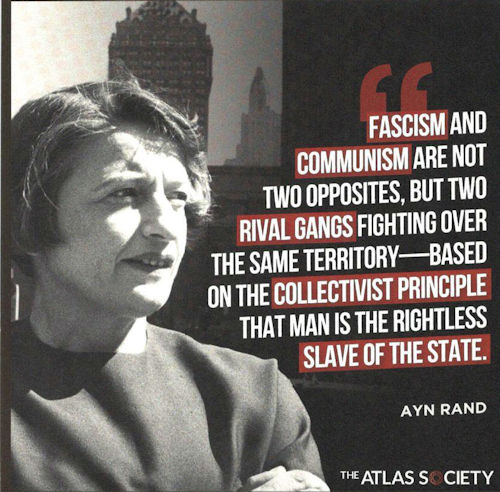






 Posts
Posts