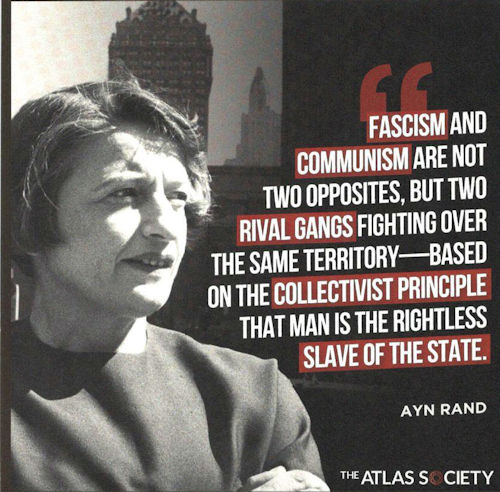
In the reaction to President Trump's efforts to reduce the scope of government, some key characteristics of the collectivists, socialists, and Progressive Elitists are more openly clear than usual.
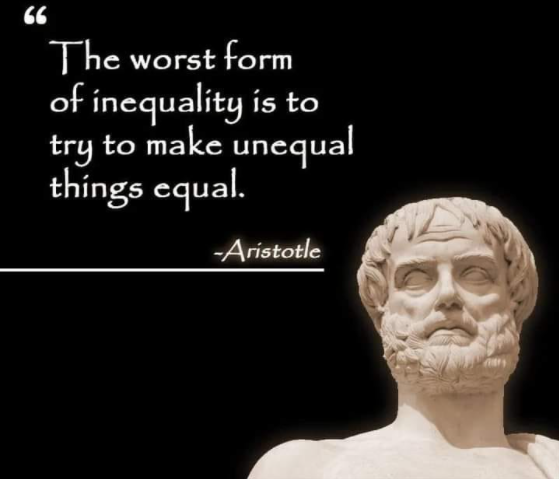
The socialists are going berserk. Hysteria is a key component of socialism. The madness of crowds, the imagined evils of business, the fears for the environment, the dislike for mankind and man's need to control his environment, the dislike for unequal accomplishment and award, fear of uncertainty, and the fear of being independent or of having to think independently. Hysteria, alarmism, fear -- they all make the socialist want to trust his life and its care to government and to the collective.
Collectivists and Progressive Elitists are known to be less charitable than conservatives are and I am sure than libertarians are as well. They look into their own souls and they see a lack of benevolence. They are ashamed. They seek a cheap and easy way to convince themselves that they are benevolent. By using the force of government, they can choose the causes of "benevolent" action and dilute the cost to themselves in time and money by making everyone contribute to their chosen causes. Despite putting a gun to the head of others to achieve their goal, they convince themselves to an extent that they are now benevolent, but that conviction is most uncertain and uneasy. It is difficult to completely evade the fact that they have done harm to some in order to fill the hole in their own souls. They are cursed with at least the vague notion, that unlike them, the good man finds it easy and natural to view most other men in a benevolent manner because he sees introspectively his own good and noble soul and naturally tends to project that evaluation of what it is to be a man onto others.
Showing posts with label benevolence. Show all posts
Showing posts with label benevolence. Show all posts
03 February 2017


17 August 2011
Socialized Medicine and a Doctor's Moral Obligation
A friend asked this question:
If the person has an entitlement mentality, then the doctor generally has no rational reason to help that person without remuneration. It is perfectly moral for him to walk away. In the context of a society of largely productive and benevolent people, a doctor may be rationally inclined to provide help to those who cannot afford to pay for their care, especially if they have become ill or hurt through no great fault of their own. But, even that depends on context, such as the expense the doctor will have in helping him and whether his helping the unfortunate person means that he is not able to help someone else who can pay. He is not obliged to save the poor man, while letting the financially prepared man die! If he gives too much of his time to helping the poor, he may not be able to generate enough income to buy the medical equipment that will enable him to save many lives in the future or he may simply go out of business. The doctor must make difficult moral decisions based on a very complex context. Some may appear to make a greater effort in benevolent acts than others, but still may not be saving the most lives possible.
Rational men are going to balance these difficult decisions differently and we should be careful in our appraisals of their morality. A doctor may be willing to give his services free in a given case, but he may be unable to convince a nurse and other assistants to give their time free. Or the hospital may be unwilling to make an operating room available. Now the proponent of socialized medicine will want to use force to make all of these needed experts and facilities available, but this is a violation of everyone's rights and cannot be tolerated in a civilized society.
My grandfather was a physician in the Great Depression. He was a surgeon who operated in the Mayo Clinic and all of the hospitals of Minneapolis and St. Paul. He did a very unusual number of operations on people who could not pay for them. But, people were different back then. A farmer might not have any money, but he would give Harry Christianson a chicken, which to the farmer was his fortune. Then very likely for 20 years after, when he could, he would stop by grandpa's home and leave a bag of potatoes or a bushel of corn. This was very welcome when rationing was going on in WWII for instance. Harry and his wife Bess always had free food and there was so much that Bess and her daughter Betty organized ways to get it into the hands of those in need in the city. One man decided he would paint grandpa's house in payment for an operation, but while he was painting the upper part of the exterior, union thugs knocked him off the ladder and shattered his leg. The man was not a union painter. He was just a farmer who wanted to pay a debt he believed he had. Harry and Bess put him up in one of their rooms until he was healed. The union later burned down their home because they did this.
So this is another important issue of context. There is value in helping people who put value on the help they receive. There is value in helping people who fundamentally believe that one should trade values for value.
There is little value in helping the ungrateful, however. Any deserving person, any person whose welfare one has reason to care about, will recognize the value they have received and will not presume that they have the rights of a master, while the doctor who worked so hard to develop his healing skills and knowledge is treated as his slave. A doctor or any other service provider has the right to choose his own values and to pursue his own happiness in terms of his values.
The need of a poor person does not deprive him of this equal individual right to pursue his happiness. Every man, whether poor or rich, whether a professional or a low-skilled worker, has this magnificent right to pursue his happiness. No one has the right to dictate the values or the moral code which will define what his happiness will be. All that can be required of another is that they are not allowed to initiate the use of force as a means to pursue their happiness.
This is very adequate for each of us when we exercise our freedoms and act within the private sector of our society. In the private sector we have a wealth of potential opportunities to cooperate with others whose values are sufficiently similar to ours or in some way complementary so that each of us can pursue our goals defined by our individually chosen values. When our values are not approved of by others, they are free to choose not to associate with us. This is the realm of the voluntary and is relished by those who want rich choices and who abhor being forced to bend to the will of others.
In contrast to this natural realm of freedom, we have the realm of the government. The principal property of government is its monopoly on the use of force in a society. Because a wise society seeks to minimize the use of force and seeks to maximize individual freedom of choice and association with others, such a society has a minimal government. Such a limited and legitimate government uses force only for the purpose of protecting the equal, sovereign rights of the individual to life, liberty, and the pursuit of happiness.
When government attempts to do more, it must necessarily do violence to the rights of the individual as it imposes values and moral codes upon the People. With this loss of freedom to choose one's values, one loses many of the freedoms to use one's own mind. One loses the choice of one's own goals. With the loss of one's own goals, one loses all hope. It is no accident that unfree societies become depressed societies with large increases in drug use, excessive alcohol use, and increased numbers of suicides. Big governments do much harm to individuals and are notable in the brutally of their violence against their people should any insist on exercising their sovereign rights. We see the party of biggest government verging close to a desire to let loose the hounds of hell upon the Tea Party people for just this reason. Over and over they have tried to label the Tea Party people who simply want to preserve some of their individual rights as terrorists and subversives. This makes the brutal nature of unlimited government all the more clear in our time.
One of the arguments I have heard from proponents of socialized medicine is that it is immoral to stand by while someone dies, and therefore society is obligated to help when someone is facing a life threatening illness but can't afford the treatment. Although there is much to refute in this type of statement, I am wondering about the more difficult refutation. As a personal decision of each doctor, is it rational to make the decision to deny treatment based upon the fact of a patient's inability to pay?The moral argument against socialized medicine, or ObamaCare in particular, is based on our equal, sovereign individual rights. It is not dependent upon whether a particular doctor decides that he must act to save a life independent of remuneration or not. It is an important moral principle that he is free to either be benevolent or not be benevolent. Now, I do believe benevolence is an important virtue, but benevolence is virtuous in the context that the person helped has value to the doctor. Benevolence is not about self-sacrifice, since that would hardly be benevolent to oneself.
If the person has an entitlement mentality, then the doctor generally has no rational reason to help that person without remuneration. It is perfectly moral for him to walk away. In the context of a society of largely productive and benevolent people, a doctor may be rationally inclined to provide help to those who cannot afford to pay for their care, especially if they have become ill or hurt through no great fault of their own. But, even that depends on context, such as the expense the doctor will have in helping him and whether his helping the unfortunate person means that he is not able to help someone else who can pay. He is not obliged to save the poor man, while letting the financially prepared man die! If he gives too much of his time to helping the poor, he may not be able to generate enough income to buy the medical equipment that will enable him to save many lives in the future or he may simply go out of business. The doctor must make difficult moral decisions based on a very complex context. Some may appear to make a greater effort in benevolent acts than others, but still may not be saving the most lives possible.
Rational men are going to balance these difficult decisions differently and we should be careful in our appraisals of their morality. A doctor may be willing to give his services free in a given case, but he may be unable to convince a nurse and other assistants to give their time free. Or the hospital may be unwilling to make an operating room available. Now the proponent of socialized medicine will want to use force to make all of these needed experts and facilities available, but this is a violation of everyone's rights and cannot be tolerated in a civilized society.
My grandfather was a physician in the Great Depression. He was a surgeon who operated in the Mayo Clinic and all of the hospitals of Minneapolis and St. Paul. He did a very unusual number of operations on people who could not pay for them. But, people were different back then. A farmer might not have any money, but he would give Harry Christianson a chicken, which to the farmer was his fortune. Then very likely for 20 years after, when he could, he would stop by grandpa's home and leave a bag of potatoes or a bushel of corn. This was very welcome when rationing was going on in WWII for instance. Harry and his wife Bess always had free food and there was so much that Bess and her daughter Betty organized ways to get it into the hands of those in need in the city. One man decided he would paint grandpa's house in payment for an operation, but while he was painting the upper part of the exterior, union thugs knocked him off the ladder and shattered his leg. The man was not a union painter. He was just a farmer who wanted to pay a debt he believed he had. Harry and Bess put him up in one of their rooms until he was healed. The union later burned down their home because they did this.
So this is another important issue of context. There is value in helping people who put value on the help they receive. There is value in helping people who fundamentally believe that one should trade values for value.
There is little value in helping the ungrateful, however. Any deserving person, any person whose welfare one has reason to care about, will recognize the value they have received and will not presume that they have the rights of a master, while the doctor who worked so hard to develop his healing skills and knowledge is treated as his slave. A doctor or any other service provider has the right to choose his own values and to pursue his own happiness in terms of his values.
The need of a poor person does not deprive him of this equal individual right to pursue his happiness. Every man, whether poor or rich, whether a professional or a low-skilled worker, has this magnificent right to pursue his happiness. No one has the right to dictate the values or the moral code which will define what his happiness will be. All that can be required of another is that they are not allowed to initiate the use of force as a means to pursue their happiness.
This is very adequate for each of us when we exercise our freedoms and act within the private sector of our society. In the private sector we have a wealth of potential opportunities to cooperate with others whose values are sufficiently similar to ours or in some way complementary so that each of us can pursue our goals defined by our individually chosen values. When our values are not approved of by others, they are free to choose not to associate with us. This is the realm of the voluntary and is relished by those who want rich choices and who abhor being forced to bend to the will of others.
In contrast to this natural realm of freedom, we have the realm of the government. The principal property of government is its monopoly on the use of force in a society. Because a wise society seeks to minimize the use of force and seeks to maximize individual freedom of choice and association with others, such a society has a minimal government. Such a limited and legitimate government uses force only for the purpose of protecting the equal, sovereign rights of the individual to life, liberty, and the pursuit of happiness.
When government attempts to do more, it must necessarily do violence to the rights of the individual as it imposes values and moral codes upon the People. With this loss of freedom to choose one's values, one loses many of the freedoms to use one's own mind. One loses the choice of one's own goals. With the loss of one's own goals, one loses all hope. It is no accident that unfree societies become depressed societies with large increases in drug use, excessive alcohol use, and increased numbers of suicides. Big governments do much harm to individuals and are notable in the brutally of their violence against their people should any insist on exercising their sovereign rights. We see the party of biggest government verging close to a desire to let loose the hounds of hell upon the Tea Party people for just this reason. Over and over they have tried to label the Tea Party people who simply want to preserve some of their individual rights as terrorists and subversives. This makes the brutal nature of unlimited government all the more clear in our time.
08 April 2007
Individuality and Loneliness
There is a constant tension between asserting one's individuality and feeling welcome within a group. In fact, we are all very complex and differentiated individuals and we are also mostly social animals. Many of the most difficult choices we make in life are the result of a tug of war between our desire to be ourselves and our desire to be well-regarded and welcomed by others. In a rational world full of benevolent and tolerant people, the tension in this rope would be reduced, but it would always still be significant with most of the people who may hold the other end of the rope. Of course, they will be different in their capabilities, interests, and values in most cases from ourselves. This is simply a consequence of the complexity and the many differences that exist among people.
To start life, we are different in many ways at birth. We are so complicated at the level of initial biochemistry, that many differences exist between us already. Then, we start experiencing the world and interacting with other people and we each have a unique experience with unique exposures to stimuli from reality. Then, we each make a constant stream of choices in our thoughts and in our actions which have consequences unique to our own life. In the end, there can be no question but that each of us is a highly complex and differentiated individual. This in turn means that if you put any two people on the opposite ends of the rope, there will be tension in that rope. Two sisters at opposite ends of the rope will find times when the tension is great, as will two lovers, two scientists, two farmers, two historians, two philosophers, two friends, two bloggers, two unionists, and two businessmen. The tension is always present at some level.
If we consider even just fairly common traits, we do not find it easy to match two people up on any fairly substantial, yet quite finite set of traits. People have a tendency to be distributed across wide ranges, often along a bell-shaped curve, for given traits. Of course, many people may be close to the maximum of the curve for a given trait, but any two people who are close for that trait may be far apart on the distribution curve for another significant trait. For instance, suppose you are trying to match two people for intelligence, talkativeness, energy level, political beliefs, religious beliefs, and sexual preferences. As we know, it is difficult even with such a limited set of traits to find someone who matches any given individual. In real life, especially if one is looking for a marriageable mate, the number of traits that may be of importance is much greater. We would have to add such items as desire for children, manner of handling money and finances, preferences in homes, driving technique, sharing versus specialization in chores, how to entertain friends, how to interact with each other's family, and how to respond to each other's career needs. Bringing any two lives together is a very challenging task. This is true in many realms beyond that of two marriage partners.
The rope is always under tension. Yet, we are social animals. We want to receive and give affection, we want to exchange ideas, goods, and services, and we want to enjoy and appreciate others who are goal-directed living beings faced with many of the same challenges in life that face us. So, we want to find those to hold the other end of the rope who will not yank us off our feet and will allow us to be the individuals we are. At least, this is what we do if we are rational, because we realize that it is important to also be the individual we are. Less rational people will often try to diminish their individuality to belong comfortably within a large group of people, so they can have any number of people from that group at the other end of the rope without being yanked off their feet. In the Northeastern US and California, many people looking for some large group to belong to will decide to share in the socialist and Europeanized vision of government and society. In the heartland, many people will seek this common ground in a Christian community. In India, they seek it most commonly in Hinduism and the caste system. In Northern Africa and parts of southern Asia, they find it in Islam. Of course, this and other aspects of the common culture in these areas are only a part, though a substantial part, of an effort to reduce the tension in the rope. Most of these efforts involve a considerable sacrifice of individuality and with that a pain of its own.
How much pain there was and how much people had a need to express their individuality has been made very clear by the advent of the Internet and the now widespread communication channels opened between countless individuals seeking to find those who lie on the bell-shaped curve for a given interest or trait near them. For instance, maybe as many as 0.01% of Americans consider themselves to be Objectivists. Despite this small number, there are at least a dozen forums for Objectivists to discuss ideas, each with its own unique flavor. Or, consider the general distain for explicit sex and its public discussion. Yet, the internet is heavily trafficked with hordes of people trying to express their individuality in sexuality which they would never express within their local community. The Internet has become a tool also for finding that mate who might best be a match for marriage. It provides a means to filter through far larger numbers of people than one could ever meet in one's local community or travel to see and it allows people to assert their individuality without as great a risk that it will be discovered at their church, their workplace, or by their political henchmen. So, the Internet has done wonders to redress the constraints put on a person's individuality by the desire to fit in with some group of people without totally suppressing their individuality.
But, there is still that tension of having one realm in which one can be an individual and another in which it is hard to assert that individuality. Yet, oddly, very many of those who try hard to conform in their local community are the individualists of the Internet. Many of them have now been exposed to a higher level of personal expression and therefore freedom on the Internet. As they turn back into their communities, the benefits and the knowledge that have come about other people and their yearnings are bound to have a big impact on the level of benevolence toward individuals and tolerance toward the idea of individuality. This effect will be greater on younger people who came of age on the Internet. Community conformity will be almost certain to diminish over the next couple of decades as a result.
Among many other things, this opens the door for a philosophy for living which stresses individuality. It is also a very strongly positive development because it allows those few people who are willing and able to sustain their end of the rope, when it is under the greater tension characteristic of a little-shared philosophy of life, to meet one another. We Objectivists can at least be a part of a society through the Internet. This Internet society will grow if we practice our rational philosophy rationally. As it does, more and more people who can sustain rope tensions in their local communities of smaller magnitudes will be enticed to become Objectivists. The cost of membership will have to be brought down before a substantial fraction of even the American population will be willing to become Objectivists. If we want Objectivism to become a powerful force in our local world, we must practice both Internet and local community benevolence and toleration. The activation energy for becoming an Objectivist must be decreased, or there will only be a very few Objectivists and too many of them will simply be masochists and contrarians, who will be poor representatives.
Even with the Internet, being an individualist and an Objectivist is a lonely experience. You really must be a strong and resilient person. You must have the strength to bear some rather serious loneliness. Some of that loneliness is the result of already generally being a particularly intelligent person with a strong commitment to understanding reality. That already places you far out on some bell-shaped curves. Then on top of that you reject all the popular philosophies and causes of our time. You reject religion, socialism, environmental animism, tribalism, racism, and simple-minded, relativistic diversity/multiculturalism. You stand out like a sore thumb. You seek company on the Internet then where you can search the entire world and still you find only a small number of individuals you can really admire and whose friendship can be treasured. The cost of loving reality is only exceeded by the cost of acquiring a club to join by denying reality. It remains a fairly lonely business to be an individualist and even more so to be an individualist Objectivist.
Of course, the only real Objectivist is the individualist who expresses his individuality, thinks for himself, lives a productive and creative life, and seeks his own happiness. The orthodox, the cultist, the contrarian, and the masochist do not live the philosophy of Objectivism. They are pretenders or in some cases those who would be carnivores. Life is short and there is much to do. This imposes an economy that dictates against wasting one's time in endless debates with those who will not be convinced by rational argument. One must identify those who treat reality with total respect and ignore those who have other primary allegiances. There are some who distort the findings of science, pick them selectively and in as out-of-context a manner as do the environmental animists while claiming to respect science. This is actually a very fundamental attack on science, one which will totally discredit it, if allowed to go unchallenged.
This attack on science is being carried out very broadly by those environmentalists who falsely claim that there is a scientific consensus that the recent global warming is caused primarily by man rather than by a natural increase in radiation from the sun. But, in some Objectivist forums, there are other attacks upon science. Some are attacks upon quantum theory, which while not yet a completed program, is nonetheless not at fault for the reasons often claimed. Another is an attempt to claim that science has proven that all operations of the mind are now understood in terms of classical physics, classical thermodynamics even! This argument is viewed as a keystone argument that man lacks volition and the mind is really just a very complex program that makes choices. How these choices differ from simple conditional branching in a computer program has not been explained, but these claims have met with widespread acceptance on one major Objectivist forum.
The battle to be true to reality is a never-ending battle and I wonder if I will ever find a reasonable and sustaining number of friends to join me in these battles. If I should not carry the day, at least I will never be defeated! I will be true to my own individual nature and to my primary respect for reality whether I fight alone or with a few magnificent friends. Those who fight under the banner of individuality and reality beside me, I will love.
To start life, we are different in many ways at birth. We are so complicated at the level of initial biochemistry, that many differences exist between us already. Then, we start experiencing the world and interacting with other people and we each have a unique experience with unique exposures to stimuli from reality. Then, we each make a constant stream of choices in our thoughts and in our actions which have consequences unique to our own life. In the end, there can be no question but that each of us is a highly complex and differentiated individual. This in turn means that if you put any two people on the opposite ends of the rope, there will be tension in that rope. Two sisters at opposite ends of the rope will find times when the tension is great, as will two lovers, two scientists, two farmers, two historians, two philosophers, two friends, two bloggers, two unionists, and two businessmen. The tension is always present at some level.
If we consider even just fairly common traits, we do not find it easy to match two people up on any fairly substantial, yet quite finite set of traits. People have a tendency to be distributed across wide ranges, often along a bell-shaped curve, for given traits. Of course, many people may be close to the maximum of the curve for a given trait, but any two people who are close for that trait may be far apart on the distribution curve for another significant trait. For instance, suppose you are trying to match two people for intelligence, talkativeness, energy level, political beliefs, religious beliefs, and sexual preferences. As we know, it is difficult even with such a limited set of traits to find someone who matches any given individual. In real life, especially if one is looking for a marriageable mate, the number of traits that may be of importance is much greater. We would have to add such items as desire for children, manner of handling money and finances, preferences in homes, driving technique, sharing versus specialization in chores, how to entertain friends, how to interact with each other's family, and how to respond to each other's career needs. Bringing any two lives together is a very challenging task. This is true in many realms beyond that of two marriage partners.
The rope is always under tension. Yet, we are social animals. We want to receive and give affection, we want to exchange ideas, goods, and services, and we want to enjoy and appreciate others who are goal-directed living beings faced with many of the same challenges in life that face us. So, we want to find those to hold the other end of the rope who will not yank us off our feet and will allow us to be the individuals we are. At least, this is what we do if we are rational, because we realize that it is important to also be the individual we are. Less rational people will often try to diminish their individuality to belong comfortably within a large group of people, so they can have any number of people from that group at the other end of the rope without being yanked off their feet. In the Northeastern US and California, many people looking for some large group to belong to will decide to share in the socialist and Europeanized vision of government and society. In the heartland, many people will seek this common ground in a Christian community. In India, they seek it most commonly in Hinduism and the caste system. In Northern Africa and parts of southern Asia, they find it in Islam. Of course, this and other aspects of the common culture in these areas are only a part, though a substantial part, of an effort to reduce the tension in the rope. Most of these efforts involve a considerable sacrifice of individuality and with that a pain of its own.
How much pain there was and how much people had a need to express their individuality has been made very clear by the advent of the Internet and the now widespread communication channels opened between countless individuals seeking to find those who lie on the bell-shaped curve for a given interest or trait near them. For instance, maybe as many as 0.01% of Americans consider themselves to be Objectivists. Despite this small number, there are at least a dozen forums for Objectivists to discuss ideas, each with its own unique flavor. Or, consider the general distain for explicit sex and its public discussion. Yet, the internet is heavily trafficked with hordes of people trying to express their individuality in sexuality which they would never express within their local community. The Internet has become a tool also for finding that mate who might best be a match for marriage. It provides a means to filter through far larger numbers of people than one could ever meet in one's local community or travel to see and it allows people to assert their individuality without as great a risk that it will be discovered at their church, their workplace, or by their political henchmen. So, the Internet has done wonders to redress the constraints put on a person's individuality by the desire to fit in with some group of people without totally suppressing their individuality.
But, there is still that tension of having one realm in which one can be an individual and another in which it is hard to assert that individuality. Yet, oddly, very many of those who try hard to conform in their local community are the individualists of the Internet. Many of them have now been exposed to a higher level of personal expression and therefore freedom on the Internet. As they turn back into their communities, the benefits and the knowledge that have come about other people and their yearnings are bound to have a big impact on the level of benevolence toward individuals and tolerance toward the idea of individuality. This effect will be greater on younger people who came of age on the Internet. Community conformity will be almost certain to diminish over the next couple of decades as a result.
Among many other things, this opens the door for a philosophy for living which stresses individuality. It is also a very strongly positive development because it allows those few people who are willing and able to sustain their end of the rope, when it is under the greater tension characteristic of a little-shared philosophy of life, to meet one another. We Objectivists can at least be a part of a society through the Internet. This Internet society will grow if we practice our rational philosophy rationally. As it does, more and more people who can sustain rope tensions in their local communities of smaller magnitudes will be enticed to become Objectivists. The cost of membership will have to be brought down before a substantial fraction of even the American population will be willing to become Objectivists. If we want Objectivism to become a powerful force in our local world, we must practice both Internet and local community benevolence and toleration. The activation energy for becoming an Objectivist must be decreased, or there will only be a very few Objectivists and too many of them will simply be masochists and contrarians, who will be poor representatives.
Even with the Internet, being an individualist and an Objectivist is a lonely experience. You really must be a strong and resilient person. You must have the strength to bear some rather serious loneliness. Some of that loneliness is the result of already generally being a particularly intelligent person with a strong commitment to understanding reality. That already places you far out on some bell-shaped curves. Then on top of that you reject all the popular philosophies and causes of our time. You reject religion, socialism, environmental animism, tribalism, racism, and simple-minded, relativistic diversity/multiculturalism. You stand out like a sore thumb. You seek company on the Internet then where you can search the entire world and still you find only a small number of individuals you can really admire and whose friendship can be treasured. The cost of loving reality is only exceeded by the cost of acquiring a club to join by denying reality. It remains a fairly lonely business to be an individualist and even more so to be an individualist Objectivist.
Of course, the only real Objectivist is the individualist who expresses his individuality, thinks for himself, lives a productive and creative life, and seeks his own happiness. The orthodox, the cultist, the contrarian, and the masochist do not live the philosophy of Objectivism. They are pretenders or in some cases those who would be carnivores. Life is short and there is much to do. This imposes an economy that dictates against wasting one's time in endless debates with those who will not be convinced by rational argument. One must identify those who treat reality with total respect and ignore those who have other primary allegiances. There are some who distort the findings of science, pick them selectively and in as out-of-context a manner as do the environmental animists while claiming to respect science. This is actually a very fundamental attack on science, one which will totally discredit it, if allowed to go unchallenged.
This attack on science is being carried out very broadly by those environmentalists who falsely claim that there is a scientific consensus that the recent global warming is caused primarily by man rather than by a natural increase in radiation from the sun. But, in some Objectivist forums, there are other attacks upon science. Some are attacks upon quantum theory, which while not yet a completed program, is nonetheless not at fault for the reasons often claimed. Another is an attempt to claim that science has proven that all operations of the mind are now understood in terms of classical physics, classical thermodynamics even! This argument is viewed as a keystone argument that man lacks volition and the mind is really just a very complex program that makes choices. How these choices differ from simple conditional branching in a computer program has not been explained, but these claims have met with widespread acceptance on one major Objectivist forum.
The battle to be true to reality is a never-ending battle and I wonder if I will ever find a reasonable and sustaining number of friends to join me in these battles. If I should not carry the day, at least I will never be defeated! I will be true to my own individual nature and to my primary respect for reality whether I fight alone or with a few magnificent friends. Those who fight under the banner of individuality and reality beside me, I will love.
Subscribe to:
Posts (Atom)







 Posts
Posts