Having noted yesterday that the Merriam-Webster Unabridged Dictionary would not even attempt a definition of Progressivism, I thought I had best be sure that it offered reasonable definitions of Libertarianism and Libertarian.
The definition offered for Libertarian is (Webster's Third New International Dictionary, Unabridged. Merriam-Webster, 2002. http://unabridged.merriam-webster.com (25 Feb. 2010).:
1 : an advocate of the doctrine of free will -- contrasted with necessitarian
2 : one who upholds the principles of liberty ; specifically : one who upholds the principles of individual liberty of thought and action
The second definition is a reasonable brief statement of the basic principle for which a Libertarian stands in politics. The kind of problem that stood in the way of the Progressives in defining themselves on the basis of principles does not exist for Libertarians!
It turns out that the Merriam-Webster dictionary defines Libertarianism as
the theories or practices of a libertarian,
which is fine since it defined libertarian. So, libertarianism is based on principles and a Libertarian is a man of principle, unlike a Progressive who has no definable principles according to the Merriam-Webster Unabridged Dictionary!
Oh, it can be fun hoisting a Progressive (liberal, fascist, socialist) upon his own petard!
Showing posts with label Anti-progressive tax. Show all posts
Showing posts with label Anti-progressive tax. Show all posts
25 February 2010


12 November 2008
Fein -- Redistribution blather
Bruce Fein, a constitutional lawyer, has written an interesting commentary called "Redistribution blather" for the Washington Times on 11 November 2008. He says,
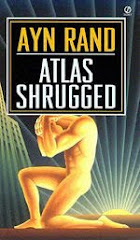
But really, Bruce Fein is on to something here. Besides making it apparent that he has probably read Ayn Rand, he is staking out the moral position from which we will probably have to start if there is to be any hope of ending up with a flat income tax. The socialists claim we are our Brother's Keeper even when we do not know our brother and their numbers are too fantastical for any one mother to have borne them all. We need to finally apply the counterbalancing truth in order to get any justice at all. That truth is the truth I quoted Fein on above. We need to start the Anti-Progressive Tax League and parlay that into something approaching a moral income tax.
Morality and economic prosperity militate in favor of turning the prevailing progressive income tax scheme on its head. They also argue against government redistributions of wealth through spending, including the $700 billion Troubled Assets Relief Act of 2008, which was championed by President Bush, Mr. McCain, and the president-elect alike. It lavishly rewards the prodigal, financially irresponsible, and politically connected at the expense of the thrifty and prudent.He notes that barriers to voting by the masses have been reduced and the checks against majoritarian tyranny have become less effective. The progressive income tax and massive redistribution programs have allowed politicians to purchase the votes of much of the middle and lower classes. The rich retain influence by making campaign contributions and by providing advertising and think tanks. The politicians then squander many billions of dollars winning the affections and allegiance of the rich, the middle class, and the lower class. Then Fein produces a great argument on the morality of progressive taxation:
Then another juicy comment:In any event, the "ability to pay" standard is morally obtuse. At present, most income is obtained through private market transactions. Income is earned by doing things other persons want done, i.e., giving them satisfaction. The willingness of a private individual to pay from his own resources is the best proxy ever invented for fixing the economic value of the thing provided. Every other standard is hopelessly subjective.
Individuals who earn high incomes through private transactions are thus the true "Good Samaritans" because they give the greatest amount of satisfaction to others. Someone who slaved 24 hours a day digging a hole to nowhere that no one wanted would be economically barren and might be whipped for refusing to do things that others wanted done. So much for Karl Marx's labor theory of value.
By any sensible moral yardstick, high-income earners should be taxed least because they generate the greatest amount of consumer satisfaction. Low-income earners should be taxed most because they create the least social good. Moreover, taxation reduces the amount of the thing taxed by raising its cost. High taxes on low-income earners would reduce their numbers by giving tax relief for earning more.
An individual whose diligence, industry and wisdom have earned great personal wealth by satisfying the wants of others stands on a higher moral plane than an individual whose indolence, indiscipline and criminality have plunged him into abject poverty.For my part, I will not propose an anti-progressive income tax with say the first dollar earned at a 39.6% rate, the second dollar taxed at a 36% rate, the third dollar earned taxed at a 33% rate, etc. Well ... at least not as long as government does not insist on doling out more welfare benefits to the lower income groups. No... I am willing to go along with a system with a flat tax rate of say 10%. I understand that it is said that a flat rate of 17% would be needed, but that assumes that we will continue the many redistributionist programs we already have. So either we slash those programs and go with a 10% flat income tax rate, or we keep the redistributionist programs and adopt an anti-progressive income tax. Thems my terms!
But really, Bruce Fein is on to something here. Besides making it apparent that he has probably read Ayn Rand, he is staking out the moral position from which we will probably have to start if there is to be any hope of ending up with a flat income tax. The socialists claim we are our Brother's Keeper even when we do not know our brother and their numbers are too fantastical for any one mother to have borne them all. We need to finally apply the counterbalancing truth in order to get any justice at all. That truth is the truth I quoted Fein on above. We need to start the Anti-Progressive Tax League and parlay that into something approaching a moral income tax.
Subscribe to:
Posts (Atom)






 Posts
Posts