The trait I am talking about is one of character, not of physical capability. A physically strong man is still a weak man if he cannot wisely direct his strength to achieve the goals appropriate to man. The key to providing that direction to action lies in our minds, in particular in our commitment to rational thought. The man of real strength thinks independently with his own mind nearly constantly in gear. He busily examines the physical and the societal events going on about him and he is a careful observer. He assesses and evaluates what he observes to make as much sense of it as he can, taking care to learn from his past experience those principles which will make it possible for him to quickly and efficiently identify the actions he will need to take in the present filled with new events. These events always do require the strong man to take action to deal with them. If a man has not learned the necessary principles from the past and his personal experience correctly, then he cannot assert himself appropriately in action. The strong man has developed good principles for action, while the weak man either has no principles or has chosen his principles with insufficient attention and rational thought. The weakest man is that man with no meaningful principles.
So, the strength of a man is critically tied to his principles and also to his commitment to preserving, protecting, and defending those principles. You might note that I have borrowed the exact phraseology here in the oath the inaugurated President of the United States takes with respect to the Constitution of the United States. A weak, unprincipled President is one who does not share and then act decisively upon the remarkable principles of the Constitution. The strong President does. But every man is given the choice to be strong or to be weak, not just the President. Every man must formulate his principles and must be willing to stand by them and promote them. If he does not, then he is a weakling. Then he is not manly, or we might say that he is not a man.
What are the principles that a strong man holds? First, he is very strongly committed to thinking for himself and performing his own analytical assessment of history and making his own critical evaluations of his personal experience. He knows what he knows and he knows what he does not know. He is careful to make the distinction between the two and he seeks to reduce the realm of what he does not know constantly. On the basis of what he does know, he acts decisively, with commitment and energy, to manage his own life. He respects that others must do the same with respect to their lives. What he does not allow is that others use force to make him manage his own life according to their values. He asserts his own chosen values as the goals in his own life. He does not require others to take on his values, but he does not allow others to assert that they have the right to impede him in his pursuit of his values, so long as he does not initiate the use of force against them. If others initiate the use of force against him to impede him from pursuing his values, then he recognizes those who have initiated the use of force as his enemies and he will fight them as best he can to protect his greatest value, his own life.
It is very common to hear weak men assert that the strong man must submit to the will of the majority. They, having no rationally determined principles and being clueless in dealing with reality because of it, will commonly bend to the majority, who themselves may have no rationally determined principles for managing their own lives. They feel so uncertain in the process of their self-management, that they simply wish to consign that responsibility elsewhere. In medieval times, they consigned it to the local strongman, who may have consigned his own life to that of a king. It has always been difficult for the strong man of principle to get others around him to agree that he should be allowed to manage his own life. In fact, the weak men, who in most societies through most of history, have been the majority, are envious of the strong man and his ability to manage his own life in accordance with his self-determined principles. Commonly, such men are hated.
In the 18th century, a great phenomena occurred in a few geographical areas of western Europe and in a part of North America. As a result of thought during the Age of Enlightenment and the work of some thinkers first in England, Scotland, and France, it became recognized that man needed the freedom to think for himself and to manage his own life on the basis of the principles that he formulated himself. There came to be a new recognition of the individuality of man and of his individual rights. In the 13 colonies of North America which became the United States of America, particularly large numbers of men who had long had to rely primarily upon themselves to conquer the wilderness and who had long been able to enjoy a state of minimal government intrusion upon their lives, became enraged when England from so far away tried to impose a heavier hand of government upon them. They were not used to being forced to bend to the will of others and being forced to deny their own values for those chosen for them by others. They rebelled and after a long and brutal struggle against the most powerful military country of that time, they became independent. After some experimenting with a national government, which they initially did not get quite right, they instituted the constitutionally-limited federal government committed to the defense of the rights of the individual. This was the start of the greatest experiment ever conducted by man in all of man's history.
Could a people highly committed to not using force as the means to achieving their values succeed in achieving those values? The great lesson of the 19th century was the incredible growth of the United States of America under a constitution which the people largely lived in accordance with. The one great problem was the ongoing existence of slavery in America, which had been characteristic of all prior human experience and was still very common in most of the world when Americans threw that yoke off their necks in the Civil War. The country, largely minus the South, then surged forward with huge numbers of people living better than any people had ever lived before. The great experiment that people could live in a society without using force to take the income, wealth, and labor of others by force to do the will of a majority, or some minority, or some powerful tyrant, proved to be an obvious huge success. Men were generally expected to be strong and most were. The free market where men could voluntarily exchange ideas, labor, and capital worked marvelously to allow many individuals to define their own values and to pursue them in a uniquely harmonious way.
In the 19th century, men in many countries in Europe, where many fewer people had ever come to believe that societies could refrain from the constant use of force to constrain others to live in accordance with the values of the rulers of those societies, there were increasing numbers of people who were dissatisfied. Many of them emigrated to the United States, or to Canada, Australia, New Zealand, South Africa, or Latin America to escape their lowly station in Europe. Periodically, there were rebellions in Europe by many of the people, but they were always put down with brutal force. Among the confused people, socialism more and more began to take hold. Bismarck bent to the pressure for socialism and began implementing it in Prussia and then in the German states influenced or controlled by Prussia. In the early 20th century, the socialist Woodrow Wilson had even become President of the United States, and he was followed by the socialists Lenin in Russia, Mussolini in Italy, Hitler in Germany, and Franco in Spain. Lesser socialists held power in the United Kingdom and in France at times. Totally unsurprisingly, the men of these societies were soon at each other's throats, since there is no way for socialist societies to allow individuals to pursue their own values and there is no reason for the various destructive states to stop at chewing up the lives of their own people when they can chew up the neighboring people. This allows these regimes based on envy and the destruction of wealth and the human mind, to prolong their inevitable collapse. The 20th century was an often brutal century, which the people of Eastern Europe were particularly able to attest to when they finally emerged from the collapsed socialist paradises there.
The great lesson of the 20th century was that the free market and political systems which recognized the rights of the individual worked much better than did socialism. This was an experiment which should never have had to be performed. The reasons for socialism's failure are as clear as those against rule by an inherited aristocracy. The framer's of the Constitution could easily have explained to Marx and Engels, Lenin, Mussolini, and Hitler why their ideas of political rule were despicable and unworkable. But, huge human misery was endured to perform this very unnecessary experiment. Germany and Italy collapsed in World War II, Franco lingered on and Spain fell into constant despair and ruin, and most dramatically, the Soviet Union finally collapsed and was found to be a hollow shell. Even the socialist state of Sweden found it necessary to greatly reduce its taxes and to make it easier for businesses to survive, to stem the flow of capable people out of the country.
So, at this point, one might think that men of strength would predominate. Strangely enough, the newly freed countries of Eastern Europe have moved to dismantle their welfare states and have lowered taxes and other forced takings from the people greatly. Their economies have boomed and men have become much stronger in those countries. This has put pressure on many countries in western Europe to reduce taxes. Ireland and Iceland have greatly reduced their tax rates. Strangely enough, those countries which have reduced tax rates have actually greatly increased government revenues, as their economies surged ahead. Many Europeans are becoming stronger, after a century of weakness.
In the United States, we have decided that we want to ignore this great victory of the free market and limited government. We have decided that the envy that powers socialism to destroy human ability and long built-up wealth is somehow the moral way to feel. Americans have decided that the individual must give up his rights, which they have been reducing by emasculating the Constitution for a very long time. We just elected a President whose one central principle is his commitment to the destruction of individualism and the rights of the individual. He calls it selfish to be an individual. He claims that there is no reason in the nature of man for a man to have the right to manage his own life. He believes that no man has the right to personal convictions, but must receive and accept the values and goals given to him by some group consensus. Flying in the unforgiving teeth of history, Obama wants to force America into the socialist experiment which failed so utterly in the Soviet Union, Germany, Italy, Spain, Cuba, China, North Korea, Vietnam, Cambodia, Honduras, Venezuela, and all of Eastern Europe. Make no mistake, this very weak man is leading us into a repeat performance of the total failure of socialism.
In foreign policy, he will perform with the same strength of conviction in America's individualistic and free market heritage as Jimmy Carter did. The bullies of the world will rejoice and will be certain to take advantage of the American weakness. We will beg them to like us by giving them handouts of the wealth which Americans worked hard to build. The socialist and bully governments will use the handouts, as they always have, to squeeze their people tighter and suffocate them controls and propaganda. Will Ragnar appear when we need him to prevent this nonsense? Countries will shoot at our military again, they will hijack international trade, and terrorists will have many safe havens. Obama will be a slave to what he thinks World Opinion is. An early show of this is the announced closing of Guantanamo Bay. He cannot release the prisoners there and will not do so, since they are too dangerous. Many prisoners already released are still there because they will not return to their own countries for fear of prosecution there. All Obama can do is set up special courts to consider each prisoner, but those courts will wind up functioning very much like Bush's military tribunals, so this entire act is the pretense of a weak man. It is a fraud, which much of world opinion will be happy to lap up because much of the world thinks he is the Messiah.
One of the most common themes of the weak man is that America does not have the right to force other people to be free. Indeed, they claim that others have the right to choose to be as unfree as they want to be. This utterly neglects the fact that in all geographic regions of the world there are some men strong enough that they wish to be free to manage their own lives and to pursue their own happiness. However few there may be, they have the right to do so and those, however many there may be, who insist on initiating the use of force to prevent them from managing their own lives, are performing the ultimate evil act among men. The few men who wish to be free have every right to oppose those who are trying to suppress them with force. They also have every right to accept the help of others who wish to help them to be free. Francisco's blazing weapons would be rightly welcomed by many throughout the world.
The U. S. government is not obliged to help everyone who wishes to be free to become so, but we are not performing an evil deed by doing so, unless the cost is too great for the American people to choose to be of help. They have that choice. They may make it because they value their right to trade freely with other free people in the world. They may make it because they know that unfree countries are often security threats or may be havens for terrorists. They may choose to help because every free mind is an innovative mind and will add to the general advance of knowledge. Of course, they are allowed to consider the costs of fighting those who wish to impose their tyrannical will on others in their geographic area. The weak man usually argues that the tyrannical majority in that area have the right to impose their will by force upon those who would be free and we are wrong to impose our will that they not use such force upon them. They try to frame this as a moral equivalency, though clearly it is not. It takes little to make a weak man happy with his rationalizations for failing to assert his independence of mind and action!
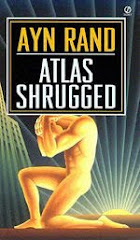
On the more important home front, Obama will eagerly continue to gobble up as much of private enterprise as possible. He will reduce the sphere of voluntary trade between Americans and replace it with political power plays. It has already become very clear that his economic czar has been acting very much like a despot already as a lower official under Bush in picking which big political contributor companies will receive government bailout money and which will be taken over by others or allowed to fail. The complaints in the banking industry have been loud and with great justification. It has become clear that bailouts go to those who have the best political connections. The general welfare is clearly not of primary concern. The only reason to bailout the Big 3 automakers is the political decision to continue the benefits and power of the auto workers unions. Rationally, these companies badly need to be allowed to fail. But, the weak men who ran the Bush administration, the still weaker men of the Obama administration, and the weak men of the Congress, do not have the priniciples men need to live independent lives and to maintain respect for the rights of the individual. They have pushed us into the failing world of Ayn Rand's
Atlas Shrugged. We are living in a nation of group think, which is, of course, an oxymoron.
Obama attended church with the Rev. Wright for 20 years and clearly had to have bought into the low group think of that church, in which the black American was a long suffering victim oppressed by the evil white man. Instead of seeking what black Americans could readily take for themselves, control and the management of their own lives, they sought special favors and reparation payments for the wrongs of southern slavery. They sought these handouts from the ancestors of the northerners who expended their lives in the hundreds of thousands to free the slaves, from the ancestors of the many Americans who first came here after the Civil War, and from people who never discriminated against anyone except on the basis of their individual character. The Rev. Wright demanded respect for every black American based not on their individual character, but on the fact that they belonged to a group as identified by their skin color. Obama bought into this nonsense. Now, he says he is a post-racial President.
We will see. But what we know for sure is that he is a group thinker who believes that harming the most capable and responsible men by transferring their income, wealth, and time to those who are less capable and responsible is a good thing. This is the form that slavery now takes in the U.S., where we no longer enslave men based on their skin color, but we enslave them instead based on their ability and responsibility. The more able and responsible a man is the heavier his chains. This viewpoint is anti-American. The great American principle is that each man has the right to think for himself, choose his own values, manage his own life, and pursue his own happiness. His obligation is to respect this same right of others and he does that simply by not initiating the use of force against them.
These are the American principles that Obama wishes to overthrow, along with the Constitution which supports them, by instituting socialist government. Socialism cannot allow individualism. It must suppress it. This means that it must wrest control over a man's life from him and substitute group control. It must do all it can to keep a man from thinking for himself and provide him with the substitution of a stream of group-thought propaganda. This is the world of weak Obama men. The strength of the American man is to be immasculated as our freedom of action in transportation, financial investments, medical decisions, energy use, food consumption, home buying, and an endless stream of other choices are wrenched away from us with the brutal threat of force if we resist. Socialism is wedded to the replacement of voluntary action with forced response. This is un-American and it is the weak man's heart of evil.







 Posts
Posts