Among the issues most commonly discussed are individuality, the rights of the individual, the limits of legitimate government, morality, history, economics, government policy, science, business, education, health care, energy, and man-made global warming evaluations. My posts are aimed at intelligent and rational individuals, whose comments are very welcome.

"No matter how vast your knowledge or how modest, it is your own mind that has to acquire it." Ayn Rand

"Observe that the 'haves' are those who have freedom, and that it is freedom that the 'have-nots' have not." Ayn Rand

"The virtue involved in helping those one loves is not 'selflessness' or 'sacrifice', but integrity." Ayn Rand

For "a human being, the question 'to be or not to be,' is the question 'to think or not to think.'" Ayn Rand
Showing posts with label creativity. Show all posts

02 September 2016

Atlas Shrugged Day!

This is a reprint of a post I wrote on 2 Sep 2010, with some updates on evolved times:

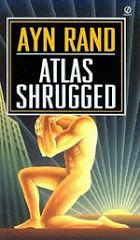
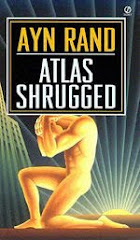
On September 2, 1946, Ayn Rand began writing Atlas Shrugged and she finished her great novel in time for publication in 1957.  Throughout the novel, September 2 is the date of a number of events:
  • In the opening scene of the novel, a bum asking Eddie Willers for a handout, asks "Who is John Galt?"  This and the way it was asked bother Eddie.  As he walks through NYC he is also bothered by the gigantic calendar hanging from a public tower and announcing the date as September 2.    
  • On that date, Hank Rearden and Dagny Taggart decide to take a vacation together.  On that vacation they discover an abandoned motor that should have revolutionized the use of energy in the world.
  • Francisco D'Anconia makes his speech on money on September 2.  He proclaims money to be the tool of free trade and the result of noble effort, not the root of evil.  Those who call money evil choose to replace its use with the force of the gun.
  • D'Anconia Copper is nationalized on 2 September, but the date on the calendar is replaced by "Brother, you asked for it!"
So, on this day of 2 September 2016, let us give thanks to Ayn Rand for her incredibly dedicated effort in writing this path-breaking novel we are finding so important in our lives 59 years after its publication date and 70 years after she started it on 2 September 1946.  This should be a day celebrated much as Thanksgiving Day is celebrated, but without any religious overtones, as a day to respect the creativity and productivity of all the heroic men and women that Ayn Rand's heroic novel commemorates.  At the top of our list of respected heroes and heroines, we should recognize Ayn Rand herself.

19 March 2016

Cummins on Ayn Rand's View of Human Nature

Dr. Denise Cummins wrote an article entitled This is what happens when you take Ayn Rand seriously, on which I commented extensively.  She has followed that article up with another in which she takes exception to one of my comments and generally finds fault with Ayn Rand for not embracing altruism.  Her second article is entitled What Ayn Rand got wrong about human nature.  She starts her article by saying that the complaints of Rand's followers "primarily objected to my assertion that Rand celebrated unbridled self-interest."

Her first quote and the only quote of such a "follower" was taken from one of my comments.  This is that quote:
Rand’s good people do care about others. They do not care to be forced to give away the fruits of their invested time to others, but they are delighted to trade what they produce to others and delighted to see those trades improve the lives of others.
To which her only direct comment is "Such objections are without merit." Oddly enough, she then quoted Ayn Rand
Man gains enormous values from dealing with other men; living in a human society is his proper way of life — but only on certain conditions. Man is not a lone wolf and he is not a social animal. He is a contractual animal. He has to plan his life long-range, make his own choices, and deal with other men by voluntary agreement (and he has to be able to rely on their observance of the agreements they entered). The choice is not self-sacrifice or domination.
showing that she also believed in goodwill towards others provided our associations and trades are of a voluntary nature.  She introduces this quote of Rand's by saying that she acknowledged that human beings are social animals who should "look beyond their own immediate self-interest in order to function."  Looking beyond "immediate self-interest" is consistent with Rand's general philosophy and with my comment that Cummins claimed had no merit.  Note the sleight of hand by Cummins in claiming that Rand believed in "unbridled self-interest" in the first paragraph of her article even as she now acknowledges that Rand looks beyond "immediate self-interest."  Actually, Rand and I believe that rational man pursues his rational self-interest, not an "unbridled self-interest."  An unbridled self-interest is an emotion-driven and short-range viewpoint of others and one's relations with them which is not bridled by rational assessment and long-range planning of one's life.

Cummins then claims:
Despite embracing sociality, Rand saw more evil than good in this kind of interdependence between people. As she wrote in “The Fountainhead,” “The choice is independence or dependence. All that which proceeds from man’s independent ego is good. All that which proceeds from man’s dependence upon men is evil.”
Note that in the quote she gives here, Rand is discussing man's independent ego.  She is not discussing an independence from the trade of values with others.  Rand is saying that one's ego should not be dependent upon what others think of you or that you should not let others tell you what to think or whether you have self-value.  The contradiction Cummins claims is not supported by this quote.

Cummins then claims that Ayn Rand somewhat embraces altruism:
Perhaps the key to understanding this contradiction lies in a journal entry in which she writes, “Selfishness does not mean only to do things for one’s self. One may do things, affecting others, for his own pleasure and benefit. This is not immoral, but the highest of morality.”
Seen in this light, altruistic acts are sanctioned insofar as they bring pleasure or other benefit to the giver, who has no moral obligation to offer help to those who are suffering.
 Ayn Rand defines altruism as the act of sacrificing one's own self-interest for the sake of the interest of others.  Cummins appears to believe that any act done for the sake of others is an act of altruism.  There are certainly many situations in which a rational man will act to enhance the interest of others without sacrificing his own interest and indeed by enhancing his own self-interest as well.  Cummins wants to provide legitimacy for altruism by claiming it subsumes both the sacrificial and the self-interested acts that help others.  For strong moral reasons, Ayn Rand wants to separate these very different actions with respect to relations and associations with others.  Cummins wants to muddle them together.

Cummins next takes exception to Rand's claims that socialism does not work.  Cummins says that socialism can lead to abuse and poverty, but it can also lead to wealth, health, and happiness superior to capitalism.  So, she proves this by stating that a certain Prosperity Index lists the United States as the 11th most "prosperous" nation after a number of nations she calls socialist nations.  The criteria for this ranking are not given by her link and that link does not link to the criteria either.  But in any case, one critical assumption in her "proof" is that the USA is an example of an unadulterated capitalist country.  In fact the Cato Institute 2015 Economic Freedom of the World report ranked the USA as only the 16th country in economic freedoms.  The Heritage Foundation Economic Freedom Index of 2016 lists the USA as #11 in economic freedom.  So, it should not be a surprising result of an index of prosperity to rank the USA #11.  According to the Cato Economic Freedom of the World report, New Zealand, Switzerland, Ireland and Canada are economically more free than the USA.  According to the Heritage Foundation Economic Freedom Index, New Zealand, Switzerland, Australia, Canada, and Ireland all have more economic freedom than does the USA.  Apparently, Cummins is unaware of the many socialist programs and economic controls that American governments have saddled our business sector with.

Oddly, Cummins claims that
while a given individual can benefit from cooperating, he or she can usually do better by reneging.  The end result is that altruists go extinct.  But Trivers showed that altruists can survive if one simple condition is satisfied: Those who fail to reciprocate must be punished through exclusion from subsequent cooperative ventures.
Once again, Cummins is implicitly claiming that one who cooperates and does their part is an altruist, while the rational self-interested person will renege.  But, she says the altruist can do well in cooperative transactions if the reneger is not allowed to enter into future cooperative ventures.  So, the long-range rational self-interest of a person is not to renege, which takes us right back to Ayn Rand's self-interest -- one of rational thought and long-range planning!  Cummins then tries to make a strong contrast between future exclusion and the enforcement of contracts.  The enforcement of contracts as advocated by Ayn Rand does help to prevent harm to the partner in a cooperative endeavor who will live up to the spirit of the endeavor.  The one who does not is subject to legal action to recover damages and also to future exclusion from cooperative endeavors.

Cummins claims that Rand's idea of enforceable contracts says Rand expects "government to play a role in maintaining fairness in market transactions."  She may be trying to claim this opens the door to a version of fairness as Cummins would see fairness, not as Rand would see it.  If this is not the case, I do not see why she has brought this up.

Not surprisingly, Cummins claims that laissez-faire capitalism failed in the 2008 financial crisis.  She fails entirely to recognize the many ways in which that crisis was caused by government policies and the many ways that government policies iced a recovery.

Cummins wraps her article up with the Elizabeth Warren quote that every individual has a collectivist debt, which may be extracted by force, because we gain from living in a society in which we exchange values, sometimes voluntarily, sometimes at the point of a gun.  Well, of course, we gain from living in a society in which we are allowed to choose our own values and act, often in cooperation with others, in the pursuit of our values.  That is central to Rand's philosophy.

Warren claims that we gain even from those goods or services delivered by the force of government that provide us some benefit, even if that benefit cost us far more in expense than is the value of the benefit.  We owe the collective for allowing us to use the roads, no matter how badly government builds and maintains roads.  We owe the collective for long-term unemployment insurance, no matter how irresponsible the beneficiary is for not getting another job or creating his own job.  This is Warren's inversion of cause and effect and hers a great way to reduce productive and creative work.  It is also most strange that she is only interested in laying forceful claim to the products of creative and productive work.  There is no compensation to the creative and productive person in the hours others have invested into their entertainments and pleasures of a non-creative and non-productive manner.  Warren is simply a bank-robber, who claims it is moral to be a thief.

Of course we gain by living in a society in which the knowledge gained by others and the produce of others can be freely traded and made available to us.  Most people who act in the private sector do leave a legacy of values behind them which make it easier for others to survive and flourish in the future.  This is a major benefit of a free society.  It is not a benefit if these benefits of a free society are undermined by the claim that the legacy of prior productive people allows a moral right to take by force whatever one wants in the future from that legacy beneficiary.  This claim does nothing but infest with rot the process of productive and creative thinking and the actions needed to turn those thoughts into actual goods and services.  We rightly admire those who have led productive and creative lives, but this does not make us slaves either to them or to others in society who may not be very productive and creative.  To claim that the legacy of other productive and creative people should be a justification for the use of force to steal the fruits of the time and effort that others invest in their productive and creative work is a sacrilege against that legacy and the good people who left it.

02 September 2014

Atlas Shrugged Day Commemorates Human Creativity and Productivity

This is an update of a 2 Sep 2010 post:

On September 2, 1946, Ayn Rand began writing Atlas Shrugged and she finished her great novel in time for publication in 1957.  Throughout the novel, September 2 is the date of a number of events:

  • In the opening scene of the novel, a bum asking Eddie Willers for a handout, asks "Who is John Galt?"  This and the way it was asked bother Eddie.  As he walks through NYC he is also bothered by the gigantic calendar hanging from a public tower and announcing the date as September 2.    
  • On that date, Hank Rearden and Dagny Taggart decide to take a vacation together.  On that vacation they discover an abandoned motor that should have revolutionized the use of energy in the world.
  •  Francisco D'Anconia makes his speech on money on September 2.  He proclaims money to be the tool of free trade and the result of noble effort, not the root of evil.  Those who call money evil choose to replace its use with the force of the gun.
  • D'Anconia Copper is nationalized on 2 September, but the date on the calendar is replaced by "Brother, you asked for it!"
So, on this day of 2 September 2014, let us give thanks to Ayn Rand for her incredibly dedicated effort in writing this path-breaking novel we are finding so important in our lives 57 years after its publication date and 68 years after she started it on 2 September 1946.  This should be a day celebrated much as Thanksgiving Day is celebrated, but without any religious overtones, as a day to respect the creativity and productivity of all the heroic men and women that Ayn Rand's heroic novel commemorates.

At the top of our list of most respected heroes and heroines, we should recognize Ayn Rand herself.  Her great achievement is still a vital inspiration for many an intelligent, hardworking, and creative human being.  Those she has so inspired are among the best among us.


05 November 2008

John Smith the Creator

One of the really good things to come out of this election was the rise of Joe the Plumber, Tito the Builder, and Cory the Well Driller. Each has built or intends to build a business and each is making or doing something that responds to the needs of others. None of them want handouts from government. They just want to be allowed the freedom to work incredibly hard to produce and create things that others want to purchase from them.

They all have the temerity to think that no one deserves to receive the wealth they created and Obama wants to spread around to others who have not worked as hard and taken the risks they have. I like the fact that each has been identified as a producer and creator of wealth and jobs. These are good men and many people seem to have responded positively to that. There are still good Americans who are not bent on mooching off others and are proud of their ability to be productive and creative.

One of the tragedies in America is that we do not call the parasites who want to receive the money Obama wants to spread around, Sally the Parasite, Joan the Moocher, and Greg the Bloodsucker. We are a nice people who rarely assume that those who produce and earn little most likely deserve to earn little. In reality, there often are good reasons why some Americans earn little.

Of course, many who earn little are also learning the skills or developing the business that will one day allow them to have a very good income. Our upward mobility in America is largely unheard of in other countries around the world. Many of the poor are on their way to wealth. If we spread the wealth as Obama wants to use force to do, then many Americans who want a chance to become wealthy will never be able to do so.

20 March 2005

Rational Men Must be Tolerant of Others

There are at least three major reasons why a rational man must practice tolerance with other human beings. These are:

  • Tolerance makes it possible to learn from the efforts of other people. Without tolerance, others are not encouraged to put as much effort into thinking, since the fruit of their labor is too often viewed as evil. It becomes less risky not to think about anything prohibited and if they have thought about it, they had best not share the thought. Without tolerance one lives in the Dark Ages in Europe or the Middle East of the present. Tolerance is essential if we do not all wish to enter the world and spend our lives reinventing the wheel. Tolerance is also the great tool that makes it possible for us to challenge our own ideas with those of others. This makes it easier for us to identify our own errors of thought and correct them. Tolerance makes it possible for a group of thinkers to tackle a tough problem and take advantage of each person's different experience, interests, and thinking abilities to understand the whole of it, when each individual could only contribute a part of that understanding. I will call this epistemological tolerance.

  • Individuals are very complex and highly differentiated. We are different biochemically and structurally. We have different experiences. We think in different ways and have a history of myriad unique choices behind us. We have different values. These differences add immensely to the richness of our experience with other people. Similarly, they make each of us a unique experience to others. Some of the value represented by each individual is precisely found in the uniqueness of each of us. As gold is more valuable than iron because it is more rare, each individual has more value because each is unique. But, of course, not all of our differences from one another are valued by others. Some of those differences may be viewed with mistrust, some with disdain, and some with repulsion. When a rational man practices tolerance with respect to the properties and values of others, he does not sign on to vouch for the value of each property or the morality of all of their choices. This form of tolerance recognizes the fact of reality that people are individuals. It recognizes that there is commonly much that is sufficiently good in the differences we find in others that we will generally profit in our interactions with them. I will call this the tolerance of individuality.

  • Throughout the history of man, the political entities that have controlled men around the world have established various balancings of dogma versus individual initiatives in thought. They have also frequently sought to direct what values a man may seek and achieve. They have often favored men of one race, ethnic group, religion, cast, tribe, clan, or profession over others. In Europe, the Hundred Year's War, largely between Catholics and Protestants, caused untold misery until finally Europe realized a more live and let live philosophy held benefits for civilization. In a capitalist republic, the government does not favor one person over another for these reasons. In fact, a capitalist republic finds value in the differences among its people, since the many differences in interests and abilities allow the society the advantages of many specializations and open the door to a wealth of trading among its citizens. It is also recognized that when one group suppresses another group or any individual, the fighting and the discord are distractions at best and very often fatal to the continuance of either the government or the entire society. This form of tolerance is political tolerance.

Each of these forms of tolerance are related to one another. They are each important to us as thinking individuals. Since Objectivists are thinking individuals, they should be foremost among those proclaiming toleration as a great benefit to each of us and to the societies in which we live. Objectivists are also a minority, who are not infrequently viewed as heretics. They are dependent upon others exercising the virtue of tolerance toward them. Taken together, the forms of tolerance allow us to develop and function fully as individuals. They allow us to trade ideas and values that raise the level of our civilization to much greater heights than is possible for a society or group of intolerant individuals.

Dogma and rigid social custom are the enemies of tolerance. Rational thought directed at understanding reality and the celebration of the productive individual are the product of toleration. Toleration allows us to experiment with ideas and test them out. It offers us a rich complexity of theories and choices, while aiding us in our efforts to evaluate those theories and choices. It allows each man to draw on the individual insights of others. It is a major virtue whenever two or more individuals live and work together.

There are dogmatic Objectivists (a contradiction in terms actually) who need very badly to understand these aspects of reality. Because reason is the individual's means of surviving and promoting his life, that which promotes reason is virtuous. Rationality is the most fundamental virtue. Tolerance is a major virtue because it recognizes that every other individual has the right of their own attempt to use reason, just as I have that right. Tolerance recognizes that it is the individual mind that must of its own volition choose to focus upon the creation of concepts and the use of principles to understand reality in all of its complexity. It is to be expected that individuals, even when highly committed to rational thought, will independently arrive at somewhat differing understandings of our complex existence. Tolerance recognizes individuality and allows us to take advantage of it to gain much greater insight of reality by evaluating the ideas generated by other creative and rational minds. What we gain in value makes us much more productive and much less primitive. We gain the advantage of living in a great civilization, provided we can also provide our society with a healthy respect for the rights of the individual. The concept of these rights and their exercise again requires us individually to be committed to tolerance.

Among Objectivists, David Kelley has been the most effective spokesman for the importance of toleration. He has been especially concerned with toleration as a means to increase our knowledge. He has also recognized the virtue of independence in each individual. I highly recommend his book The Contested Legacy of Ayn Rand: Truth and Toleration in Objectivism to anyone interested in how people can work together to greatly improve their understanding of any subject they may have a common interest in. While he especially addresses issues of Objectivism, there is a great deal to think about and use from this book even for a small group of collaborators in a laboratory or in a factory. It is really about being more productive in thought and action than it is possible for a single individual to be acting alone. As I read this book, I kept thinking that it was a marvelously organized and thought out explanation of many principles that I had found essential to the maximization of productive output in the many groups of scientific and engineering collaborators that I had had through the years.

In those groups, I had long worked hard to set such an atmosphere of tolerance in place. As this atmosphere grew, each such group became more productive. I tried to cultivate an atmosphere in which we maintained high standards for our output, but recognized that errors would be made as we sought solutions to the technical problems on which we worked, especially when we tried our hardest to be creative. Working together, we could makes leaps forward by taking advantage of our differing talents and help to correct each other's errors in a constructive way. In fact, we often learned from our errors. When we became comfortable that making an error was not likely to be viewed as evil or a sign of incompetence, ideas poured forth and our rate of solving difficult technical problems increased. It is surprising how often an idea with an error either contains a partial advance or somehow suggests the correct answer. Sometimes the wrong idea led to a test or experiment which proved it a dead end. Yet, that test provided us a clue to the right path to the answer to our problem. The idea that an error is evil is very wrongheaded. In fact, in certain contexts, making an error may actually be considered good. One does not make errors when not thinking. An error is made when one is thinking. Provided that one goes on to thoroughly evaluate the idea and test its validity rationally, the error is not evil and it may be the spur to the final correct identification of reality. In that context, it may be argued that the error served a good function. In that context, we can and should be less afraid of errors. They beat the alternative of stultification hands down.