Among the issues most commonly discussed are individuality, the rights of the individual, the limits of legitimate government, morality, history, economics, government policy, science, business, education, health care, energy, and man-made global warming evaluations. My posts are aimed at intelligent and rational individuals, whose comments are very welcome.

"No matter how vast your knowledge or how modest, it is your own mind that has to acquire it." Ayn Rand

"Observe that the 'haves' are those who have freedom, and that it is freedom that the 'have-nots' have not." Ayn Rand

"The virtue involved in helping those one loves is not 'selflessness' or 'sacrifice', but integrity." Ayn Rand

For "a human being, the question 'to be or not to be,' is the question 'to think or not to think.'" Ayn Rand
Showing posts with label legislative powers. Show all posts

19 July 2015

Ambiguity, Context, Legislative Deference, and State Emasculation in King v. Burwell ObamaCare Decision

This is my belated rational analysis of the Supreme Court's 6-3 decision to approve federal tax subsidies for health insurance exchanges mandated under ObamaCare whether they were established by the state or not in the King v. Burwell case.  I am not a lawyer.  I am simply a man who regards the protection of individual rights as the sole legitimate role of government, as stated wonderfully in the Declaration of Independence.  A very limited government consistent with that goal of legitimate government was mandated by the People in the Constitution of the United States of America.

The first Supreme Court decision on the infamously falsely named Patient Protection and Affordable Care Act was NFIB v. Sebelius.  The NFIB challenged the use of a fine or penalty fee to force individuals to buy only such particular health insurance plans as were approved by the federal government.  Congress had insisted at the time of passage of this bill that the individual penalty fee was not a tax.  The majority 5-4 decision that upheld the constitutionality of the individual mandate was based on the bizarre claim that Congress had the power to tax.  Since the penalty fee was really a tax and was not a penalty fee according to the court decision, the individual mandate was within the powers of Congress to impose.

To this day, the Supreme Court designated tax is still called a penalty fee, a fine, and a shared responsibility payment by the federal government, rather than the tax that was falsely ruled constitutional by dropping the context of the taxing power in the Constitution. The power to tax was exlusively for use in exercising the very limited and strictly enumerated powers that promptly follow the power to tax in the structure of the text of the Constitution.  If the federal government were allowed to do anything it wants under the power to tax, there was no need to enumerate its limited powers to provide for the national defense, handle foreign affairs, establish a federal court system and a postal system, establish post roads, bankruptcy law, patent law, naturalization law, and uniform weights and measures.  Note the lack of any authority to establish health care or health insurance laws.  Now remember this lack of context in the case of the Supreme Law of the Land as we discuss this King v. Burwell decision which hangs so heavily on what it claims is context.

Basically, the decision concludes that ObamaCare "includes more than a few examples of inartful drafting."  Of course those of us who paid attention to the process by which it "became law" understand that it was slapped together with undue hast, without any attempt to rationally evaluate its effects and self-consistency, and without being read by most of those Democrats who voted for it.  In fact, we are not sure that a single voter actually read it.  But, we do know that a number of those who did thought that only those in states that chose to establish an ObamaCare exchange would be eligible for federal subsidies for health insurance plans on those state exchanges.  This was supposed to help convince the state governments to cooperate with the ObamaCare law or get them in trouble with those who would be deprived of the subsidies.

The context of this history was ignored by the Supreme Court in its decision, but its decision starts with the very political and historical assessment that
The Patient Protection and Affordable Care Act grew out of a long history of failed health insurance reform.
Indeed, it goes on to discuss a series of state efforts at reform and concludes that it is necessary for a successful health insurance law to provide that:
  1.  It must have guaranteed issue.
  2.  It must have a community rating requirement.
  3.  It must require an individual mandate or impose a tax on non-compliant individuals.
  4.  It must provide subsidies to make the insurance affordable for low income persons.
Deciding what successful health insurance reform is might be a legislative power, if it were even that and it is not, but most certainly is not a power granted to the federal courts.  Nonetheless, this Supreme Court has decided that this is a part of the context which it will apply as a critical element in its argument that ObamaCare is legal.  This is a purely political decision.

The decision claims that there is ambiguity in the oft repeated phrase "an Exchange established by the State under [42 U.S.C. Section 18031]" due to context.  The dissenting opinion disagrees on this.  If the state does not establish an ObamaCare exchange, the Secretary of Health and Human Services is directed to establish "such Exchange."  The word "such" is loaded with the meaning that whether the exchange is established by the state or by the federal government, those exchanges are interchangeable for all purposes of the law.  Now this is a major case of cherry picking a meaning for the word "such" and loading it with massive interpretive import, especially in the context of a bill which "includes more than a few examples of inartful drafting."  That is a form of context-dropping.  The court claims that this is providing context, nonetheless.

There is also a reference that the act provides that tax credits "shall be allowed" for any "applicable taxpayer."  In this case the majority decision chooses to interpret "applicable taxpayer" as one who meets the income requirement but the word applicable does not apply to whether the taxpayer is in a state with an applicable state-established exchange.  Well, who knows what this means?  It is a badly written bill, full of "inartful drafting."

There is also a reference that directs all exchanges to make an effort to inform individuals about the subsidy program.  Politically, this was known to be a part of the effort to bring pressure on states to establish an ObamaCare exchange.  If they did not do so, the federal exchange would broadcast to those who did not get the subsidy what their state had taken from them and put pressure on the state to cooperate with the law to reduce its costs to the federal government by creating and managing the exchange.  It did not work out this way because so many states refused to set up state exchanges that the Obama administration had the IRS rule that subsidies would be available in all states.  This was needed to tamp down the rebellion.

With the claim that there is ambiguity, the court says that the issue is so loaded with "economic and political significance" that Congress could not have intended that the interpretation be provided by the IRS.  So, the Supreme Court concluded that the interpretation should be provided by the Supreme Court with all of its expertise on economic and political issues.  A rational individual would conclude that if this really is ambiguous, then the Supreme Court should defer to Congress and announce that this critical provision in the ObamaCare law is ambiguous and unintelligible.  It should say if Congress wants the federal courts to enforce a health insurance reform law with subsidies, then it is the duty of Congress to eliminate the ambiguity by passing a new law to remove that ambiguity.  It is critical that laws have intelligible meaning.  But no, there is no deference to Congress and the separation of powers, not even in the context of the incredible change in the Congress resulting from the people's fury over the passage of the ObamaCare law.  This court does not want the new representative resulting from democratic choice of the people to have a say in the correction of the faults of the ObamaCare law.  Clearly, the Progressive Elitist view of the Supreme Court is stronger than that of the present Congress, so the decision must stay in the Supreme Court to insure their desired political and economic outcome.

This court ruling has also had the effect of much further reducing the power of state governments.  Their refusal to participate in a federal program which many of them thought correctly was unconstitutional and unworkable was swept aside.  These state governments were not to be allowed to protect their residents from any of the many harms of the rightfully unpopular ObamaCare law.  The Supreme Court ruled that there was to be no opting out of the health insurance reform bill which it had decided was a politically and economically highly desirable reform.

The Supreme Court has once again defied the Constitution, rational law requirements, the democratic expression of the People, and our sovereign individual rights to life, liberty, property, self-ownership, and the pursuit of our happiness.

21 February 2014

Which Americans Disapprove of Despotic Presidential Actions?

As I frequently note, good government only results when Americans adhere to rational principles that define the purpose of legitimate, very limited government.  Those good American Principles are defined in the Declaration of Independence and mandated in the Constitution quite well, though those principles are no longer well-understood by most Americans.

Among the basic principles of good government is the principle that all Americans must obey legitimate laws.  This includes the President and the members of Congress.  Another very good principle is that the executive charged with executing the laws does not make the laws.  That function is very clearly and properly assigned to the legislature, our Congress.  The President's oath of office requires him to protect, preserve, and defend the Constitution and to faithfully execute the laws passed by Congress.

Obama repeatedly and habitually violates his oath of office, thumbs his nose at the Constitution and now at the Congress which is no longer entirely under his control.  He assures us that he can do anything he wishes to do and is entirely unconstrained by the Constitution.  As is the habit of convinced socialist leaders, he is sure the laws only apply to others and not to him.  He follows the path of many a socialist in assuming despotic powers over the people of his country.

What is the opinion of the People about this despot?  Well first off, the latest Rasmussen weekly poll says that 48% of the People overall approve of Obama's job as President.  Yet, when Fox News polled the People on what they thought of Obama's going around Congress and changing the laws by executive orders and with executive branch regulation changes based on exceedingly creative interpretations of laws in ways never imagined by the Congresses that passed those laws, 74% of the People disapproved of that very critical usurpation of powers.  Though 74% disapproved, many of them clearly fail to recognize how important it is to oppose such despotic acts, since 48% approve of his overall job performance.

Now it is popular among libertarians and Objectivists to claim that it does not matter a wit whether Republicans or Democrats control the government.  If this is true, then nearly equal numbers of Republicans and Democrats ought to be opposed to presidential usurpation of powers not assigned to the office in the Constitution.  Yes, when a Democrat is President, slightly more Republicans will oppose such despotic acts and when a Republican is President, slightly more Democrats will oppose despotic presidential actions.

The Fox News poll found that 93% of Republicans opposed Obama's despotic acts, 80% of Independents opposed them, and only 54% of Democrats opposed them.  Very interestingly, when asked to set aside their beliefs in how our American government was supposed to work, the People overall no longer opposed presidential despotism by 74%, but that opposition fell to a mere 60%.  Clearly many Americans would rather not have their government limited by the Constitution and do not mind having a despotic ruler.

So, removed of the constraint of how they think the American government works, those who disapprove of a despotic presidential model among Republicans falls from 93% to 90%.  Independents disapproval falls 14% from 80% to only 66% disapproval.  Democrats show their general contempt for the Constitution and their love for despotism by dropping their disapproval from only 54% to a mere 31%, a drop of 23%!  The majority of Democrats just want to be told by a Supreme Leader what to do and they will do it.

To rephrase the attitude of most Democrats, if they could have their druthers, they would happily be slaves.  Most Democrats would do away with the Constitution.  Most Democrats are less than half as much inclined to oppose despotic rule as most Independents and only about one-third as likely to oppose it as Republicans.

Like it or not libertarians, the Republicans are Patriots with respect to the American Principle of government limited to the protection of individual rights compared to the Democrat traitors.
Many Republicans are highly flawed, but they are not despot lovers.  This is why far more libertarian voters are more aligned with the Republicans than with the Democrats.  This is why I usually vote for a Republican and never for a Democrat.  I am very strongly opposed to being a slave to any despot.

There are some very significant differences between Republicans and Democrats.

19 January 2013

14th Amendment Gives President Authority to Raise the Debt Ceiling: Another Socialist Taradiddle

Bill Clinton, Nancy Pelosi, Majority Whip Sen. Dick Durbin, Representative Peter Welch, and numerous Progressive Elitist columnists have called upon Obama to raise the debt ceiling himself using the 14th Amendment as the basis for his power to do so.  Examining this claim of presidential power by the socialist left will inform us greatly about their values and how seriously they take the Constitution.

In Article 1, Section 8, the Congress is given its powers.  It says:

The Congress shall have Power To lay and collect Taxes, Duties, Imposts and Excises, to pay the Debts and provide for the common Defense and general Welfare of the United States; but all Duties, Imposts and Excises shall be uniform throughout the United States;

To borrow Money on the credit of the United States; ....

To coin Money, regulate the Value thereof, and of foreign Coin, ...

To provide for the Punishment of counterfeiting the Securities and current Coin of the United States; ....
Section 8 also goes on to describe its role in the defense of the country, including that of providing for military forces and placing a two-year appropriations limit on its doing so.
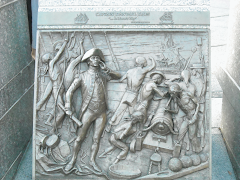
The powers of the President are given in Article 2, Section 2.  There is no mention of any power to appropriate money, to issue debt, to issue coin or bonds, or any other power pertaining to the use of the People's money.  This is not surprising given that control over money, taxes, and debt were the primary powers that the Congress was invested with for the purpose of limiting the power of the Executive.  We have to remember that Americans had just fought for their independence from a much too powerful King of England.  They had also faced too powerful governors in the colonies in most cases who ruled those colonies for the King's advantage, not the People's welfare.  The Executive under the Articles of Confederation had been nearly non-existent and was much strengthened under the Constitution, but was still subject to great distrust.  Were we as wise today, we would still view the Executive with great distrust.

The 14th Amendment was passed in 1868 to deal with issues resulting from the outcome of the Civil War.  In Section 4, it says:

The validity of the public debt of the United States, authorized by law, including debts incurred for payment of pensions and bounties for services in suppressing insurrection or rebellion, shall not be questioned.  But neither the United States or any State shall assume or pay any debt or obligation incurred in aid of insurrection or rebellion against the United States, or any claim for the loss or the emancipation of any slave; but all such debts, obligations and claims shall be held illegal and void.
Section 5 of the 14th Amendment says "Congress shall have the power to enforce, by appropriate legislation, the provisions of this article."

So whatever power is granted here is granted to Congress.  There is no mention of the President.  What is more, the debt to be honored without question, was only such debt as had been authorized by law, which only Congress can do.  One can go further in understanding this amendment's requirement about the debt.  It is clear that it imposes an obligation upon Congress to pay its debts in full and without dilution.  A rational person would question repayment of a debt with a devalued currency, for instance.  Therefore, if Congress, or in our present condition, the Federal Reserve is printing money to make up the difference between tax revenues and government spending, then Congress itself is in violation of the 14th Amendment.  Any rational broad interpretation of the 14th Amendment would note that Congress is constrained in its spending to a sustainable debt.  It cannot default on the debt, but it also cannot allow the debt to rise to such heights that a rational person would question that it can be repaid in full with a fully valued coin.

As we see, it is a ludicrous taradiddle that the President can raise the debt ceiling without an act of Congress.  There is no such power in the 14th Amendment.  This is why even Obama has been disinclined to claim this power.  Even though he dislikes the Constitution and holds it in low regard, even he dares not traduce it is such a blatant manner.  Not only would he have to assert a power he clearly does not have, but he would also have to violate multiple acts of Congress, duly passed.  First, he would have to break the law setting the current debt ceiling, as Congress has been doing since 1917.  Second, he would have to violate the Antideficiency Act which states that the President or any government official must have an appropriation from Congress before he can authorize payments.  It could not be more obvious that the power of the purse belongs to Congress, not the President.

This being such an open and shut case, it is very revealing that so many of the top leadership of the Democrat Party are so eager to subvert the Constitution and support such an egregious taradiddle as the claim that the 14th Amendment gives their great socialist leader the power to raise the debt ceiling by himself.  This is an attempt to claim dictatorial powers.  If Republicans had made such a claim when the Democrats controlled one of the houses of the Congress, you can be certain they would have been screaming in opposition.  It is way beyond time for the American People to understand that their dominant party is one eager to subvert the Constitution and thereby the control the people exercise by choosing their representatives to the Congress.  There is an eagerness for dictatorship, so long as the dictator is a Democrat Socialist.  This is a predilection to be feared and against which we must stand in firmest opposition.

taradiddle: 1) a trivial or childish lie, a fib, or 2) pretentious nonsense.