Among the issues most commonly discussed are individuality, the rights of the individual, the limits of legitimate government, morality, history, economics, government policy, science, business, education, health care, energy, and man-made global warming evaluations. My posts are aimed at intelligent and rational individuals, whose comments are very welcome.

"No matter how vast your knowledge or how modest, it is your own mind that has to acquire it." Ayn Rand

"Observe that the 'haves' are those who have freedom, and that it is freedom that the 'have-nots' have not." Ayn Rand

"The virtue involved in helping those one loves is not 'selflessness' or 'sacrifice', but integrity." Ayn Rand

For "a human being, the question 'to be or not to be,' is the question 'to think or not to think.'" Ayn Rand
Showing posts with label Libertarian. Show all posts

15 June 2010

The Politcal Spectrum and Economic Wrongheadedness

Daniel B. Klein, professor of economics at George Mason University, worked with pollster Zeljka Buturovic to characterize the relative degree of determined wrongheadedness of Americans self-identified as one of the following:
  • Very Conservative
  • Conservative
  • Libertarian
  • Moderate
  • Liberal
  • Progressive/ Very Liberal
They say they were out to measure the relative degree of economic enlightenment, but this is not an accurate a way of stating what they really did.  They rated responses to economic questions based on the responses:
  • Strongly agree
  • Somewhat agree
  • Somewhat disagree
  • Strongly disagree
  • Not sure
Suppose the correct answer to the question is Strongly Agree.  They counted up the responses that were strongly wrong, namely those responding with Somewhat disagree and Strongly disagree.  The answer Not sure was not considered strongly wrong.  Thus, this was not a test for economic knowledge, which it has been mistakenly characterized as being.  Instead, it is a test for those who do not understand economics and who refuse to recognize that they do not understand it.  It is a test for the pretense of knowledge which does not exist!

What were the statements?  What are the correct answers?
  1. Restrictions on housing development make housing less affordable.  Answer: Strongly agree
  2. Mandatory licensing of professional services increases the prices of those services.  Answer: Strongly agree.
  3. Overall, the standard of living is higher today than it was 30 years ago.  Answer: Strongly agree.
  4. Rent control leads to housing shortages.  Answer: Strongly agree.
  5. A company with the largest market share is a monopoly.  Answer:  Strongly disagree.
  6. Third World workers working for American companies overseas are being exploited.  Answer:  Strongly disagree.
  7. Free trade leads to unemployment.  Answer: Strongly disagree.
  8. Minimum wage laws raise unemployment.  Answer:  Strongly agree.
While it may allow one a faster response to these questions if one has previously thought about them, most of these statements are easy to think through and come to the correct answer.  For instance: restrictions on housing development will mean such things as a local government refusing to allow housing to be built on parcels of land in the county or town.  This must cause those parcels on which housing can be placed to be priced more highly, since the government is putting the restrictions on other land because otherwise housing would be placed on it.  Thus, the demand for housing is greater than the amount of land which will be made available, so the prices of that land will be bid upward.  Housing will be more expensive as a result.  There are other types of restrictions, such as building codes and requirements to use union labor or licensed tradesmen in the building, but all of these restrictions are placed precisely because they must be since they will raise costs.


Question 5 is really just an understanding of a definition, but as such, it requires some knowledge of economics as a study.  Question 3 requires some knowledge of how people lived 30 years ago, so it requires a bit of historical knowledge, which many young people may find challenging to come by.  Since young people are indoctrinated by the public schools and universities to become liberals and commonly have little historical knowledge of 30 years ago, this question may be a bit hard for some of them.

Question 7 is a more abstract question to which the answer is somewhat harder to think through on one's own.  But, Adam Smith and many others long ago figured this out.  It is reasonable to expect that the answer should be common knowledge today.  There are many special interests and political groups which have spread claims that free trade leads to unemployment, at least in the developed countries.  They claim that low-cost-of-labor countries are stealing American jobs.  But their wages are lower because they are less productive or production in their countries is less efficient or involves greater investment risks.  Many Americans only see the company making buggy whips whose product is now more cheaply produced in Kenya, so the American company has laid off workers.  They fail to see that the workers who were once employed making buggy whips are now becoming employed to make biomedical prostheses and infrared sensors and the old buggy whip manufacturing building is now being used to produce Kindles.  Study after study has shown that free trade leads to more jobs in the U.S. and across the world, while raising most people's standard of living.  But, it is clear that it is helpful to know some economics to understand the right answer to this question.  But also remember, one does not need to know the right answer, one only needs to know what one knows and what one does not know.  The answer 'I do not know' is not wrong.  It is not wrongheaded.  It is not a pretense to knowledge one does not have.

So, what are the results of this test for economic wrongheadedness?  Who across the political spectrum is found to be a big-headed pretender to knowledge?  Each very wrongheaded answer adds 1 to the score of each person.  The average for each person in each self-identified part of the political spectrum is given below.
  • Very conservative, 1.30
  • Libertarian, 1.38
  • Conservative, 1.67
  • Moderate, 3.67
  • Liberal, 4.69
  • Progressive/ Very liberal, 5.26
Note the very large jump in wrongheadedness between conservatives and moderates.  Those who are very conservative, libertarian, or conservative do not have a great tendency to pretend to economic knowledge which is in fact wrong.  Moderates are much more like liberals in their tendency to be wrongheaded.  The more liberal one is, the greater the pretense to knowledge in general and the more frequently that knowledge is economically wrong.  Progressives, which Obama and Hilary Clinton are, are very pretentious and very wrongheaded economically as a group.

Progressives answered the monopoly question badly wrong 31% of the time, while conservatives were badly wrong only 13% of the time.  Libertarians were so wrong only 7% of the time.

The Progressives were wrong on the living standard comparison 61% of the time, while conservatives were wrong 13% of the and libertarians were wrong 21% of the time.

Broken down on party lines the results were:
  • Libertarians, 1.26
  • Republicans, 1.61
  • Democrats, 4.59
Another huge leap in economic wrongheadedness is found for Democrats.  So-called conservative Democrats clearly do little to improve the party standing relative to Liberals with the wrongheaded score of 4.69!

Ms. Buturovic noted that men scored better than women, as did married people better compared to those who were single.  She noted that particularly poor scores were earned by those who never shop at Wal-Mart or who consider themselves residents of the 'planet Earth', rather than of America or the city or town where they live.  She says, "It took many centuries for basic economic concepts and principles to be discovered so, in a sense, it is not that surprising that some people are having trouble grasping them."

Of those who have had trouble grasping the principles and concepts of economics, unusual numbers have become politicians, book writers, newspapermen, network news announcers of the mainstream media, public school teachers, and university professors outside of economics departments.  The elitists who believe they should rule America through socialist governments are happily wrongheaded about basic economics concepts and eager to force their mistakes on the rest of us.  We can readily see that in efforts of government to micromanage the economy through long-discredited central planning, the constant meddling in our personal lives, the excessive taxes, the still more excessive government spending, the self-indulgent salaries and benefits of government workers, the claims of government job creation in the private sector, and the many special interest groups chosen as the recipients of income and wealth redistribution thefts.

07 April 2010

Check Out PJTV, Please

PJTV is a relatively new source of information on the Internet with a strong individual rights message and much good reporting.  Bill Whittle, Steven Green, Scott Ott, Joe Hicks, Yaron Brook, Andrew Klavan, Crowder, Dana Loesch, Dr. Peter Weiss, Glenn Reynolds, Sonja Schmidt, and Roger L. Simon are among the many commentators and reporters on PJTV.  This is a group with a pretty consistent pro-individual rights and free market message.  I really appreciate their work.

Here is a message from Bill Whittle in his Afterburner program on why and how we should support the Tea Party movement and the general re-awakening of the people for more limited government and for our individual rights.  This is not a typical program, but it does display the viewpoint of PJTV pretty well.  Of course, most commentaries are on a more specific current issue.  Most are lively, fun, and many are funny.

I hope you will watch a number of their programs and that if you like them, you will subscribe and support this very wonderful attempt to make a more libertarian viewpoint available to the People.  I have been impressed with its quality and the rate of expansion has been quite surprising.  That is probably because it is meeting a great need.  The Tea Party movement has fed a desire in many people for a new viewpoint on our freedoms and government, and PJTV is providing that.  Fox News is at least not consistently anti-individual rights and anti-free markets, but its reporters and commentators offer a mix of many viewpoints.  This is not bad, but those of us who understand the real issues and want our government to pursue a consistent policy of protection for the equal, sovereign, and unalienable rights of the individual will find a TV news-like supplement such as PJTV a more concentrated and consistent source of the news of interest to us.

27 February 2010

Representative Paul Ryan's Comments on ObamaCare Costs

Representative Paul Ryan is a Libertarian-oriented Republican Congressman of the 1st Congressional District of Wisconsin, which is bordered by Illinois, Lake Michigan, the southern suburbs of Milwaukee, and reaches out to Janesville in the west.  Racine and Kenosha are in his district.  Paul Ryan has read Ayn Rand's works and thinks highly of them.  I have heard him speak a number of times at events which the Atlas Society or the Competitive Enterprise Institute were participating in or sponsoring and he has always been a rational voice.  On 25 February, he spoke up at the Health Care Summit called for by Obama to discuss budgetary issues.  While I believe the primary, and completely sufficient, reason to oppose ObamaCare is the personal mandate and the idea that government has the power to decide what is and what is not acceptable health insurance and health care, the budgetary issues are also important.

Congressman Ryan said:
  • Medicare has a $38 trillion unfunded liability already, but half a trillion dollars is to be taken from it, so 20% of present Medicare providers will either go out of business or stop serving people on Medicare.
  • The cost of Medicaid is growing at a 21% annual rate and is about to bankrupt a number of states.
  • The Majority Leader of the Senate claims the Senate bill will reduce the deficit by $131 billion over the next 10 years, which is nonsense.
  • The bill collects half a trillion dollars of new taxes for 10 years and cuts Medicare for 10 years, in order to provide revenues for 6 years of ObamaCare spending.
  • The first 10 years of ObamaCare will cost $2.3 trillion.
  • The Senate bill takes $52 billion from Social Security, which has huge unfunded liabilities already.
  • It takes $72 billion from the long-term care insurance program called the CLASS Act.
  • The real 10-year cost of ObamaCare will cause a $460 billion deficit, despite the four-year delay in the program and counting taxes in that 4-year period.
  • The second 10-year cost of the program is $1.4 trillion.
  • For the last 7 years, Congress has not made the kind of 21% doctors payment cuts that are supposed to be part of the savings from Medicare according to the Senate bill.  The savings which will not occur from this cut is $371 billion.
  • Far from reducing Medicare's costs as claimed by Obama, the chief actuary at Medicare says medical costs are going up $222 billion.

The Obama camp response to being in deep, deep debt and running deep, deep deficits, is to close your eyes and plow ahead with huge new spending plans.  After all, tomorrow we will all be dead.

25 February 2010

Is Libertarianism Based on a Principle -- According to Merriam-Webster?

Having noted yesterday that the Merriam-Webster Unabridged Dictionary would not even attempt a definition of Progressivism, I thought I had best be sure that it offered reasonable definitions of Libertarianism and Libertarian.

The definition offered for Libertarian is (Webster's Third New International Dictionary, Unabridged. Merriam-Webster, 2002. http://unabridged.merriam-webster.com (25 Feb. 2010).:

1 : an advocate of the doctrine of free will -- contrasted with necessitarian
2 : one who upholds the principles of liberty ;
specifically : one who upholds the principles of individual liberty of thought and action

The second definition is a reasonable brief statement of the basic principle for which a Libertarian stands in politics.  The kind of problem that stood in the way of the Progressives in defining themselves on the basis of principles does not exist for Libertarians!

It turns out that the Merriam-Webster dictionary defines Libertarianism as

the theories or practices of a libertarian,

which is fine since it defined libertarian.  So, libertarianism is based on principles and a Libertarian is a man of principle, unlike a Progressive who has no definable principles according to the Merriam-Webster Unabridged Dictionary!

Oh, it can be fun hoisting a Progressive (liberal, fascist, socialist) upon his own petard!

09 April 2009

A Reader Request - The Humble Libertarian

A reader, Wesley Messamore, has asked me to share this with you:

To Dr. Anderson:

Hello. I'm a libertarian blogger who recently published a post with a graphic representation of the characters in Atlas Shrugged arranged according to their ability and morality.

I thought it might merit mention on your blog as your readers would find it interesting, relevant, and useful:

http://www.humblelibertarian.com/2009/04/atlas-shrugged-characters-according-to.html

Have a great day and thanks for your consideration.

Sincerely,
Wes Messamore

--
News and Commentary from a Libertarian Perspective: http://www.humblelibertarian.com


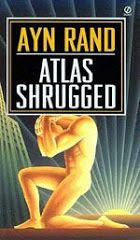
The graphic Wes produced may be useful for jogging some of our memories about some of the characters of Atlas Shrugged. I admit to being way overdue for the pleasure of re-reading Atlas Shrugged, but what can you do when you are trying to keep up with science, solve technical and scientific materials problems, run a small business, keep up with the attempts of socialists to steal away the sovereign rights of the individual, read excellent books for the first time by such authors as Thomas Sowell, Walter E. Williams, Amity Shlaes, Jonah Goldberg, Robert A. Levy & William Mellor, Patrick J. Michaels & Robert C. Balling, Jr., Chris Edwards & Daniel J. Mitchell, and others, and formulate evaluations and responses to the myriad dastardly deeds of our would-be socialist slave masters? Add to this a wife and three daughters who deserve attention and love and you have one guy with far too few hours in a day. The pleasure of re-reading Atlas Shrugged will have to wait. But, sometimes when I need a pick-up, I do just thumb through it and find a passage to re-read for pleasure and inspiration. I admit that I never pick a passage about James Taggart, Wesley Mouch, or Robert Stadler. They are just too depressing for such a purpose. My picks are always passages about my heroes, my fellow heroes, the people I want to be my best friend.

But some of you may also enjoy thinking about where you would move some of these characters on the same plot or even about plotting them against other parameters. This could be a fun exercise.

I would prefer that those of us who are trying to defend the rights of the individual in these trying times would not be too Humble. We are engaged in the on-going epic battle of the last 200 years with respect to socialism and of all of man's history with respect to his freedom. Many of us are Americans, who look back to a brash tradition in which men sought proudly to manage their own lives and to be dependent upon their own minds and the product of their personal effort. Our tradition was simply this: Nature can and must be controlled for my benefit and I am just the man to do it with the use of my capable mind and my determined effort. This is a brash assertion, but it is what gave man the confidence to claim his individual sovereign rights to his life, to his liberty, to his property, and to his pursuit of happiness. It also gives him the confidence and the self-esteem that causes him pleasure in seeing others control and manage their own lives in pursuit of their self-identified values, without a twinge of envy and without a bit of desire to steal another man's self-attained values. I would rather Wes Messamore and Ben Bryan had called their blog The Arrogant Libertarian, The Brash Libertarian, The 'I have hardly begun to fight!" Libertarian, The Unconquered Libertarian, The Unchained Libertarian, The Untrodden Libertarian, or some such name. But, a Libertarian who likes the works of Ayn Rand is likely a good ally on many important issues.

Damn, I feel like sinking a government relief ship bound with American welfare goods to a socialist country or a dictatorship for a personal pick-up of my spirits. Ragnar, where are you? Or maybe Midas Mulligan and I could come up with a scheme to get some of the bank bailout money back into the hands of the American taxpayers. Or I could do some materials R&D to support Hammond Auto in putting GM, Chrysler, and Toyota out of their misery. We individualists need something to have fun with and to celebrate the fact that some of us, at least, still feel up to the task of managing our own lives.