Among the issues most commonly discussed are individuality, the rights of the individual, the limits of legitimate government, morality, history, economics, government policy, science, business, education, health care, energy, and man-made global warming evaluations. My posts are aimed at intelligent and rational individuals, whose comments are very welcome.

"No matter how vast your knowledge or how modest, it is your own mind that has to acquire it." Ayn Rand

"Observe that the 'haves' are those who have freedom, and that it is freedom that the 'have-nots' have not." Ayn Rand

"The virtue involved in helping those one loves is not 'selflessness' or 'sacrifice', but integrity." Ayn Rand

For "a human being, the question 'to be or not to be,' is the question 'to think or not to think.'" Ayn Rand
Showing posts with label laboratory. Show all posts


14 July 2025

Thirtieth Anniversary of Anderson Materials Evaluation, Inc.

The 14th of July, 2025, is the 30th anniversary of my materials analysis laboratory, Anderson Materials Evaluation, Inc.  Within two weeks of the announcement that the recent merger of Lockheed and Martin Marietta was going to result in the closing of the Martin Marietta Laboratories - Baltimore laboratory, I incorporated Anderson Materials Evaluation, Inc.

I initially provided surface analysis services using x-ray photoelectron spectroscopy (XPS, also called electron spectroscopy for chemical analysis or ESCA) and a scanning Auger electron microprobe (SAM).  Soon, I added thermal analysis services (thermogravimetry or TGA, differential scanning calorimetry or DSC, thermomechanical analysis or TMA, and dynamic mechanical analysis or DMA) and metallographic microscopy.  Down the road awhile, we offered infrared spectroscopy (FTIR) and scanning electron microscopy (SEM).  We then added energy-dispersive x-ray spectroscopy (EDS) to our SEM.

Still later, we added mechanical testing capabilities with the purchase of a used Instron machine and we upgraded its electronic controls and software.  We purchased an ultraviolet - visible light or UV-Vis spectrometer.  Then came the purchase of our gas chromatography - mass spectrometer (GC-MS), followed by the purchase of our wavelength-dispersive x-ray fluorescence spectrometer (XRF).  Next, we purchased a 3-dimension high resolution digital optical microscope with surface profiling capabilities and an integrated laser-induced breakdown spectroscopy (LIBS) elemental microanalysis spectrometer. Finally, our last major purchase was our x-ray diffraction instrument (XRD).  Through the years, I commonly paid myself less salary than my employees so I could invest more into expanding the laboratory's materials analysis capabilities.

This expanding instrument capability has helped us to provide a wide range of materials characterizations, failure analyses, materials verifications, quality control, detection of hazards, and research and development services.  We utilize these capabilities on materials as varied as metals, semiconductors, polymers, glasses, ceramics, composite materials, minerals and other inorganic chemicals, and organic liquids.  We presently employ 8 people, counting two interns and two other part time employees.

Today, Howard County, Maryland, presented me with my annual personal property tax bill.  My willingness to forgo income, purchase the equipment of my laboratory, and to take on risk, leaves me subject to a large tax bill annually for the value of my laboratory equipment.  That equipment depreciates, but if it is in use, it never depreciates below 25% of its initial cost.  This is one instance in which inflation is a good thing.  At least the expense of purchasing equipment in 1996 is much reduced by the inflation since then, along with the subsequent property tax.

Governments love taking from small businesses.  From each according to his ability or capability, to each according to someone's perception of their own need or maybe somebody else's need.  The force of government is most easily applied against a minority, such as capable small business owners.  Yet, after 30 years, I will continue working for as many more years as I can.  I still like solving materials problems and working with the kind of people who share my interest in using materials to improve the condition of mankind.


17 December 2018

Contrary to the Washington Post, a Company Should Spend its Hard-Earned Income Based on its Own Judgment

The Washington Post's top of the Business Section article on Sunday, 16 December is headlined "How have corporations spent their tax cut windfall?"  Thomas Heath, the author, notes that many experts believe that corporations should spend the money no longer taken from them by force to build new facilities, buy equipment, invest in R&D, hire more employees, and pay their employees more.  Stock buybacks and higher dividends for stockholders are rather immoral and not in the spirit of the tax cut law.

You see, the government taxes a business, forcibly depriving it of the income it worked hard to earn in a competitive global economy.  The government thereby gains the moral right to expect the company upon the government's graciously deciding to take a bit less of the company income to spend that income according to the government's wishes.  Those wishes require that the company creates more and better jobs and does so in a way that is as obvious to the voters as possible.

What has become of the money that companies are now able to keep since the tax cut last year?  Business investment by Standard & Poor's 500 largest public corporations on new equipment and factories is up 19% in the first three quarters of 2018.  Research and development spending increased by 34%.  A Federal Reserve statistic shows that independent businesses in general increased business investment by 16% so far this year, which is the highest increase since 1993.  For years, capital expenditure by business has been very weak and productivity growth has been less than 1% per year.  Private sector employee average earnings are up 2.8% in 2018, after many years of stagnation under the Obama Regime.

The 2018 increases in business capital expenditures, R&D, employee earnings, and the expected increases in productivity should make Americans very happy.  Unless you are a Democrat socialist, in which case you bemoan the fact that stock buybacks cost companies $579 billion in the first 3 quarters of 2018.  This will set a new record for a year, replacing the record of 2007, just prior to the Great Recession.  Wisconsin Senator Tammy Baldwin says "It's just wrong for big corporations to pocket massive, permanent tax breaks and reward the wealth of top executives with more corporate stock buybacks, while workers are given pink slips and face layoffs."  Never mind that unemployment is at a record low, that millions of open positions cannot be filled with qualified workers, and that average employee earnings are up 2.8% this year.  Never, ever allow the facts to get in the way of a very emotional argument for the villainy of businesses.

The left also complains about the fact that dividends to shareholders this year will set a record previously set in 2017. 

There is a very unrealistic expectation in the criticisms of the Democrat socialists which we are not supposed to notice.  The management of a large corporation now able to keep enough of its earnings to contemplate building a new facility first has to evaluate a number of purposes for that facility, where it will be built, design it, get building and environmental permits, find and hire the people to build it, evaluate and purchase the equipment to put into the facility, and find and hire the people to be employed in the facility.  If you have just had a substantial change in the parameters under which your business operates, you are also likely to have to hire more managers to make all of these decisions and kick this whole process into gear.  How much of this process can be accomplished in the first 3 quarters of operations under the new tax conditions?

Consider R&D.  You have long been doing less R&D than your company should have been doing because too much of your company earnings were taxed away and the regulatory environment was too expensive.  During the Great Recession and the numbingly glacial recovery, you released many company scientists and engineers or did not expand their numbers.  Your company did not invest much in analytical equipment, your laboratories, the training of your technical experts, prototyping capabilities, and your forward-looking plans for R&D were scaled to your very modest means to do R&D.  Now conditions have changed.  You want to invest in R&D, but you have to figure out what directions to explore and develop with your greater R&D effort.  You consult with your technical people, make decisions on new directions based on evaluations of markets and technical possibilities, figure out what laboratory equipment is needed, evaluate the instruments available from vendors, prepare facilities for their installation, and hire more people to operate the equipment and to solve the technical problems.  By the way, the people with the brains, the dedication, and the training for these R&D tasks are hard to find.  What fraction of this process is likely to be completed within 9 months of a changed tax environment?

So, while your company is trying to become more productive and to offer new products and services, but is limited on the rate of its spending by these limits of time and resources, what do you do with your suddenly increased available funds?  Rationally, you use it for some combination of paying back debts, buying back stock, and offering improved dividends to your shareholders.

Not only is this rational from the company viewpoint, but it is hardly bad for the economy.  Lower company debt makes companies more able to weather future downturns and to minimize the layoffs of valuable employees when a downturn occurs, as they always will.  The buyback of stock, puts more money in the hands of investors who will then either spend that money or invest it in other firms that need that investment.  The increases in dividends help many investors to be able to spend more money in the economy and helps pension funds to be less unstable, as so many of them are.  To be sure, some of this money will go to foreign investors.  Some of these foreign investors will put their money back into US investments because our economy is about the best in the world.  Some will leave our economy.  But, if we suppose that money had been left in the hands of the government, what fraction of it would have been utterly wasted and gone to not only unproductive use, but to uses that cause our national productivity to have negative components?  Yes, the Democrat socialists believe that government spending is the Gold Standard for the good use of our money.  But you have to be loony to think that is the reality.

10 February 2016

Educating Students Around the World in Materials Analysis and Characterization

In addition to my writings on this blog, I have written most of the website content for my materials analysis laboratory, Anderson Materials Evaluation, Inc.  That website consists of nearly 80 pages of information about the laboratory, materials analysis techniques, applications of materials characterization to a wide range of materials to make better use of materials and better products, information about the industries, companies, universities, and governmental agencies we support, and background and specialization information about our scientists.

AME's Dr. Kevin Wepasnick is a home brew-master. He recently collaborated with C&EN, a publication of the American Chemical Society, to make a helium beer. Helium actually is soluble in beer, gives it a very fine head, and maintains a very rich and creamy taste. But it has a much lower solubility than carbon dioxide does and does not create the carbonic acid that CO2 does. Carbonic acid gives beer a sharper taste.  Consequently, helium beer is quite flat.  Because the solubility of helium is very low, Kevin used a much higher pressure of helium in the brewing process. Due to that high pressure, much of the brewing was performed in our laboratory at Anderson Materials Evaluation using higher pressure hardware than is used for the usual carbon dioxide beer. See the C&EN video at www.andersonmaterials.com/beer.  Note the remark that our AME logo is Tight!


An incredible number of students are coming to our website to learn about analytical techniques and materials characterization. In just the last week, about 100 university internet users came to our website. Visitors came from Stanford, Cal Tech, MIT, Yale, Dartmouth, Cornell, the Universities of Massachusetts, Illinois, Michigan, Minnesota, Washington, Wisconsin, Colorado, Ohio State, Texas Tech, Virginia Tech, Cal Poly, UCLA, UC at Davis, Oregon State, Michigan State, U. of Rochester, RIT, Case Western Reserve U., Georgia Tech, Texas A&M, Mississippi State, Kent State, SUNY at Potsdam, Lehigh, Arizona State, Missouri U. of Sci. & Tech., Carnegie Mellon, U. of Pittsburgh, Northeastern U., UMBC, George Mason U., Purdue U., Washington State, and many more have visited in the last week.  Visitors from McGill, U. of Toronto, U. of Alberta, U. of Calgary, and other colleges in Canada visited the AME website.

In the United Kingdom, Oxford, Cambridge, and the Universities of Strathclyde, Sheffield, Southhampton, Northhampton, Windsor, Reading, Bath, Leeds, and Birmingham have provided visitors. In the rest of Europe: Uppsala U., Ecole de technologie superieure, U. of Ulm, Gottfried Wilhelm Leibniz U. Hannover, Picardie U., U. of Mons, Flinders U., U. College of Dublin, Waterloo U., U. Libre de Bruxelles, and others have visited. Many South American, Middle Eastern, African, Indian, Korean, Japanese, and Chinese university visitors have also been to our website in the last week. AME is certainly doing its part to educate the world in materials science and engineering!

14 July 2015

20 Years of Materials Analysis by Anderson Materials Evaluation, Inc.

Today is not only Bastille Day, but it is also the 20th Anniversary of the founding of Anderson Materials Evaluation, Inc.  For 20 years we have been providing high quality materials analysis and characterization services in our laboratory to our discerning customers.  We want to thank you for using our analytical services and for making it possible for us to enjoy solving many challenging and fun materials problems, while helping you to improve your products and processing operations.

The founder, Dr. Charles Anderson, wants to thank his business partner, Dr. Lorrie Krebs, for her many years of highly dedicated effort in making this 20-year record possible.  He wishes to thank Dr. Kevin Wepasnick for his great contributions for the last several years, all of which have been during the on-going Obama Socialist Recession.  Many other employees have made great contributions in the earlier years, which are also much appreciated.  Many interns have both given us the pleasure of teaching them the science we love so much and have contributed to our work in most cases quite ably.

12 October 2008

Fall Onslaught at the Lab

I have not been posting recently since the Fall season is commonly the most busy season at my materials analysis laboratory. This year, the major onslaught of new jobs began a bit later than most recent years, since it started in mid-September. There has been much I would have liked to have posted on, but time has not allowed. Tonight, however, I will take a short break and write some notes.

22 June 2008

The Right to Life and Slavery

Most Americans believe that as human beings one has the inalienable right to life, liberty, and the pursuit of happiness. Today, I want to revisit a single aspect of our individual right to life, liberty, and the pursuit of happiness.

There are many ways to look at one's life, liberty, and pursuit of happiness. There are other ways to look at it which are also right than the viewpoint I am going to take today. But, fundamentally our life consists of all the hours we have lived and our plans for the use of our future hours. Let us oversimplify this further to consider each hour that we have just lived and each hour that we are about to live and make decisions on what we are going to do with it. If an individual had no control over how he just used his last hour, then it is unlikely that that hour added much to his life, it surely did not add to his sense of living in liberty, and he is unlikely to have been very successful in the pursuit of his happiness. Similarly, looking forward to the next hour of our life, we have a decision or several decisions on how to use it. If we can chose to spend all of that hour doing things that we believe will enhance our life, then we are already assured that our life will be better, we will feel free, and we will be pursuing our individual happiness in those ways which uniquely define that happiness to us as an individual, living creature.

So, what shall I choose to do in the next hour? Well, it is Sunday, so I could go home and work on building a new retaining wall for the garden. Let us suppose I do that. I get some fresh air, I get a wee bit of exercise, and I get a nice garden retaining wall. Oh, and my home value goes up a bit and my property taxes go up with it. Of course, I also paid sales taxes already on the wall blocks waiting to be used and on the gasoline used to go buy them. OK, so I guess I will do something else. I could watch TV and listen to the news. How exciting to find out about the latest effects of flooding in Iowa and the new declaration of a federal emergency area to cover the troubles there. And, I learn about how Obama is sure that there is no need to allow the drilling of oil in federal lands, which just happen to cover most of many of our western states. Or, I could hear McCain proclaim that he thinks the north slope in Alaska is pristine and we should leave it that way. I could hear many schemes to make the American medical system like that in Canada, the UK, France, or even Cuba. Yes, even Cuba, but I will not talk about that one, since only the truly insane want Cuba's medical system. So, if I watch TV news, I am frustrated, but, hey, I made the choice, right? But, I did still pay taxes to purchase the TV and I have a room for it in my house on which I must pay property taxes. Still, both choices to work on the garden or to watch TV are relatively lightly taxed and both are relatively free of government expropriating some of my time during that hour or in subsequent hours because I made one of those choices.

Let us suppose that being a small business owner, I decide to go to my laboratory and work on analyzing a carbon coating said to have been applied to a cubic zirconia gemstone to make it look more diamond-like. The income of an hour of work on that project will have federal income taxes, social security taxes, Medicare taxes, Workman's compensation insurance, and Maryland and Federal unemployment taxes withheld from it. I have no determinative choice in how that money is used and I oppose most of the ways in which it is used. Some of the ways it is used are just wasteful and evil for depriving me of the better things I could do with it, but many of them are for the actual doing of further evil deeds. Because I am a business owner, I have further bookkeeping to perform for replacing any supplies I may use in the laboratory analysis I chose to do in this hour. If I take some part of the money I made and invest it in buying additional laboratory equipment, then I get to pay property taxes on that equipment and do the bookkeeping to keep track of its depreciation over the years. Now, I happen to enjoy finding out such things as the nature of new coating technologies and I have specifically in the area of coatings on gemstones discovered some false claims in advertising. I also like working to be able to add to my laboratory's analysis capabilities by buying new equipment. This is fun, but is there any valid reason why when I make this choice to do productive work, I am taxed many more minutes of the hour with tax payments and with the mandated, unpaid contribution of future time than I would be if I worked on the garden retaining wall or I watched TV?

I think it is fair to say that this is clearly wrong. This is clearly a violation of my right to life, liberty, and the pursuit of happiness. I do not have the liberty to choose to spend the next hour of my life on anything without government taking a part of that hour away from me. This is especially true if I try to do productive work which requires an income to enable me to carry out that work. It costs a lot of money to keep a laboratory working. Most of the income the laboratory makes goes into paying the bills to keep it going. A small part, highly dependent upon the fluctuations in the laboratory income, goes to me in the form of a salary or into buying equipment which enables the laboratory to make more money in the future or at least to keep it up-to-date enough to continue making as much money as it does now. But, each new piece of equipment brings more taxes and more bookkeeping. I may love doing the scientific investigating that I do into the properties of materials and in evaluating the success or failure of various manufacturing processes, but I am forced by governments to pay a heavy price in precious minutes out of every hour that I choose to put into such work. Why? Why do I have less right to an hour of my life put into laboratory material analysis than I do if I put it into building a garden retaining wall or into watching TV?

What gives those who vote for these government policies that discriminate against what I like to do the right to make such forceful demands upon the minutes of each hour of my life? Is it not the case that each such minute they take is one in which they hold me as their slave? For years I have been asking this question. No one ever gives me an answer. Those elitists who believe they know how a man should live his life and that they are the ones to force him to do so according to their values never answer my question. Why should they? They have the power. The force and as-needed violent power of government is in their hands. I am deprived of many minutes of every hour I choose to work by applying my time, my investment of untold thousands of hours in all the technical and scientific knowledge I have acquired, and my investment in the laboratory I have struggled to build and I do not even get an answer as to why.

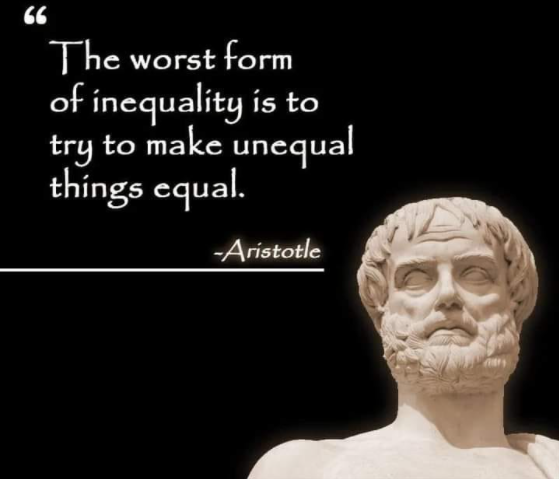
It is especially wry that many of these socialist elitists controlling governments claim to be egalitarians. This is a fraud. We all have the same number of hours of life in a week, yet they take many more hours in the form of taxes and mandated requirements for our work from some of us than from others. This taking is the taking of the hours of lives. They seek equality of income and property, but the most precious thing that any of us have is the hours of our lives. That, these socialists tax with extreme inequality.

Walter E. Williams wrote a column called "Are Americans Truly Against Slavery" in which he identified excessive taxes as slavery. As I have noted in the past, Williams is very good at getting to the heart of the matter and he does so with an obvious passion. I wrote a comment in reply to this column also at this same website. A number of the other comments are also quite good.