Jay Ambrose wrote a fine column published in the Washington Times on 18 April 2008 on a New York Times Week in Review article claiming that liberals need to supervise and direct markets to keep chaos from running amok. They say that the Milton Friedman era has passed. Jay Ambrose points out that "even if we are less burdened and more prosperous than many of our industrial rivals, we are nowhere close to the low-spending, low-tax, government-shriveled, regulation-reduced, libertarian dream embraced by Friedman. In many respects, we have been marching in the opposite direction."
"Right now, says James Gattuso of the Heritage Foundation, 50 federal agencies are enforcing 145,000 pages of regulations at a cost to the economy roughly equal to all the income taxes paid last year, some $1.1 trillion. And contrary to what some might guess, writes this research fellow, regulatory costs have been climbing upward during the George W. Bush presidency -- by about $30 billion since 2001." This $30 billion increase is substantial, though nothing like the rate we would have under a President Obama or Clinton.
Ambrose goes on to discuss how the tale that President Franklin D. Roosevelt saved the country with his New Deal is entirely wrong. He quotes Thomas DiLorenzo's book How Capitalism Saved America as showing that despite FDR's creating many new federal programs and directly employing about 10 million Americans in relief jobs, the economy was as bad in 1938 as in 1933 and only the post-war recovery ended the depression.
A minor slowdown in the present economy should not be sufficient cause for us to abandon the self-correcting wisdom of the Capitalist system which repairs the wounds in the economy much more efficiently and with much less pain than do a gaggle of government bureaucrats. Those in favor of more government control and direction of the economy and of us as individuals are very adept at exaggerating problems to justify more government intervention. The fact that home values are now going up again in many areas of the country and that many companies just reported surprisingly high earnings for this last quarter shows that the harm to the economy of the housing credit and oil cost problems was probably exaggerated, in the best progressive tradition. Our motto should always be: "Trust the free market, stupid."
19 April 2008


17 April 2008
Who are the Racists Now?
The NAACP has invited the Rev. Jeremiah Wright to deliver the keynote address at their Freedom Fund Dinner, their biggest annual fund-raising event. Tara Wall has written about this in a 15 April 2008 Washington Times OpEd. This venerable African-American organization is apparently very interested in and tolerant of this black separatist, anti-white, anti-Middle Class values, and anti-American clergyman. It is in fact only rational to say that he is a committed racist. How odd that the NAACP, supposedly committed to ending racism, is so tolerant and interested in his version of racism. The Rev. Jeremiah Wright is certainly not going to show them how to end racism in America.
In fact, it is hard not to take this as clear evidence that the primary pool of racism in America today is in the black American community. Or is that in the African-American anti-American community? This is a case in which a community has primarily to heal its own faults if it is to be accepted by those it hates with open arms. After all, no one wants to embrace someone who hates them. If you really want to be embraced, you must set aside your hatred. Then, you may indeed be of sufficiently good character that someone of another race will be more interested in your character and able to see your value as a person than concerned that your race implies an intent to do harm. No one chooses to sleep with a viper. Neither can most people find good reason to want to have a viper for a neighbor or a colleague at work. On the other hand, it is easy to look past someone's race when you are confident that they wish good health, personal security, and wealth for everyone willing to live a civilized, productive life.
The only route to eliminating racism in America is a two-way street. Racism will always be a major problem if any one or two races believe they are entitled to hate another race. Everyone of every race is obligated by any rational ethics to judge everyone on the basis of their personal character, unless too many people of a given race are racist for this to be possible. If the majority of a given race are racist, then it may become too dangerous and impractical to expend the time and effort needed to learn enough about the individual character of someone of that race to put oneself in a position to make judgments on that basis. If you want to be judged for your individual character then you cannot indulge in hatred of another race. There must also be a willingness to suspend constant suspicion and a tendency to believe that other races are constantly conspiring against your own race. Hatred, constant suspicion, and a too ready tendency to believe in conspiracy theories are signs of a deficiency of self-confidence and self-esteem.
I believe most European-Americans are inclined to judge people of other races by their individual character. There is just too much value in people of good character to shun them as potential friends, as neighbors, and as co-workers simply because someone is of another race. It is past time when African-Americans should have acquired enough self-confidence in their abilities and productivity to no longer believe that European-Americans are able or interested in suppressing them. It is time for African-Americans, where it applies, to stop acting like children who are simply against everything that their parents stand for. After all, are they not adults now also? If so, then it is time to act like adults. It is also time for European-Americans to get over a sense of guilt, where it applies, and start expecting that all African-American adults will act like self-empowered adults. Racism is simply too childish for adults.
In fact, it is hard not to take this as clear evidence that the primary pool of racism in America today is in the black American community. Or is that in the African-American anti-American community? This is a case in which a community has primarily to heal its own faults if it is to be accepted by those it hates with open arms. After all, no one wants to embrace someone who hates them. If you really want to be embraced, you must set aside your hatred. Then, you may indeed be of sufficiently good character that someone of another race will be more interested in your character and able to see your value as a person than concerned that your race implies an intent to do harm. No one chooses to sleep with a viper. Neither can most people find good reason to want to have a viper for a neighbor or a colleague at work. On the other hand, it is easy to look past someone's race when you are confident that they wish good health, personal security, and wealth for everyone willing to live a civilized, productive life.
The only route to eliminating racism in America is a two-way street. Racism will always be a major problem if any one or two races believe they are entitled to hate another race. Everyone of every race is obligated by any rational ethics to judge everyone on the basis of their personal character, unless too many people of a given race are racist for this to be possible. If the majority of a given race are racist, then it may become too dangerous and impractical to expend the time and effort needed to learn enough about the individual character of someone of that race to put oneself in a position to make judgments on that basis. If you want to be judged for your individual character then you cannot indulge in hatred of another race. There must also be a willingness to suspend constant suspicion and a tendency to believe that other races are constantly conspiring against your own race. Hatred, constant suspicion, and a too ready tendency to believe in conspiracy theories are signs of a deficiency of self-confidence and self-esteem.
I believe most European-Americans are inclined to judge people of other races by their individual character. There is just too much value in people of good character to shun them as potential friends, as neighbors, and as co-workers simply because someone is of another race. It is past time when African-Americans should have acquired enough self-confidence in their abilities and productivity to no longer believe that European-Americans are able or interested in suppressing them. It is time for African-Americans, where it applies, to stop acting like children who are simply against everything that their parents stand for. After all, are they not adults now also? If so, then it is time to act like adults. It is also time for European-Americans to get over a sense of guilt, where it applies, and start expecting that all African-American adults will act like self-empowered adults. Racism is simply too childish for adults.
Control of the Global Warming Debate
Robert Bidinotto pointed out an article by Lawrence Solomon that provides an interesting example of how the Global Warming Alarmists maintain the fraud that all climate and earth scientists agree with the alarmist consensus. In fact many disagree and are not of the opinion that such alarm is justified. Lawrence Solomon and the many climate scientists that he has profiled who have had the courage to oppose the global warming alarmists are certainly qualified to have their say on the scientific issues involved. The fascist left is afraid of letting them be heard. This is the road to totalitarian society, already well pioneered on most college campuses, where freedom of speech and press is widely suppressed.
Iran at War with the United States
Iran is unabashedly at war with the United States and we are mostly turning the other cheek. They are killing our troops and those of the Iraqi government with IEDs and other weapons supplied to al Qaeda and Shiite militia groups. They provide medical care to the al Qaeda forces in Iraq as well as money. The Shiite militia groups opposing the U.S. and the Iraqi government are trained by Iran, provided money, and even sometimes led by Iranian officers. General David Petraeus' most recent testimony before Congress noted this. The evidence has long been mounting that Iran is really the principle reason for strife in Iraq. They are playing the role there that they also perform by supporting Hezbollah in Lebanon and Hamas in Gaza. They back anti-U.S. terrorists wherever they can. As if this is not enough, they are proceeding with determination to enrich uranium and develop long-range missiles. When they have succeeded in those efforts, they will quickly finish the easier task of developing nuclear weapons and threaten Israel, Europe, and the U.S.
The Wall Street Journal and the Washington Post are finally publishing articles coming to this conclusion.
The Wall Street Journal and the Washington Post are finally publishing articles coming to this conclusion.
16 April 2008
Krugman Criticizes Teaching of Ayn Rand
Paul Krugman referred to an article about BB&T Bank giving grants to colleges if they would offer the study of Ayn Rand's novel Atlas Shrugged in college classes in his New York Times column Conscience of a Liberal. I made this comment:
Ayn Rand's work and Atlas Shrugged in particular offer students a very different approach to thinking about ethical and political ideas from those they are otherwise exposed to in most universities. I have found the usual collection of favored ethical and political ideas at universities to be simple-minded, weak-kneed, uninspiring, shackling group-think, and laden with childish envy of those who have more material goods. Ayn Rand offers a viewpoint that recognizes the complexity and uniqueness of the individual, enables the individual to claim the right to live his life and pursue his happiness, allows him the self-worth that in turn allows one to perceive and value the worth of others, and encourages everyone to make the most of their rational faculty to pursue productive and creative work and thought. This is a very good philosophy for living life.
The negative comments above have frequently indicated a clear misconception of her ideas, where enough information was given to make such a judgment. Read her works and think hard about what she has to say and some will be able to understand her philosophy. It tends to appeal much more to reality-oriented people than to academics whose theories are so readily disassociated from the real world. This is why it is more popular with businessmen and engineers as a group than with the academics. They cannot afford the luxury of ignoring reality. Ask yourself if the Marxism and socialism generally so popular among academics has proven successful in the real world. Ask yourselves if self-loathing, racial group-think, the rejection of almost all ethical values, class warfare, and the denigration of the values expressed in the Declaration of Independence and in the Constitution are representative of a healthy world view. When Capitalism and limited government are rejected, what are they replaced with? They are replaced with government wielded force. Individuality is given little accommodation and our individual goals and values are given up to the lowest common denominator goals and values of the democratic majority, so long as that will last.
Materials physicist and small business owner,
Charles R. Anderson, Ph.D.
Ayn Rand's work and Atlas Shrugged in particular offer students a very different approach to thinking about ethical and political ideas from those they are otherwise exposed to in most universities. I have found the usual collection of favored ethical and political ideas at universities to be simple-minded, weak-kneed, uninspiring, shackling group-think, and laden with childish envy of those who have more material goods. Ayn Rand offers a viewpoint that recognizes the complexity and uniqueness of the individual, enables the individual to claim the right to live his life and pursue his happiness, allows him the self-worth that in turn allows one to perceive and value the worth of others, and encourages everyone to make the most of their rational faculty to pursue productive and creative work and thought. This is a very good philosophy for living life.
The negative comments above have frequently indicated a clear misconception of her ideas, where enough information was given to make such a judgment. Read her works and think hard about what she has to say and some will be able to understand her philosophy. It tends to appeal much more to reality-oriented people than to academics whose theories are so readily disassociated from the real world. This is why it is more popular with businessmen and engineers as a group than with the academics. They cannot afford the luxury of ignoring reality. Ask yourself if the Marxism and socialism generally so popular among academics has proven successful in the real world. Ask yourselves if self-loathing, racial group-think, the rejection of almost all ethical values, class warfare, and the denigration of the values expressed in the Declaration of Independence and in the Constitution are representative of a healthy world view. When Capitalism and limited government are rejected, what are they replaced with? They are replaced with government wielded force. Individuality is given little accommodation and our individual goals and values are given up to the lowest common denominator goals and values of the democratic majority, so long as that will last.
Materials physicist and small business owner,
Charles R. Anderson, Ph.D.
14 April 2008
Tax Monies Making Some Farmers Rich
"Oh, come on Charles, now you are going to claim that the farm subsidy program, which is meant to keep the family farm in existence, is just another government mistake or a fraud! Heck, we sent the Senators and Representatives we want to Congress and they, in their wisdom, believe the farmers need this help. This is fine, because there is something reassuring and comforting in knowing that many Americans families are still able to stay close to the soil."
Two-thirds of American farmers do not receive Federal subsidies. There are no guaranteed prices or protection for the production of cherries, melons, almonds, potatoes, pears, grapes, blueberries, apples, pistachios, lettuce, celery, cabbage, cauliflower, beef, and poultry. Despite this, these foods are farmed profitably and represent two-thirds of the value of the agricultural market. Corn, soybeans, cotton, rice, wheat, milk, sugar, peanuts, tobacco, and cotton are subsidized. The first five, corn through wheat, receive more than 90% of all farm payments. In 2004, government support for farm production provided 18% of all farm income. Did this subsidy money go largely to small family farmers?
NO. In 2003, the top 10% in subsidy payments received were paid 68% of the Federal farm support funds. The top 5% were paid 55%! Riceland Foods of Stuttgart, Arkansas received $68.9 million as the largest single recipient. Producers Rice Mill of the same town received the second largest payment of $51.4 million. In more recent years, the top 10% have edged upward to getting about 72% of the payment amount. Fortune 500 companies on farm welfare include Archer Daniels Midland, International Paper, Westvaco, John Hancock Insurance, Chevron, Electronic Data Systems, and Caterpillar. Multi-multi-millionaires such as Ted Turner, Edgar Bronfman, and David Rockefeller are on the farm dole. Many of the politicians who vote for these farm supports in the Congress are also on the dole, including Representative John Salazar (Colorado Democrat) and Charles Grassley (Iowa Republican). These are certainly not the small family farmers most Americans seem to think are the ones being helped by the farm subsidy programs.
But to look on the bright side, the program does raise the dead! The Senate Finance Committee asked the GAO to perform an audit of the subsidies and they found that from 1999 to 2005, the Agriculture Department sent out payments totaling $1.1 billion to more than 170,000 dead people. 40% of the dead had been dead more than 3 years and 19% had been dead more than 7 years. How happy their relatives must have been to have such consolation from the Dept. of Agriculture! Overall improper payments were found to be over $500 million per year. Democrat Senator Harkin said, "Given the extremely tight budget restraints it is no longer tolerable to permit billions of farm bill payments to go to individuals who in instances don't even farm or are no longer alive." Aren't we all very reassured that he is on the job and watching over our tax money with such enthusiasm and vigor now that the budgets are restrained for the first time? Hmm....you and I have always been aware that our budgets were restrained, how is it that he has just become aware that his budget is restrained?
If we look at average farm household income in 2005, we find it was $79,965 or 26% higher than the average household income of all Americans. This was not a fluke year. In 2006, it was $81,420, or 29% above the national average. Agricultural prices are high and farm property values have risen greatly. Corn prices were up 41% for the 12 months prior to 25 March. Soybeans were up 74% and wheat prices were up 126%. The soybean and wheat prices were up even more than corn prices because subsidies for corn and for ethanol drove farmers to convert some land from growing soybeans and wheat to growing corn. The lessened supply of soybeans and wheat caused their prices to go up. Net farm income grew 48% from 2006 to 2007. In 2002, farm profits were $40.1 billion and in 2007 they were $87.5 billion. Farm land prices have risen 78.5% since 2002.
Between 2003 and 2006, the total of the net farm profits in those four years was $279 billion, which was the highest 4-year total ever. Despite these profits, the Senate Agriculture Committee, under Chairman Tom Harkin, Democrat of Iowa, approved a new farm subsidy program totaling $288 billion over the five-year life of the new farm bill. The Senate version and the House versions had some differences and they have been unable to resolve them, so the government is operating under an extension of the 2002 Farm Bill which was supposed to be revised and reapproved in 2007. A major difference is that the Senate wanted to put an upper limit on how much money could go to an individual and how much could go to a husband and wife, while the House refused to do so.
Aside from being soaked as taxpayers, we are also being soaked as food consumers. Between March of 2007 and March of 2008, the price of a dozen eggs went up 40%, milk went up 26%, and bread has gone up 11%. Beef prices have gone up about 20% since 2006. The sugar protective tariff program guarantees a price of $0.229 per pound for beet sugar and $0.18/pound for cane sugar. The world price is only about $0.10/pound for sugar. The U.S. International Trade Commission found that between 2000 and 2002 the average domestic price of nonfat milk was 23% higher than the world price, cheese was 37% higher, and butter was more than double the world price. Trade policy also increased the price of cotton, beef, peanuts, orange juice, and canned tuna. The mounting concerns about inflation are being fueled largely by energy costs going up and by rising food costs. The government drives up fuel costs by denying drilling for oil in the U.S., by holding the oil shale and tar sand lands in the West, and with its ethanol policy. They drive up food costs with their subsidies, their tariffs on imported foods, and their ethanol mandates.
These higher costs for food and food inputs hurt the restaurant business and it hurts the food industry dependent upon food product exports. This results in less investment in those industries, fewer employees, lower payscales, and hurts our overall export value. Food production is a major American business strength, but with our tariffs and our subsidies, we discourage greater productivity and decrease innovations in these industries. Their contribution to the balance of trade is then reduced. The number of sugar refineries in the last 20 years has dropped from 23 to 8. The confectionary industry, once very big in Chicago, has been bleeding badly. Farm subsidy reform is also required as part of the World Trade Organization talks to reduce tariff barriers to trade. Lacking that, we are reducing the exports of many other industries as well. The World Bank estimates that the removal of world trade barriers to farm products would result in world farm exports becoming 74% higher in 2015 than without this reform. U.S. exports would be up $88 billion, while our imports would rise by $28 billion, giving us a surplus in trade of $60 billion.
For about 100 years the amount of land being farmed has been dropping in the U.S. This has led to the regrowth of huge acreage of forested land. The current drive to use huge amounts of farmland to grow corn for ethanol and the fact that farm crop subsidies encourage land to be used in general for the purpose of receiving as much subsidy money as possible, is likely to cause an increase in the amount of land farmed. This also means that more marginal, less suitable land will be farmed. Plowed land produces more silt in rivers and lakes. The use of more fertilizer and insecticides results in more pollutants in our rivers, lakes, and bays. The EPA says that 72% of our rivers and 56% of our lakes suffer from agriculturally caused pollution. Agricultural water subsidies cost $2 billion per year and encourage the growing of cotton in Arizona, where that water could and should be put to better uses. The sugar supports cause farmers to grow sugar cane in Central Florida, where they have taken large amounts of water from the Everglades. The damage that has done to the Everglades allowed Congress to spend billions more tax dollars to provide a bit of mitigation to the problems caused.
The fact that we do not import more foods from abroad hurts the small farmers in many underdeveloped countries around the world. In many cases, our subsidy-induced overproduction drives world prices for some farm commodities down and makes it difficult for them to compete. It rightfully causes many of them to resent us, despite the fact that most developed countries have higher protective tariff barriers for their agricultural industries than we do. In 2004, the European Union provided 33% of farm income through subsidies, while the U.S. provided 18%. Japan provides 56%, Canada 21%, South Korea 63%, Turkey 27%, Switzerland 68%, and Mexico 17%. The good guys here are Australia at 4% and New Zealand at 3%! In terms of an equivalent tariff, the U.S. support for agriculture is 19.9%, while the European Union provides support at a 46.4% rate and Japan at an 82.0% rate. So, there are worse actors in the world, but we are nonetheless hurting ourselves and many of the poor in less developed areas of the world. This harm is not compensated by our foreign aid programs.
So, why are our elite rulers, our elected politicians who know what is best for us peon citizens, shoving these stupid programs with their baleful consequences down our throats? Apparently because we are either too uninformed to notice the problems or we simply do not have enough incentive to spend our time fighting them. There are special interests out there who have a lot to gain from these foolish programs for farm supports and they do fight hard for them. Hard enough to get the programs passed through Congress and signed by a President over and over since the Great Depression. We taxpayers and food consumers just keep taking it on the jaw and do nothing. We do not protest loudly that this is all clearly unconstitutional. We do not get angry at our tax bill. We do not mind paying much more for food. And we certainly do not care that the U.S. exports less, employs fewer people, and we earn less, all as consequences of these stupid programs.
The U.S. farm support programs fit the pattern of unconstitutional government programs, which clearly hurt the General Welfare and do not lie within the enumerated powers of Congress, and yet they proliferate. They do serve unethical and unprincipled Congressmen and the recipients of the major welfare payments. If the farm support program does not hurt most of us enough to get up off our rear ends and fight for our individual rights, then one would hope that the sum of these many deleterious programs would give us sufficient incentive. This problem is repeated over and over at all levels of government. We must learn to fight it by standing on our principles and never letting up in our fight for the rights of the individual against all such intrusions and all such little enslavements. The sum of the enslavements is no minor thing. The only pragmatic way to fight them is to stand on our principles and demand that our elected officials and all special interests give way to those principles. When government makes it its duty to protect the rights of the individual to life, liberty, and the pursuit of happiness, then it justifies its existence in the only way it can do so. Otherwise, it does evil to most of us and evil to future generations.
Two-thirds of American farmers do not receive Federal subsidies. There are no guaranteed prices or protection for the production of cherries, melons, almonds, potatoes, pears, grapes, blueberries, apples, pistachios, lettuce, celery, cabbage, cauliflower, beef, and poultry. Despite this, these foods are farmed profitably and represent two-thirds of the value of the agricultural market. Corn, soybeans, cotton, rice, wheat, milk, sugar, peanuts, tobacco, and cotton are subsidized. The first five, corn through wheat, receive more than 90% of all farm payments. In 2004, government support for farm production provided 18% of all farm income. Did this subsidy money go largely to small family farmers?
NO. In 2003, the top 10% in subsidy payments received were paid 68% of the Federal farm support funds. The top 5% were paid 55%! Riceland Foods of Stuttgart, Arkansas received $68.9 million as the largest single recipient. Producers Rice Mill of the same town received the second largest payment of $51.4 million. In more recent years, the top 10% have edged upward to getting about 72% of the payment amount. Fortune 500 companies on farm welfare include Archer Daniels Midland, International Paper, Westvaco, John Hancock Insurance, Chevron, Electronic Data Systems, and Caterpillar. Multi-multi-millionaires such as Ted Turner, Edgar Bronfman, and David Rockefeller are on the farm dole. Many of the politicians who vote for these farm supports in the Congress are also on the dole, including Representative John Salazar (Colorado Democrat) and Charles Grassley (Iowa Republican). These are certainly not the small family farmers most Americans seem to think are the ones being helped by the farm subsidy programs.
But to look on the bright side, the program does raise the dead! The Senate Finance Committee asked the GAO to perform an audit of the subsidies and they found that from 1999 to 2005, the Agriculture Department sent out payments totaling $1.1 billion to more than 170,000 dead people. 40% of the dead had been dead more than 3 years and 19% had been dead more than 7 years. How happy their relatives must have been to have such consolation from the Dept. of Agriculture! Overall improper payments were found to be over $500 million per year. Democrat Senator Harkin said, "Given the extremely tight budget restraints it is no longer tolerable to permit billions of farm bill payments to go to individuals who in instances don't even farm or are no longer alive." Aren't we all very reassured that he is on the job and watching over our tax money with such enthusiasm and vigor now that the budgets are restrained for the first time? Hmm....you and I have always been aware that our budgets were restrained, how is it that he has just become aware that his budget is restrained?
If we look at average farm household income in 2005, we find it was $79,965 or 26% higher than the average household income of all Americans. This was not a fluke year. In 2006, it was $81,420, or 29% above the national average. Agricultural prices are high and farm property values have risen greatly. Corn prices were up 41% for the 12 months prior to 25 March. Soybeans were up 74% and wheat prices were up 126%. The soybean and wheat prices were up even more than corn prices because subsidies for corn and for ethanol drove farmers to convert some land from growing soybeans and wheat to growing corn. The lessened supply of soybeans and wheat caused their prices to go up. Net farm income grew 48% from 2006 to 2007. In 2002, farm profits were $40.1 billion and in 2007 they were $87.5 billion. Farm land prices have risen 78.5% since 2002.
Between 2003 and 2006, the total of the net farm profits in those four years was $279 billion, which was the highest 4-year total ever. Despite these profits, the Senate Agriculture Committee, under Chairman Tom Harkin, Democrat of Iowa, approved a new farm subsidy program totaling $288 billion over the five-year life of the new farm bill. The Senate version and the House versions had some differences and they have been unable to resolve them, so the government is operating under an extension of the 2002 Farm Bill which was supposed to be revised and reapproved in 2007. A major difference is that the Senate wanted to put an upper limit on how much money could go to an individual and how much could go to a husband and wife, while the House refused to do so.
Aside from being soaked as taxpayers, we are also being soaked as food consumers. Between March of 2007 and March of 2008, the price of a dozen eggs went up 40%, milk went up 26%, and bread has gone up 11%. Beef prices have gone up about 20% since 2006. The sugar protective tariff program guarantees a price of $0.229 per pound for beet sugar and $0.18/pound for cane sugar. The world price is only about $0.10/pound for sugar. The U.S. International Trade Commission found that between 2000 and 2002 the average domestic price of nonfat milk was 23% higher than the world price, cheese was 37% higher, and butter was more than double the world price. Trade policy also increased the price of cotton, beef, peanuts, orange juice, and canned tuna. The mounting concerns about inflation are being fueled largely by energy costs going up and by rising food costs. The government drives up fuel costs by denying drilling for oil in the U.S., by holding the oil shale and tar sand lands in the West, and with its ethanol policy. They drive up food costs with their subsidies, their tariffs on imported foods, and their ethanol mandates.
These higher costs for food and food inputs hurt the restaurant business and it hurts the food industry dependent upon food product exports. This results in less investment in those industries, fewer employees, lower payscales, and hurts our overall export value. Food production is a major American business strength, but with our tariffs and our subsidies, we discourage greater productivity and decrease innovations in these industries. Their contribution to the balance of trade is then reduced. The number of sugar refineries in the last 20 years has dropped from 23 to 8. The confectionary industry, once very big in Chicago, has been bleeding badly. Farm subsidy reform is also required as part of the World Trade Organization talks to reduce tariff barriers to trade. Lacking that, we are reducing the exports of many other industries as well. The World Bank estimates that the removal of world trade barriers to farm products would result in world farm exports becoming 74% higher in 2015 than without this reform. U.S. exports would be up $88 billion, while our imports would rise by $28 billion, giving us a surplus in trade of $60 billion.
For about 100 years the amount of land being farmed has been dropping in the U.S. This has led to the regrowth of huge acreage of forested land. The current drive to use huge amounts of farmland to grow corn for ethanol and the fact that farm crop subsidies encourage land to be used in general for the purpose of receiving as much subsidy money as possible, is likely to cause an increase in the amount of land farmed. This also means that more marginal, less suitable land will be farmed. Plowed land produces more silt in rivers and lakes. The use of more fertilizer and insecticides results in more pollutants in our rivers, lakes, and bays. The EPA says that 72% of our rivers and 56% of our lakes suffer from agriculturally caused pollution. Agricultural water subsidies cost $2 billion per year and encourage the growing of cotton in Arizona, where that water could and should be put to better uses. The sugar supports cause farmers to grow sugar cane in Central Florida, where they have taken large amounts of water from the Everglades. The damage that has done to the Everglades allowed Congress to spend billions more tax dollars to provide a bit of mitigation to the problems caused.
The fact that we do not import more foods from abroad hurts the small farmers in many underdeveloped countries around the world. In many cases, our subsidy-induced overproduction drives world prices for some farm commodities down and makes it difficult for them to compete. It rightfully causes many of them to resent us, despite the fact that most developed countries have higher protective tariff barriers for their agricultural industries than we do. In 2004, the European Union provided 33% of farm income through subsidies, while the U.S. provided 18%. Japan provides 56%, Canada 21%, South Korea 63%, Turkey 27%, Switzerland 68%, and Mexico 17%. The good guys here are Australia at 4% and New Zealand at 3%! In terms of an equivalent tariff, the U.S. support for agriculture is 19.9%, while the European Union provides support at a 46.4% rate and Japan at an 82.0% rate. So, there are worse actors in the world, but we are nonetheless hurting ourselves and many of the poor in less developed areas of the world. This harm is not compensated by our foreign aid programs.
So, why are our elite rulers, our elected politicians who know what is best for us peon citizens, shoving these stupid programs with their baleful consequences down our throats? Apparently because we are either too uninformed to notice the problems or we simply do not have enough incentive to spend our time fighting them. There are special interests out there who have a lot to gain from these foolish programs for farm supports and they do fight hard for them. Hard enough to get the programs passed through Congress and signed by a President over and over since the Great Depression. We taxpayers and food consumers just keep taking it on the jaw and do nothing. We do not protest loudly that this is all clearly unconstitutional. We do not get angry at our tax bill. We do not mind paying much more for food. And we certainly do not care that the U.S. exports less, employs fewer people, and we earn less, all as consequences of these stupid programs.
The U.S. farm support programs fit the pattern of unconstitutional government programs, which clearly hurt the General Welfare and do not lie within the enumerated powers of Congress, and yet they proliferate. They do serve unethical and unprincipled Congressmen and the recipients of the major welfare payments. If the farm support program does not hurt most of us enough to get up off our rear ends and fight for our individual rights, then one would hope that the sum of these many deleterious programs would give us sufficient incentive. This problem is repeated over and over at all levels of government. We must learn to fight it by standing on our principles and never letting up in our fight for the rights of the individual against all such intrusions and all such little enslavements. The sum of the enslavements is no minor thing. The only pragmatic way to fight them is to stand on our principles and demand that our elected officials and all special interests give way to those principles. When government makes it its duty to protect the rights of the individual to life, liberty, and the pursuit of happiness, then it justifies its existence in the only way it can do so. Otherwise, it does evil to most of us and evil to future generations.
09 April 2008
Do You Beat Your Neighbor?
In America today we have a great many citizens who either believe the government should enforce Christian Bible morality or that the leaders of the Nanny State should see to it that the helpless masses are taken care of. These people are now being joined by some who say that American law must be determined by Sharia Law, which is the only true law, the law of Allah. All of these people believe that they are good and kind-hearted people who care greatly about their fellow man, while those who believe in Constitutionally limited government, individual rights, and laissez faire capitalism are monsters who do not give a fig for their fellow man.
I have had this charge leveled against me since I was a teenager. The equation is simple: If you think you know how your neighbor should live his life and you think you can make his life choices better than he can, then you try to gain a democratic majority and impose your way to live his life upon him. If you try to do this, whether you succeed or not, you are a very virtuous person who cares about his neighbor, his fellow man. Those who resist you are bad guys. The resisters are bad whether they think that they want simply to manage their own lives or because they think that most other people are better qualified to manage their own lives than the resister is or than the government life management service is.
Of course there are some people who wish that others would manage their lives for them. There are not very many, but there are many elitists who think that there are many people who need to have them provide life-management services to the needy and unable. As I have often observed, it is a funny thing to consult with those whom the elite think are the dependent ones. Most of them think that they themselves are not dependent, but that there are others who are. Talk to the others who are and you find the story repeating itself in most cases. Strangely, most people would rather run their own lives, but they think that there are many more people who want help via a one-size fits all government mechanism than there actually are. But believing this and wanting to care about their fellow man, they push for laws to provide government programs to compel people to contribute their time and income to the needy recipients of the law.
The needy have a very special status. They are to be treated well and provided for. This is the means by which those who favor the laws to help them become virtuous. Meanwhile, the fact that the law requires that individuals give up their rights to their life, liberty, and pursuit of happiness does not make the law proponent feel like a bad person. The fact that the law requires that if any particular individual does not provide the tax money to be used or does not provide the service free or at below market cost, then government force will be used to see that he does, does not make the law proponent feel bad. Government employees will be dispatched to seize the resisters property or to garnish his wages. If the recalcitrant individual is so foolish as to try to defend his individual rights, well, shoot him! He obviously did not care about the community enough. He was obviously suffering from a severe mental illness, social Darwinism or is an anti-social sociopath.
Would anyone even think to look into this individual's life to see how charitably he treated people that he knew and cared for? Very unlikely. Almost everyone would simply say he broke the law and he had to be compelled to submit or to be put away. So, our good people who care so much for their fellow man are now fully prepared to kill their fellow man and their neighbor in the interest of The Law, despite the fact that the law was not Constitutional and was not necessary to accomplish the mission it supposedly had. After all, the mission could have been accomplished very well by private charity. Any private charity with the enthusiastic support of a majority of the voters should be able to care for a great many needy people.
So why must the people who wish to help the needy use the force of law to do so? Why do they not put their money and time into what they themselves say they believe in? Doesn't one have to conclude that they do not really believe in helping the needy enough to put much effort into it? Don't we have to deduce that they are eager to gain their virtue on the cheap? But, it is a virtue that threatens any individual who believes that he has an individual right to choose his charitable acts himself with death. How do these people who claim they are virtuous for caring about their fellow man square this with hiring government law enforcers and sending them off to kill the individualists among them. Why do they want to beat their neighbor? Why are they so violent? Yet they pretend to be good and to care. Is this not transparently false? Are these not clearly evil-doers?
If you want to help the needy, by all means go and do it. Just have the common civility not to force everyone else to commit their lives to your charity. They may not have any charity they wish to commit to. If so, that is their right. On the other hand, they may be very committed to charitable acts which are simply different from those which you have a commitment to. If you really have a commitment to helping others, then put your money and your time where your mouth is. Don't shove a gun down someone else's throat to make them give their money and their lives to your value. They have the right to choose their own values. It is by choosing our own values that we develop and manage our own lives. Without that freedom, there is a clear violation of a man's right to life, liberty, and the pursuit of his happiness.
I have had this charge leveled against me since I was a teenager. The equation is simple: If you think you know how your neighbor should live his life and you think you can make his life choices better than he can, then you try to gain a democratic majority and impose your way to live his life upon him. If you try to do this, whether you succeed or not, you are a very virtuous person who cares about his neighbor, his fellow man. Those who resist you are bad guys. The resisters are bad whether they think that they want simply to manage their own lives or because they think that most other people are better qualified to manage their own lives than the resister is or than the government life management service is.
Of course there are some people who wish that others would manage their lives for them. There are not very many, but there are many elitists who think that there are many people who need to have them provide life-management services to the needy and unable. As I have often observed, it is a funny thing to consult with those whom the elite think are the dependent ones. Most of them think that they themselves are not dependent, but that there are others who are. Talk to the others who are and you find the story repeating itself in most cases. Strangely, most people would rather run their own lives, but they think that there are many more people who want help via a one-size fits all government mechanism than there actually are. But believing this and wanting to care about their fellow man, they push for laws to provide government programs to compel people to contribute their time and income to the needy recipients of the law.
The needy have a very special status. They are to be treated well and provided for. This is the means by which those who favor the laws to help them become virtuous. Meanwhile, the fact that the law requires that individuals give up their rights to their life, liberty, and pursuit of happiness does not make the law proponent feel like a bad person. The fact that the law requires that if any particular individual does not provide the tax money to be used or does not provide the service free or at below market cost, then government force will be used to see that he does, does not make the law proponent feel bad. Government employees will be dispatched to seize the resisters property or to garnish his wages. If the recalcitrant individual is so foolish as to try to defend his individual rights, well, shoot him! He obviously did not care about the community enough. He was obviously suffering from a severe mental illness, social Darwinism or is an anti-social sociopath.
Would anyone even think to look into this individual's life to see how charitably he treated people that he knew and cared for? Very unlikely. Almost everyone would simply say he broke the law and he had to be compelled to submit or to be put away. So, our good people who care so much for their fellow man are now fully prepared to kill their fellow man and their neighbor in the interest of The Law, despite the fact that the law was not Constitutional and was not necessary to accomplish the mission it supposedly had. After all, the mission could have been accomplished very well by private charity. Any private charity with the enthusiastic support of a majority of the voters should be able to care for a great many needy people.
So why must the people who wish to help the needy use the force of law to do so? Why do they not put their money and time into what they themselves say they believe in? Doesn't one have to conclude that they do not really believe in helping the needy enough to put much effort into it? Don't we have to deduce that they are eager to gain their virtue on the cheap? But, it is a virtue that threatens any individual who believes that he has an individual right to choose his charitable acts himself with death. How do these people who claim they are virtuous for caring about their fellow man square this with hiring government law enforcers and sending them off to kill the individualists among them. Why do they want to beat their neighbor? Why are they so violent? Yet they pretend to be good and to care. Is this not transparently false? Are these not clearly evil-doers?
If you want to help the needy, by all means go and do it. Just have the common civility not to force everyone else to commit their lives to your charity. They may not have any charity they wish to commit to. If so, that is their right. On the other hand, they may be very committed to charitable acts which are simply different from those which you have a commitment to. If you really have a commitment to helping others, then put your money and your time where your mouth is. Don't shove a gun down someone else's throat to make them give their money and their lives to your value. They have the right to choose their own values. It is by choosing our own values that we develop and manage our own lives. Without that freedom, there is a clear violation of a man's right to life, liberty, and the pursuit of his happiness.
08 April 2008
Inefficient Nationalized Oil Companies
This last week Congress once again called the big American oil companies before committee to ask them why they were making profits when Americans were paying so much at the gas pump for gasoline. The oil companies ran weak ads on TV defending themselves and blaming the cost of oil on OPEC, high demand in developing countries, and the political uncertainties in many oil-producing nations. They did not complain about the government adding to the cost of oil with ethanol mandates and high gasoline taxes. They also did not point out that Congress will not allow them to drill for oil in much of the United States and its territorial waters. They did not point out that oil production is falling in some countries due to the inefficient operation of their nationalized oil companies.
Of the top ten companies in the world in terms of petroleum reserves in 2006, nine are state-owned national oil companies. The largest by far is Saudi Aramco and the 2nd, 3rd, and 4th largest are NIOC (Iran), INOC (Iraq), and KPC (Kuwait). These all have reserves of over 100,000 million barrels of oil. Fifth place is PDV (Venezuela), 6th is Adnoc (United Arab Emirates), 7th is Libya NOC, 8th is NNPC (Nigeria), 9th is Lukoil, and tenth is Qatar Petroleum. Of these, only Lukoil is private and it is controlled by ex-KGB thugs. Exxon-Mobil, the largest US oil company in terms of reserves, is number 14! BP is 17, Chevron is 19, ConocoPhillips is 23, and Shell is 25 in 2006. Because the international oil companies have so few reserves, they have a greatly diminished ability to determine the cost of oil and that ability is diminishing with time.
It is true that the international oil companies carry their weight better when it comes to the actual production of oil. Three of them are actually in the top ten in that respect. In 6th place is BP, in 7th is Exxon-Mobil, and in 9th is Shell. Production is dominated by Saudi Aramco, followed by NIOC (Iran), Pemex (Mexico), PDV (Venezuela), and Kuwait Petroleum Company. PetroChina is 8th and Sonotrach (Algeria) is 10th. Exxon-Mobil and BP each produce about 23% as much oil as Saudi Aramco does. NOIC (Iran) produces about 37% as much and Pemex (Mexico) produces 34% as much. PDV (Venezuela) produces 24% as much as Saudi Arabia. Iran and Venezuela are self-declared enemies of the United States and Saudi Arabia heads the OPEC cartel and Kuwait in position 5 is active in OPEC. Of the top 5 producing oil companies, only Mexico's Pemex is not in OPEC and is not in a country participating in terrorist activities, outside of some bloody drug traffic anyway.
These statistics are known to our grandstanding Congress. They were taken from a report prepared by the Congressional Research Service for Congress. The report is called The Role of National Oil Companies in the International Oil Market. It was written by Robert Pirog and dated 21 August 2007.
Many of these national oil companies are inefficient producers of oil. This goes with having government monopolies in general and the oil business is no exception. Articles appeared in the Economist about the increasing inefficiency of the once relatively efficient PDV, the number 4 producer, under Hugo Chavez in the last couple of years. Pemex, the number 3 producer, is similarly plagued with inefficiencies. NIOC (Iran), ONGC (India), Rosneft (Russia, 75.16%), and PetroChina are very inefficient oil producers. This inefficiency raises the cost of oil.
On Friday, 7 April, the Washington Times had an article on the problems with Pemex. Production at the Cantarell oil field, Mexico's largest, fell 18% last year. Overall, Pemex's production has fallen in 2005, 2006, and again in 2007. Since the price of oil went up 57% last year, company revenues are not decreasing despite the reduced production.
Pemex has virtually no control over the 110,000 union workers among its employees. A fertilizer plant closed in 2002 is still manned with union workers who cannot be fired or transferred. They show up each day and clean the plant a bit and then sit. Meanwhile, despite estimates that there are 30 billion barrels of oil and gas in the deep water areas of Mexican territory in the Gulf of Mexico, Pemex is doing nothing to expand its oil reserves. They do not have the money, the knowledge, and the technology to do so. They suffer also from high taxes, corruption, deteriorating equipment, lack of investment, and lack of competition. Pemex exported 1.67 million barrels of oil last year, but without new oil fields, exports are expected to fall to 290,000 barrels in 2016.
Pemex paid the government $62.5 billion in taxes last year. This is 60% of Pemex revenues! Pemex provided the Mexican government with 40% of federal spending. With continuing production decreases, it is unlikely that Pemex will be able to support so much of the weight of the government. Mexican legislators are themselves becoming a bit worried and have allowed Pemex to retain $18 billion for exploration this year. But, Pemex is limited in its ability to pursue market approaches to solving its problems since the Mexican constitution gives the state the exclusive right to process and distribute oil and natural gas. It appears unlikely that Pemex production will soon stop decreasing.
In general, the national oil companies have little incentive to expand production and they have even less to operate efficiently. They are commonly operated to employ as many people as possible and keep them beholdened to the governments. This is clearly the case in Iran, Venezuela, and Mexico. Taken together these 3 nationalized oil companies produce 94% as much oil as Saudi Arabia does. The other nationalized oil companies are not very efficient either.
There is little we can do about this as Americans, except to open new oil fields of our own in the Gulf, off the Pacific and Atlantic coasts, and in Alaska. We can also open the huge tracts of land in the west languishing in the hands of the Federal government for the development of oil sands and oil shales for oil production. We should build new clean and safe nuclear power plants and use our very plentiful coal for power stations with improved scrubbers to remove pollutants. We will still use foreign oil suppliers, but it is foolish not to increase our options and suppliers, so long as we rely on our most effective weapon, the free market. Unfortunately, our Congress will not allow the free market to do its wonders.
Of the top ten companies in the world in terms of petroleum reserves in 2006, nine are state-owned national oil companies. The largest by far is Saudi Aramco and the 2nd, 3rd, and 4th largest are NIOC (Iran), INOC (Iraq), and KPC (Kuwait). These all have reserves of over 100,000 million barrels of oil. Fifth place is PDV (Venezuela), 6th is Adnoc (United Arab Emirates), 7th is Libya NOC, 8th is NNPC (Nigeria), 9th is Lukoil, and tenth is Qatar Petroleum. Of these, only Lukoil is private and it is controlled by ex-KGB thugs. Exxon-Mobil, the largest US oil company in terms of reserves, is number 14! BP is 17, Chevron is 19, ConocoPhillips is 23, and Shell is 25 in 2006. Because the international oil companies have so few reserves, they have a greatly diminished ability to determine the cost of oil and that ability is diminishing with time.
It is true that the international oil companies carry their weight better when it comes to the actual production of oil. Three of them are actually in the top ten in that respect. In 6th place is BP, in 7th is Exxon-Mobil, and in 9th is Shell. Production is dominated by Saudi Aramco, followed by NIOC (Iran), Pemex (Mexico), PDV (Venezuela), and Kuwait Petroleum Company. PetroChina is 8th and Sonotrach (Algeria) is 10th. Exxon-Mobil and BP each produce about 23% as much oil as Saudi Aramco does. NOIC (Iran) produces about 37% as much and Pemex (Mexico) produces 34% as much. PDV (Venezuela) produces 24% as much as Saudi Arabia. Iran and Venezuela are self-declared enemies of the United States and Saudi Arabia heads the OPEC cartel and Kuwait in position 5 is active in OPEC. Of the top 5 producing oil companies, only Mexico's Pemex is not in OPEC and is not in a country participating in terrorist activities, outside of some bloody drug traffic anyway.
These statistics are known to our grandstanding Congress. They were taken from a report prepared by the Congressional Research Service for Congress. The report is called The Role of National Oil Companies in the International Oil Market. It was written by Robert Pirog and dated 21 August 2007.
Many of these national oil companies are inefficient producers of oil. This goes with having government monopolies in general and the oil business is no exception. Articles appeared in the Economist about the increasing inefficiency of the once relatively efficient PDV, the number 4 producer, under Hugo Chavez in the last couple of years. Pemex, the number 3 producer, is similarly plagued with inefficiencies. NIOC (Iran), ONGC (India), Rosneft (Russia, 75.16%), and PetroChina are very inefficient oil producers. This inefficiency raises the cost of oil.
On Friday, 7 April, the Washington Times had an article on the problems with Pemex. Production at the Cantarell oil field, Mexico's largest, fell 18% last year. Overall, Pemex's production has fallen in 2005, 2006, and again in 2007. Since the price of oil went up 57% last year, company revenues are not decreasing despite the reduced production.
Pemex has virtually no control over the 110,000 union workers among its employees. A fertilizer plant closed in 2002 is still manned with union workers who cannot be fired or transferred. They show up each day and clean the plant a bit and then sit. Meanwhile, despite estimates that there are 30 billion barrels of oil and gas in the deep water areas of Mexican territory in the Gulf of Mexico, Pemex is doing nothing to expand its oil reserves. They do not have the money, the knowledge, and the technology to do so. They suffer also from high taxes, corruption, deteriorating equipment, lack of investment, and lack of competition. Pemex exported 1.67 million barrels of oil last year, but without new oil fields, exports are expected to fall to 290,000 barrels in 2016.
Pemex paid the government $62.5 billion in taxes last year. This is 60% of Pemex revenues! Pemex provided the Mexican government with 40% of federal spending. With continuing production decreases, it is unlikely that Pemex will be able to support so much of the weight of the government. Mexican legislators are themselves becoming a bit worried and have allowed Pemex to retain $18 billion for exploration this year. But, Pemex is limited in its ability to pursue market approaches to solving its problems since the Mexican constitution gives the state the exclusive right to process and distribute oil and natural gas. It appears unlikely that Pemex production will soon stop decreasing.
In general, the national oil companies have little incentive to expand production and they have even less to operate efficiently. They are commonly operated to employ as many people as possible and keep them beholdened to the governments. This is clearly the case in Iran, Venezuela, and Mexico. Taken together these 3 nationalized oil companies produce 94% as much oil as Saudi Arabia does. The other nationalized oil companies are not very efficient either.
There is little we can do about this as Americans, except to open new oil fields of our own in the Gulf, off the Pacific and Atlantic coasts, and in Alaska. We can also open the huge tracts of land in the west languishing in the hands of the Federal government for the development of oil sands and oil shales for oil production. We should build new clean and safe nuclear power plants and use our very plentiful coal for power stations with improved scrubbers to remove pollutants. We will still use foreign oil suppliers, but it is foolish not to increase our options and suppliers, so long as we rely on our most effective weapon, the free market. Unfortunately, our Congress will not allow the free market to do its wonders.
06 April 2008
School Choice Popularity in Maryland
A bill has been approved by the Maryland Senate to allow Maryland businesses to take a tax credit of up to 75% for a donation to an educational organization that provides scholarships to students. The bill has 78 sponsors in the Maryland House, which is more than enough to pass it, if Sheila Hixson, chairwoman of the House Ways and Means Committee, will allow it to be presented to the full House for a vote. Whether she does or not, this development is very significant because it shows how strongly disappointed many citizens are with the public schools and how desperate they are to maintain and promote private schools.
This is happening in a generally solid Democratic state. The governor is a Democrat and both the House and the Senate of the Maryland General Assembly are controlled readily by the Democrats. The Democratic party here, as everywhere else, is very beholdened to the public school teachers unions. This bill is opposed by the Maryland State Teachers Association. This group claims that the state cannot afford to give out handouts to private schools when public schools are cash strapped. Actually, Marylanders are very generous with their public schools, but no matter how generous they may be, it is never enough to make the teachers unions grateful.
Baltimore City schools are horrendous. The schools of Prince George's County, one of the two counties abutting Washington, D. C., are also very bad. Prince George's County School System is the second largest school system in the state, while Baltimore City is about tied with Baltimore County as the 3rd largest school system in the state. Many families in Prince George's County fled Washington, D. C. in large part because its schools are terrible. Now, there is pressure from many families because they wish to send their children to better schools. This pressure is particularly keen in areas with particularly poor schools, which turn out to be some of the most intensely Democrat strongholds in the state. Democrat politicians are now getting the message, partially.
Let us examine the opposition of the Maryland State Teachers Association. A business volunteers to give $100 to educate children. The corporation tax rate in Maryland is 7%. So, the corporation would usually pay $7 to the state out of $100. If the corporation gives this $100 to educate children, then it reduces its taxes by $75 - $7 = $68. Thus, education gets $100 and public education loses some fraction of the $68 less collected by the state. With this program, more students are educated privately, so public education has fewer students to educate, allowing them to spend a lot less money. More net money is going to the education of students and because private schools are better than public schools and many spend less money per student than our troubled public school systems, the total cost of education may actually drop. Our youth are net beneficiaries.
Ah, but the Maryland State Teachers Association does not like this. Is this not clear proof that the teachers represented by the Maryland State Teachers Association are not true professional teachers, who would, of course, put the interests of the students first? Yes it is. They are simply semi-skilled blue collar union workers. No more. It is clear that their priorities lie with having their hands in the government cookie jar and feasting at great expense upon the cookies put there by many hardworking citizens of the state of Maryland. It is time that Maryland citizens put the education of their children ahead of the interests of the public school teacher unions.
What is especially important here is that even Democrat parents are beginning to realize that their children are being poorly served by many of the school systems, especially those controlled most completely by the Democrats and the teachers unions, and they are rebelling. In fact, with enough vigor to get Democrat legislators to act despite the protests of the Maryland State Teachers Association.
This is happening in a generally solid Democratic state. The governor is a Democrat and both the House and the Senate of the Maryland General Assembly are controlled readily by the Democrats. The Democratic party here, as everywhere else, is very beholdened to the public school teachers unions. This bill is opposed by the Maryland State Teachers Association. This group claims that the state cannot afford to give out handouts to private schools when public schools are cash strapped. Actually, Marylanders are very generous with their public schools, but no matter how generous they may be, it is never enough to make the teachers unions grateful.
Baltimore City schools are horrendous. The schools of Prince George's County, one of the two counties abutting Washington, D. C., are also very bad. Prince George's County School System is the second largest school system in the state, while Baltimore City is about tied with Baltimore County as the 3rd largest school system in the state. Many families in Prince George's County fled Washington, D. C. in large part because its schools are terrible. Now, there is pressure from many families because they wish to send their children to better schools. This pressure is particularly keen in areas with particularly poor schools, which turn out to be some of the most intensely Democrat strongholds in the state. Democrat politicians are now getting the message, partially.
Let us examine the opposition of the Maryland State Teachers Association. A business volunteers to give $100 to educate children. The corporation tax rate in Maryland is 7%. So, the corporation would usually pay $7 to the state out of $100. If the corporation gives this $100 to educate children, then it reduces its taxes by $75 - $7 = $68. Thus, education gets $100 and public education loses some fraction of the $68 less collected by the state. With this program, more students are educated privately, so public education has fewer students to educate, allowing them to spend a lot less money. More net money is going to the education of students and because private schools are better than public schools and many spend less money per student than our troubled public school systems, the total cost of education may actually drop. Our youth are net beneficiaries.
Ah, but the Maryland State Teachers Association does not like this. Is this not clear proof that the teachers represented by the Maryland State Teachers Association are not true professional teachers, who would, of course, put the interests of the students first? Yes it is. They are simply semi-skilled blue collar union workers. No more. It is clear that their priorities lie with having their hands in the government cookie jar and feasting at great expense upon the cookies put there by many hardworking citizens of the state of Maryland. It is time that Maryland citizens put the education of their children ahead of the interests of the public school teacher unions.
What is especially important here is that even Democrat parents are beginning to realize that their children are being poorly served by many of the school systems, especially those controlled most completely by the Democrats and the teachers unions, and they are rebelling. In fact, with enough vigor to get Democrat legislators to act despite the protests of the Maryland State Teachers Association.
05 April 2008
Price of Corn Shoots Upward -- Ethanol Will Too!
In my 24 March 2008 post Corn for Real Food or Energy Myth?, I demonstrated how every argument for the use of corn to make ethanol was wrong. In some cases, it has long been clear that these arguments were at least dubious and more recently it has become clear that the entire policy is idiotic. On Friday, 4 April 2008, the futures price for corn to be delivered in May on the most actively traded contract hit $6 per bushel. Corn prices have risen nearly 30% already this year due to reduced stockpiles and an huge increase in demand for ethanol and livestock feed. Prices have shot up 89% in the last 18 months!
Recall from the earlier post that distillers can produce 2.7 gallons of ethanol from one bushel of corn. Presently, the cost of one gallon of ethanol is $2.50, so the 2.7 gallons produced from one bushel of corn are worth $6.75. This means that the cost of production in converting a bushel of corn into 2.7 gallons of ethanol and delivering it to the refiners, must be significantly below $0.75. This is really putting a squeeze on the ethanol refiners, so the cost of ethanol will likely have to go up. This will further increase our gasoline prices at the pump.
Just this last week, the oil industry was running ads, as the Democrats in Congress once again called them before committees to justify their profits, claiming that prices were going up due to the cost of a barrel of oil and the uncertain situation in the Middle East and in some other oil-producing countries, such as Venezuela and increased world-wide demand. This is true, but it was noteworthy that they did not complain about the effects of gasoline taxes, the requirement to use ethanol in gasoline blends, the many restrictions on their drilling for oil, and restrictions on using oil shale lands, most of which is on Federal land. Clearly, they were too afraid of the politicians who were challenging their profits. They told Congress their profits are in line with those of other industries. Democrats love to call them before Congress and grandstand that the oil companies are gouging the American public, but every rational examination of the situation always shows that they are not the guilty party. But the fools in Congress who are guilty use this means to divert attention from their hands in the cookie jar.
One of the interesting factors driving futures prices upward is that the U.S. Department of Agriculture has projected that farmers are only going to plant 86 million acres of corn this year, which is an 8% drop from last year, when the area planted in corn was the highest it has been since 1944. This is rather puzzling given the increase in corn prices! One would expect the expected high demand and the resulting high prices to drive farmers to plant more acreage in corn. Why is this not expected to happen?
One reason is that soybean prices have also gone up in the last year since much of the increased acreage planted in corn was due to a decrease in acreage planted in soybeans. Another factor is that the cost of planting corn is going up. Apparently one of the reasons for this is that corn seed is going up in cost, which caused the price of Monsanto Company stock to go up last week greatly. They are the biggest seed producer. Still another factor is one predicted in the March article, the need for crop rotation, which was too much ignored last year. When it is ignored, more fertilizer has to be used and that means more expense or there is a decrease in corn yields. When more fertilizer is used, there are more pollution run-off problems and this results in problems for farmers also. Heavy rains are forecast to continue in the Delta and southern Corn Belt regions far enough into April that planting delays will tend to drive farmers to plant more soybeans and less corn, since soybeans do better in wet conditions and with late planting than does corn. Fertilizer supplies are also low and since soybeans do not need nitrogen fertilizer as corn does, this gives an incentive to switch acreage to soybeans.
Meanwhile, the government requirement for ethanol use in gasoline blends is not going to diminish, so the ethanol cost will be driven sharply upward as the supply of corn diminishes and food and livestock demand remains. In fact, hog prices have been so low that farmers have been holding them back from the market in hopes of better prices. Meanwhile, these larger numbers of hogs have to be fed. Cattle stocks are also running high.
So, analysts are expecting the new corn crop prices to fluctuate between $6.20 and $6.55 per bushel, further driving the costs of corn products, beef, pork, and chicken upward. Ethanol will also increase in cost and there will be probable increases in the subsidies for ethanol so that ethanol production and use in gasoline blends will increase as Congress has determined it will. So as taxpayers, food consumers, and as users of transportation your costs are going to go up, up, and up some more. Tell your local politicians how grateful you are for their wise policies with respect to ethanol, energy in general, the environment, global warming, and taxation!
Recall from the earlier post that distillers can produce 2.7 gallons of ethanol from one bushel of corn. Presently, the cost of one gallon of ethanol is $2.50, so the 2.7 gallons produced from one bushel of corn are worth $6.75. This means that the cost of production in converting a bushel of corn into 2.7 gallons of ethanol and delivering it to the refiners, must be significantly below $0.75. This is really putting a squeeze on the ethanol refiners, so the cost of ethanol will likely have to go up. This will further increase our gasoline prices at the pump.
Just this last week, the oil industry was running ads, as the Democrats in Congress once again called them before committees to justify their profits, claiming that prices were going up due to the cost of a barrel of oil and the uncertain situation in the Middle East and in some other oil-producing countries, such as Venezuela and increased world-wide demand. This is true, but it was noteworthy that they did not complain about the effects of gasoline taxes, the requirement to use ethanol in gasoline blends, the many restrictions on their drilling for oil, and restrictions on using oil shale lands, most of which is on Federal land. Clearly, they were too afraid of the politicians who were challenging their profits. They told Congress their profits are in line with those of other industries. Democrats love to call them before Congress and grandstand that the oil companies are gouging the American public, but every rational examination of the situation always shows that they are not the guilty party. But the fools in Congress who are guilty use this means to divert attention from their hands in the cookie jar.
One of the interesting factors driving futures prices upward is that the U.S. Department of Agriculture has projected that farmers are only going to plant 86 million acres of corn this year, which is an 8% drop from last year, when the area planted in corn was the highest it has been since 1944. This is rather puzzling given the increase in corn prices! One would expect the expected high demand and the resulting high prices to drive farmers to plant more acreage in corn. Why is this not expected to happen?
One reason is that soybean prices have also gone up in the last year since much of the increased acreage planted in corn was due to a decrease in acreage planted in soybeans. Another factor is that the cost of planting corn is going up. Apparently one of the reasons for this is that corn seed is going up in cost, which caused the price of Monsanto Company stock to go up last week greatly. They are the biggest seed producer. Still another factor is one predicted in the March article, the need for crop rotation, which was too much ignored last year. When it is ignored, more fertilizer has to be used and that means more expense or there is a decrease in corn yields. When more fertilizer is used, there are more pollution run-off problems and this results in problems for farmers also. Heavy rains are forecast to continue in the Delta and southern Corn Belt regions far enough into April that planting delays will tend to drive farmers to plant more soybeans and less corn, since soybeans do better in wet conditions and with late planting than does corn. Fertilizer supplies are also low and since soybeans do not need nitrogen fertilizer as corn does, this gives an incentive to switch acreage to soybeans.
Meanwhile, the government requirement for ethanol use in gasoline blends is not going to diminish, so the ethanol cost will be driven sharply upward as the supply of corn diminishes and food and livestock demand remains. In fact, hog prices have been so low that farmers have been holding them back from the market in hopes of better prices. Meanwhile, these larger numbers of hogs have to be fed. Cattle stocks are also running high.
So, analysts are expecting the new corn crop prices to fluctuate between $6.20 and $6.55 per bushel, further driving the costs of corn products, beef, pork, and chicken upward. Ethanol will also increase in cost and there will be probable increases in the subsidies for ethanol so that ethanol production and use in gasoline blends will increase as Congress has determined it will. So as taxpayers, food consumers, and as users of transportation your costs are going to go up, up, and up some more. Tell your local politicians how grateful you are for their wise policies with respect to ethanol, energy in general, the environment, global warming, and taxation!
03 April 2008
Rose Robbins: Passionate Singer, Songwriter, Composer, Musician
 On the recommendation of a friend, Robert Bidinotto, I visited CD Baby to listen to some of the songs from a CD called Close Your Eyes by Rose Robbins. I liked what I heard so much that I bought two copies, one for home and one for my office at the lab. I have listened to this CD over and over and it has not ceased giving me great pleasure every time I do, despite a few hundred repetitions. I owe Robert a great debt for introducing me to Rose Robbins.
And I owe Rose Robbins a fortune for giving me these songs and her music. In response, I did something very uncharacteristic. I wrote a fan letter and e-mailed it to her. She responded and we exchanged a few notes. I found her to be a delightful person, witty, intelligent, passionate about her music, straightforward and genuine, and as warm and nice a human being as one could wish. But, she is also the mother of five young children and she soon had to leave her husband who was abusive and unsupportive of her music career. She holds down two regular jobs and also sings in the Northwest within a hundred mile radius of her home in Coeur D'Alene, Idaho, which is east of Spokane, Washington. In such a relatively remote area, it is difficult to develop a musical career, especially because she limits her travel so she can be with her children.
"Luminous" was her first song and it was released in 2003. It won "Best Song of 2004" at the International Online Music Awards and it was played extensively on online radio stations in the U. S., the United Kingdom, and the Netherlands. She was also nominated for "Best Female Vocalist" at the IOMAs.
Rose released her second single "Whisper" in late 2004 and it went to the top of the Jazz ratings at many online music distributors. It was chosen for use in a movie, "Monkey Love," a quirky romantic comedy.
Her music is described as "a stunning mix of elegant piano playing, soulful, smoky vocals, and a tender, evocative songwriting style." Robert Bidinotto says that Rose Robbin's Close Your Eyes CD has unforgettable melodies, lyrics rich in metaphor and exuding passion, while Rose accompanies herself brilliantly on piano, keyboards, and guitar and sings exquisitely. "She sings jazz, rock, blues, R&B, folk, torch songs, ditties of impish whimsy, and even the occasional spiritual. But the best are Rose Robbin's enchanting love songs: exuberant in their celebration of newfound passion, heartbreaking in their despair about lost love. Songs like "Blue Sky," "Stained Glass Window," and "Pale Yellow Rose" are the stuff of classics -- songs that grab you by the throat and won't let go. And she serves them up in a silky, sultry, sexy voice -- a voice that goes down as sweet and smooth as a mixture of whiskey and honey...."
And Robert is right about all of this. Her music reflects her character. No, it shares her character in a very personal way with me and I dare say with Robert and with you. When she sings she is in the room with me and singing to me alone. And I feel privileged that she would do so. Yes, me, self-assured me! I feel like the average guy in "Whisper", another favorite song, and bask in the reassurance that such a woman can love me. Rose really is one whose heart is big and inclined to love all good people and I respond with joy that I can also love her. If yours is a benevolent heart, you will love her too. Her music goes far beyond entertainment and it talks intimately with your soul.
 Please do me a favor and, more importantly, do yourself a favor and go here and listen to her. She also sings her new single "Rain," which you can download from iTunes. Then go to her website here and purchase her CD Close Your Eyes. Thanks!
02 April 2008
Trinity United Church of Christ's Black Value System and 10-Point Vision
The day after the Rev. Jeremiah Wright retired from the Trinity United Church of Christ, changes began to be made to the church's website. Some of the more racist and provocative material began to disappear. The odes to Louis Farrakhan and references to the Church awarding him the Trumpet Award have disappeared. The longer version of the church's Black Value System, to which every congregation member was required to pledge, disappeared. This longer version follows:
And we shall, beginning in 1982, institute an annual Black Value System-Educational Scholarship in the name of Dr. Byrd.
This year, 1981, however, we recognize Dr. Byrd as the first recipient of the Dr. Manford Byrd Award which will be given annually to the man or woman who best exemplifies the Black Value System.
These Black Ethics must be taught and exampled in homes, churches, nurseries and schools, wherever Blacks are gathered. They must reflect the following concepts:
Commitment of God
“The God of our weary years” will give us the strength to give up prayerful passivism and become Black Christian Activist, soldiers for Black freedom and the dignity of all humankind.
Commitment to the Black Community
The highest level of achievement for any Black person must be a contribution of substance to the strength and continuity of the Black of the Black Community.
Commitment to the Black Family
The Black family circle must generate strength, stability, and love despite the uncertainty of externals, because these characteristics are required if the developing person is to withstand warping by our racist competitive society.
Those Blacks who are blessed with membership in a strong family unit must reach out and expand that blessing to the less fortunate, especially to the children.
Dedication to the Pursuit of Education
We must forswear anti-intellectualism. Continued survival demands that each Black Person be developed to the utmost of his/her mental potential despite the inadequacies of the formal education process. “Real education” fosters understanding of ourselves as well as every aspect of our environment. Also it develops within us the ability to fashion concepts and tools for better utilization of our resources, and more effective solutions to our problems. Since the majority of Blacks have been denied such learning, Black Education must include elements that provide high school graduates with marketable skills, a trade or qualifications for apprenticeships, or proper preparation for college.
Basic education for all Blacks should include Mathematics, Science, Logic, General Semantics, Participative Politics, Economics and Finance, and the Care and Nurture of Black minds.
To the extent that we individually reach for, even strain for excellence, we increase, geometrically, the value and resourcefulness of the Black Community. We must recognize the relativity of one’s best: this year’s best can be bettered next year. Such is the language of growth and development. We must seek to excel in every endeavor.
Adherence to the Black Work Ethic
“It is becoming harder to find qualified people to work in Chicago” Whether this is true or not, it represents one of the many reasons given by businesses and industries for deserting the Chicago area. We must realize that a location with good facilities, adequate transportation and reputation for producing skilled workers will attract industry. We are in competition with other cities, states, and nations for jobs. High productivity must be a goal of the Black workforce.
Commitment to Self-Discipline and Self-Respect
To accomplish anything worthwhile requires self-discipline. We must be a community of self-disciplined persons, if we are to actualize and utilize our own human resources instead of perpetually submitting to exploitation by others. Self discipline coupled with a respect for self, will enable each of us to be an instrument of Black Progress, and a model for Black Youth.
Disavowal of the Pursuit of “Middleclassness”
Classic methodology on control of captives teaches that captors must keep the captive ignorant educationally, but trained sufficiently well to serve the system. Also, the captors must be able to identify the “talented tenth” of those subjugated, especially those who show promise of providing the kind of leadership that might threaten the captor’s control.
Those so identified as separated from the rest of the people by:
Killing them off directly, and/or fostering a social system that encourages them to kill off one another.
Placing them in concentration camps, and/or structuring an economic environment that induces captive youth to fill the jails and prisons.
Seducing them into a socioeconomic class system which while training them to earn more dollars, hypnotizes them into believing they are better than others and teaches them to think in terms of “we” and “they” instead of “us”.
So, while it is permissible to chase “middle-incomeness” with all our might, we must avoid the third separation method-the psychological entrapment of Black “middleclassness”: If we avoid the snare, we will also diminish our “voluntary” contributions to methods A and B. And more importantly, Black people no longer will be deprived of their birthright, the leadership, resourcefulness, and example of their own talented persons.
Pledge to Allocate Regularly, a Portion of Personal Resources for Strengthening and Supporting Black Institutions.
Pledge Allegiance to all Black Leadership Who Espouse and Embrace The Black Value System.
Personal Commitment to Embracement of the Black Value System - to Measure the Worth and Validity of All Activity in Terms of Positive Contributions to the General Welfare of the Black Community and the Advancement of Black People towards Freedom.
This ends the Black Value System description once posted on the Trinity United Church of Christ website. The comments below are my own.
Pledging commitment to God is unexceptional for a church. Pledging commitment to the Black Community makes some sense in the context of a community with so many problems and as a recognition that they must work hard to set their communities aright. Nonetheless, woe be to a predominantly white church that required a pledge that its members should be committed to the White Community! There is a decided asymmetry here. There is also a lack of appreciation for the value of the individual, aside from his role in the community.
Commitment to the Black Family sounds like a good thing, though once again if a white church were to ask for a commitment to the White Family, this would be viewed as racist. The explanatory text is very interesting here. The Black family is expected to provide the means that "the developing person is to withstand warping by our racist competitive society." So America is blame for being racist and for being competitive.
Dedication to the Pursuit of Education is an entirely wonderful goal. The subtext here is not so bad, though the last paragraph seems to imply that education is less for personal fulfillment and goals than to make one a value and resource for the Black Community. Again we see this recurring theme of group identity politics.
Adherence to the Black Work Ethic. In the subtext I sought the explanation of how this might differ from the White Work Ethic or the Effective Work Ethic and did not find it. Apparently the writer simply thinks anything good is better if the put the word Black in front of it.
Commitment to Self-Discipline and Self-Respect. Sounds great and the subtext largely is fine, though once again, the Black parish member is encouraged to be "an instrument of Black Progress."
Disavowal of the Pursuit of "Middleclassness". The subtext here is out of this world insane. Apparently Blacks in America are Captives. Somebody (White Males maybe?) has them enslaved and culls out those with the most initiative, talent, and leadership skills and kills them or induces them to kill each other, or puts them in concentration camps, etc. As is so often said today, you cannot make this stuff up!
The subtext does say that you can pursue middle class income, but that you must not separate yourself from the Black Community. This must make it very hard for anyone who wishes to escape the captivity that the Black Community is in. If you have the opportunity to get out of captivity, you must return to captivity! If you wish to raise your children where they will be not be induced to kill one another then it would seem that you would have to leave this captive and totally violence seduced Black Community behind. The contradiction is apparently unseen by this Black Church, however.
The Pastor, the Rev. Jeremiah Wright, also had this 10-Point Vision:
1. A congregation committed to ADORATION.
2. A congregation preaching SALVATION.
3. A congregation actively seeking RECONCILIATION.
4. A congregation with a non-negotiable COMMITMENT TO AFRICA.
5. A congregation committed to BIBLICAL EDUCATION.
6. A congregation committed to CULTURAL EDUCATION.
7. A congregation committed to the HISTORICAL EDUCATION of AFRICAN PEOPLE IN DIASPORA.
8. A congregation committed to LIBERATION.
9. A congregation committed to RESTORATION.
10. A congregation working towards ECONOMIC PARITY.
I was unable to find further information on what reconciliation and restoration mean above. However, given that the African people are in diaspora and the commitment to Africa, one wonders if restoration means that the congregation wants to be restored to Africa, perhaps with many large pots of gold provided by the US government. But who knows, this lunatic might mean any number of things largely rational people cannot imagine by this.
But, remember, this is the church and the pastor that Barack H. Obama chose as his church and his pastor. He gave considerable sums of money to it, he was married there, he had his children baptized there, and he attended services there frequently. He also frequently praised the Rev. Jeremiah Wright. And clearly by the conditions imposed by this church and its pastor on the congregation, he was committed to the Black Value System and to the 10-Point Vision. Does such a man have the knowledge, the wisdom, and the vision to be the President of the United States of America?
THE BLACK VALUE SYSTEM
Statement of Purpose
We honor Dr. Manford Byrd, our brother in Christ, because of the exemplary manner in which he has thrice withstood the ravage of being denied his earned ascension to the number one position in the Chicago School System. His dedication to the pursuit of excellence despite these systemic denials has inspired the congregation of Trinity United Church of Christ. We have prayerfully called the wisdom of all past generations of suffering Blacks for guidance in fashioning an instrument of Black self-determination, the Black Value System.And we shall, beginning in 1982, institute an annual Black Value System-Educational Scholarship in the name of Dr. Byrd.
This year, 1981, however, we recognize Dr. Byrd as the first recipient of the Dr. Manford Byrd Award which will be given annually to the man or woman who best exemplifies the Black Value System.
The Black Value System
These Black Ethics must be taught and exampled in homes, churches, nurseries and schools, wherever Blacks are gathered. They must reflect the following concepts:
Commitment of God
“The God of our weary years” will give us the strength to give up prayerful passivism and become Black Christian Activist, soldiers for Black freedom and the dignity of all humankind.
Commitment to the Black Community
The highest level of achievement for any Black person must be a contribution of substance to the strength and continuity of the Black of the Black Community.
Commitment to the Black Family
The Black family circle must generate strength, stability, and love despite the uncertainty of externals, because these characteristics are required if the developing person is to withstand warping by our racist competitive society.
Those Blacks who are blessed with membership in a strong family unit must reach out and expand that blessing to the less fortunate, especially to the children.
Dedication to the Pursuit of Education
We must forswear anti-intellectualism. Continued survival demands that each Black Person be developed to the utmost of his/her mental potential despite the inadequacies of the formal education process. “Real education” fosters understanding of ourselves as well as every aspect of our environment. Also it develops within us the ability to fashion concepts and tools for better utilization of our resources, and more effective solutions to our problems. Since the majority of Blacks have been denied such learning, Black Education must include elements that provide high school graduates with marketable skills, a trade or qualifications for apprenticeships, or proper preparation for college.
Basic education for all Blacks should include Mathematics, Science, Logic, General Semantics, Participative Politics, Economics and Finance, and the Care and Nurture of Black minds.
To the extent that we individually reach for, even strain for excellence, we increase, geometrically, the value and resourcefulness of the Black Community. We must recognize the relativity of one’s best: this year’s best can be bettered next year. Such is the language of growth and development. We must seek to excel in every endeavor.
Adherence to the Black Work Ethic
“It is becoming harder to find qualified people to work in Chicago” Whether this is true or not, it represents one of the many reasons given by businesses and industries for deserting the Chicago area. We must realize that a location with good facilities, adequate transportation and reputation for producing skilled workers will attract industry. We are in competition with other cities, states, and nations for jobs. High productivity must be a goal of the Black workforce.
Commitment to Self-Discipline and Self-Respect
To accomplish anything worthwhile requires self-discipline. We must be a community of self-disciplined persons, if we are to actualize and utilize our own human resources instead of perpetually submitting to exploitation by others. Self discipline coupled with a respect for self, will enable each of us to be an instrument of Black Progress, and a model for Black Youth.
Disavowal of the Pursuit of “Middleclassness”
Classic methodology on control of captives teaches that captors must keep the captive ignorant educationally, but trained sufficiently well to serve the system. Also, the captors must be able to identify the “talented tenth” of those subjugated, especially those who show promise of providing the kind of leadership that might threaten the captor’s control.
Those so identified as separated from the rest of the people by:
Killing them off directly, and/or fostering a social system that encourages them to kill off one another.
Placing them in concentration camps, and/or structuring an economic environment that induces captive youth to fill the jails and prisons.
Seducing them into a socioeconomic class system which while training them to earn more dollars, hypnotizes them into believing they are better than others and teaches them to think in terms of “we” and “they” instead of “us”.
So, while it is permissible to chase “middle-incomeness” with all our might, we must avoid the third separation method-the psychological entrapment of Black “middleclassness”: If we avoid the snare, we will also diminish our “voluntary” contributions to methods A and B. And more importantly, Black people no longer will be deprived of their birthright, the leadership, resourcefulness, and example of their own talented persons.
Pledge to Make the Fruits of All Developing and Acquired Skills
Available to the Black community
Available to the Black community
Pledge to Allocate Regularly, a Portion of Personal Resources for Strengthening and Supporting Black Institutions.
Pledge Allegiance to all Black Leadership Who Espouse and Embrace The Black Value System.
Personal Commitment to Embracement of the Black Value System - to Measure the Worth and Validity of All Activity in Terms of Positive Contributions to the General Welfare of the Black Community and the Advancement of Black People towards Freedom.
This ends the Black Value System description once posted on the Trinity United Church of Christ website. The comments below are my own.
Pledging commitment to God is unexceptional for a church. Pledging commitment to the Black Community makes some sense in the context of a community with so many problems and as a recognition that they must work hard to set their communities aright. Nonetheless, woe be to a predominantly white church that required a pledge that its members should be committed to the White Community! There is a decided asymmetry here. There is also a lack of appreciation for the value of the individual, aside from his role in the community.
Commitment to the Black Family sounds like a good thing, though once again if a white church were to ask for a commitment to the White Family, this would be viewed as racist. The explanatory text is very interesting here. The Black family is expected to provide the means that "the developing person is to withstand warping by our racist competitive society." So America is blame for being racist and for being competitive.
Dedication to the Pursuit of Education is an entirely wonderful goal. The subtext here is not so bad, though the last paragraph seems to imply that education is less for personal fulfillment and goals than to make one a value and resource for the Black Community. Again we see this recurring theme of group identity politics.
Adherence to the Black Work Ethic. In the subtext I sought the explanation of how this might differ from the White Work Ethic or the Effective Work Ethic and did not find it. Apparently the writer simply thinks anything good is better if the put the word Black in front of it.
Commitment to Self-Discipline and Self-Respect. Sounds great and the subtext largely is fine, though once again, the Black parish member is encouraged to be "an instrument of Black Progress."
Disavowal of the Pursuit of "Middleclassness". The subtext here is out of this world insane. Apparently Blacks in America are Captives. Somebody (White Males maybe?) has them enslaved and culls out those with the most initiative, talent, and leadership skills and kills them or induces them to kill each other, or puts them in concentration camps, etc. As is so often said today, you cannot make this stuff up!
The subtext does say that you can pursue middle class income, but that you must not separate yourself from the Black Community. This must make it very hard for anyone who wishes to escape the captivity that the Black Community is in. If you have the opportunity to get out of captivity, you must return to captivity! If you wish to raise your children where they will be not be induced to kill one another then it would seem that you would have to leave this captive and totally violence seduced Black Community behind. The contradiction is apparently unseen by this Black Church, however.
The Pastor, the Rev. Jeremiah Wright, also had this 10-Point Vision:
1. A congregation committed to ADORATION.
2. A congregation preaching SALVATION.
3. A congregation actively seeking RECONCILIATION.
4. A congregation with a non-negotiable COMMITMENT TO AFRICA.
5. A congregation committed to BIBLICAL EDUCATION.
6. A congregation committed to CULTURAL EDUCATION.
7. A congregation committed to the HISTORICAL EDUCATION of AFRICAN PEOPLE IN DIASPORA.
8. A congregation committed to LIBERATION.
9. A congregation committed to RESTORATION.
10. A congregation working towards ECONOMIC PARITY.
I was unable to find further information on what reconciliation and restoration mean above. However, given that the African people are in diaspora and the commitment to Africa, one wonders if restoration means that the congregation wants to be restored to Africa, perhaps with many large pots of gold provided by the US government. But who knows, this lunatic might mean any number of things largely rational people cannot imagine by this.
But, remember, this is the church and the pastor that Barack H. Obama chose as his church and his pastor. He gave considerable sums of money to it, he was married there, he had his children baptized there, and he attended services there frequently. He also frequently praised the Rev. Jeremiah Wright. And clearly by the conditions imposed by this church and its pastor on the congregation, he was committed to the Black Value System and to the 10-Point Vision. Does such a man have the knowledge, the wisdom, and the vision to be the President of the United States of America?
CA Attacks the Right to Teach Your Children
In California an appellate court has decided that parents do not have a right to teach their children. The case was brought against a home-school family by the teachers union. In California, the ruling has been that private school teachers do not have to be state certified teachers. Many home-schooling families have declared their homes to be private schools. The teachers union brought the case to try to force any home-schooling parents to have state teachers certification. John Stossel, of ABC News, has written a commentary on this here.
Home-schooled children do better in academic tests and in many cases seem to do even better in terms of analytical thinking skills than do the children educated by our teachers union extensions called the public schools. These teachers unions do not like home schooling for several reasons.
Home-schooled children do better in academic tests and in many cases seem to do even better in terms of analytical thinking skills than do the children educated by our teachers union extensions called the public schools. These teachers unions do not like home schooling for several reasons.
- It removes funding from the schools due to the missing child.
- It removes a child from the reach of their propaganda programs, which preach the superiority of socialism over limited government and group identity politics over the rights of the individual.
- The fact that home-schooled children do better in tests than do those schooled by the teaching professionals in public schools is an embarrassment. This embarrassment can be used to further limit the monopoly powers of public schools and to open the doors to more voucher and school-choice programs. It points a finger at the failure of the public schools.
01 April 2008
GDP Equivalents of States with Countries
A friend, Paul Cohen, sent me this very interesting map with the States of the USA labeled with the names of countries having an equivalent GDP or gross domestic product. The GDP is defined as:
GDP = Consumption + Investment + Government Spending + (Exports - Imports)
So, Maryland and Hong Kong have GDPs of about the same size, which is actually something of a tribute to the economic freedom that Hong Kong still enjoys. North Carolina and Sweden are equivalents, California and France are also. Oklahoma and the Philippines are an equivalent, as Missouri is to Poland and the Czech Republic is to Nebraska. Idaho and Ukraine are also equivalent sized economies. Poor little Rhode Island is merely the equivalent of Vietnam. Tennessee with its country singers is the same as Saudi Arabia despite its oil wealth. Virginia is the same as Austria, once the center of the Austrian Empire, then the Austro-Hungarian Empire. Chavez's Venezuela is the same as Iowa, which makes corn the equal of oil! Minnesota is the same as Norway, the country from which so many Minnesotans emigrated. Big Montana is the same as Tunisia and big Oregon is the same as Israel, though it we would not wish Oregon to have to take on all the Arab states of the Middle East as Israel has had to do.
Russia and New Jersey are the same, which makes it hard to imagine that Russia was once a super power. To be sure, we should add in Ukraine, Uzbekistan, and Belarus, which is to say add Idaho, Wyoming, and Alaska. Well, OK, Georgia, Lithuania, Estonia, Latvia, Azerbaijan, Kazakhstan, and a few other parts are still unaccounted for from the old USSR, but this is probably because few U.S. states have such small economies. Of course, the Czech Republic, Hungary, and Poland were in their orbit and these are the equivalent of Nebraska, New Mexico, and Missouri, but they were not very enthusiastic participants. Their economies have also grown substantially since they emerged from behind the Iron Curtain.
Florida and the Korea Republic, South Carolina and Singapore, Louisiana and Indonesia, Indiana and Denmark are among those hard to read on the map. Maine is Morocco.
GDP = Consumption + Investment + Government Spending + (Exports - Imports)

So, Maryland and Hong Kong have GDPs of about the same size, which is actually something of a tribute to the economic freedom that Hong Kong still enjoys. North Carolina and Sweden are equivalents, California and France are also. Oklahoma and the Philippines are an equivalent, as Missouri is to Poland and the Czech Republic is to Nebraska. Idaho and Ukraine are also equivalent sized economies. Poor little Rhode Island is merely the equivalent of Vietnam. Tennessee with its country singers is the same as Saudi Arabia despite its oil wealth. Virginia is the same as Austria, once the center of the Austrian Empire, then the Austro-Hungarian Empire. Chavez's Venezuela is the same as Iowa, which makes corn the equal of oil! Minnesota is the same as Norway, the country from which so many Minnesotans emigrated. Big Montana is the same as Tunisia and big Oregon is the same as Israel, though it we would not wish Oregon to have to take on all the Arab states of the Middle East as Israel has had to do.
Russia and New Jersey are the same, which makes it hard to imagine that Russia was once a super power. To be sure, we should add in Ukraine, Uzbekistan, and Belarus, which is to say add Idaho, Wyoming, and Alaska. Well, OK, Georgia, Lithuania, Estonia, Latvia, Azerbaijan, Kazakhstan, and a few other parts are still unaccounted for from the old USSR, but this is probably because few U.S. states have such small economies. Of course, the Czech Republic, Hungary, and Poland were in their orbit and these are the equivalent of Nebraska, New Mexico, and Missouri, but they were not very enthusiastic participants. Their economies have also grown substantially since they emerged from behind the Iron Curtain.
Florida and the Korea Republic, South Carolina and Singapore, Louisiana and Indonesia, Indiana and Denmark are among those hard to read on the map. Maine is Morocco.
31 March 2008
Canadian Brain Tumor Treatment
If you are a Canadian living in Ontario (population 12.5 million) and you are suspected of possibly having a brain tumor, what does the Single-Payer Health Care System there provide for your diagnosis and treatment? It starts with a 3 month wait for an MRI to see if you have a tumor. Then if you do, you have another wait for surgery. The combined wait is often 8 months, which is much too long for some types of brain tumors. Presently, there is an alternative. You might go to Buffalo, NY, for instance, and get the complete treatment in less than one month. However, if Americans vote for a Single-Payer System, we will wind up with similar deadly delays in treatment and Canadians will have to die. Oh, yes and so will Americans, even those willing to pay for their medical costs. There is a video clip here on one Canadian gentleman's story.
I was directed to this video by Walter E. William's website.
I was directed to this video by Walter E. William's website.
30 March 2008
A Long-Term Perspective on Global Temperatures
A while back I read the book Unstoppable Global Warming Every 1,500 Years by S. Fred Singer and Dennis T. Avery (Rowman and Littlefield Publishers, 2007). This book marshals a wealth of information about past temperature changes on Earth. The awesome power of those temperature changes and some of the consequences for mankind are important lessons for us all to learn.
In their review of the ancient climate history, they note 100s of millions of years when the Earth was very much warmer than today. A mere 2 million years ago, the Earth settled into a pattern due to the Earth's orbit and relationship with the sun of Ice Ages lasting commonly 90,000 to 100,000 years. These were terminated with brief warm periods or interglacials of 10,000 to 20,000 years length. The onset of the glacial periods is slow, but the end of an Ice Age is often abrupt. The average global temperature rises 5 to 7 degrees Celsius in the interglacial period.
The last Ice Age was at its coldest about 17,000 to 21,000 years ago. About 14,000 years ago there was a sudden temperature increase. The ice sheet began retreating and sea levels began to rise. About 12,500 years ago, there was a return to a new Ice Age called the Younger Dryas, with the cooling occurring in a mere 100 year timespan. 11,500 years ago there was another sudden warming, producing the present interglacial period, called the Holocene. Following this, much of mankind was able to make significant advances in knowledge and technology.
The Climate Optimum was from 9,000 to 5,000 years ago and most of the Earth was warmer and wetter than it is today. There may have been a brief colder and drier period about 8,200 years ago, which especially affected Africa. About 2,600 years ago, there was a cooling, though the period stayed humid.
More recently, from 600 to 200 BC, there was a cool period. This was followed by the Roman Warming from 200 BC to 600 AD. The Dark Ages were characterized by another cold period, which contributed to an increase in human misery, lasting from 600 to 900 AD. This was followed by the Medieval Warming (or the Little Climate Optimum) from 900 to 1300. Then from 1300 to 1850 mankind suffered through the Little Ice Age, which had a slight warming period (1400 to 1550) which still left temperatures below the recent temperature averages.
Since the end of the Little Ice Age, the Earth's temperature has continued to undergo temperature cycles. From 1850 to 1940 there was warming, with a particularly large temperature increase from 1920 to 1940. From 1940 to 1975 there was cooling and many experts were worrying about or predicting the onset of the next Ice Age. In 1976 and until 1978, there was a sudden warming. Since 1979, surface thermometers on land have shown a significant warming but weather balloons and satellites have shown much less warming. To this, we can add that from 1999 to the present, there has been a slight cooling. If you reference this interval to 2001, there has been no net change in surface temperature.
The Global Warming alarmists are fond of talking about the increase in temperature since 1850 or what they call the start of the Industrial Age. Or they start the clock in 1900 or in 1975 when warming cycles were underway. What they never point out to the reader or listener is that other periods as warm or warmer have played an important role in man's history. They also do not point out that man commonly flourished best in these warmer periods, such as the Roman Warming (Greek and Roman civilizations), the Medieval Warming when food production increased and so did the human population, and certainly man has prospered and the population has grown tremendously since 1850 and the end of the Little Ice Age. Perhaps a little warming is a good thing!
There is a great document called A Global Warming Primer produced by the National Center for Policy Analysis, which gives a graphic presentation about greenhouse gases, tracks temperatures back for 600 million years, and tracks CO2 concentrations in the atmosphere back 550 million years. This gives a perspective on the ability of the Earth to change its temperature readily without the help of man. It also shows that through most of these years, the amount of CO2 in the atmosphere and the average temperature of the Earth do not track one another! So, there are mechanisms to bring about large temperature changes which do not depend upon carbon dioxide concentrations. Through most of this period, the Earth's temperature and its CO2 concentrations in the atmosphere were much higher than they have been in the last 400,000 years.
However, in the last 400,000 years, there has been a correlation between the CO2 levels and the average temperature. But, we are not sure which serves as the cause and which is the effect. The CO2 concentrations and the temperature appear to have about a 120,000 year cycle in this time, which is about the same as that due to adding the glacial periods to the interglacial periods. Clearly, man was not causing these cycles. Presently, the CO2 levels are high compared to other times in this short 400,000 year period, but there is a time in each of the previous 4 cycles, when the CO2 concentrations were comparable or higher.
More recently, the CO2 concentration has steadily increased since about 1760, with a generally increasing rate since 1850. The temperature has mostly increased since then, but its curve does not have the shape of the CO2 curve. The CO2 increase has been rapid since 1950, but as we discussed above, the temperature was cooling from 1940 to 1975. There was certainly a failure to show correlation in that time frame.
Recently, it has become clear that increases in CO2 tend to bring on increases in water vapor and that this usually results in sufficient cloud cover that sufficiently more sunlight is reflected off into space to cause a cooling response to increased levels of CO2. This is still not a well-understood effect. Water vapor itself is a greenhouse gas and makes up 95% of all greenhouse gases in the atmosphere. But, when it forms clouds, they help to hold heat in at night while reflecting the heating rays of the sun in the daytime. The empirical evidence is that increasing water vapor seems generally to lead to a cooling effect. Part of this is due to the heat absorbed by a water molecule in becoming a vapor rather than liquid. The other part is the added reflectivity of the clouds.
A Global Warming Primer also gives a chart to show the Per Capita emission of CO2 by country. The U.S. is one of the highest per capital emitters, but Australia and Canada are not far behind. We are considerably higher than Germany, France, and the United Kingdom. I wonder what is the reason for this grouping. Perhaps it has to do with the density of the population, the expanse of the country, and the amount of farming done. Note that Australia and Canada, like the U. S., do considerable farming, they are big, expansive countries, and people are scattered over large distances. Well, just shoot us all for living where we do! Oh, and while we are at it, how about the rest of the world doing without the huge amounts of food that we produce and export. It costs a lot of energy to produce so much food. It is also interesting to look at the chart that shows how U. S. CO2 emission increases compare with those of the European Union in recent years. The E. U.s increases are much greater.
There are also charts showing sea level rise, the range of estimates for ice mass loss or growth in Greenland and Antarctica, the number of hurricanes by category of severity, and the number of weather-related deaths which seems to have peaked in the 1920s and 1930s when we had a previous high temperature spell, but have been much lower in the recent supposed period of increased temperature. There is a chart showing the U. S. land area affected by droughts since 1895, showing peaks in the 1930s, the late 1950s, and then again in early 1990s. The late 1950s were a cooling period, so there is no correlation here with rising temperatures. There is also a chart showing the benefits of increased CO2 levels for plants, especially those with suboptimal water. Then there are charts showing how little effect the Kyoto Protocol will have on temperature change, malaria, hunger, and coastal flooding.
The perspective given by all of these facts should make us hesitant to accept the claim that man is causing global warming by emitting CO2, without clear and certain evidence that this is the case. A few half-baked computer models which cannot predict the temperatures of the past should not be trusted to predict those of the future and to dictate policy with respect to reductions in our individual rights. If you want to reduce my rights, you had better have a very strong, rational argument for doing so. Do not attempt this with the flimsy arguments of the anti-man Global Warming alarmists.
In their review of the ancient climate history, they note 100s of millions of years when the Earth was very much warmer than today. A mere 2 million years ago, the Earth settled into a pattern due to the Earth's orbit and relationship with the sun of Ice Ages lasting commonly 90,000 to 100,000 years. These were terminated with brief warm periods or interglacials of 10,000 to 20,000 years length. The onset of the glacial periods is slow, but the end of an Ice Age is often abrupt. The average global temperature rises 5 to 7 degrees Celsius in the interglacial period.
The last Ice Age was at its coldest about 17,000 to 21,000 years ago. About 14,000 years ago there was a sudden temperature increase. The ice sheet began retreating and sea levels began to rise. About 12,500 years ago, there was a return to a new Ice Age called the Younger Dryas, with the cooling occurring in a mere 100 year timespan. 11,500 years ago there was another sudden warming, producing the present interglacial period, called the Holocene. Following this, much of mankind was able to make significant advances in knowledge and technology.
The Climate Optimum was from 9,000 to 5,000 years ago and most of the Earth was warmer and wetter than it is today. There may have been a brief colder and drier period about 8,200 years ago, which especially affected Africa. About 2,600 years ago, there was a cooling, though the period stayed humid.
More recently, from 600 to 200 BC, there was a cool period. This was followed by the Roman Warming from 200 BC to 600 AD. The Dark Ages were characterized by another cold period, which contributed to an increase in human misery, lasting from 600 to 900 AD. This was followed by the Medieval Warming (or the Little Climate Optimum) from 900 to 1300. Then from 1300 to 1850 mankind suffered through the Little Ice Age, which had a slight warming period (1400 to 1550) which still left temperatures below the recent temperature averages.
Since the end of the Little Ice Age, the Earth's temperature has continued to undergo temperature cycles. From 1850 to 1940 there was warming, with a particularly large temperature increase from 1920 to 1940. From 1940 to 1975 there was cooling and many experts were worrying about or predicting the onset of the next Ice Age. In 1976 and until 1978, there was a sudden warming. Since 1979, surface thermometers on land have shown a significant warming but weather balloons and satellites have shown much less warming. To this, we can add that from 1999 to the present, there has been a slight cooling. If you reference this interval to 2001, there has been no net change in surface temperature.
The Global Warming alarmists are fond of talking about the increase in temperature since 1850 or what they call the start of the Industrial Age. Or they start the clock in 1900 or in 1975 when warming cycles were underway. What they never point out to the reader or listener is that other periods as warm or warmer have played an important role in man's history. They also do not point out that man commonly flourished best in these warmer periods, such as the Roman Warming (Greek and Roman civilizations), the Medieval Warming when food production increased and so did the human population, and certainly man has prospered and the population has grown tremendously since 1850 and the end of the Little Ice Age. Perhaps a little warming is a good thing!
There is a great document called A Global Warming Primer produced by the National Center for Policy Analysis, which gives a graphic presentation about greenhouse gases, tracks temperatures back for 600 million years, and tracks CO2 concentrations in the atmosphere back 550 million years. This gives a perspective on the ability of the Earth to change its temperature readily without the help of man. It also shows that through most of these years, the amount of CO2 in the atmosphere and the average temperature of the Earth do not track one another! So, there are mechanisms to bring about large temperature changes which do not depend upon carbon dioxide concentrations. Through most of this period, the Earth's temperature and its CO2 concentrations in the atmosphere were much higher than they have been in the last 400,000 years.
However, in the last 400,000 years, there has been a correlation between the CO2 levels and the average temperature. But, we are not sure which serves as the cause and which is the effect. The CO2 concentrations and the temperature appear to have about a 120,000 year cycle in this time, which is about the same as that due to adding the glacial periods to the interglacial periods. Clearly, man was not causing these cycles. Presently, the CO2 levels are high compared to other times in this short 400,000 year period, but there is a time in each of the previous 4 cycles, when the CO2 concentrations were comparable or higher.
More recently, the CO2 concentration has steadily increased since about 1760, with a generally increasing rate since 1850. The temperature has mostly increased since then, but its curve does not have the shape of the CO2 curve. The CO2 increase has been rapid since 1950, but as we discussed above, the temperature was cooling from 1940 to 1975. There was certainly a failure to show correlation in that time frame.
Recently, it has become clear that increases in CO2 tend to bring on increases in water vapor and that this usually results in sufficient cloud cover that sufficiently more sunlight is reflected off into space to cause a cooling response to increased levels of CO2. This is still not a well-understood effect. Water vapor itself is a greenhouse gas and makes up 95% of all greenhouse gases in the atmosphere. But, when it forms clouds, they help to hold heat in at night while reflecting the heating rays of the sun in the daytime. The empirical evidence is that increasing water vapor seems generally to lead to a cooling effect. Part of this is due to the heat absorbed by a water molecule in becoming a vapor rather than liquid. The other part is the added reflectivity of the clouds.
A Global Warming Primer also gives a chart to show the Per Capita emission of CO2 by country. The U.S. is one of the highest per capital emitters, but Australia and Canada are not far behind. We are considerably higher than Germany, France, and the United Kingdom. I wonder what is the reason for this grouping. Perhaps it has to do with the density of the population, the expanse of the country, and the amount of farming done. Note that Australia and Canada, like the U. S., do considerable farming, they are big, expansive countries, and people are scattered over large distances. Well, just shoot us all for living where we do! Oh, and while we are at it, how about the rest of the world doing without the huge amounts of food that we produce and export. It costs a lot of energy to produce so much food. It is also interesting to look at the chart that shows how U. S. CO2 emission increases compare with those of the European Union in recent years. The E. U.s increases are much greater.
There are also charts showing sea level rise, the range of estimates for ice mass loss or growth in Greenland and Antarctica, the number of hurricanes by category of severity, and the number of weather-related deaths which seems to have peaked in the 1920s and 1930s when we had a previous high temperature spell, but have been much lower in the recent supposed period of increased temperature. There is a chart showing the U. S. land area affected by droughts since 1895, showing peaks in the 1930s, the late 1950s, and then again in early 1990s. The late 1950s were a cooling period, so there is no correlation here with rising temperatures. There is also a chart showing the benefits of increased CO2 levels for plants, especially those with suboptimal water. Then there are charts showing how little effect the Kyoto Protocol will have on temperature change, malaria, hunger, and coastal flooding.
The perspective given by all of these facts should make us hesitant to accept the claim that man is causing global warming by emitting CO2, without clear and certain evidence that this is the case. A few half-baked computer models which cannot predict the temperatures of the past should not be trusted to predict those of the future and to dictate policy with respect to reductions in our individual rights. If you want to reduce my rights, you had better have a very strong, rational argument for doing so. Do not attempt this with the flimsy arguments of the anti-man Global Warming alarmists.
Subscribe to:
Posts (Atom)

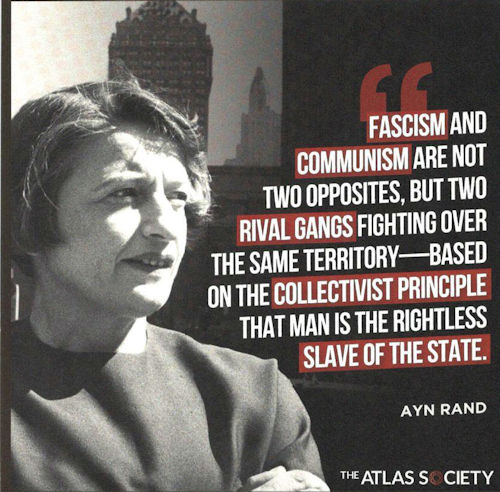






 Posts
Posts