Throughout the history of the Objectivist movement, there have been disturbing excommunications or denunciations of people who have identified themselves as Objectivists or at least neo-Objectivists. There have been many cases in which the civility of a discussion has broken down as the passions of one or more parties to the discussion have transformed to anger. Despite the philosophy's commitment to reason, one not infrequently sees arguments degenerate into blatant strawman killings, dropping of context, creative transformations of the other party's words into new meanings, and even extensive name-calling. Literally childish behavior is not uncommon.
I would like to enlarge the context in which the discussion of this phenomenon usually occurs. I would like us to give some thought to parallels with the development of other philosophies and with religions. I would like to consider the nature of the various kinds of people who tend to be attracted to radical new philosophies and to the consequences on their lives due to their participating as early members of a radically new philosophy. Of course, Objectivism is a particular philosophy with some unusual tenets that also have important consequences with respect to the civility of discussions and relationships. There were also aspects of Ayn Rand's personality and beliefs that have had important effects upon Objectivist discourse.
First, we should establish an historical context. While there are bound to be examples before Christianity, it serves as an interesting case in which a fairly significant change occurred in religion as Judaism was transformed to Christianity and Christianity was further created by adding in elements of Greek mythology, Egyptian mythology, Zoroastrianism, Mithraism, and later various barbarian European beliefs. The Christian followers, despite growing out of Judaism and borrowing from other religions as their belief sought to expand beyond appealing simply to the Jews, came to hold a belief system readily distinguishable from that of the more primitive religions of the Mediterranean basin. At first, they blended in with the Jews, but as they expanded their range geographically and as the time of their separation from Judaism increased, they became more distinguishable and were more likely to be outcasts from the societies in which they lived. Often, the Christians were secretive to avoid recriminations for these differences. They also developed into many varieties of Christianity, often being influenced by which part of the Mediterranean world they lived in. Finally, they came to at share in the power of the Roman Empire. As the ability to direct power came into play, we know that the battle over differing interpretations of Christianity came to be highly influenced by the desire of Church leaders to exercise power. While Jesus may have been willing to yield unto Caesar the material world, the church fathers were not. Ecumenical councils were called to settle many of the very hot disputes that developed. The Church broke into an Eastern and a Western part. In the West, the Pope became increasingly powerful and some gained personality cult status. Wars were launched against those who disagreed with the Pope, whether they were Muslims or they were Christian heretics. About a million people were killed after 1209 when Pope Innocent called for a crusade against the many heretics of the Albigenses in southern France. Later, after the Reformation, general warfare broke out in Europe for several hundred years fueled by religious differences.
Christianity, the self-proclaimed religion of God's love, with its commandment to turn the other cheek after being slapped once already, proved immensely uncivil in its disagreements. This was so even though their highest value, presumably God, was hardly made less by the disagreements of mere human beings! Similarly, the Muslims had long periods of history, one of which they are presently in, in which they were divided into sects who fought bitterly with one another.
How about the case of a philosophy of secular ideas, such as socialism? In the 1800s there were a number of utopian socialist communities set up in America, such as New Harmony, Indiana and the Shakers in Ohio. All of these communities failed with considerable acrimony. When Russia was taken over by the Bolsheviks, many, many leaders were purged and killed under Lenin and then even more under Stalin, each of whom dominated the Communist Party and Russia. The fascist variety of socialism took hold in Italy under Mussolini, who tightly controlled Italy. Hitler rose to power in Germany and ruthlessly killed any leader who appeared to challenge him for the leadership of the Nazi Party. When Mao led the Communists in China, he killed about 60 million Chinese to consolidate his power. These socialist endeavors marked a sharp departure, in some ways, in the cultures in which they came to hold sway. They were all ruthless, but supposedly in the name of rather radical ideas.
Viewed in the context of the history of these other radical movements, Objectivism has been very tame, despite its radicalism! Like these other movements, Objectivism does attract a number of followers who are unhappy and unable to adjust to the society in which they live. At some level, this may be true of all of us, though the ways and the extent of the unhappiness and inability to adjust vary greatly. This is not to imply that it is desirable for us to adjust completely, but there is much that is good about present-day American society. A partial alienation is good, but a complete alienation is bad. Objectivism has attracted some people who are highly alienated from America. There are always some people in a society who are contrarian by nature and will adopt a philosophy that is at odds with that of most people in the society in good part simply because it is different. One example of this would be the Wiccans and many more exist. Some of the people attracted to a radical philosophy become more alienated and more contrarian as they feel more rejection of their ideas from their neighbors and their society. They react with stronger condemnations of their society and its leadership. This accustoms them to a greater degree of stridency in their dealings with others and soon they are inclined to apply this same stridency with those of the Objectivist movement who may disagree with them on a minor point in the context of all the things they may agree on.
Because of the egoist premise that one is one's own highest value and the need for independent thought in Objectivism, the philosophy attracts a large fraction of individualists and some people who simply want a rationale for a childish kind of self-centeredness. Being independent thinkers and individualists, any collection of such people will embody a huge number of ideas, with many differing nuances and sometimes even strong fundamental differences. Because the philosophy emphasizes the importance of ideas, these differences are taken to be important. This is fine, when the larger context of areas of agreement is remembered, but it is a real problem when it is not. As we all know, many people will focus so intently on the single tree in the forest that they forget that the forest has many, many individual trees in it and each is also important in the context of the total forest.
Even though the Objectivist movement attracts individualists, some contrarians, and some childishly self-centered people, most wish to find others in the movement with whom they can feel comfortable, welcome, and who will like them. Humans are generally social animals. So, there are some who will be all too willing to submerge their independent thought to belong to one clique or another. Just as it is human nature to seek a clique in high school, or in a political party, or in a religious sect, so too do we find this effect in Objectivism, despite its incompatibility with the philosophy itself!
But, this incompatibility does have its consequences. The primary one is that to mask it, most clique comformists do so by claiming to hold the precise and exact same views on every subject that Ayn Rand held herself. They compete with one another to prove that this is so and they try desperately to find meaning in quotes of her work applied initially to a different context in every issue they face decades later by wiping out all thought of any differences in the context between then and now and dependent upon different factors being in play. They must trade in their independent minds, simply to belong to a group and be accepted. Having done this, they then raise Rand to the level of deity. After all, she must provide the answer to their every question, despite the fact she is no longer alive. Only a goddess can do that.
To maintain the clique, disputes must be kept to a minimum. So effectively, this clique claims the goddess Ayn Rand makes this possible by virtue of having developed essentially a complete philosophy, which was closed for further development with her death. The members of this clique cannot then be forced to venture onto new ground, where they might disagree with one another. They also cannot be criticized by others for not being creative and original thinkers. This would be very awkward given that the philosophy was so much created for the purpose of enabling men to be creative and original thinkers. They are simply being pure and true followers of Rand and anyone who disagrees is tainted by being in disagreement with Ayn Rand. Furthermore, one really must have a very substantial self-esteem to venture where Rand did not go. As an Objectivist cult adherent, one acquires a claim to a pseudo-self-esteem to augment any deficiencies of real self-esteem one may have.
Students of history know that very often the most bitterly fought wars are civil wars. Many of the same factors were at work when Christians branded others as heretics, when socialists fought among themselves, and when Objectivists fight among themselves. At least, Objectivists do not kill one another over their disagreements!
When a truly independent-minded and self-confident Objectivist enters into a discussion with a clique and deity-worshipping Objectivist, the clique person cannot help but feel very uneasy. He is constrained from venturing onto new ground. If he even tries, he must do so by the torturous process of finding a quote by Rand that seems generally to apply to the new situation and either sell the idea that the present context is very similar or he has to obscure the fact that it is not. This would be a difficult exercise for someone who is in the habit of thinking for himself! He is also in the awkward condition of having to maintain at all times that Rand was perfect in every way. The Passion of Ayn Rand's Critics shows us how torturous that is.
To this point, I have made no claim that either the philosophy or Ayn Rand herself are responsible for the infighting. The problems I have described are the result of common problems we have always seen in human nature. For the record, I do not believe that the philosophy is at fault for these problems by virtue of its essential and correct principles. There are some minor points that Rand made that may be minor contributors, but that is because she was either wrong or simply did not get the complete context of the ideas herself. Fundamentally, the philosophy is one for living life well and doing so harmoniously with other thinking and achieving people. Yes, it is radical, so it attracts some alienated people and some who are simply contrarian by nature, but that cannot be changed and is not a fault of the philosophy. The philosophy makes ideas very important and that makes the outcome of disagreements important. How you promote knowledge-seeking and practical discussions and collaborations among people has been the subject of many of my earlier essays and is also the primary subject of David Kelley's Truth and Toleration. Ayn Rand did not sufficiently address these issues, but they can and have been addressed properly in the context of the principles of Objectivism. Unfortunately, those who believe that Objectivism is a closed system do not enjoy a decently expanded concept of the roles that benevolence and toleration play as enablers of the transmission of ideas between people, to develop new creative ideas, and to test ideas.
Was Ayn Rand responsible in some ways for the legacy of infighting in Objectivism? Yes, I would say that she did contribute to this in ways that will slow the spread of the philosophy. Since I always thought that Objectivism would take at least 100 years to become America's dominant philosophy, I am not as disappointed as those who thought this was going to happen in their lifetime. But, I would like to have seen it get wider acceptance than it has.
Ayn Rand's own failure to think and write more about benevolence and toleration is a factor in Objectivist culture having problems engaging others and one another in effective discussions and collaborations. There is some reason to suspect that she did not properly understand these issues, based upon her personal behavior with her colleagues.
Rand came from a very fragile society that fell to Communism and her view of human nature seems to have been affected by that experience. When discussing politics, she often exaggerated the effect that a bad government policy was going to have on the nation. She underestimated the strength of the American economy and the ingenuity of its people in getting around the problems created by government on a number of issues. She even advocated a reduction of freedom of speech in the interest of making the broadcasting media deliver opposing viewpoints because she was so afraid of socialism taking over America. Consequently, she had an exaggerated fear of error in general.
She was an idealist and she was sure that any compromise between the ideal and the achievable was usually bad. She had a tendency to make the ideal the enemy of the good. This has infected many Objectivists. They are unwilling to make compromises for fear that this means that they have forsaken the ideal. Frankly, they overdo this, as she did. Because many do this, they cannot even converse with Libertarians, Conservatives, and Socialists. How do you change people's minds if you will not talk to them? This desire for purity carries over into discussions with other Objectivists with somewhat different viewpoints. In general, it is stultifying.
Ayn Rand was also too ready to assume that when someone held a mistaken viewpoint, it was due to a moral shortcoming. Many of her worshipping followers are even more inclined to make such unbenevolent and intolerant assumptions. Ayn Rand underestimated the intelligence that was necessary for others to understand complex issues. She thought that if someone had an inadequate IQ, enough effort would increase their IQ by enough. I agree that many people probably can increase their IQs, but probably not by nearly as much as she thought they could.
Ayn Rand's tendency to denounce people who disagreed with her on significant, but not necessarily central principles was a problem. Her failure to share responsibility for the break-up of her romantic relationship with Nathaniel Branden certainly created a problem. The way she dismissed him in To Whom It May Concern was highly irrational and set a bad example. Her denunciation of Barbara Branden was absolutely senseless. Some of these problems came about because she was certain she was a great hero in all respects and should be treated as such. She clearly had difficulty in properly valuing the ideas of others. She was a natural loner in many ways and did not always do justice to the contributions that earlier thinkers had made to her development of Objectivism. Of course, their work often had serious errors in it, but work with serious errors can still be very valuable in suggesting how to avoid those errors and to stimulate new approaches.
But, in summary, I think that the shortcomings of Ayn Rand's personality in her personal relations with people and as a thinker about society and human interactions are secondary issues. She presented us with a wonderfully sound and substantially developed philosophy with many innovative features. There is still much to be developed, but it is fantastic that a novelist accomplished so much as a philosopher. The core of the philosophy is not at fault in causing the in-fighting among Objectivists either. Where it has shortcomings, they can be fixed and the philosophy can be filled out in a manner consistent with Ayn Rand's own work in its essential aspects. Most of the problems in the Objectivist movement are the result of human nature and have been experienced to an even greater degree perhaps by other historically radical movements. With dedicated work, we can learn to work better as a team, but individualists will find things to disagree about. Some people will always latch onto a movement with a religious mindset. Some people will always form cliques. Objectivism has to find ways to live with this.
Those Objectivists who are truly independent thinkers and who are creative must simply continue their work. They must teach benevolence and tolerance. They must hold in their minds that a society as productive and free as the American society is has many good people in it. They must remind the more alienated Objectivists of this context. Still more important, they must reach out to Americans in general and engage them in discussions in a constructive manner. They must be explanatory, rather than accusatory. Most important, they must lead by example. If they live productive, thinking lives, exercise self-responsibility, treat others with justice, and engage others in reasoned, respectful discussions, then the Objectivist movement should flourish over the long haul.
04 June 2006


08 March 2006
Benevolence:People as Tolerance:Ideas
In my recent essay The Virtues of Benevolence and Tolerance, I chose to create a greater separation of the domains of benevolence and tolerance. People often speak of having tolerance for other people's ideas, but they also often speak of having tolerance for other people. Frequently, in either context, the emphasis is put on having to endure something distasteful, painful, and threatening to one's values. In his chapter called Toleration in The Contested Legacy of Ayn Rand: Truth and Toleration in Objectivism, David Kelley starts by pointing this out. He then proceeds to say that tolerance, "In regard to ideas, the object [of toleration] is a person with whom we disagree, who holds a conviction we believe to be false."
Now clearly this is at odds with my deciding that toleration can be made a more useful concept by making its object ideas. But what David Kelley does in his very admirable book is to develop the concept of toleration along a traditional mode of thought and in a manner that has plenty of merit. He wants to give us the utmost freedom to argue against and condemn bad ideas without having to morally condemn the person who has made a mistake and who has a bad idea. He then proceeds to give many good reasons why it can be a very bad policy with respect to doing justice to others and acquiring knowledge to too readily morally condemn the person for a bad idea. Why do I choose to take a different path when I agree with so much of his viewpoint, which is a viewpoint I have held in the past?
First of all, I think that all of the reasons that one does not too easily decide to condemn a person with a bad idea are covered by the same reasons for treating others benevolently until one has thoroughly established the rational need to do otherwise. The attitude of benevolence, which is rich in the desire to do justice to our fellow man, already provides us with the virtue of regarding others of being of value to us until we are sure that we know they are more of a threat instead. In a civilized society, such as ours, we constantly derive benefits from living among other men. They generate numerous ideas that make our lives better. They specialize in areas of knowledge that we as an individual cannot amass in our single person and single lifetime. We benefit from their services as novelists, physicists, clothing designers, car makers, doctors, farmers, grocers, and literally thousands of other disciplines and careers. The doctor who may have saved our life or that of someone we love may have some very bad political ideas and yet, he is of great value to us.
We must retain full knowledge of this greater context of knowledge and have a preference for not morally condemning others for their ideas without very strong rational reasons for doing so. There are people who are monsters. There are people we must condemn. However, most people in our society have many very bad ideas and yet they have many good ones also. Most of them are productive and contribute real values in trade with the people around them. The rational man observes this and establishes the policy of regarding others benevolently as the standard. He accepts that there are too many bad ideas and that these can be threatening, but he does not lose sight of the greater context of the value of most people in our society.
This benevolent approach to others with respect to their role as idea generators enables the trade of ideas and personal services with others. Most of the value that others give us comes via their ideas, so benevolence is critical both as justice and as a means to acquire knowledge. The latter is actually probably the more fundamental value. This knowledge acquisition value is actually the value that David Kelley develops most fully in his chapter Toleration.
I now choose to make the object of toleration that of ideas instead of the person. Toleration then only requires us to have a fundamental respect for the value of ideas in human life, to recognize that the resources we can personally direct toward creating and developing ideas are limited, to realize that other people represent a tremendous asset as thinkers, that their ideas are commonly made readily available to us, and they provide us a tremendous resource of thought against which we can check our premises and ideas. These assessments do not differ from those of David Kelley.
Now, if ideas are the object of toleration, we do not reject them as false until they fail rational evaluation. But, if they do fail the tests of rational evaluation, then we can call the idea false and we can note that human action directed by that idea may be evil or at least wrong. We are free to proclaim the falsity of any faulty idea and we clearly have not been intolerant. Now, tolerance is a tool to help us acquire knowledge, with a reduced role with respect to justice. As a tool for knowledge, its epistemological role is the role to be emphasized and we leave most issues related to impartial and rational justice to be provided for by the virtue of benevolence. Assessments of the morality of people would be very complex whether or not ideas are the object of toleration. We have not simplied these assessments of people in any way with this definition of tolerance, but we have simplified the requirements of tolerance.
One of the advantages of developing the concepts of benevolence and tolerance along these parallel lines with the person the object of benevolence and the idea the object of tolerance is that our understanding of benevolence then helps us to understand the role of tolerance better. Tolerance is the somewhat more abstract term and seems to be harder for people to grasp. Of course, the fact that our definitions for tolerance have been traditionally confused does not help. But there are reasons why those definitions were confused. The required concept is a difficult and very abstract concept. Now having grasped this concept, it is helpful that once an idea is rationally evaluated, one can clearly declare it right or wrong without being intolerant, with its negative connotations. It is simply an epistemological issue and we are not making the usually more complicated assessment that the person holding the idea is immoral or evil. Many ideas are wrong which are not immoral. Actually, an idea can only be said to be evil in the sense that a person acting on the idea does something evil. To say the idea is evil is really just a shorthand way of saying this.
One of the reasons it is difficult to get people to accept the need for tolerance is that they think it means that they must adapt an ambivalence about whether an idea is right or wrong. The tolerant person has no need to do this with the definition of tolerance I am using here. Each and every wrong idea can be identified as such and one is free to proclaim it false. This is not the same as condemning the holder of the false idea as evil. The focus is on the idea, not the person. There is no requirement that one suffer a bad idea. There is no need to endure a false idea. There is no need to ignore the threat that a bad idea may cause people to damage one's values.
In the normal confused usage of the concept tolerance, many people, especially a large faction of Objectivists, actually dislike tolerance. They believe that tolerance and any call for it is actually an act of moral cowardice, if not evil itself. This is because they believe that tolerance means either the acceptance of bad, evil ideas or at least the refusal to condemn them. Indeed, if one does not condemn the person who has a bad idea, they claim that you have given your sanction to the idea and to the person. Out of this hatred for evil or wrong ideas and people who have them, they also throw out all the valid and rationally necessary aspects of tolerance. They do indeed become intolerant. They do not have sufficient respect for ideas to give them a thorough, rational, and independent evaluation. They become very dismissive of the value of ideas which do not lie within what they call the closed system of Objectivism. If the idea was not Ayn Rand's, or Leonard Peikoff's or maybe someone licensed by Peikoff to speak of Objectivism, then the idea need not be given a serious examination. Indeed, anyone who does runs the serious risk of being excommunicated from the Objectivist movement.
This rejection of tolerance with respect to ideas (and the corresponding rejection of benevolence toward people) makes it systematically less likely that they can render independent rational evaluations of ideas (and of people). The adherents of this mindset will still likely engage in excessive moral condemnations of people, but more of them may be able to separate the epistemological evaluation of ideas from the moral evaluation of people if they can be brought to accept this more straightforward concept to tolerance. Unfortunately, the very complex evaluation of people will remain impossible for the simple-minded and fraught with error even for very intelligent and wise people. My hope is that with tolerance directed at ideas, it will at least be possible to get more people to commit themselves to the rational evaluation of ideas, even when those ideas originate in the thinking of others.
Now clearly this is at odds with my deciding that toleration can be made a more useful concept by making its object ideas. But what David Kelley does in his very admirable book is to develop the concept of toleration along a traditional mode of thought and in a manner that has plenty of merit. He wants to give us the utmost freedom to argue against and condemn bad ideas without having to morally condemn the person who has made a mistake and who has a bad idea. He then proceeds to give many good reasons why it can be a very bad policy with respect to doing justice to others and acquiring knowledge to too readily morally condemn the person for a bad idea. Why do I choose to take a different path when I agree with so much of his viewpoint, which is a viewpoint I have held in the past?
First of all, I think that all of the reasons that one does not too easily decide to condemn a person with a bad idea are covered by the same reasons for treating others benevolently until one has thoroughly established the rational need to do otherwise. The attitude of benevolence, which is rich in the desire to do justice to our fellow man, already provides us with the virtue of regarding others of being of value to us until we are sure that we know they are more of a threat instead. In a civilized society, such as ours, we constantly derive benefits from living among other men. They generate numerous ideas that make our lives better. They specialize in areas of knowledge that we as an individual cannot amass in our single person and single lifetime. We benefit from their services as novelists, physicists, clothing designers, car makers, doctors, farmers, grocers, and literally thousands of other disciplines and careers. The doctor who may have saved our life or that of someone we love may have some very bad political ideas and yet, he is of great value to us.
We must retain full knowledge of this greater context of knowledge and have a preference for not morally condemning others for their ideas without very strong rational reasons for doing so. There are people who are monsters. There are people we must condemn. However, most people in our society have many very bad ideas and yet they have many good ones also. Most of them are productive and contribute real values in trade with the people around them. The rational man observes this and establishes the policy of regarding others benevolently as the standard. He accepts that there are too many bad ideas and that these can be threatening, but he does not lose sight of the greater context of the value of most people in our society.
This benevolent approach to others with respect to their role as idea generators enables the trade of ideas and personal services with others. Most of the value that others give us comes via their ideas, so benevolence is critical both as justice and as a means to acquire knowledge. The latter is actually probably the more fundamental value. This knowledge acquisition value is actually the value that David Kelley develops most fully in his chapter Toleration.
I now choose to make the object of toleration that of ideas instead of the person. Toleration then only requires us to have a fundamental respect for the value of ideas in human life, to recognize that the resources we can personally direct toward creating and developing ideas are limited, to realize that other people represent a tremendous asset as thinkers, that their ideas are commonly made readily available to us, and they provide us a tremendous resource of thought against which we can check our premises and ideas. These assessments do not differ from those of David Kelley.
Now, if ideas are the object of toleration, we do not reject them as false until they fail rational evaluation. But, if they do fail the tests of rational evaluation, then we can call the idea false and we can note that human action directed by that idea may be evil or at least wrong. We are free to proclaim the falsity of any faulty idea and we clearly have not been intolerant. Now, tolerance is a tool to help us acquire knowledge, with a reduced role with respect to justice. As a tool for knowledge, its epistemological role is the role to be emphasized and we leave most issues related to impartial and rational justice to be provided for by the virtue of benevolence. Assessments of the morality of people would be very complex whether or not ideas are the object of toleration. We have not simplied these assessments of people in any way with this definition of tolerance, but we have simplified the requirements of tolerance.
One of the advantages of developing the concepts of benevolence and tolerance along these parallel lines with the person the object of benevolence and the idea the object of tolerance is that our understanding of benevolence then helps us to understand the role of tolerance better. Tolerance is the somewhat more abstract term and seems to be harder for people to grasp. Of course, the fact that our definitions for tolerance have been traditionally confused does not help. But there are reasons why those definitions were confused. The required concept is a difficult and very abstract concept. Now having grasped this concept, it is helpful that once an idea is rationally evaluated, one can clearly declare it right or wrong without being intolerant, with its negative connotations. It is simply an epistemological issue and we are not making the usually more complicated assessment that the person holding the idea is immoral or evil. Many ideas are wrong which are not immoral. Actually, an idea can only be said to be evil in the sense that a person acting on the idea does something evil. To say the idea is evil is really just a shorthand way of saying this.
One of the reasons it is difficult to get people to accept the need for tolerance is that they think it means that they must adapt an ambivalence about whether an idea is right or wrong. The tolerant person has no need to do this with the definition of tolerance I am using here. Each and every wrong idea can be identified as such and one is free to proclaim it false. This is not the same as condemning the holder of the false idea as evil. The focus is on the idea, not the person. There is no requirement that one suffer a bad idea. There is no need to endure a false idea. There is no need to ignore the threat that a bad idea may cause people to damage one's values.
In the normal confused usage of the concept tolerance, many people, especially a large faction of Objectivists, actually dislike tolerance. They believe that tolerance and any call for it is actually an act of moral cowardice, if not evil itself. This is because they believe that tolerance means either the acceptance of bad, evil ideas or at least the refusal to condemn them. Indeed, if one does not condemn the person who has a bad idea, they claim that you have given your sanction to the idea and to the person. Out of this hatred for evil or wrong ideas and people who have them, they also throw out all the valid and rationally necessary aspects of tolerance. They do indeed become intolerant. They do not have sufficient respect for ideas to give them a thorough, rational, and independent evaluation. They become very dismissive of the value of ideas which do not lie within what they call the closed system of Objectivism. If the idea was not Ayn Rand's, or Leonard Peikoff's or maybe someone licensed by Peikoff to speak of Objectivism, then the idea need not be given a serious examination. Indeed, anyone who does runs the serious risk of being excommunicated from the Objectivist movement.
This rejection of tolerance with respect to ideas (and the corresponding rejection of benevolence toward people) makes it systematically less likely that they can render independent rational evaluations of ideas (and of people). The adherents of this mindset will still likely engage in excessive moral condemnations of people, but more of them may be able to separate the epistemological evaluation of ideas from the moral evaluation of people if they can be brought to accept this more straightforward concept to tolerance. Unfortunately, the very complex evaluation of people will remain impossible for the simple-minded and fraught with error even for very intelligent and wise people. My hope is that with tolerance directed at ideas, it will at least be possible to get more people to commit themselves to the rational evaluation of ideas, even when those ideas originate in the thinking of others.
01 March 2006
Objectivism, Individuality, and Sexuality
Ayn Rand summarized Objectivism in the words, "My philosophy, in essence, is the concept of man as a heroic being, with his own happiness as the moral purpose of his life, with productive achievement as his noblest activity, and reason as his only absolute."
This is a wonderful summary, which when thought through carefully, contains all the essentials. Nonetheless, it might be helpful to also say that Objectivism is the philosophy committed to reality, reason, rational egoism, productive achievement, individualism, heroism, sensual sexuality, and happiness on earth. This is not a better way to summarize Objectivism, but it is a useful supplement to make some of our values more explicit and to make still more contrasts with the philosophies most people accept today.
Perhaps one of the most jarring inclusions is the acceptance of and the value accorded to the sensual sexuality of man as one of his greatest pleasures. Objectivism is not only reality-directed and committed to a mental evaluation of that reality and to hard work. These goals seem to some people to be insufficient paths to happiness, though I think them exhilarating inducements. But we live in a society with serious reservations about individual pleasures on this earth, especially about the joy and life-stimulation available to us in a healthy, sensual sexuality. We also find a strong belief that individuality should be suppressed in sexual expression. Virtually all of the religions have doctrines to deprive sexual pleasures of their value to us and to create a strong sense of guilt in the enjoyment of sex. In fact, they recognize the importance of robbing sex of its pleasure through guilt as a critical means to separate man from the pleasures of life on earth. This means of diminishing such earth-based pleasures makes it much easier to sell the trade of happiness in this life for happiness in an afterlife. The denial of the individual nature of our sexuality also undercuts our self-esteem and confidence in acting heroically to oppose the force of religious convention.
Objectivism offers us heaven on earth, while the religions only offer heaven in a dubious otherworldly setting. While religion generally allows man a very narrow scope for sex, which is not allowed to express his individuality, Objectivism sees it as one of life’s noble activities when shared with a moral person who shares one’s values. We should emphasize this advantage of Objectivism more. Religion offers the worship of God as the embodiment of the good, while Objectivism offers the worship of the best in man as the embodiment of the good. A key expression of our worship of the good in man is joining with another or others of good character in the act of shared sensual love. The Christians recognized this when they committed nuns to a life as the brides of Christ. But we love the best in man and we should express that sexually with good people in an integrated stimulation of mind and body on this earth.
Many people are greatly frustrated by the rigid and impersonal constraints on sexual expression rampant in society today. The sharing and worship of values in the sensual stimulation of our bodies and minds that good sex offers us is largely denied. The need for sex and the means of enjoying it have strong evolutionary roots. They are central to who we are as individuals. When society acts to discourage us from enjoying sex with all of its individual differentiating manifestations, this is a very fundamental attack upon individuality. It is also an attempt to ignore the biochemistry of the human body and mind, which is largely designed to allow man to enjoy and to be made healthy by sex. Good sex gives us peace of mind, it stimulates our minds, and it provides healthy exercise. It is an expression of the healthy animal that man needs to be if he is not to daily live a life attempting a mind-body dichotomy. This dichotomy is actually impossible given the integrated mind-body sexual machine that man is, but an unhealthy deprivation of sensual sex is very achievable. We can see this all too easily by observing the huge numbers of sexually deprived and frustrated human beings around us.
Good sex is an heroic act. It is an assertion of individuality, of shared values, of the integrated action of mind and body, of the worth of oneself, a means to explore and develop ourselves, and a central joy of life. In good sex, we come close to feeling and knowing god. We know that god is the best in us and that we have the power to achieve our own happiness on earth. Let us not succumb to the sad morality of the mystics and fail to assert our proud sexuality when we attempt to sell the ideals of Objectivism to a philosophically challenged society. That society needs to see the light, so people can heal their sexual dysfunction and end their brutal sexual frustration. We can and should help them.
Some will object that Ayn Rand’s vision of sex appears to be one of male-domination and excessive violence, so the sexuality of Objectivism is a hard sell. First, the reality is that the violence operates within a framework of adult consensual sex and was a definite form of role-playing that apparently appealed to the sexuality of the individual named Ayn Rand. Her expression of her individual sexuality is just that. Others are free to adopt other forms of sexuality more appropriate to their biochemistry, nervous system, fantasies, and experiences. Individuals are highly differentiated in many ways and there is little that is more complex and differentiating than our individual sexuality. Objectivism, as an individualist and reality-oriented philosophy, has to recognize and accommodate this. Few other philosophies do this and none do it within a rational system of philosophy. This aspect of Objectivism is incredibly important. It is also a sufficient driving force to motivate many people to read a novel of nearly 1100 pages length! Only a small fraction of Americans will otherwise ever do that.
This is a wonderful summary, which when thought through carefully, contains all the essentials. Nonetheless, it might be helpful to also say that Objectivism is the philosophy committed to reality, reason, rational egoism, productive achievement, individualism, heroism, sensual sexuality, and happiness on earth. This is not a better way to summarize Objectivism, but it is a useful supplement to make some of our values more explicit and to make still more contrasts with the philosophies most people accept today.
Perhaps one of the most jarring inclusions is the acceptance of and the value accorded to the sensual sexuality of man as one of his greatest pleasures. Objectivism is not only reality-directed and committed to a mental evaluation of that reality and to hard work. These goals seem to some people to be insufficient paths to happiness, though I think them exhilarating inducements. But we live in a society with serious reservations about individual pleasures on this earth, especially about the joy and life-stimulation available to us in a healthy, sensual sexuality. We also find a strong belief that individuality should be suppressed in sexual expression. Virtually all of the religions have doctrines to deprive sexual pleasures of their value to us and to create a strong sense of guilt in the enjoyment of sex. In fact, they recognize the importance of robbing sex of its pleasure through guilt as a critical means to separate man from the pleasures of life on earth. This means of diminishing such earth-based pleasures makes it much easier to sell the trade of happiness in this life for happiness in an afterlife. The denial of the individual nature of our sexuality also undercuts our self-esteem and confidence in acting heroically to oppose the force of religious convention.
Objectivism offers us heaven on earth, while the religions only offer heaven in a dubious otherworldly setting. While religion generally allows man a very narrow scope for sex, which is not allowed to express his individuality, Objectivism sees it as one of life’s noble activities when shared with a moral person who shares one’s values. We should emphasize this advantage of Objectivism more. Religion offers the worship of God as the embodiment of the good, while Objectivism offers the worship of the best in man as the embodiment of the good. A key expression of our worship of the good in man is joining with another or others of good character in the act of shared sensual love. The Christians recognized this when they committed nuns to a life as the brides of Christ. But we love the best in man and we should express that sexually with good people in an integrated stimulation of mind and body on this earth.
Many people are greatly frustrated by the rigid and impersonal constraints on sexual expression rampant in society today. The sharing and worship of values in the sensual stimulation of our bodies and minds that good sex offers us is largely denied. The need for sex and the means of enjoying it have strong evolutionary roots. They are central to who we are as individuals. When society acts to discourage us from enjoying sex with all of its individual differentiating manifestations, this is a very fundamental attack upon individuality. It is also an attempt to ignore the biochemistry of the human body and mind, which is largely designed to allow man to enjoy and to be made healthy by sex. Good sex gives us peace of mind, it stimulates our minds, and it provides healthy exercise. It is an expression of the healthy animal that man needs to be if he is not to daily live a life attempting a mind-body dichotomy. This dichotomy is actually impossible given the integrated mind-body sexual machine that man is, but an unhealthy deprivation of sensual sex is very achievable. We can see this all too easily by observing the huge numbers of sexually deprived and frustrated human beings around us.
Good sex is an heroic act. It is an assertion of individuality, of shared values, of the integrated action of mind and body, of the worth of oneself, a means to explore and develop ourselves, and a central joy of life. In good sex, we come close to feeling and knowing god. We know that god is the best in us and that we have the power to achieve our own happiness on earth. Let us not succumb to the sad morality of the mystics and fail to assert our proud sexuality when we attempt to sell the ideals of Objectivism to a philosophically challenged society. That society needs to see the light, so people can heal their sexual dysfunction and end their brutal sexual frustration. We can and should help them.
Some will object that Ayn Rand’s vision of sex appears to be one of male-domination and excessive violence, so the sexuality of Objectivism is a hard sell. First, the reality is that the violence operates within a framework of adult consensual sex and was a definite form of role-playing that apparently appealed to the sexuality of the individual named Ayn Rand. Her expression of her individual sexuality is just that. Others are free to adopt other forms of sexuality more appropriate to their biochemistry, nervous system, fantasies, and experiences. Individuals are highly differentiated in many ways and there is little that is more complex and differentiating than our individual sexuality. Objectivism, as an individualist and reality-oriented philosophy, has to recognize and accommodate this. Few other philosophies do this and none do it within a rational system of philosophy. This aspect of Objectivism is incredibly important. It is also a sufficient driving force to motivate many people to read a novel of nearly 1100 pages length! Only a small fraction of Americans will otherwise ever do that.
24 February 2006
The Virtues of Benevolence and Tolerance
In the context of the times and the society in which I live, benevolence and tolerance are important and intertwined virtues. As I have pointed out earlier, in a different society and in a different time, these virtues would be less important and might, if broadly applied, insure my death and that of those I love. In other words, in a violent and capricious society, they might simply constitute an unwise trust in unknown people and in unknown ideas. However, in America today and in a number of other areas of today's world, to adopt a malevolent view of others and to be intolerant of new and differing ideas, is to cut oneself off from the benefits of trade and friendships with others and will isolate oneself from knowledge to be gained by examining their ideas with fairness and thoroughness.
To the extent that others, though personally unknown or little known to us, might reasonably be assessed as likely to be able to deliver values to us in the context of our time and our society, the rational man will approach such strangers with an assumption that their persons are of value as an enhancement to our own lives. This means that we have a benevolent assessment of our fellow man preceding our opportunity to evaluate them morally upon getting to know them. Without such a benevolent approach, it will in fact be much more difficult to get to know them, since they will reasonably be loath to entertain our company and unwilling to confide their thoughts to us. A benevolent approach to others is often a necessary prelude to our being able to make a rational assessment of someone previously unknown to us. If we are to benefit from the existence of this person, whether through commercial trade, an exchange or simply a gleaning of their knowledge and experiences, or the development of a great friendship, we must take the risk of first assuming the likelihood that we will find some value in them. It would not be reasonable to invest our time in getting to know another, if we thought before we knew them that we would find no value in them.
The result of getting to know someone might be that we evaluate them as not a particularly rational person, but we might still have gained something of reasonable value for our effort. We might have learned something new that we would have been unlikely to have learned otherwise. But having learned this, we realize it is time to move on and invest any future time into getting to know someone else. We might realize that we have encountered a monster and devote some effort to thwarting their monstrous activities. On the other hand, we might find the love of our lives or develop a wonderful, lifelong friendship. Benevolence does not substitute for a rational judgment of others. It precedes that assessment and enables it.
Toleration is a parallel to benevolence. As benevolence is to the unexamined person, so is tolerance to the unexamined idea. This concept is a bit more abstract and it is therefore a bit more difficult to grasp. Furthermore, as I have earlier noted in other essays, English dictionary definitions are inadequate and sometimes even self-contradictory for this word. Whereas benevolence enables us to know and evaluate other people and makes it possible for us to ultimately enjoy values created by other people, toleration enables us to know and evaluate the ideas of others and makes it ultimately possible for us to find such values as those ideas may have. Just as we ultimately assess the value of the people we encounter and invest the time to get to know, we also evaluate the ideas we encounter upon taking the time to understand and critically assess them. We will encounter many good ideas and many bad ideas. Toleration does not in any way require us to be kind to an evil or reality-denying idea. Toleration does depend upon an overall assessment that ideas are important, that many other people have spent a great deal of time and effort developing ideas, that some of the ideas they have developed are either right or will teach us that this line of thought leads to a deadend, and that examining the ideas of others will allow us to understand more than if we tried to develop every thought entirely on our own.
Toleration is the attitude that there is great value in the ideas developed by others and that to realize this value we should invest a considerable effort into rationally examining the ideas of others and fairly assessing their value.
Tolerance is a virtue since we recognize that ideas are important, that valuable resources are required for their development, that many valuable ideas have been developed by others, and that a thorough understanding of our reality is not realistic in our own finite lifetime without reference to the many valuable ideas that others have developed. Tolerance offers us a path to gather up such valuable thoughts as others have had. Of course, randomly adopting other people's ideas would be foolish. Many irrational ideas have been developed, but without tolerance we will never be able to rationally identity the good ideas and differentiate them from the bad ideas. Without toleration, even the greatest genius will encounter many a brick wall he can only batter his head against, though someone else has climbed over it, burrowed under it, or outflanked it.
Toleration does not require us to accept the validity of bad ideas. It does not require us to refrain from a constructive criticism of an idea found wanting. It does not necessitate backing down from evil. It simply enables a rational assessment of ideas. Many people who read the works of Ayn Rand, whose ideas are developments along directions substantially set by Aristotle and Enlightenment thinkers in many cases, and are yet very different from most of the ideas accepted by scholars at many of our traditionally accepted best universities, had to initially approach her ideas with a healthy sense of toleration. Having done so, they became convinced that Objectivism was the philosophy they should adopt and that they should invest much of their future efforts to further develop it. Some Objectivists thought they were Christians when they first encountered her works. Some were at least moderate socialists. Many had simply never thought much about some aspect or other of philosophy. They may not have thought about concept formation, about the mind-body dichotomy, about what their ultimate value was, or about the moral basis of Capitalism. But they had enough toleration for new ideas to read her work and to evaluate it. They may have learned a great deal in the process about how to evaluate an idea. Before they adopted many or almost all of her ideas, they most likely thought that ideas were important and that they might learn something by fairly examining the ideas of Ayn Rand. Of course, if they simply adopted her ideas without critically examining them in light of their own experiences in the world and using their best effort to evaluate them rationally, they are simply dogmatists and they are not really Objectivists.
Because benevolence allows us to maximize the benefits of interactions with other good people and because most of the value of people is the result of their having good ideas, benevolence and toleration are closely tied together. If the society one lives in is good enough that benevolence is a major virtue, then it is good enough that tolerance is a major virtue. Each attains its status as a major virtue because approaching people and ideas with such a principled attitude enables one to acquire the greatest value from others and from their ideas. Neither should be held as virtue simply as wishful thinking. How great a virtue each is is dependent upon how good the people around us are and how good their ideas are.
But, if we did live in a world in which few people were of value to us and in which few of their ideas were of value, then we probably should become hermits. In America today, that would be a very sad choice, because many people, while not at all perfect, do offer us a very great value by virtue of how they live their lives and by virtue of the ideas they develop and contribute to us with little more effort on our part but that we examine them carefully. In historical terms, we live in a wonderful time with many good people and a proliferation of ideas, many of which have and continue to greatly enhance our understanding of our universe. This is not the time to be stingy with benevolence and toleration!
To the extent that others, though personally unknown or little known to us, might reasonably be assessed as likely to be able to deliver values to us in the context of our time and our society, the rational man will approach such strangers with an assumption that their persons are of value as an enhancement to our own lives. This means that we have a benevolent assessment of our fellow man preceding our opportunity to evaluate them morally upon getting to know them. Without such a benevolent approach, it will in fact be much more difficult to get to know them, since they will reasonably be loath to entertain our company and unwilling to confide their thoughts to us. A benevolent approach to others is often a necessary prelude to our being able to make a rational assessment of someone previously unknown to us. If we are to benefit from the existence of this person, whether through commercial trade, an exchange or simply a gleaning of their knowledge and experiences, or the development of a great friendship, we must take the risk of first assuming the likelihood that we will find some value in them. It would not be reasonable to invest our time in getting to know another, if we thought before we knew them that we would find no value in them.
The result of getting to know someone might be that we evaluate them as not a particularly rational person, but we might still have gained something of reasonable value for our effort. We might have learned something new that we would have been unlikely to have learned otherwise. But having learned this, we realize it is time to move on and invest any future time into getting to know someone else. We might realize that we have encountered a monster and devote some effort to thwarting their monstrous activities. On the other hand, we might find the love of our lives or develop a wonderful, lifelong friendship. Benevolence does not substitute for a rational judgment of others. It precedes that assessment and enables it.
Toleration is a parallel to benevolence. As benevolence is to the unexamined person, so is tolerance to the unexamined idea. This concept is a bit more abstract and it is therefore a bit more difficult to grasp. Furthermore, as I have earlier noted in other essays, English dictionary definitions are inadequate and sometimes even self-contradictory for this word. Whereas benevolence enables us to know and evaluate other people and makes it possible for us to ultimately enjoy values created by other people, toleration enables us to know and evaluate the ideas of others and makes it ultimately possible for us to find such values as those ideas may have. Just as we ultimately assess the value of the people we encounter and invest the time to get to know, we also evaluate the ideas we encounter upon taking the time to understand and critically assess them. We will encounter many good ideas and many bad ideas. Toleration does not in any way require us to be kind to an evil or reality-denying idea. Toleration does depend upon an overall assessment that ideas are important, that many other people have spent a great deal of time and effort developing ideas, that some of the ideas they have developed are either right or will teach us that this line of thought leads to a deadend, and that examining the ideas of others will allow us to understand more than if we tried to develop every thought entirely on our own.
Toleration is the attitude that there is great value in the ideas developed by others and that to realize this value we should invest a considerable effort into rationally examining the ideas of others and fairly assessing their value.
Tolerance is a virtue since we recognize that ideas are important, that valuable resources are required for their development, that many valuable ideas have been developed by others, and that a thorough understanding of our reality is not realistic in our own finite lifetime without reference to the many valuable ideas that others have developed. Tolerance offers us a path to gather up such valuable thoughts as others have had. Of course, randomly adopting other people's ideas would be foolish. Many irrational ideas have been developed, but without tolerance we will never be able to rationally identity the good ideas and differentiate them from the bad ideas. Without toleration, even the greatest genius will encounter many a brick wall he can only batter his head against, though someone else has climbed over it, burrowed under it, or outflanked it.
Toleration does not require us to accept the validity of bad ideas. It does not require us to refrain from a constructive criticism of an idea found wanting. It does not necessitate backing down from evil. It simply enables a rational assessment of ideas. Many people who read the works of Ayn Rand, whose ideas are developments along directions substantially set by Aristotle and Enlightenment thinkers in many cases, and are yet very different from most of the ideas accepted by scholars at many of our traditionally accepted best universities, had to initially approach her ideas with a healthy sense of toleration. Having done so, they became convinced that Objectivism was the philosophy they should adopt and that they should invest much of their future efforts to further develop it. Some Objectivists thought they were Christians when they first encountered her works. Some were at least moderate socialists. Many had simply never thought much about some aspect or other of philosophy. They may not have thought about concept formation, about the mind-body dichotomy, about what their ultimate value was, or about the moral basis of Capitalism. But they had enough toleration for new ideas to read her work and to evaluate it. They may have learned a great deal in the process about how to evaluate an idea. Before they adopted many or almost all of her ideas, they most likely thought that ideas were important and that they might learn something by fairly examining the ideas of Ayn Rand. Of course, if they simply adopted her ideas without critically examining them in light of their own experiences in the world and using their best effort to evaluate them rationally, they are simply dogmatists and they are not really Objectivists.
Because benevolence allows us to maximize the benefits of interactions with other good people and because most of the value of people is the result of their having good ideas, benevolence and toleration are closely tied together. If the society one lives in is good enough that benevolence is a major virtue, then it is good enough that tolerance is a major virtue. Each attains its status as a major virtue because approaching people and ideas with such a principled attitude enables one to acquire the greatest value from others and from their ideas. Neither should be held as virtue simply as wishful thinking. How great a virtue each is is dependent upon how good the people around us are and how good their ideas are.
But, if we did live in a world in which few people were of value to us and in which few of their ideas were of value, then we probably should become hermits. In America today, that would be a very sad choice, because many people, while not at all perfect, do offer us a very great value by virtue of how they live their lives and by virtue of the ideas they develop and contribute to us with little more effort on our part but that we examine them carefully. In historical terms, we live in a wonderful time with many good people and a proliferation of ideas, many of which have and continue to greatly enhance our understanding of our universe. This is not the time to be stingy with benevolence and toleration!
16 July 2005
Respect for the Value of Other Thinking Men
My earlier essay "Rational Men Must be Tolerant of Others" has generated a number of criticisms. Some of these are interesting and some give evidence of a failure to see the big picture. Among the criticisms are these:
- I do not formally define "tolerance" so the reader assumes that it means what some particular dictionary says it means. This ignores the fact that I clearly am saying that the dictionaries have not adequately defined the concept we need as Objectivists. My essay attempted to start a formulation of what we do need to understand about the concept of tolerance.
- I am making tolerance into a major virtue, therefore I am putting it at the level of rationality, honesty, justice, and independence. This is unjustified in their opinions. I will immediately point out that rationality is the primary virtue and is on a level of its own. Honesty, justice, independence, and tolerance are major virtues, but not primary. There is also plenty of room to grade these secondary or tertiary virtues, along with others such as benevolence. Nonetheless, each is a major virtue, certainly as compared to punctuality or fashionableness! Of course, if someone insists that tolerance is simply a high pain threshold for the irritations caused by others, then tolerance is perhaps a relatively minor virtue.
The key issue is then to try to more clearly explicate the concept we need for the virtue of having a rational respect for the value contributed to each of us and to our civilization by others who themselves make an effort to think and to make their thoughts known to others. In this, we recognize that our primary means of identifying reality and providing oneself with the means to survive is through the use of our ability to reason. To apply my rational faculty takes a great effort of focus. This effort to focus is not only great at any given moment, but it must be sustained over long periods of time if the results of my thought are to be consistent with reality. I know this by introspection. I assume that this is most likely true of other people as well. I have also observed that many people have ideas that appear to me to be largely representative of reality, so I believe that they have some power to reason, just as I do. Indeed, because of the knowledge acquired by others, when I came into this world, I was the beneficiary of the controlled use of fire, of the wheel, of the lever, of steam engines, skyscrapers, automobiles, airplanes, steel, plastics, the U.S. Constitution, plentiful food, some respect for property rights, the theory of relativity, quantum mechanics, atomic physics, classical music, many good novels and plays, good movies, and much, much more.
I happen to greatly enjoy solving complex problems related to the use of engineering materials and sometimes to such materials as pharmaceuticals. In performing this work, I have greatly benefited from the development of computers, x-ray photoelectron spectrometers, infra-red spectrometers, thermogravimetric analyzers, differential scanning calorimeters, thermomechanical analyzers, scanning electron microscopes, potentiostat/galvanostat analyzers, white light interference microscopes, metallographic microscopes, and oscilloscopes. I might have had to spend a lifetime developing and building any of these instruments, had it not been for the dedicated mental effort of many other people. I really appreciate the fact that their efforts have allowed me to concentrate my efforts on using such instruments to solve materials problems of interest to me and to my customers. This is what turns me on.
In fact, the kind of materials problem solving work that I do depends upon a society which is generally well-developed, well-fed, capital intensive, secure from gangs and rampaging tribes, respecting of property, and in many other ways the beneficiary of thinking people over hundreds of years. I owe this relatively rational, secure, and highly developed society to the Greek philosophers, especially Aristotle, to the many thinkers of the Renaissance, to those who developed English Common Law, to the many contributors to the Enlightenment, to the American Revolutionaries and framers of the Constitution of the United States of America, to those who brought forth the Industrial Age, to those who developed our transportation systems, to those who developed agriculture to the point that 1% of the population can feed the rest of the population, and to those who learned to control many of the diseases and parasites that not long ago made it unlikely that a given human being would live to be 30 years old.
An independent material characterization laboratory such as mine would have no place in a less rational and less developed society. The fact that this was so became very clear to me when after the terrorist destruction of the Twin Towers in New York City on 11 Sep 01, my incoming work fell nearly to zero until about 20 Nov 01. This is part of the busiest season for my laboratory in most years. With people fundamentally shaken in their belief that they lived in a secure society, they had little thought to spare for the high level thinking effort required to decide that a particular materials problem existed, that it was beyond their internal capability to solve, that my laboratory might be able to help them solve the problem, how to convince their management that money should be spent on such outside analytical service, what sample materials should be sent to us, and reading and understanding our report on the results of our analysis. Society reverted to concerns more immediately and simply related to issues of survival, until people thought that there was some control in America again over our fundamental security.
Any discussion of toleration and its value has to develop upon a base of knowledge about the daily benefits we enjoy in seeking our happiness in life which were given to us by the sustained efforts of many thinking human beings who preceded us and who now surround us. Our society is the result of an incredible number of wonderfully rational efforts by others. It is also the result of many irrational efforts, but many of these are recognized for their failure to contribute to human life and are then no longer pursued. Still, many irrational ideas have taken hold, especially in those areas least immediately subject to being tested by reality and given a clearly recognizable pass or fail result. Rational people must be constantly at war with these irrational ideas, but we should be able to do so in the context that we are the net beneficiaries of many good and rational ideas even as we are beset by some evil and many irrational ideas. Objectivists too often lose the context of our lives in society and focus greatly on the ways in which we are victims of the initiated use of force, particularly as exercised by a government which no longer limits its activities to those allowed it by the Constitution. While these transgressions of society are very bad and very threatening, it is always essential to maintain a firm grasp of the context of our society today and of its history.
It is important to understand that the same person who votes to increase taxes on us and transfer our wealth to someone who has less than us in order to support their egalitarian vision for society, may also be the same person who fixed our plumbing or produced the drug that gave our father another 5 years of life. We can and should rail against the injustice of the theft of the fruit of our labor, but we should also remember that our toilet is working and not backing up sewage into our bathroom. We should remember that the last time we enjoyed with our Dad would not have happened but for the fact that many a pharmaceutical is available as the result of the rational effort of people at work who may not vote for rational policies.
A working knowledge of our very developed, but imperfect society and of its roots in history is essential for anyone who would rationally evaluate how important the virtues of benevolence and toleration are. If we lived in a society such as that of Medieval Europe, when the average person barely managed to survive by farming and might any day have all of his property taken from him by the local lord or might be killed with his wife and children by a marauding band of barbarians, it would be hard to think that benevolence was a substantial value. Indeed, any stranger one might meet would reasonably come under suspicion. If everyone but a few of your local acquaintances were so mistrusted, then the ideas that were generated by people who were not known to you, would also be viewed with suspicion from the get go. Any new idea is likely just to be someone's attempt to manipulate and control you. In such an unfavorable and unforgiving society, both benevolence and toleration will be in short supply. That this is so is actually a rather logical consequence of the nature of the Medieval society. But, ours is not a Medieval society. When we evaluate the importance of benevolence and toleration, we must have a very different context, since ours is a very different society.
24 May 2005
The Individuality of Sexuality
The sexuality of a thinking person is as complexly individual as any aspect of our character. Its basis in our individual biochemistry, nervous system, knowledge, emotional experience, imagination, courage of expression, and history of choices allows the development of a bewildering complexity. The resulting richness of our sexuality contributes greatly to highly differentiating us as individuals, which means it is a key component of our individuality. As such, the individual nature of our sexuality frequently is subject to attack by those who despise expressions of individuality. That which is individual is likely to be unique and valued by its living, individual possessor. This is a barrier to those who want to submerge our individuality in equality or to those who wish to diminish the value of life in favor of a vague afterlife. Our individual sexuality is assaulted by both the liberals and the conservatives in America today.
If one really wants to come to grips with the individuality of people, one must understand our sexuality. Unfortunately, it is widely thought to be impolite and unsafe to honestly discuss our sexuality. In so far as it is discussed, few people will venture to explain to others what they best know about sexuality: what they know about themselves by virtue of introspection. It is not helpful that we cannot quote the introspective evaluations of others either, since these are rarely shared with us and are probably often untruthful given the pressure to conform sexually. Consequently, discussions are generally carried out only in terms of what is known from scientific studies. Usually, such studies are likely only to reveal the more common traits in people's sexuality. The more subtle variations are hard or impossible to detect as statistically significant. The result is that much of the individuality of those studied is unobserved.
Thus, a comparison of heterosexual males and homosexual males may reveal biochemical differences evidenced by genetic trends, actual chemical differences in hormones, different reactions to chemicals such as pheromones, and differences in the structure and functionality of neural systems and brains. In general, there may be correlations of such property differences when comparing heterosexuals to homosexuals. Indeed, there seems to be substantial recent progress in medical studies examining the biochemical differences which correlate well with sexual expressions as heterosexual or homosexual. However, these correlations may neither be necessary nor sufficient. This is harder to demonstrate. In addition, any choices made by the exercise of free will will be harder to detect scientifically than will be chemical differences. Any role that choice and imagination may play will tend to be overlooked. This does not mean that such factors are not significant. Indeed, they are probably responsible for much of the individuality of our sexuality.
An interesting suggestion that knowledge, experience, and imagination can play an important role in human sexuality may lie in the apparent fact that some people are bisexual. Of course, there are many heterosexuals and homosexuals who maintain that there is no such thing as a bisexual. I suspect that they can at best say that they themselves are not bisexual and it is not clear that many would do that honestly. I do not think it is wise to call everyone who claims to be bisexual a liar. If heterosexuals and homosexuals tend to respond as they do to others on the basis of different levels of various hormones and different responses to pheromones, for instance, then how can it be assumed that people do not differ in these chemical levels and responses to such a degree that there is a wide continuum of chemically-directed responses to others with respect to sexual interest and attraction? On the face of it, it would seem more probable than not that there are people who are chemically influenced to be strongly heterosexual, slightly heterosexual, thoroughly bisexual, slightly homosexual, and completely homosexual. This is what we should be prepared to expect unless we see strong evidence develop to the contrary. It is not as though people are always under 5 feet tall or over 6 feet tall! Our heights are distributed over a range and it is likely that our sexual response mechanisms are also.
Why is it that homosexuality truly frightens many people? If one were a member of a small tribe surrounded by powerful, war-like enemies, as the Israelites were 3,000 years ago, suppressing homosexuality may have seemed to make sense. Afterall, every new birth in the tribe meant the possibility of having another warrior to stand up against the tribe's fearsome foes. Hence a taboo against spilling seed upon the ground may have appeared useful to everyone's survival. This may be the reason for the Bible and those who are still unable to understand the world in terms of science having a bias against homosexuals and bisexuals. But in the face of what is known scientifically today and the weakening of belief in and the applicability of the Bible, how is the continuing strong bias to be understood? Why the fear? I suspect it rises from the introspective knowledge that many people have that they themselves are not 100% solid heterosexuals and they are afraid that they cannot hide that fact unless they very strongly maintain the taboo against homosexuality. In fact, the feelings against homosexuality have long been clearly those associated with unreasoning taboos.
Now, interestingly, homosexuality is not as fearsome as bisexuality. First, homosexuality is such a strong attraction to one's own sex that it is probably mostly determined by the biochemistry of the individual. Since only a small fraction of the population is homosexual, most individuals easily know that they are not homosexual and hence they have little to fear from it. What many more people are afraid of is an attraction to someone of their own sex even though they are attracted to members of the opposite sex. This will only apply to that part of the population with a biochemistry which is not very strongly oriented toward the opposite sex. One of the most interesting aspects of the lives of such people would be the fact that they are much more in control of their choices sexually. They can conform to a sexual mode which is wholly heterosexual, without giving up sex in its entirety. They may not be as happy as they might be due to abstaining from sex with a desired member of their own sex, but they may be happier than someone abstaining from all sex. This makes it reasonably practical to conform to society's accepted mores.
However, it also leaves them in a state of anywhere from frequent to rare temptation. They know that they have to maintain a tight mental control over their desires. They fear that intimacy with someone of their own sex might become too great for them to control their urges. They establish friendships with those of their own sex in which these friends are incapable of talking about sex, except as a joke. Indeed, one of the better ways to see how widespread bisexual feelings are, is to understand the frustration that drives much of sexual banter. It is also revealing that even good friends can rarely speak frankly to one another about their sexual identity. Of course, this greatly limits the depth of friendship. Another consequence is that people design games with quite rigid rules that they all agree to play in the workplace, at a neighborhood party, in their churches, or at a bar. Each place has its own rigid set of rules for behavior and if one lives within those rules, one's dangerous individuality, especially one's terrifying sexuality, cannot express itself as an indiscretion. These games can have very complex rules and the more complex they are, the more they distract individuals from fully realizing how they constrain their individuality. They keep people so occupied that they are less aware of the frustrations of not identifying themselves as individuals and of not exploring and developing their individuality, including, of course, their sexuality.
Even while science is more and more revealing the biochemistry behind homosexuality and heterosexuality, many people cling adamantly to the notion that people choose to be either homosexual or heterosexual. While those who are homosexual may make no such choice, those who are bisexual may often choose to be heterosexual or occasionally homosexual in practice. This pervading sense of choice would then be understandable. This sense that they have a choice then makes people fear those who have sex with other members of their own sex because it seems to be an exercise of the choice the bisexual has. It seems clear to them that some people are choosing not to conform. This also makes the possibility that they may fall prey to temptation all the greater, especially since they can clearly identify someone of their own sex among homosexuals who might not be repulsed by the idea of having sex with them.
This is a lot of discourse on bisexuality and homosexuality. The issue of homosexuality and its morality has been under much discussion among Objectivists lately. Many of them seem to have handled the issue of homosexuality rationally upon identifying the fact that homosexuals generally have an attraction to members of their own sex which science has revealed to be at least largely biochemical in nature. If it is their nature to be homosexual and given that sex is clearly essential to the happiness of man, then it is clear that there is no immorality in a homosexual person having sex with a member of their own sex. This is great as far as it goes, but it fails to deal with a larger ground on which biochemistry may play a role of varying degree. As that role varies from individual to individual, is it not likely that some individuals are in a position to exercise choices to a much greater degree than others? What then is the morality of their choice to identify, develop, and express their sexuality as a unique individual who may choose to have sex with the opposite sex only, their own sex only, or with both sexes?
If a philosophy based on the value of each individual and with the aim that each individual is right to seek their own happiness cannot discuss this important issue of individuality, then it is not being true to itself. Our philosophy also holds free will to be important as a manifestation of our choice to focus our rational faculty or not. I will state unequivocally that the rational life should be such that bisexuals can express themselves as bisexuals. Nothing else would be rational, since those who are bisexual by nature should seek their happiness and those who are not bisexual are not threatened by force in any way so long as bisexuals seek only consenting adults as sexual partners. While bisexuals may choose to behave as though they are heterosexuals in order to conform to old prejudices, this choice will leave them feeling unfulfilled and cowardly. On the other hand, a bisexual individual may choose to exercise his or her greater freedom of choice in developing their sexuality by applying their rational faculties and their imaginations to the development of a rich and varied sexual life. They might learn much from their enlarged range for experiment with sex. They might enjoy a greater likelihood of finding a rational and good sexual partner, at least in a more rational society than ours, given a reduction in the need to find a rational and good partner only of the opposite sex.
Objectivists, champions of the freedom of choice and the exercise of free will, should rejoice in the choice of bisexuals to assert their nature and seek their complete happiness. Objectivists should be happy to see that some people have the greater freedom to seek out partners based on their moral and intellectual character, without the limitation that they must only be of the opposite sex. Nothing else would be worthy of the life-affirming individualistic philosophy of Objectivism. Bisexuals have the right to happiness, even if it might seem politically inconvenient to both conservatives and socialist egalitarians.
Another reason I have spent so much effort in discussing this issue is because I supported President George Bush in the last election. I think he was a much better choice than his chief opponent, John Kerry. However, President Bush is and was seriously wrong about banning the marriage of homosexuals. While I would argue that governments should be only empowered to issue civil union contracts to any combination of people desiring to live together and share their assets and that government-issued legal contracts should not be called marriage contracts, at least governments should not discriminate against homosexuals. It is wrong. They deserve the same contract as two people of opposite sexes. Marriage is a state of shared values which goes way beyond the realm of government contracts. This essay is a fulfillment of my pledge to stand against President Bush on those issues on which he was wrong, especially those on which he is morally wrong.
Of course, whether one is heterosexual, bisexual, or homosexual, there are many more ways in which each person has distinct sexual characteristics and expressions. Some few people make a strong effort to identify their sexuality through a significant process of exploration and development. Some are inclined to greatly enjoy sex, some are greatly repressed, and some are largely asexual. Some have nervous systems that are very responsive to stimulation either here or there or almost everywhere. Some respond particularly strongly to breasts, some to asses, some to faces, some to legs, some to big hands, some to big penises, some to many combinations of the above. Some fall in love with another's mind as much or more than their body. Some like an evening of preparation such as a nice dinner out with wine, some like spontaneity, some like a mixture of each. Some like kissing lips, breasts, nipples, eye lids, necks, ears, hands, belly buttons, thighs, pussies, penises, asses, and behind the knees. Some like to nibble. Some to scratch lightly, some to caress with the touch of a feather. Some like to spank or to pinch. Some like a blindfold, some to be tied down. Some like costumes. Some like rituals. Some love to share imagined scenes or make up stories. Some feel like worshippers. Some like vaginal sex, some anal, some cunnilingus, some like to be watched, some like to watch, some like threesomes, and some foursomes. Some can love only one person in any given period of their life, while some can love two or more. What could possibly be more an expression of our own individual soul and body than our sexuality?
If we are individualists, then we must stand up for the value of living our lives in a rational manner consistent with our own individual sexuality. We must be free to identify it, develop and refine it, and be able at least to talk about it with our friends. We should also value the great wealth of complexity of sexuality in other individuals and allow them the same sexual freedoms we ourselves require in the quest for our happiness.
If one really wants to come to grips with the individuality of people, one must understand our sexuality. Unfortunately, it is widely thought to be impolite and unsafe to honestly discuss our sexuality. In so far as it is discussed, few people will venture to explain to others what they best know about sexuality: what they know about themselves by virtue of introspection. It is not helpful that we cannot quote the introspective evaluations of others either, since these are rarely shared with us and are probably often untruthful given the pressure to conform sexually. Consequently, discussions are generally carried out only in terms of what is known from scientific studies. Usually, such studies are likely only to reveal the more common traits in people's sexuality. The more subtle variations are hard or impossible to detect as statistically significant. The result is that much of the individuality of those studied is unobserved.
Thus, a comparison of heterosexual males and homosexual males may reveal biochemical differences evidenced by genetic trends, actual chemical differences in hormones, different reactions to chemicals such as pheromones, and differences in the structure and functionality of neural systems and brains. In general, there may be correlations of such property differences when comparing heterosexuals to homosexuals. Indeed, there seems to be substantial recent progress in medical studies examining the biochemical differences which correlate well with sexual expressions as heterosexual or homosexual. However, these correlations may neither be necessary nor sufficient. This is harder to demonstrate. In addition, any choices made by the exercise of free will will be harder to detect scientifically than will be chemical differences. Any role that choice and imagination may play will tend to be overlooked. This does not mean that such factors are not significant. Indeed, they are probably responsible for much of the individuality of our sexuality.
An interesting suggestion that knowledge, experience, and imagination can play an important role in human sexuality may lie in the apparent fact that some people are bisexual. Of course, there are many heterosexuals and homosexuals who maintain that there is no such thing as a bisexual. I suspect that they can at best say that they themselves are not bisexual and it is not clear that many would do that honestly. I do not think it is wise to call everyone who claims to be bisexual a liar. If heterosexuals and homosexuals tend to respond as they do to others on the basis of different levels of various hormones and different responses to pheromones, for instance, then how can it be assumed that people do not differ in these chemical levels and responses to such a degree that there is a wide continuum of chemically-directed responses to others with respect to sexual interest and attraction? On the face of it, it would seem more probable than not that there are people who are chemically influenced to be strongly heterosexual, slightly heterosexual, thoroughly bisexual, slightly homosexual, and completely homosexual. This is what we should be prepared to expect unless we see strong evidence develop to the contrary. It is not as though people are always under 5 feet tall or over 6 feet tall! Our heights are distributed over a range and it is likely that our sexual response mechanisms are also.
Why is it that homosexuality truly frightens many people? If one were a member of a small tribe surrounded by powerful, war-like enemies, as the Israelites were 3,000 years ago, suppressing homosexuality may have seemed to make sense. Afterall, every new birth in the tribe meant the possibility of having another warrior to stand up against the tribe's fearsome foes. Hence a taboo against spilling seed upon the ground may have appeared useful to everyone's survival. This may be the reason for the Bible and those who are still unable to understand the world in terms of science having a bias against homosexuals and bisexuals. But in the face of what is known scientifically today and the weakening of belief in and the applicability of the Bible, how is the continuing strong bias to be understood? Why the fear? I suspect it rises from the introspective knowledge that many people have that they themselves are not 100% solid heterosexuals and they are afraid that they cannot hide that fact unless they very strongly maintain the taboo against homosexuality. In fact, the feelings against homosexuality have long been clearly those associated with unreasoning taboos.
Now, interestingly, homosexuality is not as fearsome as bisexuality. First, homosexuality is such a strong attraction to one's own sex that it is probably mostly determined by the biochemistry of the individual. Since only a small fraction of the population is homosexual, most individuals easily know that they are not homosexual and hence they have little to fear from it. What many more people are afraid of is an attraction to someone of their own sex even though they are attracted to members of the opposite sex. This will only apply to that part of the population with a biochemistry which is not very strongly oriented toward the opposite sex. One of the most interesting aspects of the lives of such people would be the fact that they are much more in control of their choices sexually. They can conform to a sexual mode which is wholly heterosexual, without giving up sex in its entirety. They may not be as happy as they might be due to abstaining from sex with a desired member of their own sex, but they may be happier than someone abstaining from all sex. This makes it reasonably practical to conform to society's accepted mores.
However, it also leaves them in a state of anywhere from frequent to rare temptation. They know that they have to maintain a tight mental control over their desires. They fear that intimacy with someone of their own sex might become too great for them to control their urges. They establish friendships with those of their own sex in which these friends are incapable of talking about sex, except as a joke. Indeed, one of the better ways to see how widespread bisexual feelings are, is to understand the frustration that drives much of sexual banter. It is also revealing that even good friends can rarely speak frankly to one another about their sexual identity. Of course, this greatly limits the depth of friendship. Another consequence is that people design games with quite rigid rules that they all agree to play in the workplace, at a neighborhood party, in their churches, or at a bar. Each place has its own rigid set of rules for behavior and if one lives within those rules, one's dangerous individuality, especially one's terrifying sexuality, cannot express itself as an indiscretion. These games can have very complex rules and the more complex they are, the more they distract individuals from fully realizing how they constrain their individuality. They keep people so occupied that they are less aware of the frustrations of not identifying themselves as individuals and of not exploring and developing their individuality, including, of course, their sexuality.
Even while science is more and more revealing the biochemistry behind homosexuality and heterosexuality, many people cling adamantly to the notion that people choose to be either homosexual or heterosexual. While those who are homosexual may make no such choice, those who are bisexual may often choose to be heterosexual or occasionally homosexual in practice. This pervading sense of choice would then be understandable. This sense that they have a choice then makes people fear those who have sex with other members of their own sex because it seems to be an exercise of the choice the bisexual has. It seems clear to them that some people are choosing not to conform. This also makes the possibility that they may fall prey to temptation all the greater, especially since they can clearly identify someone of their own sex among homosexuals who might not be repulsed by the idea of having sex with them.
This is a lot of discourse on bisexuality and homosexuality. The issue of homosexuality and its morality has been under much discussion among Objectivists lately. Many of them seem to have handled the issue of homosexuality rationally upon identifying the fact that homosexuals generally have an attraction to members of their own sex which science has revealed to be at least largely biochemical in nature. If it is their nature to be homosexual and given that sex is clearly essential to the happiness of man, then it is clear that there is no immorality in a homosexual person having sex with a member of their own sex. This is great as far as it goes, but it fails to deal with a larger ground on which biochemistry may play a role of varying degree. As that role varies from individual to individual, is it not likely that some individuals are in a position to exercise choices to a much greater degree than others? What then is the morality of their choice to identify, develop, and express their sexuality as a unique individual who may choose to have sex with the opposite sex only, their own sex only, or with both sexes?
If a philosophy based on the value of each individual and with the aim that each individual is right to seek their own happiness cannot discuss this important issue of individuality, then it is not being true to itself. Our philosophy also holds free will to be important as a manifestation of our choice to focus our rational faculty or not. I will state unequivocally that the rational life should be such that bisexuals can express themselves as bisexuals. Nothing else would be rational, since those who are bisexual by nature should seek their happiness and those who are not bisexual are not threatened by force in any way so long as bisexuals seek only consenting adults as sexual partners. While bisexuals may choose to behave as though they are heterosexuals in order to conform to old prejudices, this choice will leave them feeling unfulfilled and cowardly. On the other hand, a bisexual individual may choose to exercise his or her greater freedom of choice in developing their sexuality by applying their rational faculties and their imaginations to the development of a rich and varied sexual life. They might learn much from their enlarged range for experiment with sex. They might enjoy a greater likelihood of finding a rational and good sexual partner, at least in a more rational society than ours, given a reduction in the need to find a rational and good partner only of the opposite sex.
Objectivists, champions of the freedom of choice and the exercise of free will, should rejoice in the choice of bisexuals to assert their nature and seek their complete happiness. Objectivists should be happy to see that some people have the greater freedom to seek out partners based on their moral and intellectual character, without the limitation that they must only be of the opposite sex. Nothing else would be worthy of the life-affirming individualistic philosophy of Objectivism. Bisexuals have the right to happiness, even if it might seem politically inconvenient to both conservatives and socialist egalitarians.
Another reason I have spent so much effort in discussing this issue is because I supported President George Bush in the last election. I think he was a much better choice than his chief opponent, John Kerry. However, President Bush is and was seriously wrong about banning the marriage of homosexuals. While I would argue that governments should be only empowered to issue civil union contracts to any combination of people desiring to live together and share their assets and that government-issued legal contracts should not be called marriage contracts, at least governments should not discriminate against homosexuals. It is wrong. They deserve the same contract as two people of opposite sexes. Marriage is a state of shared values which goes way beyond the realm of government contracts. This essay is a fulfillment of my pledge to stand against President Bush on those issues on which he was wrong, especially those on which he is morally wrong.
Of course, whether one is heterosexual, bisexual, or homosexual, there are many more ways in which each person has distinct sexual characteristics and expressions. Some few people make a strong effort to identify their sexuality through a significant process of exploration and development. Some are inclined to greatly enjoy sex, some are greatly repressed, and some are largely asexual. Some have nervous systems that are very responsive to stimulation either here or there or almost everywhere. Some respond particularly strongly to breasts, some to asses, some to faces, some to legs, some to big hands, some to big penises, some to many combinations of the above. Some fall in love with another's mind as much or more than their body. Some like an evening of preparation such as a nice dinner out with wine, some like spontaneity, some like a mixture of each. Some like kissing lips, breasts, nipples, eye lids, necks, ears, hands, belly buttons, thighs, pussies, penises, asses, and behind the knees. Some like to nibble. Some to scratch lightly, some to caress with the touch of a feather. Some like to spank or to pinch. Some like a blindfold, some to be tied down. Some like costumes. Some like rituals. Some love to share imagined scenes or make up stories. Some feel like worshippers. Some like vaginal sex, some anal, some cunnilingus, some like to be watched, some like to watch, some like threesomes, and some foursomes. Some can love only one person in any given period of their life, while some can love two or more. What could possibly be more an expression of our own individual soul and body than our sexuality?
If we are individualists, then we must stand up for the value of living our lives in a rational manner consistent with our own individual sexuality. We must be free to identify it, develop and refine it, and be able at least to talk about it with our friends. We should also value the great wealth of complexity of sexuality in other individuals and allow them the same sexual freedoms we ourselves require in the quest for our happiness.
20 March 2005
Rational Men Must be Tolerant of Others
There are at least three major reasons why a rational man must practice tolerance with other human beings. These are:
- Tolerance makes it possible to learn from the efforts of other people. Without tolerance, others are not encouraged to put as much effort into thinking, since the fruit of their labor is too often viewed as evil. It becomes less risky not to think about anything prohibited and if they have thought about it, they had best not share the thought. Without tolerance one lives in the Dark Ages in Europe or the Middle East of the present. Tolerance is essential if we do not all wish to enter the world and spend our lives reinventing the wheel. Tolerance is also the great tool that makes it possible for us to challenge our own ideas with those of others. This makes it easier for us to identify our own errors of thought and correct them. Tolerance makes it possible for a group of thinkers to tackle a tough problem and take advantage of each person's different experience, interests, and thinking abilities to understand the whole of it, when each individual could only contribute a part of that understanding. I will call this epistemological tolerance.
- Individuals are very complex and highly differentiated. We are different biochemically and structurally. We have different experiences. We think in different ways and have a history of myriad unique choices behind us. We have different values. These differences add immensely to the richness of our experience with other people. Similarly, they make each of us a unique experience to others. Some of the value represented by each individual is precisely found in the uniqueness of each of us. As gold is more valuable than iron because it is more rare, each individual has more value because each is unique. But, of course, not all of our differences from one another are valued by others. Some of those differences may be viewed with mistrust, some with disdain, and some with repulsion. When a rational man practices tolerance with respect to the properties and values of others, he does not sign on to vouch for the value of each property or the morality of all of their choices. This form of tolerance recognizes the fact of reality that people are individuals. It recognizes that there is commonly much that is sufficiently good in the differences we find in others that we will generally profit in our interactions with them. I will call this the tolerance of individuality.
- Throughout the history of man, the political entities that have controlled men around the world have established various balancings of dogma versus individual initiatives in thought. They have also frequently sought to direct what values a man may seek and achieve. They have often favored men of one race, ethnic group, religion, cast, tribe, clan, or profession over others. In Europe, the Hundred Year's War, largely between Catholics and Protestants, caused untold misery until finally Europe realized a more live and let live philosophy held benefits for civilization. In a capitalist republic, the government does not favor one person over another for these reasons. In fact, a capitalist republic finds value in the differences among its people, since the many differences in interests and abilities allow the society the advantages of many specializations and open the door to a wealth of trading among its citizens. It is also recognized that when one group suppresses another group or any individual, the fighting and the discord are distractions at best and very often fatal to the continuance of either the government or the entire society. This form of tolerance is political tolerance.
Each of these forms of tolerance are related to one another. They are each important to us as thinking individuals. Since Objectivists are thinking individuals, they should be foremost among those proclaiming toleration as a great benefit to each of us and to the societies in which we live. Objectivists are also a minority, who are not infrequently viewed as heretics. They are dependent upon others exercising the virtue of tolerance toward them. Taken together, the forms of tolerance allow us to develop and function fully as individuals. They allow us to trade ideas and values that raise the level of our civilization to much greater heights than is possible for a society or group of intolerant individuals.
Dogma and rigid social custom are the enemies of tolerance. Rational thought directed at understanding reality and the celebration of the productive individual are the product of toleration. Toleration allows us to experiment with ideas and test them out. It offers us a rich complexity of theories and choices, while aiding us in our efforts to evaluate those theories and choices. It allows each man to draw on the individual insights of others. It is a major virtue whenever two or more individuals live and work together.
There are dogmatic Objectivists (a contradiction in terms actually) who need very badly to understand these aspects of reality. Because reason is the individual's means of surviving and promoting his life, that which promotes reason is virtuous. Rationality is the most fundamental virtue. Tolerance is a major virtue because it recognizes that every other individual has the right of their own attempt to use reason, just as I have that right. Tolerance recognizes that it is the individual mind that must of its own volition choose to focus upon the creation of concepts and the use of principles to understand reality in all of its complexity. It is to be expected that individuals, even when highly committed to rational thought, will independently arrive at somewhat differing understandings of our complex existence. Tolerance recognizes individuality and allows us to take advantage of it to gain much greater insight of reality by evaluating the ideas generated by other creative and rational minds. What we gain in value makes us much more productive and much less primitive. We gain the advantage of living in a great civilization, provided we can also provide our society with a healthy respect for the rights of the individual. The concept of these rights and their exercise again requires us individually to be committed to tolerance.
Among Objectivists, David Kelley has been the most effective spokesman for the importance of toleration. He has been especially concerned with toleration as a means to increase our knowledge. He has also recognized the virtue of independence in each individual. I highly recommend his book The Contested Legacy of Ayn Rand: Truth and Toleration in Objectivism to anyone interested in how people can work together to greatly improve their understanding of any subject they may have a common interest in. While he especially addresses issues of Objectivism, there is a great deal to think about and use from this book even for a small group of collaborators in a laboratory or in a factory. It is really about being more productive in thought and action than it is possible for a single individual to be acting alone. As I read this book, I kept thinking that it was a marvelously organized and thought out explanation of many principles that I had found essential to the maximization of productive output in the many groups of scientific and engineering collaborators that I had had through the years.
In those groups, I had long worked hard to set such an atmosphere of tolerance in place. As this atmosphere grew, each such group became more productive. I tried to cultivate an atmosphere in which we maintained high standards for our output, but recognized that errors would be made as we sought solutions to the technical problems on which we worked, especially when we tried our hardest to be creative. Working together, we could makes leaps forward by taking advantage of our differing talents and help to correct each other's errors in a constructive way. In fact, we often learned from our errors. When we became comfortable that making an error was not likely to be viewed as evil or a sign of incompetence, ideas poured forth and our rate of solving difficult technical problems increased. It is surprising how often an idea with an error either contains a partial advance or somehow suggests the correct answer. Sometimes the wrong idea led to a test or experiment which proved it a dead end. Yet, that test provided us a clue to the right path to the answer to our problem. The idea that an error is evil is very wrongheaded. In fact, in certain contexts, making an error may actually be considered good. One does not make errors when not thinking. An error is made when one is thinking. Provided that one goes on to thoroughly evaluate the idea and test its validity rationally, the error is not evil and it may be the spur to the final correct identification of reality. In that context, it may be argued that the error served a good function. In that context, we can and should be less afraid of errors. They beat the alternative of stultification hands down.
19 March 2005
The Individuality of a Thinking Human Being
Of course, every human being is very distinguishable from anyone else. But those who think deeply and over sustained periods of time, both understand many more things and make many more judgments and choices. This increases their complexity immensely over that which they would have simply as the product of genetic code or as a result of the interaction of their genetic code with their environment to produce a biochemical system of great complexity. Even this baseline biochemical complexity is huge compared to that of engineering materials whose complexity I discussed in a previous essay. The body itself is a composite material, not with 2 or 6 chemicals in the mix as in an engineering material, but with tens of thousands of chemicals in the mix. In itself, this is nothing to make light of. Nonetheless, it is the operation of our mind that raises the level of complexity and of individuality of each thinking person to mind-boggling heights. Those of us who think are convolutions of convolutions of ideas and emotions in which the complexity grows exponentially. The more you think, the larger the time constant.
Before thinking more about the effects of thinking upon one's richness of properties, I do not want to make light of the differences that exist in our complex biochemistries. We come into the world with many differences. We generally look different. Babies immediately have different temperaments from one another. My first daughter was impatient and demanding from at least her 2nd day of life, while my second daughter was laid back and quiet from her 2nd day of life. Those character differences have not changed over the course of about 20 years. We know that some babies develop allergies to certain foods, while others do not. Some people may die from eating nuts or fish, while most of us are fine. Some people are cured by a medicine, while someone else is killed by it. Some people survive yellow fever, while others do not. Some people have the cycle cell anemia adaptation to malaria, while most do not. Some people have a great sense of smell, while others do not. Some people feel tickled easily, some do not. Some people learn best visually, some learn best aurally. Some people can cut through the complexity of much detail and see what is essential to solve a very complex problem. Others are faster than they are at solving relatively simple and well-formed problems, but they cannot solve the creative problems that require them to isolate the essentials from a complex situation. Of course, some people can leap 38 inches off the ground, while others cannot. Some are quick sprinters, some are better in marathons. Some people are incredibly flexible, while others are stiff. Some have great rhythm and others are beat-impaired. Some enjoy the complexity of a great symphony, while others enjoy a screamer with a strong beat in the foreground. Some are more the slave of pheromones than are others. There are those only attracted to the opposite sex, those attracted only to members of the same sex, and some who are attracted to members of both sexes. Some are pessimists and some are optimists.
Much of this differentiation is likely to be due to the wide ranging biochemical structures of each individual's body. While the music we like is also a function of our conscious choices, it may well be partially a function of our biochemistries as well.
These biochemical differences are themselves important. By taking advantage of them, we can assemble teams of incredible athletes for football or swimming. We can figure that no matter how bad the epidemic, some part of the population will survive. Our differences may make one person better suited to be a soldier than another, one a better scientist, another a better farmer, another a better actor, et cetera. Of course, one may be better at any of these jobs with thought, but some require different temperaments than others, some quick thinking, and some deeper thinking with plenty of time. Some jobs are inherently aural, some inherently visual. Some suit a quiet person, some require someone very outgoing.
Our differences rooted in our distinct biochemistries better enable us to specialize. This is somewhat analogous to building a technological society upon specialized engineering materials. You cannot build cities simply upon a single low-carbon alloy steel. It takes many specialized alloys, as well as many glasses, ceramics, semiconductors, inorganic compounds, and polymers. Similarly, we can take tremendous advantage of our biochemical differences to increase the likelihood that we can find the right person for the sales job, the bank manager job, the ladies hairdresser, the pharmacist, the teacher, the street paver, and the telephone lineman. We should not forget that many of these differences may actually have been selected by the evolutionary process because it was useful to man that there be a great range of natural abilities, temperaments, outlooks, and sexualities.
As important as our biochemical differences may be, we add to these the tremendous differences in how we utilize such capability as each of our mind's holds. As we focus our attention upon identifying the nature of reality and from that investigation select our values, we more and more develop an individual nature. Some of this individuality comes from what aspects of reality we focus our effort upon. Some comes from how rigorously we critically evaluate what we think is true. The degree to which we can think independently is a key factor. Another is how well do we learn from what others have already learned. Everyone of us could spend his lifetime simply trying to reinvent the wheel or learning how to make flint weapons, if we did not learn from others. We also benefit from recognizing the advantages of trade for acquiring goods and services from those best able to provide them.
We have to learn how to trade with others for their ideas, services, and goods, as well. This includes such complex issues as granting them the necessary freedom of conscience to develop their ideas and choose their values, so that we will have these available to us at a later time as potential trade items.
To make this possible, we need to extend the same sense of tolerance to them that we will need them to extend to us. We live in a complex world which we will inevitably make mistakes in trying to understand. So will our fellow man. If we are too eager to evaluate these errors as evil, then we will act to stamp out the development of new ideas, which often must pick a path through errors to final enlightenment. Since the world is complex, the first person to understand something may have a hard time convincing everyone else that he does understand it. They may well react with intolerance for the heresy of the new idea, as they did when the idea that the earth was the center of the universe was challenged. They did this when bacteria were understood to cause many of the deaths previously attributed to the wise hand of God.
We also benefit in our own rich mental complexity when we are cognizant that the very individuality of man causes others to sometimes irritate us, but also makes their mental efforts complementary to ours and improves the chances that they may have some ideas we may never have. Tolerance recognizes individuality. Intolerance defies that fact of reality. Tolerance aids the interactive process of learning with and from others, while intolerance is the path to dogma and ignorance.
To the extent that a man wants to maximize the richness of his mind through understanding as much as possible about our complex reality and the complexity of others and their interactions, he will value the trade of ideas with others. To the extent that he recognizes the futility of having to figure out everything without help, he will value the individuality of others. He will grant them the freedom of conscience to make their own choices and to evaluate ideas in their way, because he knows he will benefit from at least some of the ideas of others to the extent of many lifetimes of learning on his own.
Objectivists are likely to recognize this intellectual advantage given them by Ayn Rand, but they too often do not recognize that we have the advantage of many other life-enhancing ideas from many other people as well. They fail to note that if Americans did not have a very substantial commitment to tolerance, Ayn Rand's ideas would have been stamped out. She and all of her followers would have been hunted down and killed.
Yet, how commonly they call Objectivism a closed philosophical system, which accommodates only those who are virtual clones of Ayn Rand and cannot make manifest their own individuality. The individualist thinker is not tolerated by them, though Objectivism supposedly values the individual life as the source of all value and the individual as the holder of all value. Well, the individual is the source of all reasoning! The individual is also the source of all error, but retains the ability to correct each error and to proceed to a pretty accurate perception of reality. Just as Ayn Rand made great advances over the philosophy of Aristotle, someday, one hopes that someone else will greatly advance Ayn Rand's understanding of philosophy. We should be tolerant enough that such an advance is allowed to happen and that we can recognize it when it has happened.
17 March 2005
The Complexity of Reality
The complexity of reality seems a strangely abstract subject for an essay. Why is that of interest to an Objectivist or indeed to anyone? Well, because reality consists of particular existents, or to be less formal, of particular things. Among these things are us and we are extraordinarily particular, or as we say of people, we are very distinguishable as individuals. Now, if we are in the habit of underestimating the complexity of materials, tables, and cows, are we not much more likely to underestimate the complexity of people and their interactions? It is common for people to do just this and Objectivists are sometimes among the most shameless in oversimplifying everything in our quest for tight, simple, logical arguments.
There is a real place for simplification, but we need to retain consciousness of how and why we have performed it in our thinking. As Ayn Rand astutely noted, concept formation depends upon a kind of simplification. It requires that we delete certain measurements of the attributes of things. A table is a table whether it has four legs or three. It may be 4 feet high or it may be 3 feet high. It may be 6 feet long or 12 feet long. Having the concept of a table is valuable to us. It allows us to say, "We need a table for our dining room." Having noted that, we can next consider the particular characteristics that this table should have. We want it to be high enough that we can sit comfortably in chairs around it and yet do not have to reach too high to gain access to our plates. The height of the table can be so chosen. We need to consider how many people should be able to eat at the table at one time. We need to be sure it will fit in the dining room. We had best think about whether it will fit through the doors, so we can put it there. So, as useful as the general concept of table is, we must in many cases put the dimensions of a particular table back into our thinking as we make use of the general concept of a table. As we do that and consider the materials from which it should be made and how they should be processed, we have an individual table again. Finally, as we use it, it will acquire its own set of particular scratches and stains. We live in a world of particular things.
Particular things can be incredibly complicated. Sometimes this seems inconvenient, but actually it is often very essential to our modern technological control of our human environment. Consider the tools that man had to develop in order to gain enough control over the world that his life became less desperate than that of being the prey of lions, tigers, bears, bacteria, and viruses. Without tools, he was subject to the extremes of heat and cold, to the loss of water, and to starvation. At first he had to work very hard to make wood, stone, and bone tools. This was not easy. Making sharp and durable edges from stones is very difficult and tedious work and actually took a lot of skill. Working with wood in all of its varieties was never easy either. But, the varieties in which each material came, did make many applications of these materials possible. But, let us move on to the age of metal use.
The four most common elements in the earth's crust are, starting with the most prevalent, oxygen, silicon, aluminum, and iron. Of these, iron was discovered about 2500 BC. But oxygen was discovered in 1774, silicon in 1824, and aluminum in 1825. For a long time after its discovery, aluminum was more expensive than gold, because it was so hard to unlock from its oxides and other mineral forms. There was no chance of an early Aluminum Age to preceed the Bronze Age. Aluminum was bound up in all kinds of rocks, schists, micas, and clays, but was never found as a vein of pure metal. Fortunately, copper and tin we also discovered in 5000 BC and 2100 BC, respectively. Copper and tin proved relatively easy to work with, so the Bronze Age preceeded the Iron Age. But, copper, tin, and iron are all very soft and of little use for structural purposes in their pure forms. To be useful, one has to have the right additives as in the case for iron and the right mixture of copper and tin in the case of bronze. In the modern era, we use a plethora of iron alloys. Most of these are useful for engineering purposes only when a host of processing conditions are carefully controlled. These alloys are rather complex and often have very individual characteristics that make them suited for the many different applications we have for them.
First, for our more sophisticated uses, we make pure iron, which involves a good deal of processing, which was largely accomplished in the 1800s, but has continued to be improved up to the present time. We now have cast irons such as gray iron, ductile iron, compacted graphite iron, malleable iron, and many alloy cast irons. We have a host of carbon and low-alloy steels as cast steels, hot-rolled steels, cold-finished steels, extruded steels, spring steels, forged steels, bearing steels, dual-phase steels, and ultrahigh-strength steels. There are hardenable steels. There are steels optimized for high temperature use, for neutron radiation resistance, for low-temperature properties, for maximum fatigue resistance, to resist embrittlement in various environments, and to have high toughness. There are wrought tool steels, powder metallurgy tool steels, maraging steels, ferrous powder metallurgy steels, austenitic manganese steels, wrought stainless steels, cast stainless steels, elevated temperature stainless steels, wrought and powder metallurgy superalloys, polycrystalline cast superalloys, and directionally solidified and single-crystal superalloys. All of these are based on iron as the primary ingredient. These hundreds of alloys have a host of individual properties based upon their elemental ingredients, the temperatures they were heated to, the rates at which they were cooled, the manner in which they were beaten, and the order and sequence of all these processes. Iron is alloyed with carbon, manganese, chromium, nickel, vanadium, molybdenum, cobalt, titanium, silicon, phosphorus, sulfur, boron, copper, niobium, zirconium, tungsten, tantalum, aluminum, nitrogen, beryllium, lanthanum, yttrium, hafnium, and selenium to produce various properties.
Engineering metals are usually polycrystalline, with each crystallite called a grain and separated from other grains by a grain boundary. The crystallites consist mostly of very ordered planes of atoms stacked neatly with respect to one another. Iron has chemical phases with carbon called martinsite, austenite, and pearlite. Carbon can be distributed throughout the iron in clusters of graphite. The alloying elements may form various carbide chemical phases distributed in the alloy. The alloying elements may be found preferentially at the grain boundaries or at the metal surface. The size of the grains may be large or small. The grains may be elongated along one axis. The crystallites may have atomic vacancies, interstitial (extra, squeezed) atoms, dislocations (abrupt misalignments within crystallites), twin dislocations, and slip planes. There may also be various intermetallic phases in which the ratio of one element to another is locally precise, but different from areas around it. There is a wealth of possibilities. These materials have a level of complexity that provides us with a huge range of properties and hence of applications of each alloy. We are constantly discovering more useful alloys.
Now, this is just iron alloys. We have copper, nickel, aluminum, titanium, cobalt, tungsten and many other alloys. We also have semiconductor, glass, ceramic, polymer, mineral and inorganic compound, and composite materials. We have thousands of materials and thousands of ways to process them and tens of thousands of ways to use them in thousands of different environments. From the standpoint of an analytical laboratory owner, we investigate materials all the time that are not quite what they are supposed to be. Many errors are made in processing materials to manufacture them to the complex recipes required for each material. Sometimes, fraud and shortcuts were the cause and there are moral implications, but mostly these materials are made well by men operating in a rational environment and still some errors arise. Generally, suspect materials are sent to us for analysis by people who want to produce a good product and they want our help in identifying what is wrong with the material. This is the moral action of rational men. As we proceed in our laboratories to analyze the material we learn more and more about it. Along that path of investigation, however, it is not uncommon for us to have a wrong idea about the implications of our data with respect to the properties of the material. Afterall, materials can be very complex. We simply keep adding up the data from our measurements and observations and try to formulate an idea of the material composition and structure which is compatible with the data we have acquired. Sometimes, we consult with the customer, since he often knows a great deal about his own material and how they have attempted to process it. Faced with all of the complexity of materials and with a considerable complexity in the experimental techniques we use to make measurements and to observe these materials, we have a great deal to sort out and keep track of. We commonly call on multiple members of our staff with training and experience in different fields, with various materials, and with the analytical techniques to make sense of all of the results. In the end, it is amazing how often we figure out what the material is and identify the problem and its cause.
What a wonderful complexity. There is so much richness here that we can support an incredible technological society upon it. The individuality and distinguishability of our engineering materials supports our civilization and makes our lives more security and more likely to be happy. It gives us many opportunities and many choices.
So, if there is so much advantage in the individuality of materials, should we not suspect that there is at least as much advantage in a society of individual men and women? Could it not be that having people of different appearance, experience, athletic abilities, musical abilities, mixes of visual versus aural learning abilities, career interests, reading interests, acting abilities, math and science abilities, favorite sports, disease resistance, dreams, child-raising talents, philosophical beliefs, and sexualities is an advantage to all of the individuals in a society? I find it hard to believe that it would not be an advantage.
However, I constantly observe that many people are certain that anyone different than themselves is not so good as they are. In fact, if they have a different philosophical belief they are likely to be considered evil. By losing sight of the complexity of reality, we lose sight of the reason that people make errors. Even geniuses make errors without having any evil intent. It is also common to condemn those who have a different sexual expression. Apparently, the idea that they are different is unacceptable.
Such judgmental leaps are unfortunately not uncommon among Objectivists, just as they are not uncommon among people who identify themselves with less rational philosophies. Many people are sorely tempted to over-simplify reality and to define the good very tightly and narrowly. It makes thinking about topics easier. In fact, if we simplify enough, maybe we can reduce any complex situation into the equivalent of a situation Ayn Rand addressed and quote her to find the truth. Now we do not have to think for ourselves at all. How convenient. But, we may well have thrown context out the window. We may have made the error of not appreciating the complexity of the situation or person. A terrible consequence is that we lose sight of what makes us individuals and of all the value that comes from that individuality. We have lost the Individualism which is a cornerstone of Objectivism. We have lost much of the richness of experience that makes life so worth living.
There is a real place for simplification, but we need to retain consciousness of how and why we have performed it in our thinking. As Ayn Rand astutely noted, concept formation depends upon a kind of simplification. It requires that we delete certain measurements of the attributes of things. A table is a table whether it has four legs or three. It may be 4 feet high or it may be 3 feet high. It may be 6 feet long or 12 feet long. Having the concept of a table is valuable to us. It allows us to say, "We need a table for our dining room." Having noted that, we can next consider the particular characteristics that this table should have. We want it to be high enough that we can sit comfortably in chairs around it and yet do not have to reach too high to gain access to our plates. The height of the table can be so chosen. We need to consider how many people should be able to eat at the table at one time. We need to be sure it will fit in the dining room. We had best think about whether it will fit through the doors, so we can put it there. So, as useful as the general concept of table is, we must in many cases put the dimensions of a particular table back into our thinking as we make use of the general concept of a table. As we do that and consider the materials from which it should be made and how they should be processed, we have an individual table again. Finally, as we use it, it will acquire its own set of particular scratches and stains. We live in a world of particular things.
Particular things can be incredibly complicated. Sometimes this seems inconvenient, but actually it is often very essential to our modern technological control of our human environment. Consider the tools that man had to develop in order to gain enough control over the world that his life became less desperate than that of being the prey of lions, tigers, bears, bacteria, and viruses. Without tools, he was subject to the extremes of heat and cold, to the loss of water, and to starvation. At first he had to work very hard to make wood, stone, and bone tools. This was not easy. Making sharp and durable edges from stones is very difficult and tedious work and actually took a lot of skill. Working with wood in all of its varieties was never easy either. But, the varieties in which each material came, did make many applications of these materials possible. But, let us move on to the age of metal use.
The four most common elements in the earth's crust are, starting with the most prevalent, oxygen, silicon, aluminum, and iron. Of these, iron was discovered about 2500 BC. But oxygen was discovered in 1774, silicon in 1824, and aluminum in 1825. For a long time after its discovery, aluminum was more expensive than gold, because it was so hard to unlock from its oxides and other mineral forms. There was no chance of an early Aluminum Age to preceed the Bronze Age. Aluminum was bound up in all kinds of rocks, schists, micas, and clays, but was never found as a vein of pure metal. Fortunately, copper and tin we also discovered in 5000 BC and 2100 BC, respectively. Copper and tin proved relatively easy to work with, so the Bronze Age preceeded the Iron Age. But, copper, tin, and iron are all very soft and of little use for structural purposes in their pure forms. To be useful, one has to have the right additives as in the case for iron and the right mixture of copper and tin in the case of bronze. In the modern era, we use a plethora of iron alloys. Most of these are useful for engineering purposes only when a host of processing conditions are carefully controlled. These alloys are rather complex and often have very individual characteristics that make them suited for the many different applications we have for them.
First, for our more sophisticated uses, we make pure iron, which involves a good deal of processing, which was largely accomplished in the 1800s, but has continued to be improved up to the present time. We now have cast irons such as gray iron, ductile iron, compacted graphite iron, malleable iron, and many alloy cast irons. We have a host of carbon and low-alloy steels as cast steels, hot-rolled steels, cold-finished steels, extruded steels, spring steels, forged steels, bearing steels, dual-phase steels, and ultrahigh-strength steels. There are hardenable steels. There are steels optimized for high temperature use, for neutron radiation resistance, for low-temperature properties, for maximum fatigue resistance, to resist embrittlement in various environments, and to have high toughness. There are wrought tool steels, powder metallurgy tool steels, maraging steels, ferrous powder metallurgy steels, austenitic manganese steels, wrought stainless steels, cast stainless steels, elevated temperature stainless steels, wrought and powder metallurgy superalloys, polycrystalline cast superalloys, and directionally solidified and single-crystal superalloys. All of these are based on iron as the primary ingredient. These hundreds of alloys have a host of individual properties based upon their elemental ingredients, the temperatures they were heated to, the rates at which they were cooled, the manner in which they were beaten, and the order and sequence of all these processes. Iron is alloyed with carbon, manganese, chromium, nickel, vanadium, molybdenum, cobalt, titanium, silicon, phosphorus, sulfur, boron, copper, niobium, zirconium, tungsten, tantalum, aluminum, nitrogen, beryllium, lanthanum, yttrium, hafnium, and selenium to produce various properties.
Engineering metals are usually polycrystalline, with each crystallite called a grain and separated from other grains by a grain boundary. The crystallites consist mostly of very ordered planes of atoms stacked neatly with respect to one another. Iron has chemical phases with carbon called martinsite, austenite, and pearlite. Carbon can be distributed throughout the iron in clusters of graphite. The alloying elements may form various carbide chemical phases distributed in the alloy. The alloying elements may be found preferentially at the grain boundaries or at the metal surface. The size of the grains may be large or small. The grains may be elongated along one axis. The crystallites may have atomic vacancies, interstitial (extra, squeezed) atoms, dislocations (abrupt misalignments within crystallites), twin dislocations, and slip planes. There may also be various intermetallic phases in which the ratio of one element to another is locally precise, but different from areas around it. There is a wealth of possibilities. These materials have a level of complexity that provides us with a huge range of properties and hence of applications of each alloy. We are constantly discovering more useful alloys.
Now, this is just iron alloys. We have copper, nickel, aluminum, titanium, cobalt, tungsten and many other alloys. We also have semiconductor, glass, ceramic, polymer, mineral and inorganic compound, and composite materials. We have thousands of materials and thousands of ways to process them and tens of thousands of ways to use them in thousands of different environments. From the standpoint of an analytical laboratory owner, we investigate materials all the time that are not quite what they are supposed to be. Many errors are made in processing materials to manufacture them to the complex recipes required for each material. Sometimes, fraud and shortcuts were the cause and there are moral implications, but mostly these materials are made well by men operating in a rational environment and still some errors arise. Generally, suspect materials are sent to us for analysis by people who want to produce a good product and they want our help in identifying what is wrong with the material. This is the moral action of rational men. As we proceed in our laboratories to analyze the material we learn more and more about it. Along that path of investigation, however, it is not uncommon for us to have a wrong idea about the implications of our data with respect to the properties of the material. Afterall, materials can be very complex. We simply keep adding up the data from our measurements and observations and try to formulate an idea of the material composition and structure which is compatible with the data we have acquired. Sometimes, we consult with the customer, since he often knows a great deal about his own material and how they have attempted to process it. Faced with all of the complexity of materials and with a considerable complexity in the experimental techniques we use to make measurements and to observe these materials, we have a great deal to sort out and keep track of. We commonly call on multiple members of our staff with training and experience in different fields, with various materials, and with the analytical techniques to make sense of all of the results. In the end, it is amazing how often we figure out what the material is and identify the problem and its cause.
What a wonderful complexity. There is so much richness here that we can support an incredible technological society upon it. The individuality and distinguishability of our engineering materials supports our civilization and makes our lives more security and more likely to be happy. It gives us many opportunities and many choices.
So, if there is so much advantage in the individuality of materials, should we not suspect that there is at least as much advantage in a society of individual men and women? Could it not be that having people of different appearance, experience, athletic abilities, musical abilities, mixes of visual versus aural learning abilities, career interests, reading interests, acting abilities, math and science abilities, favorite sports, disease resistance, dreams, child-raising talents, philosophical beliefs, and sexualities is an advantage to all of the individuals in a society? I find it hard to believe that it would not be an advantage.
However, I constantly observe that many people are certain that anyone different than themselves is not so good as they are. In fact, if they have a different philosophical belief they are likely to be considered evil. By losing sight of the complexity of reality, we lose sight of the reason that people make errors. Even geniuses make errors without having any evil intent. It is also common to condemn those who have a different sexual expression. Apparently, the idea that they are different is unacceptable.
Such judgmental leaps are unfortunately not uncommon among Objectivists, just as they are not uncommon among people who identify themselves with less rational philosophies. Many people are sorely tempted to over-simplify reality and to define the good very tightly and narrowly. It makes thinking about topics easier. In fact, if we simplify enough, maybe we can reduce any complex situation into the equivalent of a situation Ayn Rand addressed and quote her to find the truth. Now we do not have to think for ourselves at all. How convenient. But, we may well have thrown context out the window. We may have made the error of not appreciating the complexity of the situation or person. A terrible consequence is that we lose sight of what makes us individuals and of all the value that comes from that individuality. We have lost the Individualism which is a cornerstone of Objectivism. We have lost much of the richness of experience that makes life so worth living.
Subscribe to:
Posts (Atom)

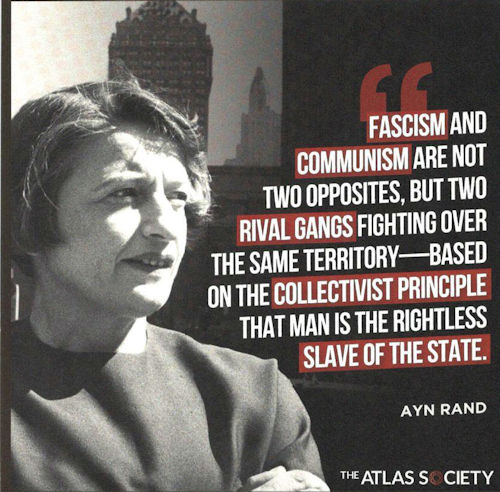



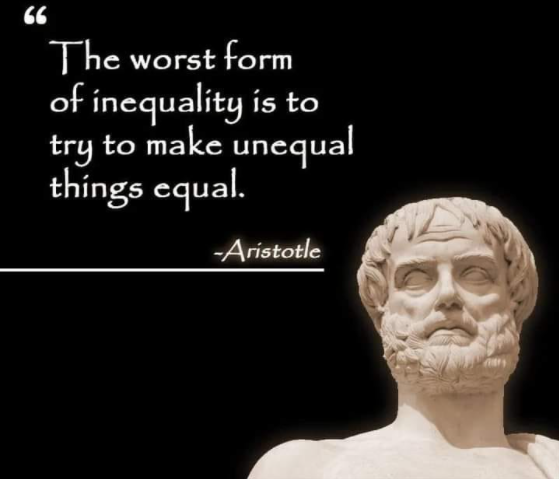



 Posts
Posts