Steve Forbes discusses the Federal Reserve action on its latest stress tests of the nation's 18 largest banks in his Fact & Comment in the 6 May issue of Forbes. Of the 18 biggest banks, the Federal Reserve claimed four had serious problems which it said must be cleared up. Ally Financial is the present name for GM's bankrupt and reorganized financial services arm. It is in real trouble. But Steve Forbes claims that JPMorgan Chase, Goldman Sachs, and BB&T were named as having problems purely for small-minded political reasons.
JPMorgan's Jamie Dimon has expressed displeasure with the Obama administration, but it is a well-run company with a good balance sheet. Goldman Sachs was too close to Romney and Lloyd Blankfein also made it clear he is not happy with Obama. So, the Federal Reserve concocted reasons to fault these two institutions.
Most troubling was the claim that the best run major bank in the entire nation had serious problems because it uses its own economic models and judges its own loan portfolio differently than the Federal Reserve wants it to. Independent thinking is discouraged, even when a company's track record justifies it to any rational observer. In fact, if all banks work on one model, the risks of a systemic banking failure go up. This is especially true when the dictated model is designed by bureaucrats for their purposes, not those of the private sector. It is even more true when the appointments to the Federal Reserve are poisoned by Obama appointees.
Steve Forbes notes that the Basel Accords required banks to have heavy reserves for loans to even the best commercial companies, but none for loans to Greece or Iceland or Ireland. Those government accords also enshrined mortgages for special low reserve treatment. Look where these imposed government models led the world financial institutions in 2008 and 2009.
BB&T bank CEO John Allison IV, now retired and heading the Cato Institute, opposed the TARP program and was most forcefully forced to take that money in 2008-2009. His bank was so well run it had no need for the money. The Federal Reserve wanted to hide the worst banks by making sound banks take the money and it was hiding potential losses on its loans by making a forced profit in interest from sound banks that did not want the money in the first place. Allison further earned the enmity of the Federal Reserve and the Obama Regime by writing The Financial Crisis and the Free Market Cure - Why Pure Capitalism is the World Economy's Only Hope, published in 2013 by McGraw Hill.
Government thugs cannot stand the heat of criticism, especially when it is well-stated. In the Obama Chicago style, they strike back brutally with the misuse of government power. You do as they say, or they will breaka you knee caps.
Showing posts with label TARP. Show all posts
Showing posts with label TARP. Show all posts


28 April 2010
An Update on the GM Loan Repayment
Ed Whitacre, has been featured in a GM ad on TV lately in which he makes the claim that General Motors has repaid its loan "in full, with interest, five years ahead of schedule." He did not mention that this repayment was only of $5.8 billion to the U.S. and Canadian governments and that the repayment was made with funds from a line of credit under TARP. That sounds as though the Canadian government has been repaid with U.S. taxpayer money. Senator Chuck Grassley (R, Iowa) thinks the early repayment was made in order to avoid a proposed tax on those with unpaid bailout loans.
The government investment in GM is still $50 billion. GM was also taken off the hook for about $6 billion of losses in its share of the losses of GMAC due to its problems selling its subprime loans. GM owned part of GMAC, which was bailed out by the taxpayers. Meanwhile, GM is still losing money. Its sales have been increasing though.
What is it about taking the taxpayer's money that turns so many people into deceptive and duplicitous scalawags? No, this is not quite the right question. The people attracted to the taxpayer's money are probably deceptive and duplicitous by nature in the first place and they gravitate to positions in which they can get their hands on that easy money. To be sure, once they get their hands on that money, it generally does play a role in making their deceptive and duplicitous nature even more so.
The government investment in GM is still $50 billion. GM was also taken off the hook for about $6 billion of losses in its share of the losses of GMAC due to its problems selling its subprime loans. GM owned part of GMAC, which was bailed out by the taxpayers. Meanwhile, GM is still losing money. Its sales have been increasing though.
What is it about taking the taxpayer's money that turns so many people into deceptive and duplicitous scalawags? No, this is not quite the right question. The people attracted to the taxpayer's money are probably deceptive and duplicitous by nature in the first place and they gravitate to positions in which they can get their hands on that easy money. To be sure, once they get their hands on that money, it generally does play a role in making their deceptive and duplicitous nature even more so.
24 April 2010
Government Motors Paid Back the TARP Loan?
The CEO of Government Motors (the old General Motors) has been in a TV ad in which he is on the factory floor and claiming that GM has paid back the TARP money it owed the U.S. government in full 5 years early! Did it really?
Given that it lost $3.4 billion just last quarter, what money could it possibly have used to make the payment of such a large sum of money that so many economists and businessmen have said they will probably never be able to repay the taxpayer? It turns out that they were allowed to use taxpayer money that the government had put into an escrow account to back up GM to pay off the loan! In fact, it actually only paid $7 billion on a particular loan even given that subterfuge. GM still owes the government, the taxpayers really, more than $50 billion. So where is the achievement that the GM CEO was crowing about? They simply handed the government money with the right hand, while receiving money in their left hand, and all of that money was our money.
It gets worse. The GM pension plan is underfunded by a mere $27 billion. The taxpayers, who now own 70% of GM through the government, and share it with the totally irresponsible United Auto Workers Union, are now held hostage to pay this pension bill as well. So, the taxpayer's total liability to Government Motors is already $77 billion or more.
Just as with most other Obama administration agencies, Government Motors is now using our taxpayer money to tell us lies. Yes, they used our money in expensive TV ads to tell us this very misleading lie that they had paid us back IN FULL as the CEO kept emphasizing. Well yes, that particular loan was paid in full. But, that ad was crafted with the intention of misleading every taxpayer and every voter in America into thinking that GM no longer owed us our money back and that GM was now a sound, moneymaking company.
It perhaps did improve its position with the loan repayment. It may have a lower interest rate on the second pot of our money. Or, it may have fewer restrictions on executive compensation. But, any company 20% owned by labor unions, 70% owned by government, and owing more than $77 billion is surely a walking ghost. But this ghost is walking off with our money, while giving us attitude!
Given that it lost $3.4 billion just last quarter, what money could it possibly have used to make the payment of such a large sum of money that so many economists and businessmen have said they will probably never be able to repay the taxpayer? It turns out that they were allowed to use taxpayer money that the government had put into an escrow account to back up GM to pay off the loan! In fact, it actually only paid $7 billion on a particular loan even given that subterfuge. GM still owes the government, the taxpayers really, more than $50 billion. So where is the achievement that the GM CEO was crowing about? They simply handed the government money with the right hand, while receiving money in their left hand, and all of that money was our money.
It gets worse. The GM pension plan is underfunded by a mere $27 billion. The taxpayers, who now own 70% of GM through the government, and share it with the totally irresponsible United Auto Workers Union, are now held hostage to pay this pension bill as well. So, the taxpayer's total liability to Government Motors is already $77 billion or more.
Just as with most other Obama administration agencies, Government Motors is now using our taxpayer money to tell us lies. Yes, they used our money in expensive TV ads to tell us this very misleading lie that they had paid us back IN FULL as the CEO kept emphasizing. Well yes, that particular loan was paid in full. But, that ad was crafted with the intention of misleading every taxpayer and every voter in America into thinking that GM no longer owed us our money back and that GM was now a sound, moneymaking company.
It perhaps did improve its position with the loan repayment. It may have a lower interest rate on the second pot of our money. Or, it may have fewer restrictions on executive compensation. But, any company 20% owned by labor unions, 70% owned by government, and owing more than $77 billion is surely a walking ghost. But this ghost is walking off with our money, while giving us attitude!
08 April 2010
Fannie Mae and Freddie Mac and the Full Faith and Credit of the USA
Robert Romano posted an interesting article on the debt of Fannie Mae and Freddie Mac and the U.S. debt on 7 April 2010. Romano is the Senior Editor of the ALG News Bureau. ALG is Americans for Limited Government, which is an organization doing good work for the cause of American liberty. I will summarize the most interesting points in his article below.
Congress placed the government secured entities (GSEs) Fannie Mae and Freddie Mac under federal government conservatorship in 2008 because they were effectively bankrupt. Congress formed the Federal Housing Finance Agency to manage their sorry financial mess, which Congress had long worked hard to foster. In June 2008, their combined debt was $6.6 trillion, of which $4.7 trillion was mortgage-backed securities. Congressman Scott Garrett asked Treasury Secretary Timothy Geithner why this debt taken on by the federal government had not been added to the national debt. The U.S. debt of $12.6 trillion should really be $19.2 trillion and this would result in the downgrading of U.S. debt due to excessive risk. There is quite a song and dance going on here while trying to avoid this.
Geithner says this corporate debt is not the same as U.S. Treasuries and should not be considered sovereign debt. He says, "By statute, all obligations and securities issued by GSEs must include a statement that makes clear that such obligations and securities are not guaranteed by the United States and do not constitute a debt or obligation of the United States." But, he also says the "Treasury is committed to supporting the GSEs while in conservatorship and to ensuring that the GSEs have sufficient capital to meet their debt obligations and honor their guarantees." When Fannie Mae and Freddy Mac were nationalized, the FHFA director James Lockhart told Congress that "the conservatorship and the access to credit from the U. S. Treasury provide an explicit guarantee to existing and future debt holders of Fanny Mae and Freddy Mac." It seems clear that when Congress nationalized the GSEs, the earlier statute that their obligations were not guaranteed by the federal government, had to be superseded or inherently contradicted.
Foreign investors held $1.5 trillion of the $4.7 trillion in mortgage-backed securities. In June 2007, the last an accounting by nation was performed, China held $376 billion, Japan $228 billion, Russia $75 billion, Luxembourg held $39 billion, Belgium $33 billion, Britain $28 billion, and Middle Eastern national funds are also big holders. Many of these nations apparently said they would not buy Treasury bonds to support the U.S. national debt if the government did not rescue them from the bankrupt mortgage-backed securities they held. The federal government has since bought up $1.25 trillion of mortgage-backed toxic security debt. The Treasury will not say whose toxic securities they bought, but they only dealt with primary dealers who could directly deal with the Federal Reserve Bank of New York. When the TARP program was put together, the Treasury was forbidden to purchase the mortgage-backed securities of foreign central banks. But, it appears likely that Geithner has done just that with paper which is indeed backed by the explicit backing of the United States. What else could he have paid the primary dealers for the toxic securities with?
This is just me again: Our real national debt is clearly much greater than the $12.6 trillion figure we are told in a huge lie that it is. There is still much more hidden debt than just that of Fanny Mae and Freddy Mac also.
Congress placed the government secured entities (GSEs) Fannie Mae and Freddie Mac under federal government conservatorship in 2008 because they were effectively bankrupt. Congress formed the Federal Housing Finance Agency to manage their sorry financial mess, which Congress had long worked hard to foster. In June 2008, their combined debt was $6.6 trillion, of which $4.7 trillion was mortgage-backed securities. Congressman Scott Garrett asked Treasury Secretary Timothy Geithner why this debt taken on by the federal government had not been added to the national debt. The U.S. debt of $12.6 trillion should really be $19.2 trillion and this would result in the downgrading of U.S. debt due to excessive risk. There is quite a song and dance going on here while trying to avoid this.
Geithner says this corporate debt is not the same as U.S. Treasuries and should not be considered sovereign debt. He says, "By statute, all obligations and securities issued by GSEs must include a statement that makes clear that such obligations and securities are not guaranteed by the United States and do not constitute a debt or obligation of the United States." But, he also says the "Treasury is committed to supporting the GSEs while in conservatorship and to ensuring that the GSEs have sufficient capital to meet their debt obligations and honor their guarantees." When Fannie Mae and Freddy Mac were nationalized, the FHFA director James Lockhart told Congress that "the conservatorship and the access to credit from the U. S. Treasury provide an explicit guarantee to existing and future debt holders of Fanny Mae and Freddy Mac." It seems clear that when Congress nationalized the GSEs, the earlier statute that their obligations were not guaranteed by the federal government, had to be superseded or inherently contradicted.
Foreign investors held $1.5 trillion of the $4.7 trillion in mortgage-backed securities. In June 2007, the last an accounting by nation was performed, China held $376 billion, Japan $228 billion, Russia $75 billion, Luxembourg held $39 billion, Belgium $33 billion, Britain $28 billion, and Middle Eastern national funds are also big holders. Many of these nations apparently said they would not buy Treasury bonds to support the U.S. national debt if the government did not rescue them from the bankrupt mortgage-backed securities they held. The federal government has since bought up $1.25 trillion of mortgage-backed toxic security debt. The Treasury will not say whose toxic securities they bought, but they only dealt with primary dealers who could directly deal with the Federal Reserve Bank of New York. When the TARP program was put together, the Treasury was forbidden to purchase the mortgage-backed securities of foreign central banks. But, it appears likely that Geithner has done just that with paper which is indeed backed by the explicit backing of the United States. What else could he have paid the primary dealers for the toxic securities with?
This is just me again: Our real national debt is clearly much greater than the $12.6 trillion figure we are told in a huge lie that it is. There is still much more hidden debt than just that of Fanny Mae and Freddy Mac also.
06 April 2009
Why did banks take TARP money?
Many healthy banks have reported that they were forced to take TARP money even though they did not need it. Today, Judge Andrew Napolitano, said on FOX News that the chief executive of a $250 billion asset bank told him that his bank was threatened with 5 consecutive years of tax audits by the IRS if the bank did not take the TARP money (bank bailout money) that it did not want to take. The Secretary of the Treasury, who did not pay his own taxes, is apparently very comfortable in using the power of the IRS to make others miserable to further the cause of fascist socialism. If the government would use this fascist tactic, it would undoubtedly be likely to use other tactics equally reprehensible to force banks to take TARP money they did not need and did not want. The banks are heavily regulated, which undoubtedly gives the Federal government a huge degree of power over them.
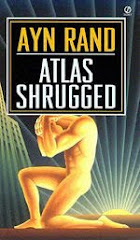
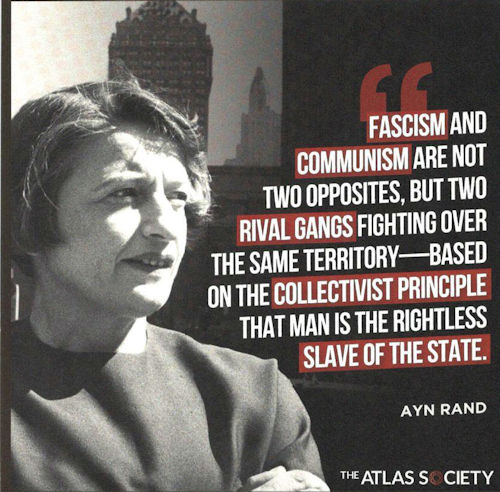
This may explain why the very free market oriented BB&T Bank, whose Chairman John Allison requires high-level bank executives to read Atlas Shrugged and donates money to colleges which introduce Ayn Rand's works into the curriculum, disappointed many of us by taking TARP money. Earlier reports that bankers were forced into a room in Washington and told that they would not be allowed to leave until they accepted the TARP money were apparently not exaggerations. As we now know, those banks who were force-fed TARP money are now under either the direct control of the Federal government or being threatened with it if their policies do not comply with the Federal government wishes. The latter state is little different from the former. If you must do something because someone is holding a gun to your head, then you clearly have no real control and you are nothing but a slave.
Many bankers do not wish to be slaves. Many banks are offering to pay back the government the money given them with interest. The government is refusing to allow the larger banks to do this, though they have taken some payoffs from the smaller banks given money. Why are they refusing to allow banks to pay off their loans? Why did they force them to take the money in the first place? The answer is clear. This money loan was a pretext to gain control of the banks and the Federal government does not want to relinquish that control. Fascism is both tempting and addictive to the kind of politicians who seek to control our government. Government is then used as the tool to gain control not just of banks and auto companies, but of each and every one of us individuals. Of course, they offer various social program bribes to individuals under the same principle as the TARP loans as a means to gain control of us individually.
Governments in the United States have long been trekking down the road to fascist socialism, but the pace of the forced march has picked up markedly since Obama has been united with the Democrat-controlled Congress. We individual Americans have been like frogs placed in a very deep pot on the stove and the heat has been turned up gradually until recently. This has kept us sluggish and pacified. We are now being put to the boil. When the boiling is done, we are all to be one intermixed, indifferentiable mush. The socialist ideal of equality in total poverty will have been accomplished. Unless we strive most mightily to jump out of this deep pot of water immediately.
This may explain why the very free market oriented BB&T Bank, whose Chairman John Allison requires high-level bank executives to read Atlas Shrugged and donates money to colleges which introduce Ayn Rand's works into the curriculum, disappointed many of us by taking TARP money. Earlier reports that bankers were forced into a room in Washington and told that they would not be allowed to leave until they accepted the TARP money were apparently not exaggerations. As we now know, those banks who were force-fed TARP money are now under either the direct control of the Federal government or being threatened with it if their policies do not comply with the Federal government wishes. The latter state is little different from the former. If you must do something because someone is holding a gun to your head, then you clearly have no real control and you are nothing but a slave.
Many bankers do not wish to be slaves. Many banks are offering to pay back the government the money given them with interest. The government is refusing to allow the larger banks to do this, though they have taken some payoffs from the smaller banks given money. Why are they refusing to allow banks to pay off their loans? Why did they force them to take the money in the first place? The answer is clear. This money loan was a pretext to gain control of the banks and the Federal government does not want to relinquish that control. Fascism is both tempting and addictive to the kind of politicians who seek to control our government. Government is then used as the tool to gain control not just of banks and auto companies, but of each and every one of us individuals. Of course, they offer various social program bribes to individuals under the same principle as the TARP loans as a means to gain control of us individually.
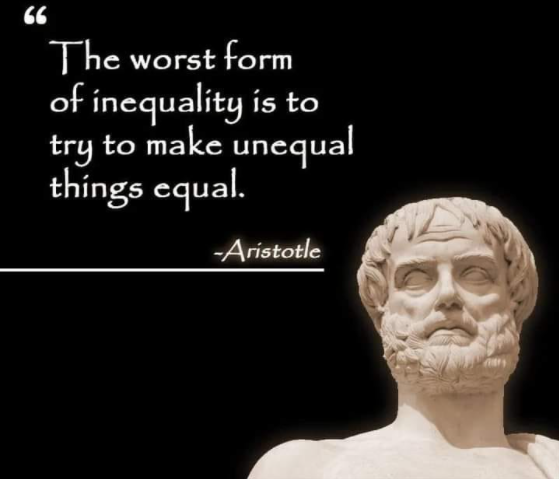
Governments in the United States have long been trekking down the road to fascist socialism, but the pace of the forced march has picked up markedly since Obama has been united with the Democrat-controlled Congress. We individual Americans have been like frogs placed in a very deep pot on the stove and the heat has been turned up gradually until recently. This has kept us sluggish and pacified. We are now being put to the boil. When the boiling is done, we are all to be one intermixed, indifferentiable mush. The socialist ideal of equality in total poverty will have been accomplished. Unless we strive most mightily to jump out of this deep pot of water immediately.
Subscribe to:
Posts (Atom)






 Posts
Posts