Among the issues most commonly discussed are individuality, the rights of the individual, the limits of legitimate government, morality, history, economics, government policy, science, business, education, health care, energy, and man-made global warming evaluations. My posts are aimed at intelligent and rational individuals, whose comments are very welcome.

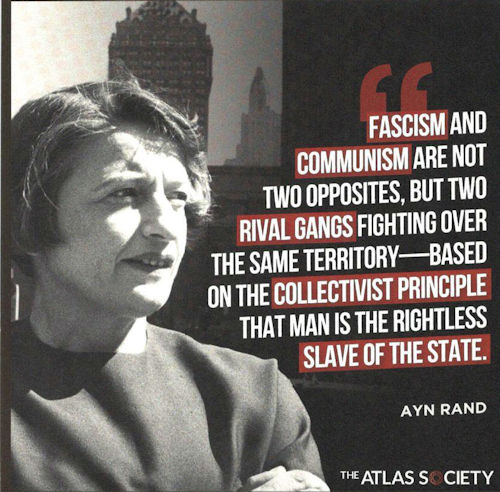
"No matter how vast your knowledge or how modest, it is your own mind that has to acquire it." Ayn Rand

"Observe that the 'haves' are those who have freedom, and that it is freedom that the 'have-nots' have not." Ayn Rand

"The virtue involved in helping those one loves is not 'selflessness' or 'sacrifice', but integrity." Ayn Rand

For "a human being, the question 'to be or not to be,' is the question 'to think or not to think.'" Ayn Rand
Showing posts with label Cato Institute. Show all posts

21 July 2021

Ilya Shapiro on Supreme Court Confirmations

Ilya Shapiro of the Cato Institute testified on 20 July 2021 before the Presidential Commission on the Supreme Court .  He made the following major points:

  1. Politics has always been part of the confirmation process.
  2. Confirmation fights are now driven by judicial philosophy.
  3. Modern confirmations are different because the political culture is different.
  4. Hearings have become kabuki theater.
  5. Every nomination can have a big impact.
  6. The hardest confirmations are when there's a potential for a big shift.
  7. The Court rules on so many controversies that political battles are unavoidable.
He concluded:

The ever​expanding size and scope of the federal government has increased the number and complexity of issues brought under Washington’s control, while the collection of those new federal powers into the administrative state has transferred ultimate decision​making authority to the courts. The imbalance between the executive branch and Congress has made the Supreme Court the decider both of controversial social issues and complex policy disputes.

So should we reform the confirmation process? I’ve come to the conclusion that we should get rid of hearings altogether, that they’ve served their purpose but now inflict greater cost than any informational benefit. With instantly searchable records that nominees now have, is there any need to subject them, and the country, to an inquisition? Or maybe senators could hold hearings in closed session.

In the end, all “reform” discussion boils down to re​arranging the deck chairs on the Titanic. And this Titanic is not the appointment process, but the ship of state. The fundamental problem is the politicization not of the process but of the product. The judicial debates we’ve seen the last few decades were never really about the nominees themselves. They’re about the Court’s direction.

The reason we have these heated battles is that the federal government is making too many decisions for such a large, diverse, and pluralistic country. Let Congress decide truly national issues like defense or (actually) interstate (actual) commerce, but let states and localities make most of the decisions that affect our daily lives. Let Texas be Texas and California be California. That’s the only way we’re going to defuse tensions in Washington, whether in the halls of Congress or in the marble palace of the highest court in the land.


My Comments: 

Basically, the federal government is too damned big and presumptuously and injudiciously has taken on far too many powers, some of which should have been left at the state or local government levels.  People who live in different parts of the country commonly have different interests and values.  The many federal powers often conflict with these differing interests and values.  The federal legislative branch has defaulted on making those constitutional decisions that were assigned to it, allowing the executive branch to grow into a behemoth administrative, regulatory state issuing many controversial edicts, often bafflingly formulated.  As a result of the burgeoning administrative state, the Supreme Court has had make many more decisions regarding both "controversial social issues and complex policy disputes."  Ignoring the wisdom of the Constitution sure has disastrous consequences!

You have done good work here Ilya Shapiro.


23 August 2016

Leaving High Taxes and Big Government Behind

This post is based on some very useful references provided in a comment to my prior post on the Cato Institute evaluation of the freedom in the 50 States 2016.

Between 1992 and 2014, the IRS tracked the migration of people and their AGI on their tax forms. The net results of these migrations are indicated in this map where red is a loss of income due to net migration and green is an income gain.


It is interesting to note that of the 8 least free states by the 2016 report of Cato Institute on Freedom in the 50 States of my last post, the following 7 states are either red or light red in this income migration map, indicating a loss of income:

New York
California
New Jersey
Maryland
Connecticut
Illinois
Rhode Island

Out migration from California tends to be strong to Arizona, Nevada, Washington, and Oregon.  All of these states are more free than California and the least free is Oregon, which perhaps explains why its income increased the least of these four states.

New Hampshire, the freest state, had a small increase in income due to migration. Oklahoma and Alaska were #3 and #2, respectively, and both have risen in recent years in freedom, so their newly deserved reputations were not yet established in many of the years 1992 - 2014.  Indiana at #4 has been more stable in its freedom and clearly has performed much better in minimizing losses than its neighboring states of Illinois, Michigan, and Ohio in this time period.  Indiana's weakest ranking of #26 was in fiscal policy which includes taxes and that is a particularly strong factor on the out-migration of income.  Tennessee, Idaho, Florida, and Arizona of the 10 most free states are also all green in this income migration map above.  #5 South Dakota is white, or income neutral, and #9 Iowa is pink.

Overall, the freer states were the Rocky Mountain states, the Great Plain states from Oklahoma north, and the Southeast with the exception of Mississippi, Louisiana, and Arkansas.  There are no red states in these areas.  Nebraska, Iowa, Missouri, and Kansas are pink, but three of these states are in the #16 - #25 grouping for freedom.  Missouri is further hurt by not being a Right to Work state.

Here is another interesting map from Peter J. Nelson of the Center of the American Experiment entitled Minnesotans on the Move to Lower Tax States 2016:


In the map, the bluer the color the greater the loss of taxpayers earning more than $200K a year.  We also find that most of the low freedom states have higher losses than do high freedom states.  All of the 9 states with gains equal or greater than 1.00% are in the top twenty most free states by the Cato Institute ranking.  Tax policy is under the Fiscal Policy ranking and in this area South Carolina is ranked #23, Nevada is #25, and Wyoming is #21, so there is a stronger correlation with the overall freedom ranking than there is with the Fiscal Policy ranking subset of freedoms for these high income in-migration states.  Some of these high in-flux states do have very high Fiscal Policy rankings, however, with New Hampshire, Tennessee, Florida, Montana, and Idaho having Fiscal Policy rankings from #1 to #8.  So general freedom may be more important for a subset of the wealthier migrators and tax policy alone may be the most important factor for another subset of these wealthier migrators.

Overall, I would judge it likely that income migration is affected strongly by tax policy, but it is also affected strongly by a desire for freedom in general.  Different people have different weightings on these aspects of freedom in their personal set of values.  Good government seeks to provide everyone with the freedoms their individual rights entitle them to.  When a state government offers a better service to freedom, rational and productive people will come to that state. Good things happen to states and the local communities when more rational and productive people choose to live there.

20 August 2016

Freedom in the 50 States Evaluated by Cato Institute

The 2016 report on Freedom in the 50 States by the Cato Institute evaluating the state of freedom through 2014 is now available.  The results of their evaluation of freedom based on fiscal policy, personal freedom, and regulatory policy are summarized in this map:


Cato provides the weightings they used for the evaluation of freedom and one can change those weightings to one's personal preferences to see how the rankings change.  But by Cato's weightings, the top ten freest states are ranked and graded as, with the party of the governor, the senate, and the house of the state added in order either as a D or an R in the year 2014:

1) New Hampshire, 0.3319, D, R, D
2) Alaska, 0.3265, R, R, R
3) Oklahoma, 0.2791, R, R, R
4) Indiana, 0.2778, R, R, R
5) South Dakota, 0.2754, R, R, R
6) Tennessee, 0.2646, R, R, R
7) Idaho, 0.2608, R, R, R
8) Florida, 0.2133, R, R, R
9) Iowa, 0.2048, R, D, R
10) Arizona, 0.1834, R, R, R

The 10 most authoritarian states with their negative scores are:

50) New York, -0.9763, D, D, D
49) California, -0.5026, D, D, D
48) Hawaii, -0.4904, D, D, D
47) New Jersey, -0.4285, R, D, D
46) Maryland, -0.4039, D, D, D
45) Connecticut, -0.2612, D, D, D
44) Illinois, -0.2554, D, D, D
43) Rhode Island, -0.1735, I (really D), D, D
42) Maine, -0.1500, R, D, D
41) Kentucky, -0.1489, D, R, D

It is interesting that the five most authoritarian states, New York, California, Hawaii, New Jersey, and Maryland are all more greatly deviant from the norm of freedom than is the freest of the states, New Hampshire.  If you value your freedom, it is particularly important to avoid these most negatively rated states.  New York is about three times more negative than New Hampshire is positive.  In fact, New York is almost twice as bad as either of the next two worst states, California and Hawaii.

If one were to move from New York to New Hampshire, the freedom score would increase by 1.3082.  Or if I were to move from authoritarian Maryland to where much of my family lives in Oklahoma, my score would improve by 0.6830, which is a substantial increase in freedom.  Or if you live in the Washington, DC area, living in Virginia offers a big improvement over living in Maryland by 0.5080.  If you have to live near New York City, Connecticut is substantially more free than is either New York or New Jersey.

Of the 10 most free states, all are controlled by Republicans, except two which had divided government in 2014.  Of the 10 most authoritarian governments, all were entirely controlled by Democrats in the governorship and the legislature, except the two least repressive of that set of the 10 worst, who had one of the three legs of the state government in the hands of Republicans.  It is not uncommon for libertarians to claim that the Republicans are every bit as anti-freedom as the Democrats, but these rankings make it clear that the Republicans are significantly better than the Democrats in most cases.  Indeed, one of the main reasons that the mean state freedom rankings are so much better than those of the most repressive states is because far more states are controlled by Republicans than are controlled by the more adamant deniers of individual rights found in the Democrat Party.

30 April 2013

Federal Reserve Joins Vendetta Politics of Obama Regime

Steve Forbes discusses the Federal Reserve action on its latest stress tests of the nation's 18 largest banks in his Fact & Comment in the 6 May issue of Forbes.  Of the 18 biggest banks, the Federal Reserve claimed four had serious problems which it said must be cleared up.  Ally Financial is the present name for GM's bankrupt and reorganized financial services arm.  It is in real trouble.  But Steve Forbes claims that JPMorgan Chase, Goldman Sachs, and BB&T were named as having problems purely for small-minded political reasons.

JPMorgan's Jamie Dimon has expressed displeasure with the Obama administration, but it is a well-run company with a good balance sheet.  Goldman Sachs was too close to Romney and Lloyd Blankfein also made it clear he is not happy with Obama.  So, the Federal Reserve concocted reasons to fault these two institutions.

Most troubling was the claim that the best run major bank in the entire nation had serious problems because it uses its own economic models and judges its own loan portfolio differently than the Federal Reserve wants it to.  Independent thinking is discouraged, even when a company's track record justifies it to any rational observer.  In fact, if all banks work on one model, the risks of a systemic banking failure go up.  This is especially true when the dictated model is designed by bureaucrats for their purposes, not those of the private sector.  It is even more true when the appointments to the Federal Reserve are poisoned by Obama appointees.

Steve Forbes notes that the Basel Accords required banks to have heavy reserves for loans to even the best commercial companies, but none for loans to Greece or Iceland or Ireland.  Those government accords also enshrined mortgages for special low reserve treatment.  Look where these imposed government models led the world financial institutions in 2008 and 2009.

BB&T bank CEO John Allison IV, now retired and heading the Cato Institute, opposed the TARP program and was most forcefully forced to take that money in 2008-2009.  His bank was so well run it had no need for the money.  The Federal Reserve wanted to hide the worst banks by making sound banks take the money and it was hiding potential losses on its loans by making a forced profit in interest from sound banks that did not want the money in the first place.  Allison further earned the enmity of the Federal Reserve and the Obama Regime by writing The Financial Crisis and the Free Market Cure - Why Pure Capitalism is the World Economy's Only Hope, published in 2013 by McGraw Hill.

Government thugs cannot stand the heat of criticism, especially when it is well-stated.  In the Obama Chicago style, they strike back brutally with the misuse of government power.  You do as they say, or they will breaka you knee caps.

14 October 2010

CATO Grades Governors on Tax and Spending Actions

Chris Edwards of the CATO Institute has put out the 2010 report card on governors.  He grades their performance on their taxation and spending actions and policies.  These state spending results are very important because one of the major reasons for slow job growth and standard of living increases since 2000 has been the 55% increase in state and local government spending from 2000 to 2008.  State spending in 2009 and 2010 is down due to the extended recession, but local government spending was up in those years enough that combined state and local spending in 2009 equaled that in 2008 and exceeded 2008 spending levels in 2010.  State government spending increases were especially steep in the years 2005 - 2008.  Aggregate state spending in 2008 was 31.4% higher than in 2004 and 46.8% higher than in 2000.  Local government spending increases were even faster than the state increases between 2000 and 2008.  These state and local government spending increases added to the federal government increase of 52.5% between 2000 and 2007 and the increase of 66.7% between 2000 and 2008.  These combined spending increases shifted huge amounts of wealth from the private sector to the government sector and greatly weakened the American economy.

The sharp increase in oil  prices in 2007 started the worldwide recession, which brought on our mortgage and loan crisis.  The heavily funded state and local governments had spent years meddling with land use and building restrictions which had driven up the cost of housing beyond belief.  In the extreme case of California, this caused 80% of new home buyers to become sub-prime borrowers!  Such pressures on home buyers helped to fuel support for Fanny Mae, Freddy Mac, the Federal Reserve, and private lending institutions to make mortgages more readily available.  The house of cards developed by the combined effects of huge local, state, and federal spending increases, the oil price shock, and the mortgage and loan crisis created the basis for a severe recession.  Of course, Obama's socialist and anti-business response to that crisis greatly extended and delayed the recovery.

Let's return our focus to the orgy of spending by local, state, and federal government since 2000 and concentrate on state and local spending and debt.  Between 2000 and 2010, state and local government debt increased by 205%!  This debt estimate is based on official, unrealistic projections of state and local pension funds, which estimates them to be underfunded by about $1 trillion.  Better estimates see them as underfunded by about $3.2 trillion.  We have a tendency to focus more on federal spending and debt, but the problem of local and state spending and debt is also huge.  We have a general government spending and debt problem. 

The Edwards report on governors scores them on
  • The average annual percentage change in per capita general fund spending proposed by the governor
  • The average annual percentage change in actual per capita general fund spending
  • The average dollar value of proposed, enacted, and vetoed tax changes
  • Changes in the top personal income tax rate
  • Changes in the top corporate income tax rate
  • Changes in the general sales tax
  • Changes in the cigarette tax rate
The spending on the general fund is used because governors generally have more control on that spending than on other state spending.  After all, state legislatures share in the spending, tax, and debt orgy.  The scoring is based only on the time period 2008 - 2009 since the period covered by Edward's governor report in 2008.  This is important, since Maryland Governor Martin O'Folly, err..... O'Malley earned a grade of F in the 2008 report since he urged and received a $1.4 billion tax increase in 2007, yet in this report he is at the bottom of the grade B list.  There is a paragraph in the report on each governor giving more information on their actions and policies and you should look up your governor in the report.  The paragraphs are labeled alphabetically by state.

The scores and grades are [State, Governor (Party), Score, Grade]:

South Carolina, Mark Sanford (R), 74, A
Louisiana, Bobby Jindal (R), 71, A
Minnesota, Tim Pawlenty (R), 66, A
West Virginia, Joe Manchin (D), 66, A

Wyoming, Dave Feudenthal (D), 63, B
Rhode Island, Don Carcieri (D), 62, B
Oklahoma, Brad Henry (D), 62, B
Nevada, Jim Gibbons (R), 61, B
Texas, Rick Perry (R), 61, B
Alabama, Bob Riley (R), 61, B
Montana, Brian Schweitzer (D), 61, B
Georgia, Sonny Perdue (R), 60, B
Missouri, Jay Nixon (D), 59, B
Idaho, C. L. "Butch" Otter (R), 58, B
New Mexico, Bill Richardson (D), 57, B
Vermont, Jim Douglas (R), 56, B
Indiana, Mitch Daniels (R), 56, B
Maine, John Baldacci (D), 55, B
Maryland, Martin O'Malley (D), 55, B

Kentucky, Steven Beshear (D), 54, C
Michigan, Jennifer Granholm (D), 53, C
Mississippi, Haley Barbour (R), 53, C
South Dakota, Mike Rounds (R), 53, C
Tennessee, Phil Bredesen (D), 53, C
Nebraska, Dave Heineman (R), 51, C
North Dakota, John Hoeven (R), 51, C
Hawaii, Linda Lingle (R), 51, C

Florida, Charlie Crist (R), 49, D
Ohio, Ted Strickland (D), 49, D
California, Arnold Schwarzenegger (R), 47, D
Delaware, Jack Markell (D), 47, D
Arkansas, Mike Beebe (D), 47, D
Iowa, Chet Culver (D), 47, D
Massachusetts, Deval Patrick (D), 43, D
New Hampshire, John Lynch (D), 41, D
North Carolina, Beverly Perdue (D), 40, D
Arizona, Jan Brewer (R), 40, D
Pennsylvania, Edward Rendell (D), 40, D

Washington, Chris Gregoire (D), 39, F
Wisconsin, Jim Doyle (D), 35, F
Colorado, Bill Ritter (D), 35, F
Illinois, Pat Quinn (D), 30, F
Connecticut, Jodi Rell (R), 28, F
New York, David Paterson (D), 25, F
Oregon, Ted Kulongoski (D), 19, F

The average score of the 45 state governors scored was 50.  The governors of Kansas, New Jersey, Virginia, and Utah had not been in office sufficiently long to score them.  The governor of Alaska is not scored because its budget is so peculiar that it cannot be compared to that of other states.

The average score of Republicans was 55, while that for Democrats was 47.  Yet, Gov. Manchin (D) of West Virginia was tied for the 3rd best score with an A at a score of 66, while Gov. Jodi Rell (R) of Connecticut had the third worst score of only 28 with a grade of F.  Nonetheless, the Republicans in this report's time-frame and also that of the 2008 report ( R 55 - D 46) scored significantly higher than did the Democrats.

Edwards points out that some governors think businesses are simply cash cows to be milked for higher state spending.  Prime examples are Quinn of Illinois and Kulongoski of Oregon.  Others, such as Carcieri of Rhode Island, Manchin of West Virginia, and Pawlenty of Minnesota understand that lower state taxes on businesses help state businesses to compete with those in other states and with those in other countries.  Edwards advises that corporation income taxes be abolished because they decrease jobs, create huge compliance burdens, and raise relatively little revenue.

In the last two years, nine states increased their top income tax rates:  California, Connecticut, Delaware, Hawaii, New Jersey, New York, North Carolina, Oregon, and Wisconsin.  Three states have cut their top income tax rate:  North Dakota, Rhode Island, and Vermont.  Governor Carcieri of Rhode Island was outstanding in cutting the state's top income tax rate from 9.90% to 5.99%.

We need to pay attention to the assault on our liberties due to the growth of local and state governments as well as that from our voracious federal government.  This list also gives us a scorecard for the several governors who are running for the Senate in this election or who are being discussed as potential presidential candidates in 2012.  You might note that Charlie Crist of Florida has only a grade of D.  Among governors talked about as potential presidential candidates, Bobby Jindal had an A, Tim Pawlenty had an A, Rick Perry had a B, Mitch Daniels had a B, and Haley Barbour has a C.

10 June 2010

Equal Rights in Domestic Partnerships

Robert A. Levy, Chairman of the Cato Institute, and John D. Podesta, President of the Center for American Progress, wrote an interesting article for the 8 June 2010 Washington Post called Marriage Equality for All Couples.  They noted that the 1967 case of Loving v. Virginia, ended the ban on interracial marriage in the 16 states with laws banning it at the time.  The Supreme Court unanimously ruled that "marriage is one of the 'basic civil rights of man.'"  This decision was based on the 14th Amendment, ratified in 1868.  Sadly, it took 99 years for this ruling to finally be made.  At the time of that decision, 74% of Americans disapproved of interracial marriages.  Twenty years ago, only 6.8% of newly married couples said they married outside their race or ethnicity.  That number is now 14.6% according to a recent Pew Research Center study.  Clearly, the earlier prejudice against interracial marriages has subsided and more and more Americans are claiming their equal right to marry, whatever their racial mix may be.

The right of people to marry who are not heterosexual has not yet been given a basis in the federal courts.  In 2003, the American opinion was that only 37% supported same-sex marriages.  A February Washington Post poll found that 47% of Americans now support same-sex marriages.  65% of those ages 18 to 29 support same-sex marriages, so the trend will continue in the direction of increasing support.  Robert Levy and John Podesta are the chairmen of the advisory board of the American Foundation for Equal Rights, which is supporting the case of Perry v. Schwarzenegger.  This case is aiming to have California's Proposition 8 outlawing same-sex marriages declared a violation of the 14th Amendment and is now before the federal district court in California.  The case is likely to be appealed to the Supreme Court.  It ought to win the freedom for all couples to enter into equal marriages.

I have long made it clear that government should not be claiming to play a role in marriage at all.  For many, marriage is a spiritual union and I fully understand that concept even though it is not the case that I believe in a god.  There is good reason to reserve the term marriage to meaning a spiritual union and allowing people to control that spiritual content in their marriages without any presumption on the part of government that it has anything to say about that spiritual content.  Those who are religious or who have spiritual values which are not religious are best served by adopting a more appropriate term for the contract that government offers to couples.  It would be better if this were universally called a domestic partnership contract or agreement.  All of the issues which involve government are better described as contractual in nature.  Recognizing this, provides a separation of church and state in marriages/domestic partnerships which would help to diminish the passion of the argument from religious quarters against equal rights in domestic partnership contracts.

As I have written many times also, domestic partnership agreements ought to be a parallel to small business partnerships in that government does not dictate the sex or number of partners.  Two men, or two women, or two men and two women, or any other combination of several people ought to be free to enter into a legal domestic partnership contract.  Joint property, joint responsibility for raising children, the sharing of income, and critical medical decisions and support could readily all be incorporated into such domestic partnership agreements.

Very likely, most families would still be built around one father and one mother, but the huge number of divorces and resulting serial marriages are clear evidence that one-man-one-woman marriages do not work for large numbers of people.  Sometimes the failure is largely the result of two people becoming bored with one another or of one simply yearning for some change of pace.  Sometimes, the couple simply do not always share the same cycle of need for sex.  Sometimes, the strains of earning income, cleaning house, purchasing food and clothes, maintaining the house and cars, agreeing on a common vacation, and raising the children are simply too much for two people.  Some people would do better in larger domestic partnerships in which tasks are spread over more specialists or where they can be varied over time.  With most public schools having severe shortcomings, many such extended family groups would be able to have a member or two specialize in home-schooling the children, while a sufficient number of others remain to bring home the bacon.  One member might be particularly good in managing the family investments, while another is great in playing with the kids and caring for the yard.  One may love to cook, while another loves to work on the cars and keep them running.  Another may like purchasing the groceries, the furniture, and the clothes for the children.

Of course, in many such cases, family members may have the option for having a sexual life enriched by more than one sexual partner.  Sex is one of man's greatest pleasures in life.  It is very important to many people that they are able to optimally enjoy this pleasure.  There is no valid ethical principle that says that it is immoral for a man or a woman to have more than one sexual partner in any period of his or her life.  The ethical issue is whether the person one chooses to have sex with is a person of good character who is of great interest to and highly valued by the chooser.  If someone is fortunate enough to find more than one such person with whom they can form a more intimate bond with shared life-affirming sexual pleasures, people of good will ought to be ready to simply wish them the best.  This is true whether the individuals in the serious and sincere sexual relationship are of different sexes or the same sex.

A knowledge of history makes it very clear that while some people may be entirely heterosexual, very many people are bisexual or homosexual.  When societies are not burdened by severe heterosexual bigotry, it is clear that many people are happy to give outlet to their bisexual or homosexual desires and choose to pursue their happiness in that way.  In our present time, the video market in erotic movies and the rich offering of sexual images and discussions offered on the Internet, make it clear that sex is both of great interest to many people and that their interests are highly varied.  These interests, when given anonymous expression, do not conform to the publicly affirmed principles dominant in our society.  It is clear that many sexual interests are being suppressed, some for good reason, but many for no more reason than traditional prejudice.  It is no one's right to interfere with the exploration, development, and expression of another's optimal sexuality, so long as only consenting adults are involved.

We are all complex and highly differentiated individuals and one of the great expressions of that is in our sexuality.  To suppress the sexual development and expression of others is to attack the rights of the individual in a very basic and fundamental way.  This is an attempt to deny the nature of man and as such it is not consistent with a rational understanding of man and reality.  Let us hope that a step in the direction of our sexual liberation will be made with a Supreme Court decision that same-sex marriage must be allowed because all people have an equal right to pursue their happiness in domestic partnerships.

22 January 2010

Take Heart if Barbara Mikulski is Not Your Senator

One of the burdens I bear is that as a Marylander, I am represented by two total losers in the Senate, Barbara Mikulski and Ben Cardin.  Here is a piece of history from 1990 according to Time Magazine:
Democrats cheered when Maryland's Barbara Mikulski declared that "the middle class have no more to give. The poor have nothing to give. So, let's go and get it from those who've got it." To Republican applause, G.O.P. Senator Bill Armstrong of Colorado proclaimed that "raising taxes in the face of a recession is a hare-brained idea."
The war cry of the Democrats is still that of Barbara Mikulski:  "So, let's go and get it from those who've got it."   David Boaz of the Cato Institute calls this the Mikulski Principle.  It is alive and well and controlling the Democrat agenda still, given this list of taxes called for by Obama or his advisers.

12 January 2010

Levy: The Moral and Constitutional Case for a Right to Gay Marriage

Robert A. Levy is the chairman of the Cato Institute, a libertarian think tank in Washington, D.C.  He recently played a major role in strengthening the Second Amendment to the Constitution in the case of Washington, D.C. vs. Heller.  He recently wrote an article appearing in the New York Daily News on 7 January 2010 on the right to gay marriage called The Moral and Constitutional Case for a Right to Gay Marriage.  It is an excellent article, consistent with my oft-stated belief that we would be better served by getting government out of marriages, which I believe are a spiritual union of partners.  The government should only be offering an important legal contract for domestic partnerships, somewhat akin to a small business partnership.  The spiritual aspect of such a domestic partnership, the marriage aspect, is not something government can or should attempt to address.

Levy points out that New Hampshire and Washington, D.C. have just joined Connecticut, Iowa, Massachusetts, and Vermont in legalizing gay marriage after disappointing defeats in California, Maine, and New York.  Levy says:
The primary purpose of government is to safeguard individual rights and prevent some persons from harming others. Heterosexuals should not be treated preferentially when the state carries out that role. And no one is harmed by the union of two consenting gay people.
For most of Western history, marriage was a matter of private contract between the betrothed parties and perhaps their families. Following that tradition, marriage today should be a private arrangement, requiring minimal or no state intervention. Some religious or secular institutions would recognize gay marriages; others would not; still others would call them domestic partnerships or assign another label. Join whichever group you wish. The rights and responsibilities of partners would be governed by personally tailored contracts — consensual bargains like those that control most other interactions in a free society.
Levy notes that more than 1,000 federal laws dealing mostly with taxes and transfer payments have provisions for married people.  The states have many more laws with provisions for married people.  But Levy says:
Whenever government imposes obligations or dispenses benefits, it may not "deny to any person within its jurisdiction the equal protection of the laws." That provision is explicit in the 14th Amendment to the U.S. Constitution, applicable to the states, and implicit in the Fifth Amendment, applicable to the federal government.
Levy also observes that:
No compelling reason has been proffered for sanctioning heterosexual but not homosexual marriages. Nor is a ban on gay marriage a close fit for attaining the goals cited by proponents of such bans. If the goal, for example, is to strengthen the institution of marriage, a more effective step might be to bar no-fault divorce and premarital cohabitation. If the goal is to ensure procreation, then infertile and aged couples should be precluded from marriage.
More and more people are unable to find any substantial merit to the claim that gay domestic partnerships weaken or threaten heterosexual marriages.  As Levy notes, nearly 60% of Fortune 500 companies offer employee benefits to domestic partners.  The Senate Homeland Security and Governmental Affairs Committee has also voted to apply employee benefits to the gay partners of federal employees.  The clock is running out on this cruel act of discrimination.

18 June 2009

Mark Calabria - A Fake Financial Fix

Mark Calabria, the new director of financial regulation studies at the Cato Institute, has written an op-ed in the 18 June 2009 New York Post entitled A Fake Financial Fix about the Obama plan to acquire further power over the financial industry while refusing to address the huge problems already caused by federal control over the banking system and in many respects over other parts of the financial system. This is worth reading.

Of course he asks how the government which was caught unaware of the Citibank and Bank of America problems might be expected to offer any real safety net to the broader financial markets. He failed to note that this same government forced Bank of America to take a $16 billion loss in acquiring Merrill Lynch, which weakened the Bank of America greatly. He notes that the federal plan will essentially designate some private institutions as too big to fail and will commit the government to future bailouts of those institutions. This provides these bigger institutions advantages in giving them lower interest rates for money they borrow and makes it harder for smaller financial firms to compete. This system would rig the financial markets to make the very big companies bigger and to protect them from competition. This is the usual pattern followed whenever government increases the regulation of business. It increases the cost of doing business and slows down decision-making processes. It distracts business management from making real business decisions by funnelling their time into handling government paperwork, petting government bureaucrats, and forcing them to devote more time and money to political influence peddling.

Calabria notes that 40% of the subprime mortgages passed through the hands of Fanny Mae and Freddy Mac, the government-sponsored institutions, which may cost the taxpayers more than $300 billion. This is twice the cost incurred in rescuing AIG. Despite this, these politician favorites are not included in the financial regulation plan by Obama. In other respects there is also no intention in this plan to reduce government efforts to encourage homeownership by subprime borrowers. This is really the way to address the problem, right folks?

As Mark Calabria notes, this is just politics as usual. The government messes up big-time and the problem is blamed on business or Capitalism. The government, in the throes of economic crisis, claims the solution to the problem is more government. It gets many big companies to go along with the grab for power by government by offering them special advantages and protected markets. It then moves quickly to pass new laws, before wiser heads have time to identify how what they are doing is foolish and above all before wiser Americans can inform the general public about how badly they are about to be taken advantage of. Small businesses and consumers are the big losers, even as the politicians and the main stream media will pretend that the increased government regulation is for the purpose of protecting them.

20 May 2009

Ed Crane - Obamacare: Medical Malpractice

I just read the Cato Policy Report for May/June 2009 and Ed Crane's Message from the President entitled Obamacare: Medical Malpractice makes some good points. First, he points out that "America is a land of free individuals. Socialized medicine is not what we are about -- and with good reason, both philosophical and practical."

As I have said repeatedly, socialized medicine turns the members of the medical professions into slaves. It raises bureaucrats into the Gods of our medical needs and the services to be allowed. It treats each and every one of us individuals as simply a statistic. The idea becomes one of degrading the judgment of the health care professionals and of the patient. Only the needs of the politicians and bureaucrats matter in a socialized medicine scheme. Of course their needs will allow them to sell their decision-making power to the highest special interest bidder of the moment, but the special interest bidder will himself be in a very precarious position.

But back to Ed Crane: He notes tha:
  • Eight out of ten of the most recent major medical innovations, ranging from MRIs to hip replacement, have come from the United States.
  • Americans have access, on a per capita basis, to three times as many CT scans as Canadians and four times as many as Britons.
  • The average wait for treatment by a specialist in Canada is 18 weeks. Patients are more likely to die waiting and often suffer greatly with pain while waiting.
  • British women have nearly double the risk of dying from breast cancer compared to American women.
  • British men are six times more likely to die from prostate cancer compared to American men.
  • There is a severe shortage of doctors even in America. Does this have anything to do with the likelihood that the American medical profession is being very seriously threatened with a takeover by government?
  • He notes that Obama's plan to create a heavily subsidized federal insurance will kill off private insurance plans and result in the government plan being the only insurance left standing. This is a backdoor approach to the nationalization of the health insurance and health care professions.
As with education, health care is too important to be entrusted to the government. It is also, like education, much too critical to the maintenance of a society of free individuals.

03 July 2008

1776 Federal Subsidy Programs

No, this is not a post on the Federal Subsidy Programs in place in the great year of 1776, one of whose chief events, the Declaration of Independence, we are going to celebrate tomorrow.
How ironic that the nation that rebelled over an issue of minuscule taxation, much of whose proceeds supported and subsidized an aristocracy, has been found to have 1776 federal subsidy programs in 2007. Chris Edwards, Director of Tax Policy Studies of the Cato Institute published a record of federal subsidy programs since 1970 in a Tax and Budget Bulletin called "Number of Federal Subsidy Programs is Soaring," which covered programs through late 2006. He has just updated the count for 2007 and made that result available in "Independence in 1776 to Dependence on 1776."

These subsidies have state governments, businesses, non-profit groups, and individuals as beneficiaries. Edwards counted the subsidy programs by examining the Catalog of Federal Domestic Assistance, which lists all federal aid and subsidy programs, including grants, loans, insurance, scholarships, and much more.

If you examine the chart by Chris Edwards, there was an increase of programs of 11% from 1975 to 1980, most of this period being the Carter presidency. From 1980 to 1985, President Reagan remarkably cut the number of subsidies by 10%, but by 1990 they had grown in number by 16%. From 1990 to 2000, the number grew 21%. Under President Bush, they grew from 1,425 in 2000 to 1776 in 2007. This is a 25% increase. President Bush's reluctance to use the veto and his lack of commitment to reducing the size and power of government has had direful consequences!